The Short Answer on Hyundai's Earth and Venus Concepts
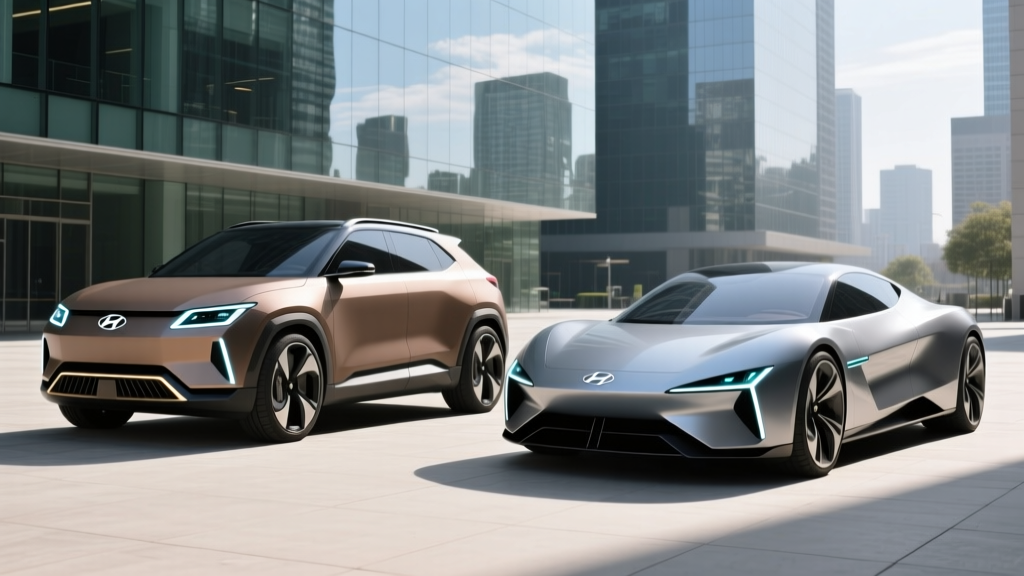
Hyundai's Earth and Venus EV concepts are design and technology studies — not production vehicles you can buy today. They preview the styling language, battery architecture, and cabin technology likely heading to Hyundai's next-generation Ioniq and sub-brand models from 2027 onward. For buyers shopping right now, the current Hyundai EV lineup (Ioniq 5, Ioniq 6, Ioniq 9, Kona Electric) represents the production reality, while Earth and Venus signal where the brand is headed on efficiency, solid-state readiness, and software-defined platforms.
What Are the Hyundai EV Concepts Earth and Venus?
Hyundai periodically releases concept vehicles to test public reaction to new design directions and technology integrations. The Earth concept and Venus concept are part of Hyundai's broader exploration of next-generation electric mobility — vehicles designed from the ground up on evolved versions of the company's Electric-Global Modular Platform (E-GMP) and its successor architecture.
Concept vehicles typically serve three purposes for automakers:
- Design validation: Gauge consumer reaction to new exterior and interior styling before committing to production tooling.
- Technology showcase: Demonstrate battery chemistries, thermal management systems, and software architectures that may be 2–4 years from production readiness.
- Brand positioning: Signal to investors and competitors that the company is investing in specific mobility segments (urban EVs, rugged SUVs, autonomous-ready platforms).
Neither Earth nor Venus has been confirmed for production under those names. However, Hyundai has a strong track record of translating concept elements into production vehicles — the 45 Concept directly became the Ioniq 5, and the Prophecy Concept heavily influenced the Ioniq 6.
What These Concepts Tell Us About Hyundai's EV Roadmap
While final specifications remain unannounced, the Earth and Venus concepts point to several strategic priorities for Hyundai's electrified future:
Next-Generation Platform Evolution
Hyundai's current E-GMP platform underpins the Ioniq 5, Ioniq 6, and Kia EV6/EV9 family. It supports 800V architecture, enabling peak DC fast-charging rates up to 350 kW on compatible vehicles (the Ioniq 5 peaks around 238 kW in real-world conditions, achieving 10–80% in approximately 18 minutes at a capable charger). The successor platform previewed by these concepts is expected to push toward higher sustained charge rates, improved energy density, and potentially solid-state battery compatibility by the late 2020s.
Segment Expansion
Hyundai's current U.S. EV lineup spans from the compact Kona Electric (EPA 261 miles, ~$32,975 base MSRP) to the three-row Ioniq 9 (EPA up to 335 miles, ~$59,900+). The concepts suggest Hyundai is exploring additional niches — potentially a more rugged, adventure-oriented EV (Earth) and a more premium, comfort-focused urban or grand-touring model (Venus). This mirrors the industry trend of segment-specific EV design rather than one-size-fits-all platforms.
Software-Defined Vehicle Architecture
Both concepts emphasize over-the-air (OTA) update capability, advanced ADAS sensor suites, and deeply integrated digital cockpits. Hyundai's current Level 2 Highway Driving Assist 2 (HDA2) system is competitive but not class-leading. The concepts preview a path toward higher-capability driver-assistance — though still firmly in the Level 2/Level 2+ supervised category, not autonomous driving.
Concept vs. Production: Separating Signal from Noise
| Concept Claim / Feature | Production Reality Check |
|---|---|
| "Revolutionary new battery" | Concepts often showcase lab-stage chemistry. Expect NMC or LFP production cells with incremental energy-density gains, not a chemistry breakthrough, in near-term models. |
| "500+ mile range" | Possible with a very large pack (>120 kWh), but adds weight and cost. Current production sweet spot is 270–340 EPA miles. Real-world highway range drops 15–25% below EPA. |
| "Fully autonomous driving" | No consumer Hyundai offers Level 4 autonomy. Production vehicles will ship with Level 2 supervised systems requiring active driver engagement. |
| "Charges in 5 minutes" | Even 800V architectures need 15–20 minutes for 10–80% at peak. Sub-10-minute charges require >500 kW infrastructure not widely available. |
| "Zero-emission materials" | Marketing language. All EV batteries require mining of lithium, nickel, cobalt, or iron. Hyundai is improving supply-chain transparency but "zero impact" isn't achievable yet. |
Buying a Hyundai EV Today: What's Actually Available
If the Earth and Venus concepts have you interested in Hyundai's electric direction but you need a vehicle now, here's the current production lineup with real numbers:
| Model | EPA Range | Battery (usable kWh) | Peak DC Charge | 10–80% Time | Base MSRP |
|---|---|---|---|---|---|
| Kona Electric | 261 mi | 65.4 kWh (NMC) | ~100 kW | ~43 min | ~$32,975 |
| Ioniq 5 (Long Range AWD) | 290 mi | 77.4 kWh (NMC) | ~238 kW | ~18 min | ~$47,600 |
| Ioniq 6 (Long Range RWD) | 361 mi | 77.4 kWh (NMC) | ~238 kW | ~18 min | ~$42,700 |
| Ioniq 9 (Long Range RWD) | 335 mi | 110.3 kWh (NMC) | ~240 kW | ~24 min | ~$59,900 |
Real-World Range Reality: EPA estimates assume mixed driving. On sustained highway trips at 70+ mph, expect 15–20% less range. In freezing temperatures (below 32°F / 0°C), range can drop 25–40% depending on cabin heating use and whether the vehicle has a heat pump (the Ioniq 5/6 include one; the Kona Electric's cold performance is more limited). Always plan road trips around 70% of the EPA sticker for safety margin.
Hyundai EV vs. Gas Car vs. Hybrid: Cost Comparison
One of the most practical questions for buyers eyeing Hyundai's electric future is whether an EV, hybrid, or gas vehicle makes financial sense. Here's a 5-year ownership cost comparison using the Ioniq 5 SEL (AWD, ~$47,600 MSRP) against the similarly sized Hyundai Tucson gas model and the Tucson Hybrid:
| Cost Category | Ioniq 5 SEL AWD (EV) | Tucson Hybrid AWD | Tucson Gas AWD |
|---|---|---|---|
| Purchase Price (MSRP) | $47,600 | $38,250 | $34,500 |
| Federal Tax Credit (§30D) | Up to $7,500* | Up to $3,500** | $0 |
| Effective Purchase | ~$40,100 | ~$34,750 | $34,500 |
| Fuel / Energy (5 yr) | ~$3,750† | ~$6,800 | ~$9,400 |
| Maintenance (5 yr) | ~$1,500 | ~$3,200 | ~$3,800 |
| Insurance (5 yr est.) | ~$9,500 | ~$7,800 | ~$7,200 |
| Total 5-Year Cost | ~$54,850 | ~$52,550 | ~$54,900 |
* §30D credit eligibility depends on MSRP caps ($55,000 SUVs), buyer income limits ($150K single / $300K joint), and battery critical-mineral sourcing requirements. Verify at IRS.gov. Hyundai's U.S.-built Ioniq 5 currently qualifies for partial or full credit depending on trim and sourcing compliance — confirm with your dealer at point of sale.
** PHEV credit up to $3,500 for Tucson PHEV variant, subject to same income/sourcing rules.
† Based on national average electricity rate of ~$0.17/kWh and 3.5 mi/kWh efficiency. Home charging is significantly cheaper than public DC fast charging.
The EV and gas Tucson land within a few hundred dollars of each other over five years — but the EV delivers dramatically lower running costs after the credit offsets the higher purchase price. Without the tax credit, the EV costs roughly $7,000–$8,000 more over five years. This is the central calculus for every EV buyer: incentives close the gap.
Real-World Ownership Considerations Before You Wait for a Concept
Concept vehicles generate excitement, but your daily driving reality depends on practical factors that no concept car brochure addresses:
Home Charging Access Is the Single Biggest Factor
EV ownership satisfaction correlates almost directly with reliable home charging. If you can install a Level 2 (240V) charger at home — typically a 32A or 48A unit delivering 7.7 to 11.5 kW — you'll wake up every morning with a full battery and rarely visit public chargers except on road trips.
- Level 2 home charger equipment: $300–$700 (quality units from ChargePoint, Emporia, Wallbox)
- Electrician installation: $500–$2,000 (depends on panel proximity, conduit run, and whether a 200A panel upgrade is needed)
- Permit costs: $50–$250 depending on municipality
- Typical total: $800–$2,500 for a straightforward install; $2,500–$5,000+ if a panel upgrade is required
If you live in an apartment or lack dedicated parking with electrical access, public charging becomes your primary fueling method — and that changes the economics and convenience equation significantly. Public DC fast charging costs roughly $0.30–$0.50/kWh in most U.S. markets, making it comparable to or more expensive than gasoline on a per-mile basis.
Climate and Driving Patterns Matter
If you live in a region with harsh winters (sustained temperatures below freezing), plan for meaningful range reduction. Hyundai's heat pump-equipped models (Ioniq 5, Ioniq 6) handle cold better than resistive-heater vehicles, but you'll still see 20–35% range loss in sub-freeting conditions. For a 290-mile EPA Ioniq 5, that means ~190–230 real-world miles in deep winter.
Similarly, if your commute is mostly highway miles at 75–80 mph, aerodynamic drag pushes consumption higher. The Ioniq 6's teardrop shape (0.21 Cd drag coefficient) gives it an efficiency edge over the boxier Ioniq 5 at highway speeds — a factor the EPA test cycle partially captures but doesn't fully reflect at sustained high speeds.
Should You Buy Now or Wait for Next-Gen Hyundai EVs?
Buy a current Hyundai EV now if:
- You need a vehicle within 6 months and have home charging access
- The Ioniq 5, Ioniq 6, or Ioniq 9 meets your space, range, and budget needs
- You can take advantage of current §30D tax credit rules before potential legislative changes
- You value a proven platform with established reliability data and dealer service infrastructure
Wait for next-gen models (inspired by Earth/Venus concepts) if:
- Your current vehicle is functional and you're 2–4 years from needing a replacement
- You specifically want solid-state battery technology or significantly faster charging (>350 kW sustained)
- You're targeting a segment Hyundai doesn't currently serve (compact pickup, ultra-compact urban EV)
- You want more advanced Level 2+ driver-assistance with broader hands-free operational domains
Federal Tax Credit Rules for Hyundai EVs in 2025–2026
The §30D Clean Vehicle Credit remains a major purchase factor, but the rules are specific and change periodically. Here's the current framework:
§30D Eligibility Checklist (Current Rules — Verify at IRS.gov)
- MSRP cap: SUVs/pickups/vans ≤ $80,000; sedans/other ≤ $55,000
- Buyer income cap: Modified AGI ≤ $150,000 (single) / $225,000 (head of household) / $300,000 (joint)
- Battery critical minerals: Required percentage must be sourced from U.S. or FTA partners (threshold increases annually)
- Battery components: Required percentage must be manufactured in North America (threshold increases annually)
- Foreign Entity of Concern (FEOC): Vehicles with battery components or critical minerals from designated foreign entities are disqualified
- Point-of-sale transfer: Buyers can transfer the credit to the dealer at purchase, reducing the out-of-pocket price immediately (rather than waiting for tax filing)
- Final assembly: Must occur in North America
Hyundai's U.S.-built vehicles (Ioniq 5 from the Georgia Meta plant) have an advantage in meeting final-assembly and component requirements. Always confirm current eligibility with your dealer and consult a tax professional. Rules referenced from IRS §30D guidance.
Hyundai's Battery Warranty and Long-Term Ownership
For buyers concerned about battery longevity — whether buying today or waiting for concept-derived models — Hyundai's warranty coverage is among the industry's strongest:
- High-voltage battery warranty: 10 years / 100,000 miles (whichever comes first)
- Capacity retention threshold: Warranty covers repair or replacement if the battery falls below 70% of original capacity during the warranty period
- Electric powertrain warranty: 10 years / 100,000 miles covering the motor, inverter, and related components
- Basic vehicle warranty: 5 years / 60,000 miles bumper-to-bumper
Industry data from sources including fueleconomy.gov and long-term fleet studies suggest modern NMC batteries with active thermal management (as used in Hyundai's E-GMP vehicles) typically retain 85–92% capacity after 100,000 miles. Degradation is steepest in the first 20,000–30,000 miles and then flattens into a slow linear decline. LFP chemistry — not yet used in Hyundai's U.S. lineup but likely in future lower-cost models — offers even longer cycle life with a slightly lower energy density trade-off.
What First-Time Hyundai EV Buyers Should Know
If the Earth and Venus concepts have put Hyundai on your EV radar, here are the non-obvious realities that separate informed buyers from disappointed ones:
- Peak kW is not sustained kW. A "238 kW peak" charge rate applies only in a narrow state-of-charge window (typically 10–35% SoC at optimal battery temperature). The charge curve tapers significantly above 60% SoC. Plan your road-trip stops around 10–80% sessions, not 0–100%.
- NACS adoption is coming. Hyundai has committed to adopting the Tesla NACS connector for future models. Current Hyundai EVs use CCS1. Adapters are available, and Hyundai's future production models (potentially those inspired by these concepts) will likely ship with native NACS ports, granting seamless Supercharger access.
- Preconditioning matters. Hyundai's route-planning system can precondition the battery for fast charging when a DC charger is set as your navigation destination. This warms the battery to optimal temperature, enabling the advertised peak charge rates. Without preconditioning (especially in cold weather), your first several minutes of charging will be significantly slower.
- Insurance costs are higher. EV insurance premiums run 15–25% above comparable gas vehicles due to higher repair costs and battery replacement expenses. Get quotes before purchasing — the savings on fuel can be partially offset by insurance.
- The dealer experience varies. Hyundai's direct-sales model isn't available in most states. Dealer markup, add-ons, and varying EV knowledge mean you should research invoice pricing, confirm tax credit eligibility in writing, and be prepared to walk away from bad deals.
Frequently Asked Questions
Can I buy the Hyundai Earth or Venus concept car?
No. These are design and technology study vehicles not available for purchase. They preview elements likely to appear in production Hyundai EVs from approximately 2027–2030. If you need a Hyundai EV today, the Ioniq 5, Ioniq 6, Ioniq 9, and Kona Electric are the production options.
Will Hyundai's next EVs have solid-state batteries?
Hyundai is investing in solid-state battery development through partnerships and internal R&D, but mass production of solid-state EV batteries is not expected before approximately 2028–2030 at the earliest. Near-term production models will continue using NMC lithium-ion cells with incremental energy-density improvements. Any concept claiming solid-state technology is showing a future aspiration, not a guaranteed near-term spec.
How does Hyundai's EV reliability compare to Tesla?
Hyundai's E-GMP platform has proven generally reliable since its 2022 U.S. launch, with fewer reported build-quality issues than early Tesla Model Y vehicles. However, Hyundai's EV service network is still growing, and some dealers have limited high-voltage technician availability. Tesla's service infrastructure is more mature but faces its own capacity challenges in high-volume markets. Check IIHS and owner forums for model-specific reliability data.
What happens if I buy a Hyundai EV now and the next-gen model is much better?
This is the perpetual tech-buyer dilemma. Current Hyundai EVs offer competitive range, fast charging, and strong warranties. Depreciation on EVs has been steep in 2024–2025 due to price competition and incentive changes, so buying now carries resale-value risk. However, waiting 2–3 years means 2–3 years of higher fuel costs in a gas vehicle. If you can hold a current EV for 7–10 years, the technology gap with future models matters less than you might think — today's 290-mile, 18-minute-charging Ioniq 5 will remain a capable vehicle for a decade.
Does Hyundai's EV lineup qualify for the full $7,500 tax credit?
Eligibility varies by model, trim, and the current critical-mineral and battery-component sourcing requirements. The U.S.-built Ioniq 5 has the strongest case for full or partial credit. The Kona Electric and imported models may qualify for reduced amounts or none depending on the latest FEOC and sourcing rules. Always verify with your dealer and the IRS Clean Vehicle Credit page before relying on the credit in your purchase budget.