The Quick Answer
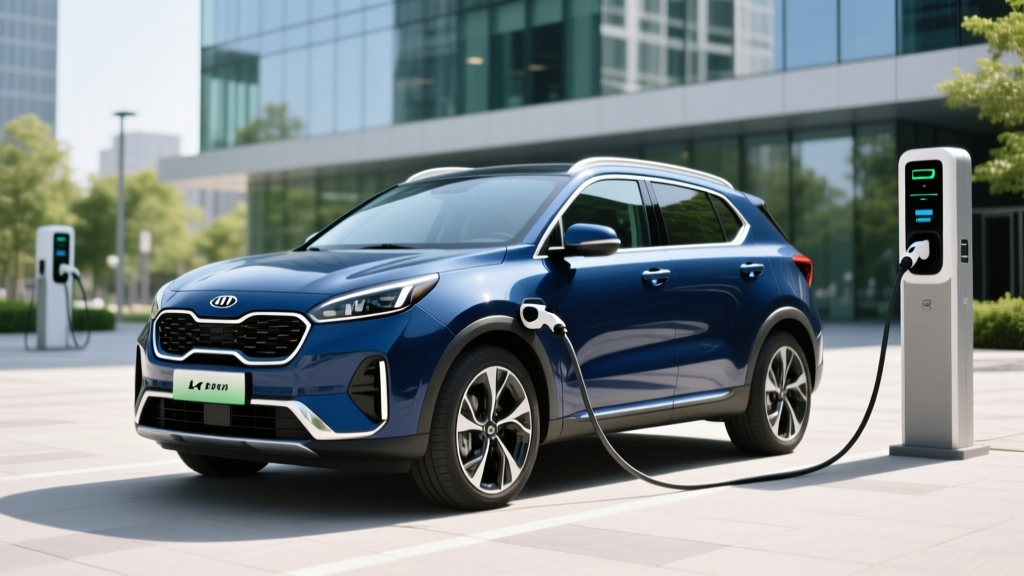
As of the 2026 model year, there is no fully electric Kia Sportage (BEV) sold in the United States. Kia has not announced a battery-electric Sportage for the U.S. market. What Kia does offer is the Sportage Hybrid (HEV) and Sportage Plug-In Hybrid (PHEV), which pair a gasoline engine with an electric motor and battery. If you want a fully electric Kia SUV in 2026, your closest alternatives are the Kia EV6 (crossover, EPA range up to 310 miles, starting around $42,900) and the Kia EV9 (three-row SUV, EPA range up to 304 miles, starting around $54,900). If you specifically want the Sportage body style, the PHEV delivers 34 miles of electric-only driving before the gas engine takes over.
Why Buyers Keep Searching for a Kia Sportage Electric
The Sportage is one of Kia's best-selling compact SUVs, and the confusion is understandable. Hyundai — Kia's corporate sibling — sells the Tucson, which also comes in gas, hybrid, and PHEV forms but has no fully electric version in the U.S. either. Meanwhile, Kia has invested heavily in its dedicated EV lineup (the EV6, EV9, and the upcoming EV5), leading many shoppers to assume a battery-electric Sportage must exist or be imminent.
The reality: Kia's EV strategy has focused on dedicated electric platforms (the E-GMP architecture shared with Hyundai's Ioniq models) rather than converting existing gas-car nameplates to battery power. The Sportage rides on the N3 platform, which was engineered for internal combustion, hybrid, and plug-in hybrid powertrains — not a large under-floor battery pack. That doesn't rule out a future electric Sportage, but nothing has been confirmed for 2026 or 2027.
What Kia Actually Sells: Sportage Hybrid vs. PHEV vs. EV Alternatives
Here is how the current Sportage electrified lineup stacks up against Kia's dedicated EVs. These are 2026 model-year figures.
| Model | Powertrain | EPA Range / MPG | Battery | 0–60 mph | Starting MSRP |
|---|---|---|---|---|---|
| Sportage Hybrid (HEV) | 1.6L turbo + electric motor | 43 MPG combined (FWD) | 1.49 kWh (small, no plug) | ~7.5 sec | ~$29,990 |
| Sportage PHEV | 1.6L turbo + larger motor | 34 mi electric-only, then 35 MPG combined | 13.8 kWh (NMC, plug-in) | ~7.0 sec | ~$39,990 |
| Kia EV6 (RWD LR) | BEV (E-GMP platform) | 310 mi (EPA) | 77.4 kWh usable (NMC) | 7.2 sec | ~$42,900 |
| Kia EV6 (AWD GT-Line) | BEV (E-GMP platform) | 282 mi (EPA) | 77.4 kWh usable (NMC) | 3.4 sec (GT trim) | ~$52,900 |
| Kia EV9 (RWD LR) | BEV (E-GMP platform) | 304 mi (EPA) | 99.8 kWh usable (NMC) | 8.2 sec | ~$54,900 |
Sources: fueleconomy.gov, Kia America. Prices reflect base MSRP before destination and incentives; verify current-year figures.
Real Costs: Sportage PHEV vs. EV6 Ownership Over 5 Years
For buyers cross-shopping a Sportage PHEV against a Kia EV6, the cost picture depends heavily on your driving patterns, electricity rates, and whether you can charge at home. Below is a realistic 5-year/75,000-mile estimate assuming national-average energy prices ($3.50/gallon gasoline, $0.16/kWh home electricity, $0.40/kWh public DC fast charging).
| Cost Category | Sportage PHEV | Kia EV6 (RWD LR) |
|---|---|---|
| Purchase Price (base MSRP) | $39,990 | $42,900 |
| Federal Tax Credit (§30D) | $3,752 (partial, battery-size formula)* | Up to $7,500 (if sourcing/income requirements met)* |
| Fuel / Electricity (5 yr) | ~$5,200 (mix of gas + electric) | ~$3,400 (mostly home charging) |
| Maintenance (5 yr) | ~$3,500 (oil, filters, brakes, engine) | ~$1,800 (no oil changes, regen saves brakes) |
| Insurance (5 yr est.) | ~$7,500 | ~$8,500 (EVs typically 10–15% higher) |
| Estimated 5-Year Total | ~$52,438 | ~$49,100 |
*Tax credit note: Under IRS §30D rules, the PHEV's credit is calculated based on battery capacity (the 13.8 kWh pack yields a partial credit). The EV6 may qualify for up to $7,500, but eligibility depends on battery-component and critical-mineral sourcing requirements, buyer income caps ($150K single / $300K joint), and MSRP caps ($55K for SUVs). Credits can be transferred to the dealer at point of sale. Always verify on IRS.gov and consult a tax professional.
Real-World Range and Charging: What the Numbers Actually Mean
If you're considering a Kia EV6 as your Sportage electric alternative, here's what to expect beyond the EPA sticker:
Kia EV6 (RWD Long Range) — Range Reality Check
EPA rating: 310 miles
Real-world highway (70–80 mph, mild weather): ~260–280 miles
Cold weather (below 30°F, highway): ~220–240 miles (15–25% loss typical for NMC chemistry without heat-pump preconditioning)
City/mixed driving with regen: ~290–310 miles (regen recovers energy in stop-and-go)
Charging speed is where the EV6 shines on its 800V E-GMP architecture:
- DC fast charging (peak): 240 kW on a 350 kW charger
- 10–80% charge time: ~18 minutes under ideal conditions
- Charge curve taper: Speed drops sharply above 80% — expect 80–100% to take an additional 15+ minutes. Plan to charge to 80% on road trips and skip the top-off unless you need the full range.
- Level 2 home charging: 10.9 kW onboard charger, 0–100% in ~7 hours on a 48-amp circuit
- Level 1 (120V outlet): ~1.4 kW, roughly 4–5 miles of range per hour — fine for overnight top-ups on low-mileage days, impractical for full charges
The Sportage PHEV, by contrast, charges its 13.8 kWh battery in about 2 hours on a Level 2 charger or roughly 5 hours on a standard 120V outlet. It does not accept DC fast charging — no PHEV in this class does. The 34 miles of electric-only range covers most daily commutes, but once the battery depletes, you're running on the turbo-four hybrid system at 35 MPG combined.
Common Misconceptions About a Sportage EV
| Myth | Fact |
|---|---|
| "The Kia Sportage electric is available in 2026." | No fully electric Sportage exists in the U.S. Kia sells hybrid and PHEV versions. The EV6 and EV9 are Kia's dedicated electric SUVs. |
| "PHEVs don't qualify for any tax credit." | PHEVs with at least 7 kWh of battery capacity can qualify for a partial §30D credit based on battery size, subject to the same income and sourcing rules as BEVs. |
| "An EV is always cheaper to own." | Not automatically. Higher purchase price, potentially higher insurance, and public-charging costs can offset fuel savings if you can't charge at home. The math works best with home Level 2 charging and moderate daily mileage. |
| "The EV6 is too small compared to the Sportage." | The EV6 has 103 cu-ft of passenger volume and 24.4 cu-ft cargo (50.2 with seats folded). The Sportage offers 41.3 cu-ft cargo. If cargo space is critical, the three-row EV9 (81.7 cu-ft max cargo) or the Sportage PHEV are better fits. |
| "I need a full EV to save money and reduce emissions." | A PHEV like the Sportage eliminates most weekday gas use (if you charge nightly) while retaining gas-engine flexibility for road trips. It's a legitimate bridge for buyers without reliable home charging or who regularly drive 300+ miles. |
Decision Framework: Which Kia Should You Actually Buy?
Choose the Sportage Hybrid (HEV) if:
- You want the lowest purchase price (~$29,990) and cannot charge at home
- You drive less than 15,000 miles/year and want zero lifestyle change from a gas car
- 43 MPG combined is compelling enough without plugging in
Choose the Sportage PHEV if:
- You can install a Level 2 charger at home and your commute is under 34 miles round-trip
- You want electric daily driving but need gas flexibility for frequent road trips or rural driving
- You want the Sportage's cargo space (41.3 cu-ft) and compact-SUV footprint
- You live in a cold climate where EV range loss is a real concern
Choose the Kia EV6 if:
- You have reliable home Level 2 charging and want a true zero-tailpipe-emission vehicle
- Your daily driving is under 250 miles and you road-trip fewer than 5 times per year
- You value fast DC charging (18-min 10–80%) and 800V architecture for road-trip practicality
- You want the lowest per-mile energy cost (~$0.04–0.06/mile on home electricity vs. ~$0.12/mile in a 35-MPG gas car)
Choose the Kia EV9 if:
- You need three rows and up to 81.7 cu-ft of cargo space
- You can absorb the higher starting price (~$54,900) and still meet §30D MSRP caps
- You want a family EV with V2L (vehicle-to-load) capability to power devices or a home during outages
What First-Time EV Buyers Should Know Before Switching
If you're moving from a gas Sportage (or any gas SUV) to your first EV, here are the practical realities that spec sheets don't always highlight:
- Home charging is the make-or-break factor. A Level 2 home charger (240V, 32–48 amps) costs $500–$1,500 for the equipment and $800–$2,500 for professional installation depending on your electrical panel. If you need a panel upgrade (100A to 200A), add $1,500–$3,000. Budget $2,000–$5,000 total for a complete home charging setup. Without it, relying on public DC fast chargers at $0.35–$0.50/kWh eliminates most of the per-mile cost advantage.
- kW vs. kWh — know the difference. kW (kilowatts) is the rate of power — how fast you charge. kWh (kilowatt-hours) is energy capacity — how big the battery is. The EV6 has a 77.4 kWh battery and charges at up to 240 kW. Think of kWh as your gas-tank size and kW as the pump flow rate.
- Plan road trips around charging, not just range. A 310-mile EPA range sounds like you can skip charging on a 250-mile trip. In reality, highway speeds, air conditioning, elevation changes, and cold weather eat into that buffer. Use apps like PlugShare or A Better Routeplanner and aim to arrive at chargers with 15–20% remaining.
- Maintenance is genuinely cheaper, but insurance is not. EVs eliminate oil changes, transmission fluid, spark plugs, and exhaust repairs. Regenerative braking extends pad life significantly. But EV insurance premiums run 10–15% higher on average due to repair costs for battery and high-voltage components. Get quotes before you buy.
- Battery degradation is slower than most buyers fear. Kia covers the EV6 and EV9 battery for 10 years / 100,000 miles (whichever comes first) against capacity loss below 70%. Real-world data from E-GMP vehicles shows roughly 5–8% degradation over the first 100,000 miles under normal use. LFP chemistry (used in some standard-range EV6 trims) degrades even more slowly but offers lower energy density.
Frequently Asked Questions
Will Kia release a Sportage EV in the future?
Kia has not confirmed a battery-electric Sportage for the U.S. market. The company's EV roadmap through 2027 focuses on dedicated E-GMP models (EV3, EV4, EV5). A future electric compact SUV wearing the Sportage name is possible but not announced. For the latest, monitor Kia America's official site.
Does the Sportage PHEV qualify for the $7,500 federal tax credit?
Not the full amount. Under §30D, PHEVs receive a credit calculated partly on battery capacity. The Sportage PHEV's 13.8 kWh battery qualifies it for a partial credit (approximately $3,752 based on the capacity formula), subject to the same buyer income caps, MSRP caps, and battery-sourcing requirements as full EVs. Verify current eligibility at IRS.gov.
How much does it cost to charge the EV6 at home vs. public chargers?
At $0.16/kWh (national residential average), a full 77.4 kWh charge costs about $12.38 for 310 miles of range — roughly $0.04/mile. Public DC fast charging at $0.40/kWh pushes that to ~$31 per full charge, or ~$0.10/mile. Compare that to a 35-MPG gas car at $3.50/gallon: ~$0.10/mile. Home charging is where the EV savings materialize.
Is the EV6 bigger or smaller than the Sportage?
They're comparable in passenger space but differ in cargo. The EV6 offers 24.4 cu-ft of cargo behind the rear seats (50.2 cu-ft folded). The Sportage provides 41.3 cu-ft behind the rear seats. If maximum cargo volume in a compact footprint matters, the Sportage PHEV wins. If you need more room, step up to the EV9.
What happens if I can't charge at home?
Without home charging, a full EV like the EV6 becomes significantly less practical and more expensive to operate (public DC fast charging costs roughly 2.5× home rates). In this scenario, the Sportage PHEV is a stronger choice — you get 34 miles of electric commuting when you can plug in, and the gas engine handles everything else with no charging dependency.