What Is the Hyundai EREV and Why Does It Matter?
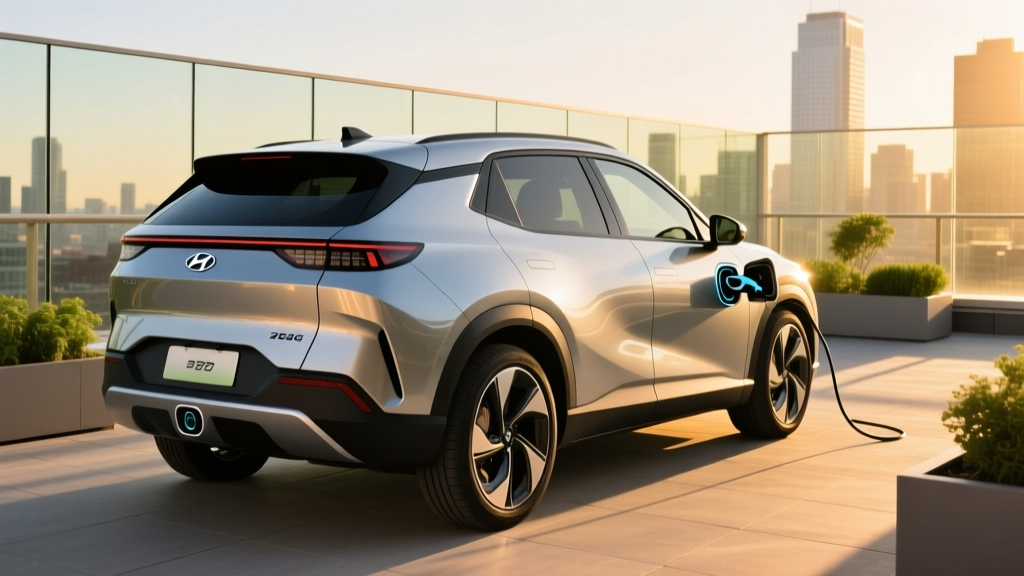
Hyundai has confirmed it is developing an extended-range electric vehicle (EREV) for the North American market, targeting buyers who want electric driving without range anxiety. Unlike a plug-in hybrid (PHEV), where the gas engine can directly drive the wheels, an EREV uses its gasoline engine solely as a generator to recharge the battery. The wheels are always driven by the electric motor.
Think of it as an EV that carries its own portable power plant. The concept echoes the Chevrolet Volt and the BMW i3 REx, but with modern battery chemistry, larger usable capacity, and far more electric-only range. Hyundai's EREV platform is expected to debut in a midsize SUV body style, potentially wearing the Tucson nameplate or launching as a new standalone model, with sales projected for the 2027 model year.
This preview covers what we know from Hyundai's announcements, industry reporting, and comparable EREV/PHEV platforms — and flags clearly where specs remain preliminary.
BEV (Battery Electric): 100% electric, no gas. Example: Hyundai Ioniq 5.
PHEV (Plug-In Hybrid): Gas engine + electric motor, both can drive wheels. Example: Hyundai Tucson PHEV (33 mi electric-only).
EREV (Extended-Range EV): Electric motor drives wheels at all times; gas engine only generates electricity. Example: upcoming Hyundai EREV, current BMW iX1 eDrive20 range extender variants.
Expected Range, Battery, and Powertrain Specs
Hyundai has not published final specifications, but based on the company's EREV patent filings, statements at the 2024 CEO Investor Day, and benchmarking against competitors like the Mazda MX-30 REx and range-extended commercial vans, here is what we expect:
| Specification | Expected / Target | Notes |
|---|---|---|
| Electric-Only Range (EPA est.) | 70–100 miles | Significantly more than current PHEVs |
| Total Range (battery + generator) | 400–500+ miles | Combined with ~12-gal fuel tank |
| Battery Capacity | ~30–40 kWh usable | Likely NMC chemistry for energy density |
| Range Extender Engine | 1.5L turbo 4-cyl generator | Not connected to wheels; optimized RPM |
| Electric Motor Output | ~200–250 hp (FWD); ~300 hp (AWD) | Single or dual motor configurations |
| 0–60 mph (est.) | 6.5–7.5 sec (FWD) | Instant electric torque advantage |
| Drivetrain | FWD standard, AWD available | Rear motor for AWD variants |
If Hyundai hits the 80–100 mile EPA electric-only target, expect ~60–75 miles of real-world highway electric range at 70 mph, and roughly 50–60 miles in cold weather (below 30°F) due to cabin heating demands and reduced battery efficiency. The gasoline generator would extend total range to 400+ miles, but fuel economy in generator mode will likely land around 30–35 MPG combined — respectable, but not as efficient as a dedicated hybrid like the Tucson HEV (38 MPG combined).
The sweet spot: daily commutes under 60 miles run entirely on electricity. Road trips use the generator seamlessly, with no plug required.
Charging Speed: DC Fast, Level 2, and Level 1
Because the EREV carries a smaller battery than a full BEV, charging times are inherently shorter. This is one of the platform's practical advantages — you don't need a 350 kW ultra-fast charger to top up quickly.
| Charging Level | Power (kW) | Speed | 0–100% Time |
|---|---|---|---|
| Level 1 (120V outlet) | ~1.4 kW | ~5 mi/hr electric range | ~24 hours (full) |
| Level 2 (240V home) | ~7.2–11 kW | ~25–38 mi/hr | ~3–4.5 hours (full) |
| DC Fast Charge | ~100–150 kW peak | N/A (small battery) | 10–80% in ~20–25 min |
Key insight: A 35 kWh battery charging at 7.2 kW (a common home Level 2 setup) fills from empty in under 5 hours. Most EREV owners will plug in overnight and wake up to a full battery every morning — the generator exists as a safety net, not a daily necessity.
On DC fast chargers, the smaller battery means the 10–80% session is quick in absolute time, but peak charge rates will likely be capped lower than Hyundai's BEVs (the Ioniq 5 peaks at 240 kW). Expect a charge curve that tapers above 80% SoC, as is standard for all lithium-ion packs. For daily use, Level 2 home charging will handle nearly all needs.
Pricing, Trims, and Federal Tax Credit Eligibility
Hyundai has not announced MSRP, but we can project based on the current Tucson lineup and the cost premium of EREV powertrains over conventional hybrids:
| Trim (Projected) | Est. MSRP | After Max §30D Credit | Credit Eligible? |
|---|---|---|---|
| SE (base FWD) | ~$36,000–$38,000 | ~$28,500–$30,500 | Likely (under $80k MSRP cap) |
| SEL (mid AWD) | ~$40,000–$43,000 | ~$32,500–$35,500 | Likely |
| Limited (top AWD) | ~$46,000–$50,000 | ~$38,500–$42,500 | Likely |
Federal tax credit (§30D) considerations for the Hyundai EREV:
- MSRP cap: SUVs must be under $80,000 — all projected EREV trims clear this easily.
- Buyer income cap: Modified AGI must not exceed $150,000 (single) / $300,000 (joint). Check IRS guidelines for current-year limits.
- Battery sourcing: The §30D credit is split into two halves — $3,750 for critical minerals and $3,750 for battery component assembly, both with escalating domestic-content requirements through 2026–2027. Hyundai's U.S. battery partnerships (including the Metaplant in Georgia) position it well, but final credit amounts depend on the specific model year's sourcing rules.
- Point-of-sale transfer: As of 2024+, buyers can transfer the credit to the dealer for an immediate price reduction at purchase, rather than waiting to claim it on their tax return.
- EREV classification: The IRS treats qualifying EREVs the same as PHEVs/BEVs under §30D, provided they meet the 4 kWh minimum battery and plug-in requirements. Hyundai's 30+ kWh pack clears this easily.
Note: Tax credit rules change frequently. Consult a tax professional and verify current IRS §30D eligibility before purchasing.
Efficiency: MPGe and Operating Costs
In electric-only mode, a Hyundai EREV with a ~35 kWh pack should achieve approximately 100–115 MPGe combined (roughly 29–33 kWh/100 miles), based on comparable vehicles and Hyundai's efficient e-GMP-derived motors.
Once the gasoline generator activates, efficiency drops to a conventional 30–35 MPG combined, because the engine must generate electricity, which the motor then converts to motion — an extra energy-conversion step that pure hybrids avoid by driving the wheels mechanically at highway speeds.
Cost-per-mile comparison (estimates):
- Electric-only (home charging at $0.14/kWh): ~$0.04–0.05/mile
- Generator mode ($3.50/gal gas, 32 MPG): ~$0.11/mile
- Gas-only Tucson (30 MPG combined): ~$0.12/mile
- Tucson PHEV (blended): ~$0.07–0.09/mile
The EREV's economics shine when most miles are electric. A commuter driving 40 miles round-trip could go months without buying gas, while retaining the freedom to drive 500 miles without stopping to charge.
Interior, Cargo, and Technology
Based on Hyundai's current midsize SUV architecture, the EREV is expected to offer:
- Cargo volume: ~34–38 cu ft behind rear seats; ~70–75 cu ft with seats folded (slightly reduced vs. BEV due to generator and fuel tank packaging)
- Passenger space: ~41 inches front legroom, ~38 inches rear legroom (midsize SUV class standard)
- Infotainment: 12.3-inch dual curved displays, wireless Apple CarPlay/Android Auto, OTA updates
- Driver assistance: Hyundai SmartSense suite — adaptive cruise with stop-and-go, lane-keeping, highway driving assist (SAE Level 2), blind-spot view monitor, remote smart parking assist
- Unique EREV features: Real-time energy-flow display showing battery/generator split, generator-on-demand button for mountain/highway pre-charging, charge-scheduling for off-peak electricity rates
- V2L (Vehicle-to-Load): Likely included, allowing the EREV to power external devices (camping gear, tools, emergency home backup) at up to 3.6 kW
- Generator noise: When the range extender activates under heavy acceleration or low battery, the engine drone can be noticeable — especially compared to the silence of pure EV mode. Modern EREVs insulate this well, but it's not invisible.
- Two systems to maintain: You have both an electric powertrain AND a gasoline engine requiring oil changes, spark plugs, and emissions service — unlike a pure BEV.
- Less efficient than a BEV on road trips: The generator mode adds a conversion step; a Tucson Hybrid may actually achieve better highway MPG than the EREV in generator-only mode.
- Frunk unlikely: The gasoline engine occupies the front compartment, eliminating the front trunk found on BEVs like the Ioniq 5.
How the Hyundai EREV Compares to Competitors
The EREV occupies a narrow but growing segment. Here's how it stacks up against the closest alternatives:
| Vehicle | Electric Range | Total Range | Est. Price | Powertrain |
|---|---|---|---|---|
| Hyundai EREV (projected) | 70–100 mi | 400–500+ mi | ~$36k–$50k | EREV |
| Hyundai Tucson PHEV | 33 mi | ~400 mi | $38k–$45k | PHEV |
| Toyota RAV4 Prime | 42 mi | ~600 mi | $44k–$48k | PHEV |
| Hyundai Ioniq 5 (BEV) | 303 mi | 303 mi | $42k–$58k | BEV |
| Ford Maverick Hybrid | 0 mi | ~500+ mi | $28k–$38k | HEV |
The EREV's key differentiator is electric-only range 2–3× that of current PHEVs, meaning most daily driving is zero-emission, while the generator eliminates range anxiety for long trips. It trades the RAV4 Prime's proven reliability and 42-mile electric range for potentially double the battery-only miles — at a likely lower starting price.
Who Should Buy the Hyundai EREV?
- Your daily commute is 30–80 miles and you can charge at home overnight
- You take road trips 3–6 times per year and don't want to plan around DC fast chargers
- You live in an area with sparse public charging infrastructure
- You want EV driving feel (instant torque, one-pedal regen) without range limitations
- You want to reduce fuel costs dramatically without going full BEV
❌ Look elsewhere if:
- You can't charge at home (the EREV's value proposition collapses without regular plug-in)
- You want zero maintenance — a BEV has no engine, no oil changes, no emissions system
- You drive 200+ miles daily — a long-range BEV or diesel may be more efficient
- You want maximum cargo space — the generator and fuel tank reduce packaging vs. a BEV
Warranty and Long-Term Ownership
Hyundai's warranty coverage is among the best in the industry, and the EREV should inherit the brand's standard protection:
- Battery warranty: 10 years / 100,000 miles (capacity retention threshold expected at 70% of original, consistent with Hyundai's current EV/PHEV warranty terms)
- Powertrain warranty: 10 years / 100,000 miles (covers electric motor, generator, and transmission)
- New vehicle limited: 5 years / 60,000 miles
- Roadside assistance: 5 years / unlimited miles
The 10-year battery warranty is a significant confidence signal. For an EREV, the battery undergoes shallower daily cycles (35 kWh vs. 77+ kWh in a BEV), which typically translates to slower degradation over time. Expect 85–90% state of health (SoH) after 5 years of normal use, based on Hyundai's NMC pack track record in the Ioniq 5 and Tucson PHEV.
Frequently Asked Questions
What is the real-world electric range of the Hyundai EREV?
Based on projected specs, expect 60–80 miles of real-world electric range in mixed driving, dropping to 50–60 miles on the highway at 70 mph or in sub-freezing temperatures. The EPA sticker may read 80–100 miles, but real-world conditions — especially cold weather, high speeds, and elevation changes — reduce usable range by 15–30%.
How fast does the Hyundai EREV charge at home and on DC fast chargers?
On a 240V Level 2 home charger (7.2–11 kW), the ~35 kWh battery fills from empty in approximately 3–4.5 hours. On a DC fast charger, expect 10–80% in roughly 20–25 minutes at a peak rate of 100–150 kW. The smaller battery means absolute charge times are short, even without ultra-fast 350 kW infrastructure.
Does the Hyundai EREV qualify for the $7,500 federal EV tax credit?
It is expected to qualify for at least a partial credit ($3,750–$7,500), depending on battery sourcing requirements in effect at the time of purchase. The MSRP will fall well under the $80,000 SUV cap. Buyer income limits ($150k single / $300k joint MAGI) apply. Verify current eligibility at IRS.gov before purchasing.
Is the Hyundai EREV worth buying over a Tucson PHEV or Ioniq 5?
It depends on your driving pattern. If your commute is under 40 miles and you road-trip frequently, the EREV offers the best of both worlds — more electric range than the Tucson PHEV (33 mi) and no range anxiety vs. the Ioniq 5 (303 mi BEV). If you can always charge and rarely drive over 250 miles, the Ioniq 5 BEV is simpler, cheaper to maintain, and more efficient. If you can't charge at home, the Tucson HEV (38 MPG, no plug needed) may be smarter.
What are the biggest pros and cons of the Hyundai EREV?
Pros: 2–3× the electric range of current PHEVs; no range anxiety on road trips; EV driving feel; qualifies for tax credits; 10-year battery warranty; V2L capability.
Cons: Two powertrains to maintain; generator noise under load; less highway-efficient than a dedicated hybrid; no frunk; slightly reduced cargo space vs. BEV variants.
When will the Hyundai EREV be available to buy?
Hyundai has confirmed EREV development but has not announced a specific on-sale date. Industry projections point to a late-2026 reveal with 2027 model-year availability. All specs in this article are preliminary and subject to change. We will update this page when final EPA figures and pricing are published.