The Short Answer
Hyundai has transformed nearly every major electric vehicle concept from the past five years into a production car you can buy today. The Hyundai Ioniq 5 (from the 45 Concept), Ioniq 6 (from the Prophecy Concept), and Ioniq 9 (from the Seven Concept) are all on sale for the 2026 model year. The Ioniq 5 N performance variant traces its DNA to the RN22e rolling concept. The next frontier: the Concept Inster and NPX1 accessories concept hint at an affordable compact EV and a rugged off-road Ioniq variant, both expected by 2027. If you're shopping now, the Ioniq 5 remains the best all-around value starting at $42,600 MSRP, with up to 361 miles of EPA range and 240 kW peak DC fast charging.
From Auto Show Floor to Your Driveway: Hyundai's Concept-to-Production Pipeline
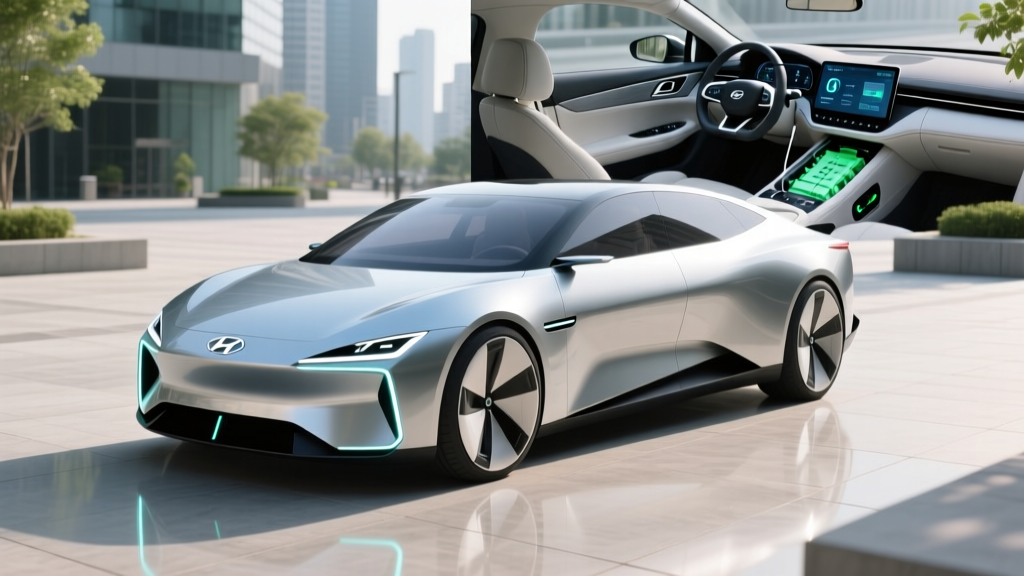
Hyundai has been unusually disciplined about turning show-car fantasy into showroom reality. Unlike some automakers whose concepts languish for a decade, Hyundai's E-GMP (Electric Global Modular Platform) has allowed rapid production translation. Here's the lineage:
- 45 Concept (2019) → Ioniq 5 (2022–present): The pixel-light, wedge-shaped crossover that defined Hyundai's EV design language.
- Prophecy Concept (2020) → Ioniq 6 (2023–present): The low-drag sedan with a 0.21 Cd coefficient, yielding class-leading highway efficiency.
- Seven Concept (2021) → Ioniq 9 (2025–present): The three-row family hauler with lounge-style seating concepts carried into production.
- RN22e (2022) → Ioniq 5 N (2024–present): The track-capable performance EV with simulated gear shifts and 641 hp.
- NPX1 Concept (2023) → Expected Ioniq 5 off-road variant: Aggressive cladding, roof rack, and rally-inspired lighting preview a production trim likely arriving 2027.
The consistency matters for buyers: when Hyundai shows a concept now, there's a strong probability the production version arrives within 24–36 months with specs close to what was announced.
The 2026 Hyundai EV Lineup: Production Specs That Replaced the Concepts
| Model | Battery (kWh) | Chemistry | EPA Range | Peak DC Charge | 10–80% Time | 0–60 mph | HP | Base MSRP |
|---|---|---|---|---|---|---|---|---|
| Ioniq 5 SE Std Range | 58 usable | NMC | 245 mi | 150 kW | ~22 min | 7.4s | 168 | $42,600 |
| Ioniq 5 SEL Long Range RWD | 77.4 usable | NMC | 318 mi | 240 kW | ~18 min | 7.1s | 225 | $47,850 |
| Ioniq 5 Limited AWD | 77.4 usable | NMC | 290 mi | 240 kW | ~18 min | 4.5s | 320 | $54,200 |
| Ioniq 5 N | 84 usable | NMC | 221 mi | 350 kW | ~18 min | 3.25s | 641 | $67,500 |
| Ioniq 6 SE Long Range RWD | 77.4 usable | NMC | 361 mi | 240 kW | ~18 min | 7.1s | 225 | $43,500 |
| Ioniq 6 Limited AWD | 77.4 usable | NMC | 316 mi | 240 kW | ~18 min | 5.1s | 320 | $52,950 |
| Ioniq 9 SE Standard Range | 84 usable | NMC | 280 mi | 240 kW | ~20 min | 7.5s | 215 | $54,000 |
| Ioniq 9 Limited AWD | 110.3 usable | NMC | 335 mi | 350 kW | ~24 min | 5.8s | 378 | $66,500 |
Real-World Range Reality Check
EPA estimates assume moderate temperatures and mixed driving. In practice: expect ~15–25% range reduction on sustained highway driving above 70 mph, and ~20–35% loss in sub-freezing temperatures depending on cabin heat usage. The Ioniq 6's exceptional 0.21 Cd drag coefficient makes it one of the least affected by highway speeds — real-world highway range holds closer to EPA than the boxier Ioniq 5 or Ioniq 9. All Hyundai EVs use a heat pump (standard on Long Range trims, optional on Standard Range), which significantly reduces cold-weather cabin-heating energy draw.
EV vs. Gas vs. Hybrid: How Hyundai's EVs Stack Up on Cost
The decision between the Ioniq 5, the Tucson Hybrid, and a comparable gas crossover hinges on your driving pattern and charging access. Here's a concrete five-year comparison using the Ioniq 5 SEL LR RWD ($47,850 MSRP) versus the Tucson Hybrid Limited ($39,750 MSRP) and the Tucson Gas Limited ($38,250 MSRP), assuming 12,000 miles/year, $3.50/gal gas, and $0.14/kWh home electricity:
| Cost Category (5 Years) | Ioniq 5 SEL LR RWD | Tucson Hybrid Limited | Tucson Gas Limited |
|---|---|---|---|
| Purchase Price (MSRP) | $47,850 | $39,750 | $38,250 |
| Est. Federal Tax Credit (§30D) | –$7,500* | $0 | $0 |
| Effective Purchase | $40,350 | $39,750 | $38,250 |
| Fuel / Electricity (5 yr) | $4,200 | $7,350 | $10,500 |
| Maintenance (5 yr) | $1,500 | $3,200 | $3,800 |
| Insurance (5 yr, avg) | $9,500 | $7,800 | $7,400 |
| 5-Year Total Cost | $55,550 | $58,100 | $59,950 |
*The §30D federal tax credit of up to $7,500 is subject to buyer income caps ($150K single / $300K joint), MSRP caps ($55K for SUVs), and battery critical-mineral sourcing requirements. The credit can now be transferred to the dealer at point of sale as an instant discount. Verify current eligibility at irs.gov before purchase. Hyundai's US-built Ioniq 5 (Savannah, GA plant) has maintained strong sourcing compliance, but rules tighten annually.
Charging at Home and on the Road: What Hyundai EV Owners Actually Experience
Hyundai's 800V architecture (shared across all E-GMP vehicles) is the platform's defining advantage. While most competitors use 400V systems that peak around 150–175 kW on DC fast chargers, Hyundai's 800V system sustains higher charge rates longer before tapering. Here's what that means in practice:
| Charging Level | Power (kW) | Miles Added per Hour | Typical Use Case | Cost per Full Charge |
|---|---|---|---|---|
| Level 1 (120V household) | 1.4 kW | ~4–5 mi/hr | Overnight top-up, low-mileage drivers | $3–$5 (home) |
| Level 2 (240V home charger) | 7.2–11.5 kW | ~25–40 mi/hr | Daily home charging, 7–10 hr full charge | $5–$11 (home) |
| DC Fast (150 kW station) | 150 kW peak | ~500+ mi/hr | Road trips, 10–80% in ~22 min | $12–$25 (public) |
| DC Fast (350 kW station) | 240–350 kW peak | ~800+ mi/hr | Ioniq 5/6 at Electrify America, 10–80% in ~18 min | $12–$25 (public) |
Home Charging Installation: The Real Costs
Most Hyundai EV buyers install a Level 2 home charger. Budget realistically:
| Item | Cost Range |
|---|---|
| Level 2 charger hardware (e.g., ChargePoint Home Flex, Emporia Vue) | $350–$700 |
| Electrician: 240V/50A circuit run (within 20 ft of panel) | $600–$1,200 |
| Electrician: longer run or conduit work (20–60 ft) | $1,200–$2,500 |
| Electrical panel upgrade (if 100A service needs 200A) | $1,500–$3,500 |
| Permit and inspection | $50–$250 |
| Total (typical install, no panel upgrade) | $1,000–$2,200 |
| Total (with panel upgrade) | $2,500–$5,500 |
Hyundai includes two years of complimentary 30-minute DC fast charging sessions at Electrify America with new Ioniq purchases — a meaningful offset for early ownership road trips. After that, expect to pay $0.31–$0.48/kWh at public DC stations depending on location and time of day.
Common Misconceptions About Hyundai's EVs
| Myth | Fact |
|---|---|
| "Hyundai EV batteries degrade quickly and cost $20K to replace." | Hyundai's battery warranty covers 10 years / 100,000 miles with a capacity retention threshold of 70%. Independent fleet data shows E-GMP batteries losing approximately 5–8% capacity over 100,000 miles under normal use. Full pack replacement (rarely needed) runs $12,000–$18,000 depending on model. |
| "You can't road-trip an EV — charging takes too long." | At a 350 kW Electrify America station, the Ioniq 5 adds ~180 miles in 18 minutes (10–80%). That's a restroom break and coffee. The constraint isn't charge speed — it's station availability in rural corridors. Plan routes using A Better Routeplanner or the car's built-in navigation with preconditioning. |
| "The Ioniq 5 N's 221-mile range makes it impractical." | The 5 N is a track-first performance car, not a commuter. Its 84 kWh battery and 350 kW charge capability mean quick pit stops. For daily driving, most owners charge to 80% (~177 miles) overnight, which covers any commute. Buy the 5 N as a second car or accept the range trade-off for 641 hp. |
| "Hyundai concepts never make it to production faithfully." | The Ioniq 5 retained over 90% of the 45 Concept's design language. The Ioniq 6's silhouette is nearly identical to the Prophecy. Hyundai's E-GMP platform enables high-fidelity concept translation because the skateboard architecture doesn't require packaging compromises. |
| "EV insurance is unaffordable." | EV insurance premiums run 15–25% higher than equivalent gas cars due to repair costs and battery replacement risk. However, the gap is narrowing. Shop quotes from GEICO, Progressive, and EV-specialty insurers like Plug In America partners. The Ioniq 5 typically insures for $150–$200/month depending on profile. |
Decision Framework: Which Hyundai EV (or Alternative) Is Right for You?
Choose the Ioniq 5 if:
- You want the best balance of range (318 mi EPA), charge speed (240 kW), cargo space (27.2 cu ft), and price ($47,850 SEL LR).
- You need crossover ground clearance and available AWD for snow-belt climates.
- You value V2L (vehicle-to-load) capability to power devices or appliances from the car's battery.
Choose the Ioniq 6 if:
- Highway efficiency is your priority — 361 mi EPA range with the lowest drag coefficient in the segment.
- You don't need SUV cargo height and prefer a sedan's driving dynamics.
- Your commute is highway-heavy, where the Ioniq 6's aero advantage yields 5–10% better real-world range than the Ioniq 5.
Choose the Ioniq 9 if:
- You need three rows and six or seven seats — no other Hyundai EV offers this.
- You're replacing a minivan or large SUV and want zero tailpipe emissions for school runs and family trips.
- You can accommodate the $54,000+ starting price and higher insurance premiums.
Choose the Tucson PHEV instead if:
- You lack reliable home charging access (apartment, street parking, no 240V circuit option).
- You regularly drive 300+ miles through rural areas with sparse DC charging infrastructure.
- Your budget is under $38,000 and you still want electrified efficiency (33 mi electric-only + 35 mpg combined after battery depletion).
Wait for the next concept-to-production EV if:
- You want LFP battery chemistry (Hyundai hasn't announced LFP for US models yet — LFP offers longer cycle life and lower cost but ~15% less energy density).
- You're hoping for a sub-$30,000 Hyundai EV (the Inster/Concept Inster may fill this slot by 2027, but US availability is unconfirmed).
Battery Longevity, Warranty, and What Happens After Year 10
Hyundai's high-voltage battery warranty covers 10 years or 100,000 miles (whichever comes first) against capacity loss below 70% of original. This is among the strongest in the industry, matching Kia and exceeding most competitors' 8-year / 100,000-mile terms.
All current Hyundai EVs use NMC (nickel-manganese-cobalt) lithium-ion chemistry. NMC offers higher energy density than LFP, enabling the Ioniq 5's 318-mile range in a relatively compact pack. The trade-off: NMC cells degrade slightly faster than LFP under extreme conditions (frequent 100% charges, sustained high-temperature storage). For maximum longevity:
- Charge to 80% for daily use; reserve 100% for road trips.
- Use the car's scheduled charging feature to avoid sitting at high SoC in hot weather.
- Precondition the battery before DC fast charging (the car does this automatically when you navigate to a charger).
- Avoid repeated back-to-back DC fast charging sessions without cooldown — the liquid thermal management system handles this well, but it's unnecessary stress for daily routine.
If a battery does need replacement out of warranty, Hyundai's dealer network quotes typically range from $12,000 to $18,000 depending on pack size and model. Third-party refurbishment options are emerging but not yet widely available for E-GMP platforms. According to fueleconomy.gov, modern EV battery packs are lasting 200,000+ miles in fleet data before reaching 70% capacity — well beyond the warranty period for most owners.
Frequently Asked Questions
Does the Hyundai Ioniq 5 qualify for the $7,500 federal tax credit in 2026?
The Ioniq 5 is assembled at Hyundai's Metaplant in Savannah, Georgia, which has been a strong factor in maintaining §30D eligibility. However, the credit depends on battery critical-mineral sourcing percentages (which tighten each year), your personal income (must be under $150K single / $300K joint), and the vehicle's MSRP (must be under $55,000 for SUVs — the Ioniq 5 Limited AWD at $54,200 squeaks under, while the Ioniq 5 N at $67,500 does not qualify). The credit can be applied at point of sale as an instant price reduction. Always verify current eligibility at irs.gov and with your dealer before signing.
How does the Hyundai Ioniq 5 compare to the Tesla Model Y on charging speed?
The Ioniq 5's 800V architecture peaks at 240 kW on compatible DC fast chargers, achieving 10–80% in approximately 18 minutes. The refreshed Model Y (2025+) peaks around 250 kW on Tesla Superchargers with a similar 10–80% time of roughly 18–20 minutes. The practical difference is infrastructure: Tesla's Supercharger network remains the most reliable and widespread in the US, though Hyundai's adoption of NACS (Tesla's connector) starting with 2025 models means Ioniq owners now access Superchargers directly with an adapter, and natively on 2026+ models.
What Hyundai electric vehicle concept is coming next?
The NPX1 concept (unveiled 2023) previews a rugged, off-road-oriented Ioniq 5 variant with reinforced cladding, all-terrain tires, and integrated roof lighting. Hyundai has not confirmed a production timeline, but industry analysis suggests a 2027 model-year arrival. The Concept Inster previews a subcompact, affordable EV potentially priced under $30,000, though US market availability remains unconfirmed. Hyundai's Initium hydrogen fuel cell concept signals continued FCEV investment, but the Tucson FCEV remains limited to California availability.
Can I charge a Hyundai EV at a Tesla Supercharger?
Yes. Hyundai began providing NACS adapters for existing CCS-equipped Ioniq models in late 2024, and 2026 model-year Hyundais ship with the native NACS port. This grants access to Tesla's 17,000+ Supercharger stalls nationwide — a significant infrastructure advantage. Charging speed on Superchargers (which are typically 150–250 kW) is comparable to Electrify America, though you won't always hit the Ioniq's full 240 kW peak on V3 Superchargers limited to 250 kW.
Is the Ioniq 5 a good first EV for someone switching from gas?
It's one of the strongest first-EV choices available. The 318-mile EPA range (Long Range RWD) eliminates range anxiety for most drivers. The 18-minute DC fast charging time makes road trips practical. The crossover form factor is familiar. And the available HDA2 (Highway Driving Assist 2) with lane-centering and adaptive cruise is a well-rated Level 2 system — note that this is driver-assist, not self-driving; you must keep your hands on the wheel and eyes on the road. The main adjustment for gas-car switchers: plan charging around your routine (home overnight charging is ideal) rather than treating it like a gas station stop.