Quick Answer: Hyundai's All-Electric Lineup at a Glance
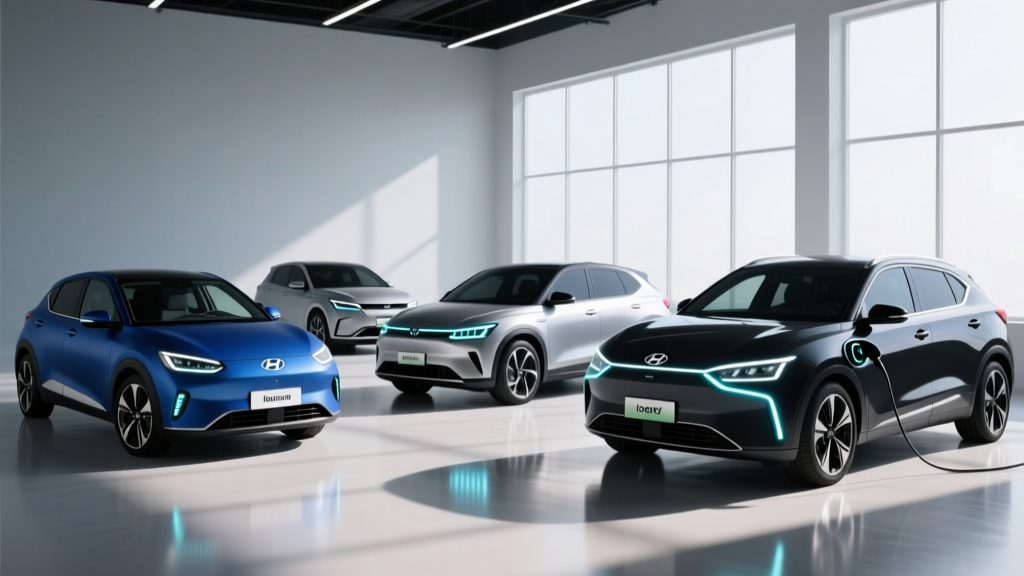
Hyundai currently sells three battery-electric vehicles (BEVs) in the U.S.: the Kona Electric (compact crossover, EPA 261 mi, starting ~$32,975), the Ioniq 5 (midsize crossover, EPA 303 mi, starting ~$42,600), and the Ioniq 6 (sedan, EPA 361 mi, starting ~$38,650). All three use Hyundai's E-GMP platform (Ioniq models) or adapted architecture (Kona), feature 800V-capable DC fast charging on the Ioniq models, and qualify for varying portions of the federal §30D tax credit depending on battery sourcing and your income. If you want the most range per dollar, the Ioniq 6 SE Long Range is the standout. If you need cargo space and the fastest charging, the Ioniq 5 wins. If budget is the priority, the Kona Electric is one of the cheapest new EVs available.
Hyundai All Electric Models: Spec-by-Spec Breakdown
Before we get into ownership economics, here are the hard numbers for each 2026 Hyundai BEV. Note: kWh measures battery energy capacity (how much "fuel" the tank holds); kW measures power flow (how fast you can fill that tank). These are not interchangeable.
| Spec | 2026 Kona Electric | 2026 Ioniq 5 (RWD Long Range) | 2026 Ioniq 6 (SE Long Range) |
|---|---|---|---|
| EPA Range | 261 mi | 303 mi | 361 mi |
| Battery (usable) | 65.4 kWh (NMC) | 77.4 kWh (NMC) | 77.4 kWh (NMC) |
| Architecture | 400V | 800V (E-GMP) | 800V (E-GMP) |
| Peak DC Fast Charge | ~100 kW | ~240 kW | ~240 kW |
| 10–80% DCFC Time | ~43 min | ~18 min | ~18 min |
| Level 2 (240V) Rate | ~10.9 kW | ~10.9 kW | ~10.9 kW |
| MPGe (combined) | 118 MPGe | 114 MPGe | 140 MPGe |
| Horsepower | 201 hp | 225 hp | 225 hp |
| 0–60 mph | ~7.4 sec | ~7.0 sec | ~6.2 sec |
| Cargo (behind 2nd row) | 25.5 cu ft | 27.2 cu ft | 12.3 cu ft (trunk) |
| Base MSRP | $32,975 | $42,600 | $38,650 |
| Battery Warranty | 10 yr / 100,000 mi | 10 yr / 100,000 mi | 10 yr / 100,000 mi |
Sources: EPA / fueleconomy.gov, Hyundai Newsroom
Real-World Range vs. EPA Stickers: What You'll Actually Get
EPA range is a laboratory estimate. Here's what to expect in real driving:
- Ioniq 6 SE LR (EPA 361 mi): Expect ~290–310 mi on mixed highway driving at 70 mph. In winter conditions (below 32°F), plan for 220–260 mi due to cabin heating and battery chemistry slowdown.
- Ioniq 5 RWD LR (EPA 303 mi): Expect ~250–270 mi highway. Cold-weather drops to ~200–230 mi. The boxier shape creates more drag than the Ioniq 6's teardrop profile.
- Kona Electric (EPA 261 mi): Expect ~220–235 mi highway. Cold weather: ~170–200 mi. Its 400V architecture also means slower DC charging on road trips.
The Ioniq 6's aerodynamic advantage (drag coefficient of 0.21) is the main reason it squeezes 58 more EPA miles from the identical 77.4 kWh battery that powers the Ioniq 5. If your commute is mostly stop-and-go city driving, the gap narrows — regenerative braking recaptures energy that highway driving can't. But for road-trip-heavy owners, the Ioniq 6 delivers measurably more miles per charge.
Charging-curve reality check: Both Ioniq models peak at roughly 240 kW on a 350 kW DC fast charger — but only between ~10% and ~45% state of charge (SoC). Above 60%, the rate tapers to ~100–120 kW, and above 80% it drops below 50 kW. The published "18-minute 10–80%" time is accurate, but if you charge past 80%, expect the final 20% to add another 20–25 minutes. Plan your road-trip stops around 10–80% sprints.
Cost Breakdown: Hyundai EV vs. Gas Equivalent
The sticker price of an EV is higher, but the operating cost gap is substantial. Here's a five-year cost comparison between the Ioniq 5 (base SE, $42,600) and a comparably equipped Hyundai Tucson gas crossover (base SE, ~$30,500), assuming 12,000 miles/year, $3.50/gallon gas, and $0.14/kWh home electricity (national average).
| Cost Category (5 years / 60k mi) | Ioniq 5 SE ($42,600) | Tucson SE Gas ($30,500) |
|---|---|---|
| Purchase Price (before credit) | $42,600 | $30,500 |
| Est. Federal Tax Credit (§30D) | –$3,750 to –$7,500* | $0 |
| Fuel / Electricity | ~$2,520 (home charging) | ~$7,350 (28 MPG combined) |
| Maintenance (est.) | ~$1,200 | ~$3,200 |
| Insurance (est. average) | ~$9,600 | ~$7,800 |
| Net 5-Year Cost (approx.) | ~$52,220 – $48,470 | ~$48,850 |
*§30D credit eligibility depends on battery critical-mineral sourcing, buyer income caps ($150k single / $300k joint AGI), and MSRP limits ($80k for SUVs). Credit amounts for Hyundai models vary by model year and sourcing changes. Verify current eligibility at IRS.gov or transfer the credit at point of sale through a registered dealer.
Key takeaway: The Ioniq 5 closes the cost gap significantly when you factor in fuel and maintenance savings — and if you qualify for the full $7,500 credit applied at point of sale, the five-year cost is nearly identical to the Tucson. EV insurance premiums run 15–25% higher on average due to repair complexity and battery replacement costs, which partially offsets fuel savings.
Charging at Home vs. Public Networks: The Ownership Reality
Hyundai's all-electric models are most practical when paired with home Level 2 charging. Here's the hierarchy:
| Charging Level | Power (kW) | Miles Added per Hour | Use Case |
|---|---|---|---|
| Level 1 (120V outlet) | ~1.4 kW | ~4–5 mi/hr | Overnight top-up if daily driving <30 mi |
| Level 2 (240V, 48A) | ~10.9 kW | ~35–40 mi/hr | Daily home charging; full charge in 7–8 hours |
| DC Fast (Ioniq, 800V) | Up to 240 kW | ~800+ mi/hr (peak) | Road trips; 10–80% in ~18 min |
| DC Fast (Kona, 400V) | Up to ~100 kW | ~350 mi/hr (peak) | Road trips; 10–80% in ~43 min |
Home charging installation: A Level 2 hardwired charger (like the Hyundai-recommended ChargePoint Home Flex or Emporia Vue) costs $500–$700 for the unit. Professional electrician installation runs $800–$2,500 depending on panel proximity, conduit length, and whether your electrical panel needs a 200A upgrade ($1,500–$3,500 additional). Total typical investment: $1,300–$3,200 for a standard install, up to $5,000+ if a panel upgrade is needed.
If you live in an apartment or lack garage access, public charging becomes your primary source. Electrify America, EVgo, and ChargePoint networks cover most metro areas, but pricing runs $0.35–$0.55/kWh at DC fast chargers — roughly 2.5–4× the cost of home electricity. This erodes the fuel-cost advantage significantly. If you can't charge at home or at work, a Hyundai hybrid (like the Tucson Hybrid or Ioniq PHEV) may be a more practical choice.
Federal Tax Credit Eligibility for Hyundai EVs
§30D Clean Vehicle Credit — Current Requirements:
- Buyer income cap: Modified AGI ≤ $150,000 (single) or ≤ $300,000 (married filing jointly)
- MSRP cap: ≤ $80,000 for SUVs/vans/pickups (Ioniq 5, Kona Electric); ≤ $55,000 for sedans (Ioniq 6)
- Battery sourcing: Critical minerals and battery components must meet phased-in percentage thresholds from U.S. or FTA-partner countries. This determines whether you receive $3,750 (minerals only), $3,750 (components only), or the full $7,500 (both).
- Point-of-sale transfer: You can transfer the credit to the dealer at purchase, reducing your out-of-pocket cost immediately rather than waiting for tax filing.
- Assembly: Vehicle must undergo final assembly in North America. All three Hyundai BEVs sold in the U.S. qualify (Ioniq 5 and Ioniq 6 are assembled in Georgia; Kona Electric assembly varies by model year).
Rules are subject to change. Confirm current eligibility at IRS.gov and consult a tax professional for your specific situation.
Common Misconceptions About Hyundai EVs — Addressed
| Myth | Fact |
|---|---|
| "EV batteries need replacing every 5 years." | Hyundai warranties the battery for 10 years/100,000 miles with a 70% capacity retention threshold. Real-world degradation data from E-GMP vehicles shows ~5–8% loss over the first 100k miles — well within warranty. |
| "The Ioniq 5 charges at 240 kW the whole time." | Peak 240 kW occurs only between ~10–45% SoC on a 350 kW-rated charger. The average rate across a 10–80% session is closer to ~150–170 kW. Charging past 80% slows dramatically to protect cell health. |
| "Hyundais don't qualify for the tax credit because they're Korean." | Since Hyundai opened its Metaplant in Ellabell, Georgia, the Ioniq 5 and Ioniq 6 undergo final assembly in the U.S. and meet North American assembly requirements. Battery-sourcing rules determine the dollar amount. |
| "I need a special charger at home." | Any J1772-compatible Level 2 charger (or NACS adapter, depending on model year) works. Hyundai doesn't lock you into proprietary hardware. The Ioniq models use CCS1 connectors for DC fast charging; some 2025+ models may include NACS ports for native Tesla Supercharger access. |
| "EVs cost more to insure, so savings disappear." | Insurance is 15–25% higher on average, but fuel savings of ~$960/year and maintenance savings of ~$400/year typically offset the insurance premium gap (~$300–$500/year extra). |
Decision Framework: Which Hyundai All-Electric Model Is Right for You?
Choose the Kona Electric if:
- Your budget is under $35,000 (before incentives)
- Your daily commute is under 60 miles round-trip
- You rarely take road trips over 200 miles
- You want one of the lowest-priced new EVs on the market
Choose the Ioniq 5 if:
- You need cargo space (27.2 cu ft + available frunk) for family gear
- You want ultra-fast 800V DC charging for frequent road trips
- You prefer a crossover ride height and SUV styling
- You want available AWD (dual motor, 320 hp, EPA 260 mi)
Choose the Ioniq 6 if:
- Maximum range per charge is your top priority (361 mi EPA)
- Your driving is mostly highway commuting (aero advantage maximized)
- You don't need large cargo capacity (sedan trunk limits utility)
- You value efficiency (140 MPGe) over interior volume
Choose a Hyundai Hybrid (Tucson Hybrid / Santa Fe Hybrid) instead if:
- You cannot install a Level 2 charger at home and lack workplace charging
- You regularly drive in extreme cold (below 10°F) where range loss exceeds 30%
- You frequently tow (none of Hyundai's BEVs are rated for significant towing; the Tucson Hybrid tows up to 2,000 lbs)
- Your budget is firm below $30,000
What First-Time Hyundai EV Buyers Should Know
Preconditioning matters. Both Ioniq models can precondition the battery when you navigate to a DC fast charger via the built-in route planner. This warms the cells to optimal temperature and enables peak 240 kW charging. Without preconditioning — especially in cold weather — your first few minutes at the charger may be limited to 50–80 kW. Always use the nav-based preconditioning feature on road trips.
One-pedal driving is available but optional. Hyundai's i-Pedal mode (strongest regen setting) lets you drive without touching the brake pedal in most city conditions. You can also select regen levels 0–3 via steering-wheel paddles. Level 2 or 3 regen recaptures meaningful energy in stop-and-go traffic, adding 5–10% effective range in city driving.
The 12V battery is still a thing. Like all EVs, Hyundai's BEVs have a conventional 12V auxiliary battery that powers electronics, lights, and the contactor that connects the main traction battery. If the 12V dies, the car won't start — even with a full high-voltage battery. Hyundai includes a 12V battery reset button in most models, but keep jumper cables or a lithium jump-starter in the car.
Hyundai's ADAS is Level 2, not self-driving. Hyundai's Highway Driving Assist 2 (HDA2) and available Highway Driving Assist with lane-change support are SAE Level 2 systems — meaning you must keep your hands on the wheel and eyes on the road at all times. These are excellent adaptive cruise + lane-centering systems, but they do not handle construction zones, unmapped roads, or complex merges autonomously.
Frequently Asked Questions
Does Hyundai make a fully electric SUV with 300+ miles of range?
Not yet in SUV form. The Ioniq 5 tops out at 303 miles EPA (RWD Long Range). The 361-mile Ioniq 6 is a sedan. If you need 300+ miles in a crossover body, the closest Hyundai option is the Ioniq 5 at 303 miles. The upcoming Ioniq 7 (three-row SUV, announced) is expected to offer 300+ miles but is not yet on sale.
Can I charge a Hyundai EV at a Tesla Supercharger?
Hyundai has been transitioning to the NACS (North American Charging Standard) connector. Model-year 2025+ vehicles may ship with a native NACS port; older CCS-equipped models can use a Hyundai-provided or third-party CCS-to-NACS adapter. Verify your specific model year's connector at purchase. Tesla Supercharger access for non-Tesla EVs is expanding but remains limited to specific stations — check the Tesla app for availability.
How much does it cost to charge a Hyundai Ioniq 5 at home?
At the national average electricity rate of ~$0.14/kWh, fully charging the Ioniq 5's 77.4 kWh battery from 10% to 100% costs roughly $9.75. That's for ~270 real-world miles — equivalent to about $0.036/mile. Compare that to the Tucson gas SUV at ~$0.125/mile at $3.50/gallon and 28 MPG combined.
What happens if the battery degrades past 70%?
If your Hyundai's high-voltage battery drops below 70% of original capacity within the 10-year/100,000-mile warranty period, Hyundai will repair or replace the battery at no cost. In practice, E-GMP battery degradation has been modest — most owners report 92–95% capacity retention after 50,000 miles based on community data from owner forums and testing.
Is the Hyundai Kona Electric worth it over the Ioniq 5?
If budget is your primary constraint, yes. The Kona Electric starts ~$10,000 below the Ioniq 5 and is one of the most affordable new EVs available. You sacrifice ~40 miles of EPA range, significantly slower DC fast charging (43 min vs 18 min for 10–80%), and some interior space. For city commuters who charge at home and rarely road-trip, the Kona Electric is a strong value.
Always verify current pricing, tax credit eligibility, and specifications at HyundaiUSA.com and fueleconomy.gov before purchasing. Incentive rules and vehicle specs change by model year.