Quick Verdict: Can You Get the Hummer EV Tax Credit?
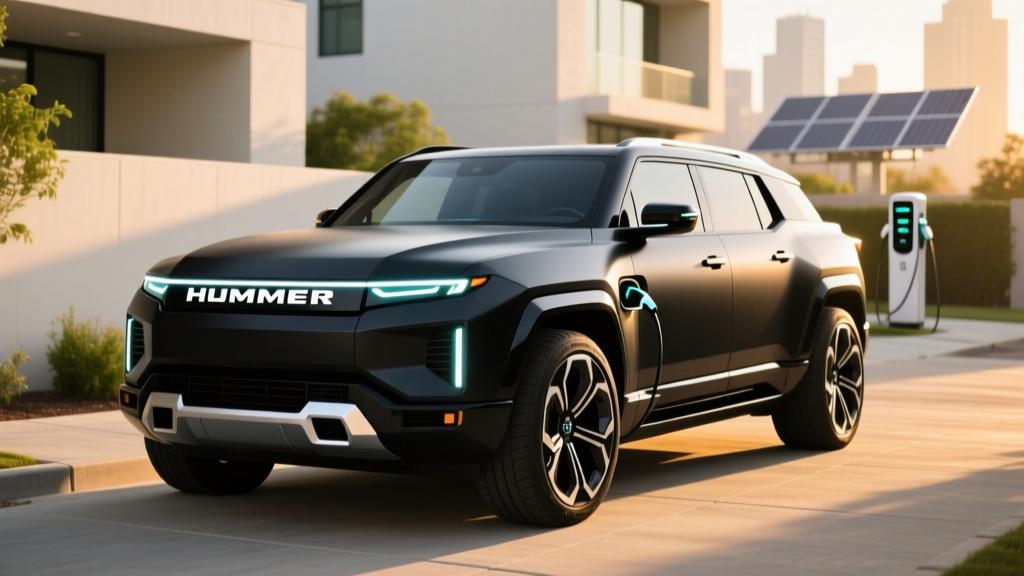
The GMC Hummer EV is one of the most capable electric trucks on the road, but whether you can claim the federal EV tax credit (IRS §30D) on a new 2026 model depends on three moving targets: your income, the vehicle's MSRP, and where its battery minerals and components are sourced. As of 2026, the Hummer EV Pickup's base MSRP starts around $98,545 (2X trim), which clears the §30D MSRP cap for trucks ($80,000). However, the Hummer EV SUV starts at approximately $108,895, also above the cap for SUVs. Let's unpack exactly what this means for your wallet and whether the Hummer EV's total cost of ownership justifies its premium price.
IRS §30D Federal Tax Credit Checklist (2026 Rules)
- Vehicle type: New BEV or PHEV with ≥4 kWh battery capacity
- MSRP cap: ≤$80,000 for vans/SUVs/pickups; ≤$55,000 for sedans
- Buyer income cap (AGI): ≤$300,000 joint filers; ≤$225,000 head of household; ≤$150,000 single
- Battery sourcing: Critical minerals and battery components must meet escalating domestic/free-trade-partner thresholds (tighter each year through 2032)
- Foreign entity of concern (FEOC): Vehicles with battery components or critical minerals from designated FEOCs are disqualified
- Point-of-sale transfer: You can transfer the credit to the dealer for an immediate price reduction (effective 2024+)
- Non-refundable: If you have no tax liability, you cannot use the credit (but point-of-sale transfer bypasses this)
Source: IRS §30D Clean Vehicle Credit. Rules subject to change — verify at purchase time.
Bottom line for the Hummer EV: The Pickup 2X at ~$98,545 and the SUV at ~$108,895 both exceed the §30D MSRP caps. This means neither the Hummer EV Pickup nor the SUV qualifies for the new-vehicle federal tax credit as of 2026. If GMC introduces a lower-priced trim or if MSRP caps are adjusted by legislation, this could change. Always verify with your dealer and a tax professional at the point of purchase.
2026 GMC Hummer EV: Key Specs at a Glance
| Spec | Hummer EV Pickup 2X | Hummer EV SUV 3X |
|---|---|---|
| EPA Range | ~350 miles (est.) | ~314 miles (est.) |
| Real-World Range (highway/cold) | ~280–310 miles | ~250–280 miles |
| Battery Capacity | ~212.7 kWh (usable), Ultium NMC | ~212.7 kWh (usable), Ultium NMC |
| Horsepower | 655 hp (dual motor) | 830 hp (tri-motor, 3X) |
| 0–60 mph | ~3.5 sec | ~3.0 sec (Watts to Freedom) |
| Peak DC Fast Charge | ~350 kW (800V architecture) | ~350 kW (800V architecture) |
| 10–80% DC Charge Time | ~12–15 min (est., at compatible station) | ~12–15 min (est.) |
| Level 2 Charge Rate | ~11.5 kW onboard charger | ~11.5 kW onboard charger |
| Base MSRP (2026) | ~$98,545 | ~$118,295 (3X) |
| §30D Federal Credit | Not eligible (above MSRP cap) | Not eligible (above MSRP cap) |
| Battery/Powertrain Warranty | 8 years / 100,000 miles | 8 years / 100,000 miles |
5-Year Total Cost of Ownership: Hummer EV vs. Gas Truck
To understand the Hummer EV's true financial picture, we need to model five years of ownership against a comparable gas truck — say, the GMC Sierra 1500 Denali (MSRP ~$72,000, 15 MPG combined). Here's a realistic breakdown assuming 12,000 miles/year, home charging at the national average electricity rate, and standard insurance.
| Cost Category | Hummer EV Pickup 2X (5 yr) | Sierra 1500 Denali (5 yr) |
|---|---|---|
| Purchase Price (MSRP) | $98,545 | $72,000 |
| Federal Tax Credit | $0 (MSRP exceeds cap) | $0 |
| Fuel/Energy (60,000 mi) | $5,400 (at $0.15/kWh, 2.0 mi/kWh) | $14,400 (at $3.60/gal, 15 MPG) |
| Maintenance (5 yr) | $2,500 | $5,500 |
| Insurance (5 yr) | $15,000 | $9,500 |
| Depreciation (est. 5 yr) | $42,000 (~43%) | $32,000 (~44%) |
| Total 5-Year Cost | $121,445 | $101,400 |
Key takeaway: The Hummer EV saves roughly $12,000 in fuel and maintenance over five years compared to the gas Sierra Denali. However, those savings are overwhelmed by a ~$26,500 higher purchase price and ~$5,500 higher insurance cost. Without the federal tax credit, the Hummer EV costs approximately $20,000 more to own over five years. This is a premium lifestyle and capability purchase, not a cost-savings play.
Charging vs. Gas: Cost Per Mile Breakdown
Hummer EV Charging Cost
- Energy consumption: ~2.0 miles per kWh (real-world, mixed driving; EPA efficiency ~47 MPGe for the SUV variant per fueleconomy.gov)
- Home charging (Level 2, national avg $0.15/kWh): $0.075 per mile
- Public DC fast charging (avg $0.40/kWh): $0.20 per mile
- Blended cost (80% home / 20% DCFC): ~$0.10 per mile
Sierra 1500 Denali Gas Cost
- Fuel economy: 15 MPG combined (real-world)
- Gas price (national avg): $3.60/gallon
- Cost per mile: $0.24
Annual savings at 12,000 miles: Gas costs ~$2,880/yr; Hummer EV (blended) costs ~$1,200/yr → ~$1,680/yr savings on energy alone.
That $1,680/year fuel savings is meaningful, but it takes over 15 years to close the ~$26,500 purchase-price gap. If you have access to free or cheap workplace/solar charging, your cost per mile could drop to $0.03–$0.05, which improves the math significantly.
Maintenance Savings: Where the EV Wins
| Maintenance Item | Hummer EV | Gas Truck (Sierra 1500) |
|---|---|---|
| Oil changes | None — $0 | $300–$500/yr (every 5,000–7,500 mi) |
| Transmission fluid | None (single-speed reduction gear) | $150–$250 every 30,000–60,000 mi |
| Brake pads/rotors | Every 80,000–100,000+ mi (regen braking saves wear) | Every 30,000–50,000 mi |
| Spark plugs | None | $200–$400 every 60,000–100,000 mi |
| Coolant | Every 5 years / 150,000 mi | Every 5 years / 100,000 mi |
| Air filters (engine) | None | $30–$50 every 15,000–30,000 mi |
| Cabin air filter | $30–$50 every 15,000–20,000 mi | $30–$50 every 15,000–20,000 mi |
| Tire rotation | $50–$100 every 5,000–7,500 mi (heavier vehicle = faster tire wear) | $50–$100 every 5,000–7,500 mi |
The Hummer EV eliminates most routine powertrain maintenance. However, two cost factors offset some savings:
- Tires: At 9,000+ lbs with massive torque, the Hummer EV wears tires faster than a gas truck. Replacement 35-inch all-terrain tires can cost $400–$600 each, and you may need them every 25,000–35,000 miles.
- Washer fluid and wipers: Identical costs to gas vehicles.
Net maintenance savings over 5 years: approximately $3,000, but tire costs partially erode that advantage.
Insurance Costs: The Uncomfortable Reality
EVs, and especially high-performance luxury EVs like the Hummer EV, cost more to insure. Expect to pay $2,800–$3,500/year for the Hummer EV Pickup, compared to roughly $1,800–$2,200/year for a gas Sierra 1500 Denali. That's a $600–$1,300/year premium.
Why the higher cost?
- Repair complexity: The Ultium battery pack, 800V electrical architecture, and advanced ADAS sensors (cameras, radar, ultrasonic) make collision repairs expensive. A minor fender-bender can total a sensor array.
- Higher replacement cost: A ~$100,000 vehicle costs more to replace than a ~$72,000 one.
- Specialized labor: High-voltage system repairs require certified EV technicians, which are still less common than general mechanics.
- Weight: At 9,000+ lbs, the Hummer EV causes more damage to other vehicles in a collision, increasing liability premiums.
Shop multiple insurers — some now offer EV-specific discounts (e.g., IIHS top safety pick discounts, home-charging discounts). Always get a quote before purchasing.
State, Local, and Utility Incentives
While the Hummer EV doesn't qualify for the federal §30D credit, you may still access other incentives depending on your location:
- State EV rebates: Some states offer point-of-sale rebates or tax credits regardless of MSRP. Check your state's energy or environmental agency. (Amounts and eligibility vary widely by jurisdiction — verify with official state sources.)
- Utility charging rebates: Many utilities offer $250–$1,500 rebates for Level 2 home charger installation, off-peak charging credits, or smart-thermostat bundling. Contact your local utility.
- HOV lane access: Several states grant EVs solo HOV lane access regardless of federal credit eligibility — a significant commute perk.
- Property/sales tax exemptions: A few jurisdictions exempt EVs from annual personal property tax or reduced registration fees.
- Commercial/fleet credits: If purchasing for a business, §45W (commercial clean vehicle credit) has different rules and may apply.
Always verify current incentive availability with official state and utility sources. Programs change frequently and may have funding caps.
Depreciation and Resale Value
EV depreciation has been volatile. After a sharp correction in 2023–2024 (driven by Tesla price cuts, new model influx, and battery tech evolution), luxury EV depreciation has stabilized somewhat but remains steeper than comparable gas trucks.
For the Hummer EV specifically:
- 5-year depreciation estimate: ~40–48% of MSRP (vs. ~40–45% for a Sierra 1500 Denali)
- Positive factors: Limited production volume, GMC brand loyalty, unique capability (CrabWalk, Extract Mode, adaptive air suspension) support residual value
- Risk factors: Battery degradation uncertainty at 200+ kWh, evolving EV tech making older models less desirable, potential battery replacement costs ($20,000–$35,000+ out of warranty for a pack this size)
The Hummer EV's Ultium battery warranty (8 years / 100,000 miles, with GM guaranteeing ≥70% capacity retention during that period) provides some buyer confidence. However, a truck this heavy puts significant cycle stress on its battery — monitoring State of Health (SoH) via the myGMC app is recommended.
Is the Hummer EV Worth the Premium? Decision Framework
Buy the Hummer EV if:
- You want a zero-tailpipe-emission truck with unmatched off-road tech (CrabWalk, Extract Mode, underbody armor)
- You can charge at home with Level 2 and have access to 350 kW DC fast chargers for road trips
- The $100,000+ price tag fits your budget without relying on tax credits
- You value instant 830 hp torque and 0–60 in ~3 seconds in a 9,000-lb truck
- You live in a state with additional EV perks (HOV access, utility rebates, registration savings)
Consider a gas or hybrid truck if:
- Total cost of ownership is your primary decision driver
- You regularly tow heavy loads long distances (towing halves EV range)
- You lack reliable home or workplace charging access
- You want maximum resale value predictability
- You need a truck under $80,000 to stay eligible for the federal tax credit
Frequently Asked Questions
Does the 2026 GMC Hummer EV qualify for the $7,500 federal tax credit?
No. As of 2026, the Hummer EV Pickup (starting ~$98,545) and SUV (starting ~$108,895) both exceed the IRS §30D MSRP cap of $80,000 for trucks/SUVs/vans. This makes them ineligible for the new clean vehicle credit regardless of your income or the battery's sourcing. Always confirm with your dealer and review the latest rules at IRS.gov.
Can I get the Hummer EV tax credit on a used model?
The §25E used clean vehicle credit offers up to $4,000 (or 30% of the sale price, whichever is less) on qualifying used EVs. However, the used Hummer EV's sale price would need to be ≤$25,000 for the full credit to apply — extremely unlikely given current resale values. This credit also has income caps ($150,000 joint / $75,000 single) and requires the vehicle to be at least 2 model years old.
How much does it cost to charge a Hummer EV at home?
The Hummer EV's ~212.7 kWh battery, charged from 10% to 90% (~170 kWh) at the national average of $0.15/kWh, costs roughly $25.50 per full charge session. At 2.0 miles/kWh, that gives you ~340 miles of range for about $25.50 — compared to ~$81.60 for the same range in a gas truck at 15 MPG and $3.60/gallon. However, charging a 212.7 kWh battery on Level 2 (11.5 kW) takes roughly 15+ hours from 10% to 90%, so overnight charging is essential.
How well does the Hummer EV hold its value?
Expect ~40–48% depreciation over 5 years. The Hummer EV's limited production run and unique capabilities provide some residual value support, but luxury EVs broadly depreciate faster than comparable gas trucks. The massive battery replacement cost (potentially $20,000–$35,000+ out of warranty) also weighs on long-term resale confidence.
Does the Hummer EV qualify for any incentives at all?
While the federal §30D new-vehicle credit is off the table, you may qualify for state rebates, utility charger-installation incentives, HOV lane access, and reduced registration fees depending on your jurisdiction. Commercial buyers may also explore the §45W commercial clean vehicle credit. Check with your state energy office and local utility for current programs.
What's the real-world range of the Hummer EV?
The Hummer EV Pickup estimates ~350 miles EPA, but expect ~280–310 miles in real-world mixed driving, and as low as ~240–260 miles in cold weather or sustained highway use. Towing can reduce range to ~175 miles or less. The SUV variant, with its shorter wheelbase and slightly lower efficiency, sees ~250–280 real-world miles.
How fast does the Hummer EV charge?
With its 800V architecture, the Hummer EV can accept up to ~350 kW peak DC fast charging at compatible stations, adding roughly 100 miles of range in ~10 minutes. A 10–80% charge takes an estimated 12–15 minutes under ideal conditions. However, few public chargers currently deliver a sustained 350 kW — expect real-world DCFC sessions to average 150–200 kW, pushing 10–80% closer to 18–22 minutes. Level 2 home charging at 11.5 kW takes ~18+ hours for a full charge of the 212.7 kWh pack.