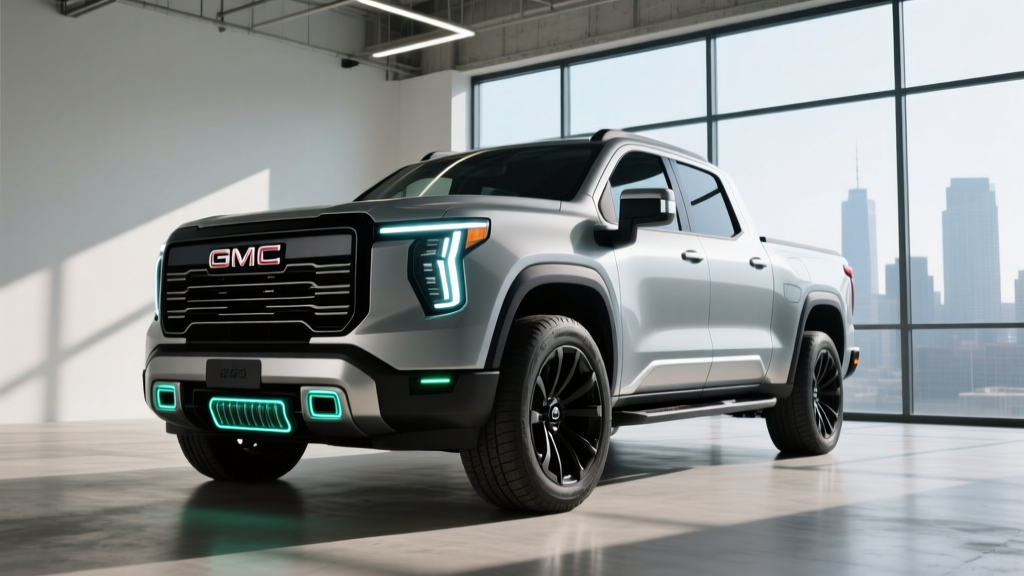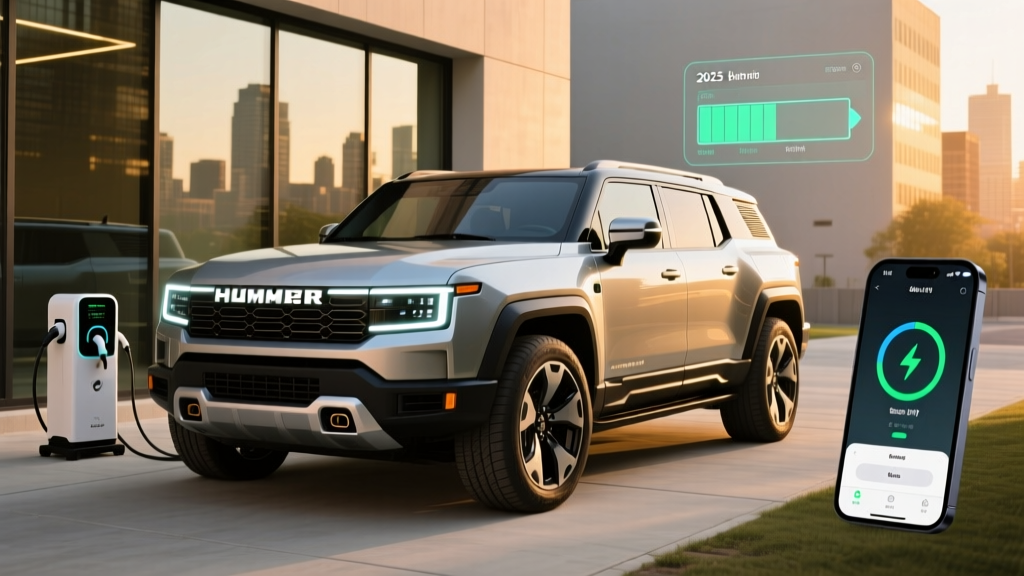
The GMC Hummer EV remains one of the most polarizing electric vehicles on the road — a 9,000-pound electric supertruck that defies conventional EV logic. As Hummer EV sales continue to draw attention from both enthusiasts and skeptics, prospective buyers face a unique calculus: does a battery-electric behemoth with 1,000+ horsepower and 300+ miles of range make practical sense, or is it purely a halo product? This review breaks down every number that matters for 2026 buyers.
The Hummer EV at a Glance: 2026 Pickup and SUV Specs
GMC offers the Hummer EV in two body styles — the Pickup (launched 2022) and the SUV (launched 2023). Both share the Ultium platform architecture but differ in battery size, range, and pricing. For the 2026 model year, GMC has streamlined trims around the 2X and 3X designations, with the limited-run Edition 1 production complete.
| Spec | Hummer EV Pickup 3X | Hummer EV SUV 3X | Hummer EV SUV 2X |
|---|---|---|---|
| EPA Range | 381 mi | 314 mi | 314 mi |
| Battery (usable) | ~246 kWh (NMC) | ~212 kWh (NMC) | ~170 kWh (NMC) |
| Drivetrain | Tri-motor AWD (Watts to Freedom) | Tri-motor AWD | Dual-motor AWD |
| Horsepower | 1,000 hp | 830 hp | 625 hp |
| 0-60 mph | ~3.0 sec | ~3.5 sec | ~4.5 sec |
| MPGe (combined) | 47 MPGe | 44 MPGe | 44 MPGe |
| kWh/100 mi | ~72 | ~76 | ~76 |
| Max DC Charge Rate | 350 kW (peak) | 300 kW (peak) | 300 kW (peak) |
| 10-80% DC Time | ~38 min | ~34 min | ~30 min |
| Level 2 Rate | 11.5 kW (~30 mi/hr) | 11.5 kW (~30 mi/hr) | 11.5 kW (~30 mi/hr) |
| Base MSRP | $112,595 | $106,795 | $99,395 |
| Battery Warranty | 8 yr / 100,000 mi | 8 yr / 100,000 mi | 8 yr / 100,000 mi |
Sources: EPA fueleconomy.gov, GMC Hummer EV official specs.
Real-World Range: What the EPA Sticker Doesn't Tell You
EPA Pickup 3X: 381 miles | EPA SUV 3X: 314 miles
Real-world highway (70-80 mph): Expect 280-320 mi (Pickup) / 230-265 mi (SUV). The Hummer EV's brick-like aerodynamics (drag coefficient ~0.40+) punish efficiency at sustained highway speeds.
Cold weather (below 32°F): Add a 20-30% range reduction. A 381-mi Pickup could deliver 265-300 mi in freezing temps without preconditioning.
With heavy towing: Towing a 7,500-lb trailer can cut range by 40-50%, dropping real-world range to 150-190 miles.
The Hummer EV's massive battery pack compensates for its poor efficiency. At roughly 72-76 kWh per 100 miles, it consumes nearly three times the energy of a Tesla Model Y (~28 kWh/100 mi). But when you start with 246 kWh of usable capacity, even terrible efficiency yields impressive range numbers. The critical caveat: this efficiency profile means high electricity costs per mile and enormous energy demands during charging.
The Ultium battery uses NMC (nickel-manganese-cobalt) chemistry in a pouch-cell format. Unlike LFP packs found in some base-trim Teslas and Rivians, NMC offers higher energy density — necessary here given the sheer capacity required — but requires careful thermal management and benefits from not regularly sitting at 100% state of charge. GMC recommends daily charging to 80-90% for battery longevity, using the full 100% primarily before long trips.
Charging Speed and Infrastructure: The 350 kW Promise vs Reality
The Hummer EV's charging story is one of enormous potential tempered by infrastructure limitations. The Pickup 3X supports a peak DC fast-charge rate of 350 kW, while dual-motor and SUV variants peak around 300 kW. Here's how that translates to real charging sessions:
| Charging Level | Power | Miles Added per Hour | Notes |
|---|---|---|---|
| Level 1 (120V outlet) | ~1.4 kW | ~2 mi/hr | Emergency use only — a full charge takes days |
| Level 2 (240V home) | 11.5 kW | ~30 mi/hr | Overnight charge (~10 hrs) adds ~300 mi |
| DC Fast (150 kW station) | 150 kW | ~180 mi in 30 min | Most common public fast-charger speed |
| DC Fast (350 kW station) | 350 kW peak | 10-80% in ~38 min (Pickup 3X) | Requires 800V-capable station (EA, select Tesla) |
The charge curve reality: Like all large-battery EVs, the Hummer doesn't sustain peak charge rates. You'll see 350 kW briefly in the 10-30% SoC window, tapering to ~200 kW by 50% and dropping sharply above 80%. The published 10-80% time of ~38 minutes assumes optimal battery preconditioning and a station capable of delivering sustained high power. At most 150 kW Electrify America or EVgo stations — still the majority of public infrastructure — expect 45-55 minutes for that same 10-80% session.
Home charging is essential. With a 246 kWh battery, Level 1 charging is functionally useless for daily use. A Level 2 home charger at 11.5 kW (48-amp circuit) is mandatory and will replenish roughly 30 miles of range per hour. A full overnight session (10-12 hours) can refill most of the pack. Expect a home Level 2 installation to cost $1,200-$3,500 depending on panel capacity, run length, and permitting — and given the Hummer's appetite, you may need a 200-amp electrical panel upgrade ($1,500-$3,000 additional).
Performance: Watts to Freedom and the Physics of 9,000 Pounds
The tri-motor Hummer EV 3X produces an absurd 1,000 horsepower and an estimated 12,000 lb-ft of wheel torque (not directly comparable to crankshaft torque figures). The Watts to Freedom (WTF) launch mode drops the air suspension, stiffens dampers, and unleashes the full tri-motor system for a 0-60 mph time of approximately 3.0 seconds in the Pickup. The dual-motor 2X SUV manages a still-impressive 4.5 seconds.
But performance isn't just straight-line speed. The Hummer EV features:
- CrabWalk: Four-wheel steering allows diagonal movement at low speeds — useful for tight trail obstacles and a genuine party trick
- Extract Mode: Air suspension raises the vehicle ~6 inches for 15.9 inches of ground clearance
- Torque vectoring: Independent front and rear motor control enables precise off-road articulation
- Towing capacity: 7,500 lbs (Pickup) / 5,000 lbs (SUV)
The handling compromise is real, however. At nearly 9,000 pounds (Pickup 3X), this vehicle's mass is felt in every corner, every braking zone, and every pothole. Tire wear is accelerated, and replacement 35-inch all-terrain tires run $400-$600 each. Braking distances are longer than lighter EVs, and the regenerative braking system — while offering one-pedal driving capability — can't fully overcome the physics of this much mass.
Pricing, Trims, and Federal Tax Credit Eligibility
The Hummer EV occupies a premium price tier that puts it squarely in luxury-truck territory. Here's the 2026 pricing breakdown:
| Trim | Base MSRP | Federal §30D Credit | Effective Price (if eligible) |
|---|---|---|---|
| SUV 2X (dual-motor) | $99,395 | $0 (MSRP cap exceeded) | $99,395 |
| SUV 3X (tri-motor) | $106,795 | $0 (MSRP cap exceeded) | $106,795 |
| Pickup 3X (tri-motor) | $112,595 | $0 (MSRP cap exceeded) | $112,595 |
The Hummer EV does NOT qualify for the $7,500 federal EV tax credit under IRS §30D rules. The law caps eligible pickups at an MSRP of $80,000 and SUVs at $80,000. Even the base SUV 2X at $99,395 far exceeds this threshold. Additionally, buyer income caps ($150K single / $300K joint) and critical-mineral/battery-sourcing requirements further limit credit availability for vehicles in this price range. Always verify current rules at IRS.gov.
The as-tested price for a well-equipped 3X Pickup with the Extreme Off-Road package, power station generator, and premium interior easily reaches $125,000-$135,000. For context, this competes with the Tesla Cybertruck Cyberbeast ($114,990), Rivian R1T Quad-Motor ($99,900), and the upper trims of the Ford F-150 Lightning Platinum ($97,874).
Interior, Cargo, and Daily-Use Practicality
The Hummer EV's cabin reflects its premium positioning with a 13.4-inch infotainment touchscreen running GM's latest Ultifi software, a 12.3-inch digital instrument cluster, and Google Built-in navigation. The 18-speaker Bose audio system, heated and ventilated front seats, and panoramic sky roof (with removable panels on the Pickup) deliver genuine luxury.
Cargo dimensions:
- Pickup bed: 5 feet (61.1 inches) long — shorter than most full-size truck beds (typically 6.5-8 ft). The bed includes a powered multi-pro tailgate and integrated storage compartments
- SUV cargo (behind 2nd row): ~35.9 cu ft
- SUV cargo (seats folded): ~81.8 cu ft
- Front trunk (frunk): Both body styles offer a powered front trunk — approximately 11.3 cu ft in the Pickup, useful for secure, weatherproof storage
- Seating: 5 passengers maximum (no third-row option)
- Rear legroom: ~38.9 inches (adequate for adults)
The vehicle's sheer width (86.7 inches without mirrors) creates genuine daily challenges. Standard parking spaces feel tight, many urban parking garages have height restrictions below the Hummer's 79.1-inch roof height (81.2 inches in Extract Mode), and drive-through lanes at restaurants or car washes may be uncomfortably narrow.
Driver Assistance and Smart Tech
The Hummer EV comes equipped with GM Super Cruise — a hands-free Level 2 driver-assistance system operational on over 750,000 miles of mapped highways across North America. Super Cruise uses a combination of LiDAR-mapped road data, GPS, cameras, and radar to maintain lane position and adaptive cruise control, with a driver-facing camera ensuring attention.
Super Cruise is not self-driving. The driver must remain alert and ready to take over at any time. It is not comparable to Level 4 autonomous systems like Waymo's driverless robotaxis. Hands can leave the wheel on compatible roads, but eyes must stay on the road.
Additional tech features include:
- UltraVision: Up to 18 camera views including underbody cameras for off-road obstacle visibility
- My Mode: Customizable drive settings for throttle, steering, suspension, and regen
- Power Station Generator: Available V2L (vehicle-to-load) capability providing up to 2.4 kW of AC power for tools, camping gear, or emergency backup
- Energy App: Detailed energy flow monitoring, charge scheduling, and preconditioning via the GMC app
Hummer EV Sales Context: Who's Actually Buying This Truck?
GMC does not break out Hummer EV sales separately from its broader EV portfolio in all quarterly reports, but industry tracking from Kelley Blue Book and registration data suggest cumulative Hummer EV deliveries have reached approximately 20,000-25,000 units since late 2021. Sales velocity has moderated from initial backlog fulfillment — early Edition 1 reservation holders waited 18-24 months — to a more normalized pace as GMC expanded production capacity at Factory ZERO in Detroit.
The buyer profile is distinct: typically high-income (household income $250K+), truck-enthusiast, often coming from a conventional heavy-duty truck or luxury SUV. Many are second- or third-EV households who have charging infrastructure already established. The Hummer EV serves as a lifestyle statement and weekend adventurer rather than a primary commuter for most owners.
From an ownership cost perspective, the Hummer EV is expensive to operate even without fuel costs:
- Electricity cost: At $0.16/kWh national average, charging the 246 kWh Pickup from empty costs ~$39. Driven 12,000 miles/year at 72 kWh/100 mi, annual energy cost is ~$1,380
- Insurance: Expect $3,500-$5,500/year depending on location and driving record — significantly above average due to repair costs and vehicle value
- Tires: 35-inch AT tires at $400-$600 each, with faster wear due to vehicle weight. Budget $2,000-$3,000 per replacement cycle (~30,000-40,000 mi)
- Depreciation: Luxury EVs in the $100K+ range typically lose 40-55% of value in the first three years
Pros, Cons, and the Verdict
✅ Pros
- Class-leading 381-mile EPA range (Pickup 3X) despite massive size
- 350 kW peak charging capability — among the fastest-charging EVs available
- Genuine off-road capability with CrabWalk, Extract Mode, and skid plates
- Super Cruise hands-free highway driving on 750K+ mapped miles
- 1,000 hp / 3.0-sec 0-60 in a full-size truck is extraordinary
- 8-year/100,000-mile battery warranty with no capacity threshold games
- V2L power station capability for off-grid and emergency use
❌ Cons
- No federal tax credit eligibility (MSRP exceeds $80K cap)
- Efficiency of 72-76 kWh/100 mi means high electricity costs per mile
- Short 5-foot pickup bed limits utility vs. conventional full-size trucks
- 9,000-lb weight causes rapid tire wear and long braking distances
- Width and height create parking and garage access issues
- High insurance premiums and steep projected depreciation
- Towing cuts range by 40-50%, limiting road-trip utility with a trailer
🎯 Decision Framework: Is the Hummer EV Right for You?
Choose the Hummer EV if: You want the ultimate electric off-road lifestyle vehicle, have reliable home Level 2 charging, prioritize range and tech over efficiency, and don't need a traditional full-length truck bed.
Look elsewhere if: You need a daily commuter with low operating costs, require serious towing range, want federal tax credit savings, or need a practical full-size truck bed for work.
Frequently Asked Questions
What is the real-world range of the Hummer EV?
The Pickup 3X carries an EPA rating of 381 miles, but real-world highway driving at 70-80 mph typically yields 280-320 miles. Cold weather (below freezing) can reduce range by 20-30%, and towing a 7,500-lb trailer can cut range to 150-190 miles. The SUV 3X is rated at 314 miles EPA with real-world highway figures around 230-265 miles.
How fast does the Hummer EV charge at home and on the road?
At home on a Level 2 charger (11.5 kW), the Hummer EV adds roughly 30 miles of range per hour — a full overnight session replenishes most of the battery. On DC fast chargers, the Pickup 3X peaks at 350 kW, achieving a 10-80% charge in approximately 38 minutes at a compatible 800V station. At more common 150 kW stations, expect 45-55 minutes for the same session. The dual-motor 2X peaks at 300 kW with a 10-80% time of about 30 minutes.
Does the Hummer EV qualify for the $7,500 federal EV tax credit?
No. Under current IRS §30D rules, the Hummer EV exceeds the MSRP cap of $80,000 for both pickups and SUVs. Even the lowest-priced SUV 2X starts at $99,395, disqualifying it entirely. Additionally, buyer income caps and battery-sourcing requirements further limit credit availability at this price point. Some buyers may qualify for state or utility incentives — check your local programs.
How does the Hummer EV compare to the Rivian R1T and Tesla Cybertruck?
The Rivian R1T (starting ~$73,800 for the Dual-Motor) offers better efficiency, a more usable 4.5-foot bed with the Gear Tunnel, and is eligible for the federal tax credit on qualifying trims. It sacrifices some range (EPA ~352 mi max) and raw power. The Tesla Cybertruck Cyberbeast ($114,990) matches the Hummer's performance and tech ambition but has faced build-quality scrutiny and limited Supercharger access with its stainless-steel body. The Hummer EV wins on maximum range, off-road capability, and proven Super Cruise, but loses on price, efficiency, and bed utility.
Is the Hummer EV worth buying in 2026?
For the right buyer — yes, with caveats. If you want a no-compromise electric off-road truck with massive range, genuine capability, and head-turning presence, nothing else matches the Hummer EV's combination of attributes. However, the high purchase price, no tax credit, steep operating costs, and practical limitations (short bed, extreme width, tire wear) mean it's a passion purchase rather than a rational one. Most EV buyers will find better daily value in a Rivian R1T, Ford F-150 Lightning, or even a Chevrolet Silverado EV if they need a full-size electric truck.
What's the battery warranty and expected longevity?
GMC covers the Hummer EV's Ultium battery pack for 8 years or 100,000 miles (whichever comes first), with coverage against defects and excessive capacity loss. GM does not publish a specific capacity retention threshold in the warranty documentation — contact your dealer for exact terms. Based on NMC chemistry degradation patterns in other Ultium-based vehicles, expect approximately 85-90% capacity retention at 100,000 miles under normal use with proper charge management (avoiding frequent 100% charges and extreme heat exposure).
Always verify the latest specifications, pricing, and tax credit rules directly with GMC and the IRS before making a purchase decision. Rules and specs are subject to change.