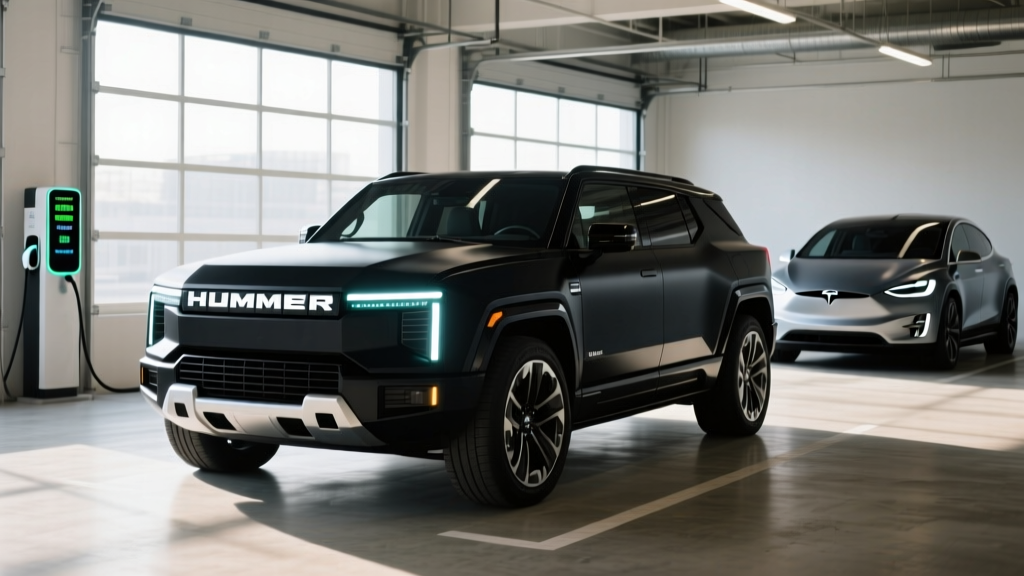
The GMC Hummer EV remains one of the most polarizing vehicles on the road — a 9,000-pound electric supertruck that pairs absurd performance with genuine off-road capability. But with a starting price that climbs well into six figures for loaded models, buyers need hard data before signing. This review breaks down every 2026 Hummer EV MSRP tier, real-world range expectations, charging performance, and whether the federal tax credit actually applies to a vehicle this expensive.
2026 Hummer EV MSRP by Trim: What You'll Actually Pay
GMC restructured the Hummer EV lineup for the 2025 model year, consolidating trims and adjusting pricing. The 2026 model year carries forward with minor adjustments. Here's the complete MSRP breakdown for both the pickup and SUV variants:
| Trim | Body Style | MSRP | Est. Destination | Total Before Options |
|---|---|---|---|---|
| 2X | Pickup | $99,795 | $1,995 | $101,790 |
| 2X | SUV | $101,495 | $1,995 | $103,490 |
| 3X | Pickup | $119,495 | $1,995 | $121,490 |
| 3X | SUV | $119,495 | $1,995 | $121,490 |
The entry-level 2X trim includes dual-motor AWD, air suspension, and the core Ultium battery pack. The 3X adds tri-motor e4WD with torque vectoring, adaptive air ride with Extract Mode (lifts the body 5.8 inches for extreme terrain), and GMC's Super Cruise hands-free driving system. The Edition 1 — which launched at $112,595 — has been phased out as of 2025.
Options that move the needle: The Extreme Off-Road Package ($5,995 on 3X) adds underbody armor, 35-inch mud-terrain tires, and front/rear electronic locking differentials. Infinity Roof with removable panels runs $3,995. Fully loaded 3X pickups can push past $135,000.
EPA Range, Real-World Efficiency, and the Weight Penalty
The Hummer EV's sheer mass — 9,046 lbs for the pickup, 8,660 lbs for the SUV — is the defining factor in its efficiency story. Here's what the EPA says versus what you'll see in real driving:
2X Pickup (dual-motor): EPA 350 miles — expect ~280–310 miles highway, ~240–260 miles in cold weather (below 30°F).
3X Pickup (tri-motor): EPA 329 miles — expect ~260–290 miles highway, ~220–240 miles in cold weather.
2X SUV: EPA 314 miles — expect ~250–280 miles highway.
3X SUV: EPA 307 miles — expect ~245–275 miles highway.
Highway driving at 75+ mph and cold temperatures impose the largest range penalties. City driving with regen braking recovers more energy.
The 2X's larger usable battery capacity — approximately 212.7 kWh (NMC lithium-ion chemistry, part of GM's Ultium platform) — gives it the range edge. The 3X uses the same pack but diverts energy to the third motor and heavier drivetrain components.
Efficiency ratings tell the full story of the weight problem:
| Trim | MPGe (Combined) | kWh/100 mi | Est. Cost per Mile* |
|---|---|---|---|
| 2X Pickup | 47 MPGe | 71 kWh | $0.091 |
| 3X Pickup | 45 MPGe | 74 kWh | $0.095 |
| 2X SUV | 47 MPGe | 71 kWh | $0.091 |
| 3X SUV | 45 MPGe | 74 kWh | $0.095 |
*Based on $0.13/kWh national average home electricity rate. Public DC fast charging at $0.35–$0.50/kWh pushes cost to $0.25–$0.37/mile. Source: fueleconomy.gov.
To put 71 kWh/100 mi in perspective: the Rivian R1T Dual-Motor achieves roughly 42 kWh/100 mi, and the Tesla Cybertruck AWD sits around 48 kWh/100 mi. The Hummer EV consumes nearly 70% more energy per mile than the R1T. If you drive 15,000 miles annually, that's roughly 10,650 kWh consumed versus 6,300 kWh in the Rivian — an extra $565/year in home charging costs.
Charging Performance: 800V Architecture, Real Charge Curves
The Hummer EV uses GM's Ultium 800-volt architecture, enabling impressive peak DC fast-charge rates. But peak kW is only part of the story — the charge curve taper above 80% State of Charge (SoC) significantly affects total session time on a massive 212.7 kWh battery.
| Charging Level | Power / Rate | Time / Miles Added | Notes |
|---|---|---|---|
| Level 1 (120V, 12A) | ~1.4 kW | ~3 miles/hour | Emergency only — a full charge takes 6+ days |
| Level 2 (240V, 48A) | 11.5 kW | ~23 miles/hour | Full charge in ~18.5 hours; overnight recovery of 200+ mi |
| Level 2 (240V, 80A) | 19.2 kW | ~38 miles/hour | Requires hardwired 100A circuit; full charge in ~11 hours |
| DC Fast (peak) | 350 kW (peak) | ~100 miles in 12 minutes | Peak only — sustained avg ~200–250 kW from 10–80% |
| DC Fast (10–80%) | ~220 kW avg | 10–80% in ~34 minutes | On 350 kW CCS/NACS station |
The charge-curve reality: The Hummer EV peaks near 350 kW only between roughly 10–25% SoC. From 25–50%, it sustains approximately 280–300 kW. From 50–80%, it tapers to 180–220 kW. Above 80%, charging slows dramatically to protect the battery — expect 80–100% to take an additional 35–45 minutes. On road trips, plan stops around the 10–80% window to minimize time at the charger.
GMC now equips 2026 Hummer EVs with the NACS (Tesla Supercharger) connector as standard, replacing the CCS1 port used on 2022–2024 models. This grants access to Tesla's Supercharger network — currently the most reliable DC fast-charging infrastructure in the U.S. For home Level 2 charging, a 48A unit on a NEMA 14-50 outlet is the practical minimum; an 80A hardwired unit (like the ChargePoint Home Flex or FLO Home X8) is strongly recommended given the battery's size.
Performance: Tri-Motor Power and 9,000-Pound Physics
The Hummer EV's performance numbers are genuinely staggering for a vehicle this heavy. GMC's tri-motor e4WD system in the 3X produces up to 830 horsepower and 1,200 lb-ft of torque in Watts to Freedom (WTF) mode — a launch-control sequence that lowers the air suspension, preconditions the battery, and haptically rumbles the seat before releasing full power.
| Spec | 2X (Dual-Motor) | 3X (Tri-Motor) |
|---|---|---|
| Horsepower | 625 hp | 830 hp |
| Torque | 7,400 lb-ft (wheel) | 11,500 lb-ft (wheel) |
| 0–60 mph | ~4.3 seconds | ~3.0 seconds |
| Drivetrain | Dual-motor AWD | Tri-motor e4WD w/ torque vectoring |
| Towing Capacity | 7,500 lbs | 7,500 lbs |
| Ground Clearance (max) | 10.1 in | 15.9 in (Extract Mode) |
| Water Fording | 28 in | 32 in |
The 3.0-second 0–60 time in the 3X makes it quicker than a Porsche Cayenne Turbo GT. That said, the physics of 9,000 pounds assert themselves in braking distances (expect 140+ feet from 60 mph) and cornering grip. This is a straight-line and off-road performer, not a canyon carver.
Towing note: The 7,500-lb tow rating is modest for a full-size truck. Towing at max capacity will cut range by approximately 40–50%, meaning a 3X towing a 7,000-lb trailer might see 160–180 real-world miles between charges. For comparison, the Ford F-150 Lightning Extended Range tows 10,000 lbs.
Federal Tax Credit: Does the Hummer EV Qualify?
This is where the Hummer EV's premium positioning creates a hard wall. Under current IRS §30D rules, the federal EV tax credit has strict MSRP caps:
- $80,000 MSRP cap for vans, SUVs, and pickup trucks
- $55,000 MSRP cap for sedans and other body styles
- Buyer income limits: $150,000 single / $225,000 head of household / $300,000 joint (Modified AGI)
- Battery sourcing requirements: Critical minerals and battery components must meet phased-in domestic/free-trade-agreement thresholds
With the 2X pickup starting at $99,795 and the 3X at $119,495, no Hummer EV trim qualifies for the $7,500 federal tax credit. Every configuration exceeds the $80,000 truck/SUV MSRP cap. The point-of-sale transfer option introduced in 2024 does not change this — the credit simply does not apply.
Some state-level incentives may partially offset the cost. Colorado's innovative EV tax credit (up to $5,000 for vehicles above certain MSRP thresholds), California's CVRP rebate (up to $7,000 for income-qualified buyers, though MSRP caps apply), and various utility rebates may apply. Always verify current eligibility with your state's energy office and a tax professional. See IRS §30D guidelines for complete federal rules.
Cargo, Passenger Space, and Daily Practicality
The Hummer EV Pickup offers a 5-foot bed with 81.8 cubic feet of cargo volume (with the MultiPro tailgate and mid-gate open, accommodating items up to 8 feet). The front trunk (frunk) provides an additional 11.7 cubic feet of lockable storage — useful for charging cables and gear.
The SUV variant sacrifices the bed for enclosed cargo space: 35.9 cu ft behind the second row, expanding to 81.8 cu ft with seats folded. Both body styles seat five passengers.
| Measurement | Pickup | SUV |
|---|---|---|
| Front Headroom | 42.5 in | 42.5 in |
| Front Legroom | 45.6 in | 45.6 in |
| Rear Headroom | 38.3 in | 38.3 in |
| Rear Legroom | 38.9 in | 38.9 in |
| Cargo (bed / behind 2nd row) | 81.8 cu ft (bed) | 35.9 cu ft |
| Frunk Volume | 11.7 cu ft | 11.7 cu ft |
The cabin is wide — the Hummer EV is 86.7 inches wide without mirrors — and the seating position is commanding. However, the rear seats are flat and lack the adjustability found in the Rivian R1T or Ford F-150 Lightning. The 13.4-inch infotainment touchscreen runs GM's latest Ultifi software with native Google Built-In (Maps, Assistant, Play Store), wireless Apple CarPlay/Android Auto, and an available 12-speaker Bose audio system.
Standout Tech, Driver Assists, and Notable Drawbacks
Tech highlights:
- Super Cruise: GM's Level 2 hands-free driver-assist system on 3X trims — operational on 750,000+ miles of mapped highways. The driver must remain attentive (monitored by a steering-column camera); this is not self-driving.
- CrabWalk: Four-wheel steering allows the rear wheels to turn up to 10 degrees in the same direction as the fronts, enabling diagonal movement at low speeds — genuinely useful on tight trails.
- Extract Mode: Air suspension raises the body an additional 5.8 inches for 15.9 inches total ground clearance (3X only).
- UltraVision: Up to 18 camera views including underbody cameras for trail navigation.
- Power Station Generator: ProGrade onboard power can supply up to 2.4 kW from bed outlets (120V/240V).
- No over-the-air (OTA) software updates for core vehicle systems — only infotainment. Unlike Tesla or Rivian, don't expect feature additions post-purchase.
- Regenerative braking is weak by EV standards. One-pedal driving is available but doesn't bring the truck to a complete stop without brake pedal input in most conditions.
- Turning radius is 44.4 feet — enormous for urban environments and tight parking structures.
- Visibility is compromised by thick A-pillars and the tall, flat hood. The camera system helps but doesn't fully compensate.
- Tire costs are extreme: 35-inch tires run $400–$600 each and wear faster due to the vehicle's weight.
Battery Warranty, Degradation, and Long-Term Costs
GMC backs the Hummer EV's Ultium battery pack with an 8-year/100,000-mile warranty, covering defects and capacity loss below 70% of original capacity (whichever comes first). The powertrain carries the same 8-year/100,000-mile coverage. The bumper-to-bumper warranty is 3 years/36,000 miles.
With 212.7 kWh of usable capacity and NMC chemistry, long-term degradation data is still limited — the oldest Hummer EVs on the road are 2022 models with roughly 3 years of field data. GM's Ultium platform uses active liquid thermal management, which should mitigate accelerated degradation. Based on industry NMC averages, expect approximately 10–15% capacity loss over 150,000 miles under normal use patterns (avoiding habitual 100% charges and frequent DC fast charging above 80%).
Insurance costs are steep. The Hummer EV's combination of high MSRP, extreme performance, and expensive body panels pushes annual premiums to $3,200–$5,500 depending on your profile, location, and coverage level — roughly 40–60% above the F-150 Lightning.
Hummer EV vs. Key Competitors: Value Comparison
| Spec | GMC Hummer EV 3X | Rivian R1T Tri-Motor | Tesla Cybertruck Cyberbeast | Ford F-150 Lightning Platinum |
|---|---|---|---|---|
| MSRP | $121,490 | $115,900 | $101,630 | $98,875 |
| EPA Range | 329 mi | 420 mi (Max Pack) | 320 mi | 300 mi (Ext. Range) |
| Battery (kWh) | 212.7 | 149 (Max) | 123 | 131 |
| 0–60 mph | 3.0s | 2.9s | 2.6s | 4.5s |
| Max DC Charge | 350 kW | 200 kW | 250 kW | 150 kW |
| Towing | 7,500 lbs | 11,000 lbs | 11,000 lbs | 10,000 lbs |
| Tax Credit? | No (over MSRP cap) | No (over MSRP cap) | No (over MSRP cap) | No (over MSRP cap) |
- Choose the Hummer EV if: You want unmatched off-road capability (Extract Mode, CrabWalk, locking diffs), a statement vehicle with genuine presence, and the fastest DC charging in the electric truck segment. You accept the efficiency penalty and size compromises.
- Choose the Rivian R1T if: You prioritize range (420 mi with Max Pack), towing capacity (11,000 lbs), a more usable daily-driver size, and the best-in-class adventure-oriented software/camping features.
- Choose the Cybertruck if: You want the quickest acceleration, stainless-steel durability, and Tesla's Supercharger network with the lowest starting price among tri-motor trucks.
- Choose the F-150 Lightning if: You need a conventional truck experience with the best towing (10,000 lbs), widest service network, and lowest cost of entry in the premium electric truck space.
Frequently Asked Questions
What is the real-world range of the Hummer EV?
The EPA rates the 2X pickup at 350 miles and the 3X at 329 miles. In real-world highway driving at 70–75 mph, expect 280–310 miles (2X) and 260–290 miles (3X). Cold weather (below 30°F) can reduce range by 20–30%, bringing the 3X down to roughly 220–240 miles. City driving with regenerative braking recovers more energy and can approach or slightly exceed EPA estimates in mild temperatures.
How fast does the Hummer EV charge at home and on the road?
On a 350 kW DC fast charger, the Hummer EV peaks at 350 kW and averages roughly 220 kW from 10–80%, completing that session in approximately 34 minutes. At home on a 48A Level 2 charger (240V), it adds about 23 miles per hour — a full charge takes roughly 18.5 hours. An 80A hardwired Level 2 unit cuts that to about 11 hours and is strongly recommended for this battery size.
Does the Hummer EV qualify for the federal EV tax credit?
No. Under IRS §30D rules, the $7,500 federal tax credit has an $80,000 MSRP cap for trucks, SUVs, and vans. The least expensive Hummer EV (2X Pickup at $99,795) exceeds this cap by nearly $20,000. No trim qualifies. Some state incentives and utility rebates may still apply — check your state's energy office.
Is the Hummer EV worth buying over the Rivian R1T or Tesla Cybertruck?
It depends on your priorities. The Hummer EV wins on off-road capability (Extract Mode, CrabWalk, 15.9 inches of ground clearance), DC fast-charge speed (350 kW peak), and sheer road presence. The Rivian R1T offers superior range (420 mi), more towing capacity (11,000 lbs), better efficiency, and a more manageable footprint for daily driving. The Cybertruck undercuts on price and acceleration. If off-road performance and fast charging are your top criteria, the Hummer EV earns its premium. If range and daily usability matter more, the R1T is the stronger pick.
How much does it cost to charge a Hummer EV?
At the national average home electricity rate of $0.13/kWh, fully charging the 212.7 kWh battery costs approximately $27.65. At public DC fast-charging rates of $0.35–$0.50/kWh, a full charge costs $74–$106. Given the Hummer EV's 71–74 kWh/100 mi consumption, home charging costs roughly $0.09 per mile while DC fast charging runs $0.25–$0.37 per mile.
What is the Hummer EV's battery warranty?
GMC provides an 8-year/100,000-mile warranty on the Ultium battery pack and powertrain, covering defects and capacity degradation below 70% of original capacity. The bumper-to-bumper warranty is 3 years/36,000 miles. GM's active liquid thermal management system is designed to minimize degradation over the battery's lifespan.