The 2026 GMC Hummer EV: A Quick Verdict on Range and Efficiency
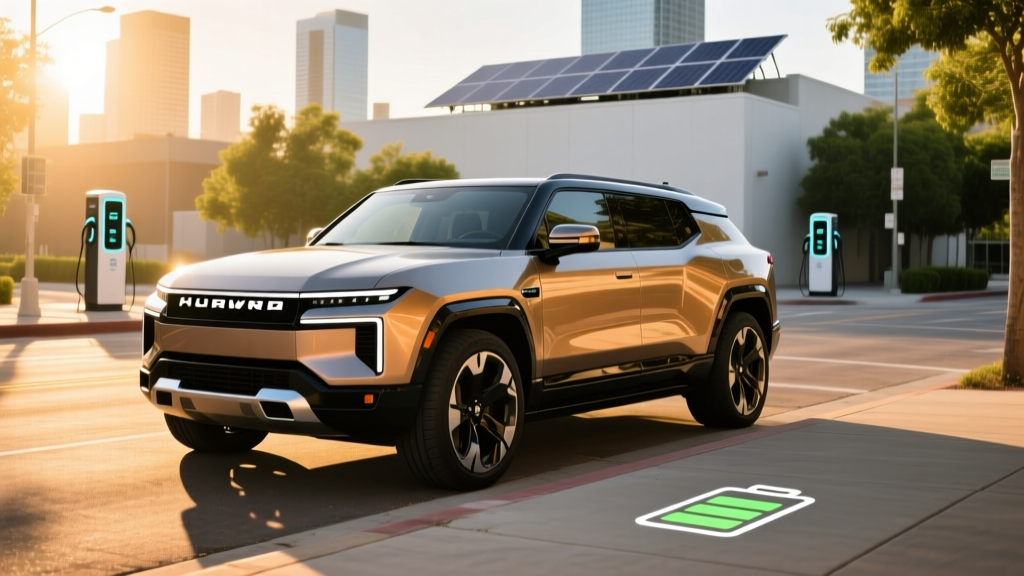
The GMC Hummer EV is a 9,000-pound electric supertruck that prioritizes brute force over efficiency — and its mileage reflects that physics. With up to 1,045 horsepower and a massive Ultium battery pack, the 2026 Hummer EV delivers a 381-mile EPA-estimated range on the 3X trim. But if you're researching Hummer EV mileage before buying, the real story lies in how that range holds up at highway speeds, in cold weather, and on the charging pad. This profile covers every efficiency, charging, and ownership metric you need to decide if this electric leviathan fits your garage.
- EPA Estimate: 381 miles (3X, 24-module pack)
- Real-World Highway (70 mph): ~280–310 miles
- Cold Weather (below 32°F): ~240–270 miles
- City / Mixed Driving: ~340–370 miles (regen-heavy routes)
The Hummer EV's brick-like aerodynamics (drag coefficient ~0.44 Cd) and 9,046-pound curb weight crush highway efficiency. Plan for 25–30% range loss at sustained 70+ mph speeds and another 10–15% in freezing temperatures. Source: fueleconomy.gov.
Hummer EV Battery Capacity, Chemistry, and Energy Specs
Under the floor sits GM's Ultium battery platform — the largest passenger-vehicle battery pack currently on the US market. Here's the technical breakdown:
| Specification | 3X / Edition 1 (24 Modules) | 2X (20 Modules) |
|---|---|---|
| Total Battery Capacity | ~246 kWh (gross) | ~205 kWh (gross) |
| Usable Capacity | ~212 kWh | ~175 kWh |
| Chemistry | NMC (Nickel Manganese Cobalt) | NMC |
| Cell Format | Pouch cells, double-stacked | Pouch cells, double-stacked |
| Thermal Management | Liquid-cooled / heated | Liquid-cooled / heated |
| EPA Range | 381 miles | ~314 miles |
| Efficiency (Combined) | 47 MPGe / 72 kWh/100mi | ~49 MPGe / ~69 kWh/100mi |
The NMC chemistry provides the energy density needed for a pack this large, but it's heavier and more expensive than LFP (lithium iron phosphate). You won't find an LFP option here — the Hummer EV needs every kilowatt-hour it can pack. At 72 kWh per 100 miles, the 3X is one of the least efficient EVs sold in the US. For comparison, a Tesla Model Y uses roughly 28 kWh/100mi. That's the cost of moving nearly five tons.
Charging Speed: DC Fast Charge and Home Level 2
Charging a 212 kWh usable battery is a time commitment. The Hummer EV supports up to 350 kW peak DC fast charging on 800V-capable architecture, but sustained rates tell a different story.
| Charging Level | Power (kW) | Speed / Time | Notes |
|---|---|---|---|
| Level 1 (120V, 12A) | ~1.4 kW | ~3 miles per hour | Emergency only — a full charge takes 6+ days |
| Level 2 (240V, 48A) | 11.5 kW | ~25 miles per hour | Full 10–100% in ~18–20 hours |
| Level 2 (240V, 80A) | 19.2 kW | ~42 miles per hour | Requires compatible home charger + 100A circuit |
| DC Fast Charge (peak) | Up to 350 kW | 10–80% in ~35 minutes (350 kW station) | Peak rate is short-lived; taper begins ~60% SoC |
| DC Fast Charge (150 kW station) | ~150 kW sustained | 10–80% in ~55–60 minutes | More realistic at most public chargers |
The charging-curve reality: At a 350 kW Electrify America or EVgo station, the Hummer EV will peak near 300–320 kW for a brief window between 15–40% SoC, then step down to ~175 kW through 60%, and taper sharply above 80%. A 10–80% session takes roughly 35 minutes at a top-tier charger. At the more common 150 kW chargers, expect closer to an hour. Always precondition the battery via the myGMC app before arriving at a DC station — cold packs charge significantly slower.
For home charging, most owners install a 48A Level 2 wallbox on a 60A breaker, yielding ~11.5 kW and about 25 miles of range per hour. Overnight (10 hours) adds ~250 miles — enough to replenish a typical day's driving. An 80A hardwired charger (19.2 kW) cuts full-charge time roughly in half but requires a 100A dedicated circuit and a panel that can support it.
Performance, Drivetrain, and Capability
| Metric | 3X (Tri-Motor AWD) | 2X (Dual-Motor AWD) |
|---|---|---|
| Horsepower | 1,045 hp (Watts to Freedom mode) | 625 hp |
| Torque | 1,200 lb-ft | 775 lb-ft |
| 0–60 mph | ~3.0 seconds | ~4.5 seconds |
| Drivetrain | Tri-motor AWD (1 front, 2 rear) | Dual-motor AWD |
| Towing Capacity | 7,500 lbs | 7,500 lbs |
| Ground Clearance | Up to 15.9 in (Extract Mode) | Up to 10.1 in |
| CrabWalk | Yes (4-wheel steer) | Yes (4-wheel steer) |
The 3X's tri-motor setup with the Watts to Freedom (WTF) launch mode delivers supercar acceleration in a vehicle heavier than two Ford F-150s. The CrabWalk diagonal-steering feature is genuinely useful on tight off-road trails, and Extract Mode raises the air suspension over 5 inches for serious rock crawling. Towing drops range by roughly 40–50% — plan on 150–180 miles max when pulling 7,000+ pounds.
Pricing, Trim Levels, and Federal Tax Credit Eligibility
| Trim | Base MSRP (2026) | §30D Federal Credit | Effective Price* |
|---|---|---|---|
| 2X Pickup | $99,995 | $0 (exceeds MSRP cap) | $99,995 |
| 3X Pickup | $119,995 | $0 (exceeds MSRP cap) | $119,995 |
| 2X SUV | $106,495 | $0 (exceeds MSRP cap) | $106,495 |
| 3X SUV | $126,495 | $0 (exceeds MSRP cap) | $126,495 |
Federal tax credit reality: Under current IRS §30D rules, the Hummer EV does not qualify for the $7,500 federal EV tax credit. The credit caps at $80,000 MSRP for trucks and $55,000 for SUVs/vans. Every Hummer EV trim exceeds these limits. There are also buyer income caps ($300K joint / $150K single) and battery critical-mineral sourcing requirements — but the MSRP disqualification alone rules it out.
*Effective price excludes destination charges ($1,995), dealer markups, state/local incentives, and registration. Some states offer additional rebates — check your local DMV or energy office. A fully loaded 3X with the Extreme Off-Road package and Infinity Roof can exceed $145,000.
Cargo, Passenger Space, and Interior Tech
The Hummer EV Pickup offers a 5-foot bed with a powered MultiPro tailgate and a front trunk (frunk) that's genuinely large enough for gear. The SUV trades the bed for enclosed cargo space but sacrifices some versatility.
| Dimension | Pickup | SUV |
|---|---|---|
| Front Legroom | 45.6 in | 45.6 in |
| Rear Legroom | 40.4 in | 38.9 in |
| Bed Length (Pickup) | 5 ft | N/A |
| Frunk Volume | 11.3 cu ft | 11.3 cu ft |
| Cargo (behind 2nd row, SUV) | N/A | ~35 cu ft |
| Cargo (seats folded, SUV) | N/A | ~82 cu ft |
Inside, a 13.4-inch infotainment touchscreen runs GM's latest Ultifi software with wireless Apple CarPlay/Android Auto, Google Built-In navigation, and an 18-speaker Bose audio system. The removable Infinity Roof panels (stored in the frunk) turn the cabin into an open-air experience. Driver-assistance tech includes Super Cruise — GM's hands-free Level 2 highway driving system covering over 750,000 miles of mapped roads in the US and Canada. Note: Super Cruise requires driver attention via an infrared camera; it is not autonomous driving.
Despite hands-free operation, Super Cruise requires the driver to remain alert and ready to take over at any moment. It handles steering, acceleration, and braking on pre-mapped divided highways but does not navigate city streets, construction zones, or unmapped roads. See NHTSA's automation guide for SAE level definitions.
Warranty and Long-Term Battery Outlook
GMC backs the Hummer EV with competitive warranty coverage, critical given the cost and complexity of a 212 kWh pack:
- Battery & Propulsion: 8 years / 100,000 miles (whichever comes first)
- Battery Capacity Retention Threshold: GM warrants the pack will retain at least 60% of original capacity during the warranty period
- Bumper-to-Bumper: 3 years / 36,000 miles
- Powertrain (non-battery): 5 years / 60,000 miles
- Corrosion: 6 years / 100,000 miles
The 60% retention floor is lower than some competitors (Hyundai/Kia warrant 70%). NMC chemistry typically degrades 1–2% per year under normal use. At that rate, expect ~85–90% State of Health (SoH) after 8 years. Battery replacement, if ever needed out of warranty, is estimated at $20,000–$35,000 for a pack this size — a sobering figure.
Who Should Buy the Hummer EV (and Who Shouldn't)
- You want maximum off-road capability with zero tailpipe emissions
- You need 7,500-lb towing and 381 miles of range for adventure trips
- Sub-3-second 0–60 in a 9,000-lb truck matters to you
- You have home Level 2 charging and rarely rely on public fast chargers
- Efficiency and low cost-per-mile are priorities (72 kWh/100mi is brutal on your electric bill)
- You want federal tax credit savings — the Hummer EV doesn't qualify
- Daily commuting in tight urban environments (229 inches long, 96.5 inches wide including mirrors)
- You need quick road-trip charging — a 35-minute 10–80% stop is long when repeated 3–4 times on a cross-country drive
How the Hummer EV Compares to Key Rivals
| Vehicle | EPA Range | Efficiency | 0–60 | Base MSRP | §30D Credit |
|---|---|---|---|---|---|
| GMC Hummer EV 3X | 381 mi | 47 MPGe | 3.0s | $119,995 | $0 |
| Rivian R1T Tri-Motor | 420 mi (Max pack) | ~70 MPGe | 2.9s | $99,900 | $0 (MSRP cap) |
| Ford F-150 Lightning Platinum | 320 mi | 66 MPGe | 3.8s | $96,874 | $0 (MSRP cap) |
| Tesla Cybertruck Cyberbeast | 340 mi | ~78 MPGe | 2.6s | $99,990 | $0 (MSRP cap) |
The Hummer EV wins on raw presence, CrabWalk maneuverability, and the largest battery pack in the segment. The Rivian R1T offers more range with the Max pack, better efficiency, and a more refined interior. The F-150 Lightning is the practical work-truck choice with better charging infrastructure access via Ford's BlueOval network. None of these trucks qualify for the federal credit due to the MSRP cap.
Pros and Cons at a Glance
- 381-mile EPA range is among the highest of any electric truck
- 1,045 hp / 3.0s 0–60 is absurd fun for a vehicle this massive
- CrabWalk and Extract Mode deliver genuine off-road innovation
- Super Cruise hands-free driving on 750K+ miles of highways
- Removable Infinity Roof panels for open-air driving
- 11.3 cu ft frunk + MultiPro tailgate add real utility
- 47 MPGe / 72 kWh/100mi — extremely high electricity cost per mile
- No federal tax credit eligibility (MSRP far exceeds §30D cap)
- 10–80% DC fast charge takes 35+ min at best; 55–60 min at 150 kW
- 9,046-lb curb weight limits tire life, brake wear, and garage options
- Highway range drops to ~280–310 miles; towing cuts it nearly in half
- 86.5-inch body width (excl. mirrors) won't fit many parking structures
Hummer EV Mileage FAQ
What is the real-world range of the Hummer EV?
The EPA rates the 3X at 381 miles. In real-world highway driving at 70 mph, expect 280–310 miles. In cold weather below 32°F, plan for 240–270 miles. City driving with heavy regenerative braking can get closer to 350 miles.
How fast does the Hummer EV charge?
At a 350 kW DC fast charger, 10–80% takes about 35 minutes. At a 150 kW charger, expect 55–60 minutes. At home on a 48A Level 2 charger (11.5 kW), you gain roughly 25 miles per hour, with a full charge taking 18–20 hours.
Does the Hummer EV qualify for the federal EV tax credit?
No. Under IRS §30D rules, trucks must have an MSRP at or below $80,000 to qualify. The cheapest Hummer EV starts at $99,995, disqualifying all trims regardless of buyer income or battery sourcing.
Is the Hummer EV worth buying over the Rivian R1T or F-150 Lightning?
If you want maximum presence, CrabWalk, and the largest battery, the Hummer EV is unique. But the Rivian R1T Max pack offers more range (420 mi) and better efficiency, while the F-150 Lightning is more practical for daily use and work duty. All three exceed the federal credit MSRP cap.
What does it cost to charge a Hummer EV?
At the US average residential electricity rate of ~$0.17/kWh, a full home charge of the 212 kWh usable pack costs roughly $36. At public DC fast chargers ($0.35–$0.50/kWh), a 10–80% session (roughly 150 kWh) costs $52–$75. That's significantly more than most EVs due to the massive battery.
How does towing affect Hummer EV mileage?
Towing a 7,000–7,500 lb trailer reduces range by approximately 40–50%. Expect 150–190 miles of real-world range while towing at highway speeds. Plan charging stops accordingly — this is the biggest range challenge for electric trucks.
What is the Hummer EV's MPGe rating?
The EPA rates the Hummer EV 3X at 47 MPGe combined (49 city / 43 highway). Efficiency is 72 kWh per 100 miles — the lowest MPGe of any current mainstream EV, a direct result of its extreme weight and poor aerodynamics.