Why You Might Need to Reboot Your Tesla Model 3
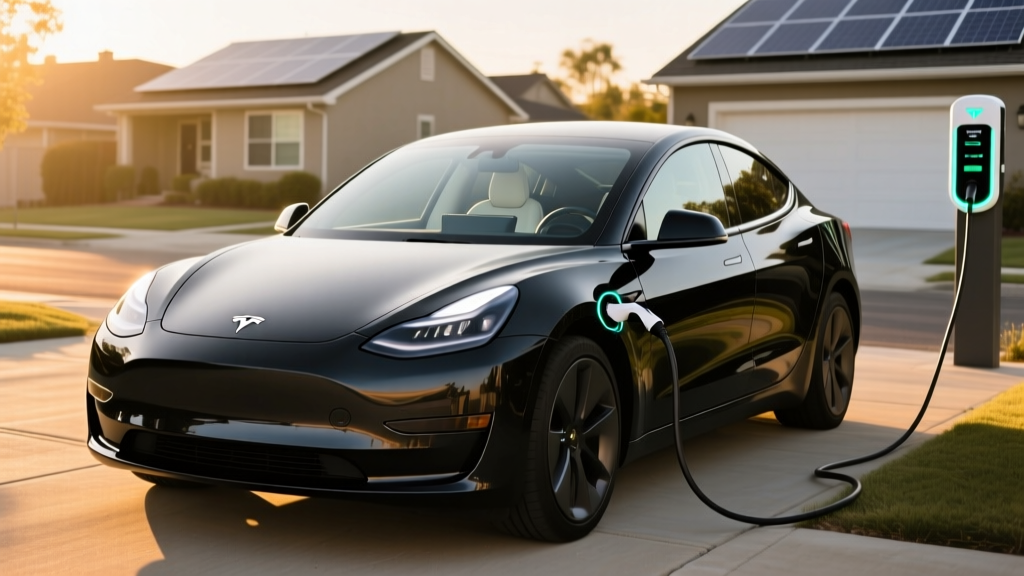
The Tesla Model 3 is essentially a computer on wheels, and like any computer, its touchscreen and electronic systems occasionally freeze, glitch, or become unresponsive. Whether your screen has gone black, Bluetooth won't connect, audio is cutting out, or the navigation system is stuck, a reboot usually resolves the issue without affecting your driving data, odometer, or vehicle settings.
Before we walk through the exact reboot procedures, here's the quick answer most owners need:
Below, we cover every reboot method available on the current-generation (Highland and refreshed) Tesla Model 3, plus a comprehensive review of what you're driving — including real-world range, charging speeds, pricing, and whether it still earns its spot as the default EV sedan in 2026.
Every Way to Reboot a Tesla Model 3
Method 1: Soft Reboot (Scroll-Wheel Reset)
This is the most common and least disruptive reset. It restarts the infotainment system (the MCU — Media Control Unit) without powering down any vehicle systems.
- Ensure the vehicle is in Park (recommended) or that a passenger is performing the reset if driving.
- Press and hold both scroll wheels on the steering wheel simultaneously.
- Hold for approximately 10 seconds. The touchscreen will go black.
- Release the scroll wheels. The Tesla "T" logo will appear within 15–30 seconds, followed by the home screen.
What it fixes: Frozen touchscreen, unresponsive apps, Bluetooth/audio glitches, navigation errors, phantom proximity-key issues, and sluggish UI performance.
Method 2: Hard Reboot (Power-Off Reset)
If the scroll-wheel reset doesn't resolve the issue, a full power-off cycle shuts down nearly all vehicle electronics and restarts them from scratch.
- Sit in the driver's seat with all doors closed.
- On the touchscreen, navigate to Controls > Safety > Power Off.
- Wait at least 2 minutes without touching any pedal, door handle, or the touchscreen. (Any interaction will wake the car.)
- Press the brake pedal or open a door to wake the vehicle. The system will boot fully within 30 seconds.
What it fixes: Persistent software bugs, failed OTA update states, key-fob recognition failures, and deeper MCU lockups that survive a scroll-wheel reset.
Method 3: Full Vehicle Reset (12V Battery Disconnect)
This is a last resort and is generally only needed if the vehicle is completely unresponsive — no screen, no lights, no door handles deploying. Disconnecting the 12V auxiliary battery (located under the rear seat in current Model 3 variants) for 60 seconds and reconnecting it forces a complete hardware restart.
When to Contact Tesla Service Instead
If reboots don't resolve your issue, or if the problem recurs within days, schedule service through the Tesla app. Many software-related issues can be diagnosed remotely via Tesla's over-the-air logs, and mobile service technicians can visit your home or workplace.
2026 Tesla Model 3: Full Specs at a Glance
Now that you know how to get your Model 3 back online, let's look at what you're actually driving. The current-generation Model 3 (the "Highland" refresh introduced for 2024 and carried forward with minor updates into 2026) brought significant improvements to ride quality, cabin noise, and interior materials.
| Specification | Model 3 RWD | Model 3 Long Range AWD | Model 3 Performance |
|---|---|---|---|
| EPA Range | 272 miles | 363 miles | 315 miles |
| Battery (usable) | ~57.5 kWh (LFP) | ~75 kWh (NMC) | ~75 kWh (NMC) |
| Drivetrain | RWD, single motor | AWD, dual motor | AWD, dual motor |
| Horsepower | 271 hp | 346 hp | 510 hp |
| 0–60 mph | 5.8 sec | 4.2 sec | 2.9 sec |
| Peak DC Charge Rate | 170 kW | 250 kW | 250 kW |
| 10–80% DC Time | ~25 min | ~25 min | ~25 min |
| Level 2 Charge Rate | 11.5 kW (~44 mi/hr) | 11.5 kW (~44 mi/hr) | 11.5 kW (~44 mi/hr) |
| EPA Efficiency | 132 MPGe (25 kWh/100mi) | 131 MPGe (26 kWh/100mi) | 121 MPGe (28 kWh/100mi) |
| Cargo Volume | 23 cu ft (trunk + frunk) | 23 cu ft | 23 cu ft |
| Base MSRP | $38,990 | $44,990 | $52,990 |
Sources: EPA Fueleconomy.gov, Tesla.com specifications (2026 model year). Prices exclude destination fee of $1,390.
Real-World Range: What the EPA Number Doesn't Tell You
- RWD (EPA 272 mi): Expect ~220–240 mi on the highway at 70 mph; ~180–200 mi in sub-30°F winter conditions. City driving with regenerative braking often matches or slightly exceeds the EPA figure.
- Long Range AWD (EPA 363 mi): Expect ~290–310 mi highway; ~240–260 mi in cold weather. This trim's larger NMC pack provides a more comfortable buffer on road trips.
- Performance (EPA 315 mi): Expect ~250–270 mi highway under normal driving; aggressive acceleration significantly reduces range.
The Model 3's efficiency remains among the best in the EV sedan segment. Tesla's heat pump (standard on all trims) minimizes cold-weather range loss compared to competitors still using resistive PTC heaters. However, the LFP battery in the RWD trim has lower energy density, which is why its range is substantially lower despite the same aerodynamic profile.
LFP vs. NMC — what it means for you: The RWD's lithium iron phosphate (LFP) battery is heavier and less energy-dense but offers longer cycle life and can be charged to 100% daily without degradation concerns. Tesla recommends periodic 100% charges for LFP to maintain accurate state-of-charge calibration. The Long Range and Performance trims use nickel-manganese-cobalt (NMC) chemistry, which offers more range but benefits from daily charge limits of 80% for longevity.
Charging Speed: DC Fast, Level 2, and Home Setup
| Charging Level | Power (kW) | Miles Added per Hour | Notes |
|---|---|---|---|
| Level 1 (120V household) | ~1.4 kW | ~4–5 mi/hr | Emergency only; full charge takes 40+ hours |
| Level 2 (240V home/public) | 11.5 kW max | ~44 mi/hr | Full charge overnight (~6–7 hrs for LR) |
| DC Fast Charge (RWD) | 170 kW peak | ~170 mi in 15 min | LFP charges more linearly; less taper |
| DC Fast Charge (LR/Perf) | 250 kW peak | ~200 mi in 15 min | Peak rate sustained only to ~50% SoC, then tapers |
Charging curve reality check: The advertised 250 kW peak on Long Range and Performance trims is only achievable at low state-of-charge (below ~40%) and with a preconditioned battery. Above 80% SoC, charge speed drops dramatically — often below 50 kW. This is why the 10–80% time (~25 minutes) is the meaningful metric, not peak kW.
Home charging cost: A Level 2 home installation (48-amp circuit, NEMA 14-50 or hardwired Wall Connector) typically costs $800–$2,000 depending on panel proximity and local permitting. At the national average electricity rate of ~$0.16/kWh, a full Long Range charge costs approximately $12 — roughly equivalent to $1.50/gallon gasoline.
All 2026 Model 3 vehicles come equipped with the NACS (North American Charging Standard) connector natively, providing seamless access to Tesla's Supercharger network — now exceeding 25,000 stalls in North America — as well as growing third-party NACS networks.
Pricing, Trims, and Federal Tax Credit Eligibility
| Trim | MSRP (incl. dest.) | Est. After §30D Credit | Credit Eligible? |
|---|---|---|---|
| RWD | $40,380 | ~$32,880 | Eligible (up to $7,500) — verify battery sourcing |
| Long Range AWD | $46,380 | ~$38,880 | Eligible (up to $7,500) — verify battery sourcing |
| Performance | $54,380 | ~$46,880 | Eligible (up to $7,500) — verify battery sourcing |
The IRS §30D federal tax credit offers up to $7,500 for qualifying new EVs, but eligibility depends on several factors that change periodically:
- MSRP cap: Sedans must be below $55,000 — all Model 3 trims qualify.
- Buyer income cap: Modified AGI must not exceed $150,000 (single), $225,000 (head of household), or $300,000 (joint).
- Battery sourcing: Critical minerals and battery components must meet phased-in domestic/FTE-sourced thresholds. Tesla has generally maintained compliance, but specific batch eligibility can vary. Verify at fueleconomy.gov before purchasing.
- Point-of-sale transfer: As of 2024, the credit can be transferred to the dealer at purchase, reducing your out-of-pocket cost immediately rather than waiting for tax filing.
Important: Tax credit rules are subject to legislative change. Consult a tax professional and verify current eligibility on IRS.gov before finalizing your purchase.
Tech, Driver Assistance, and Interior
The Highland refresh transformed the Model 3 interior from minimalist-austere to minimalist-premium. Ventilated front seats, ambient lighting, acoustic glass on all windows, and a rear passenger touchscreen are now standard. The 15.4-inch center display handles all vehicle controls — there are no physical buttons or stalks (turn signals are on the steering wheel rim).
Autopilot and FSD (Supervised):
Tesla Autopilot and Full Self-Driving (Supervised) are Level 2 driver-assistance systems, meaning the driver must remain fully attentive, keep hands on the steering wheel, and be prepared to take over at any moment. These systems do not make the vehicle self-driving. Level 4 autonomy (true driverless operation) is currently only available in limited geographic areas through services like Waymo — not in any consumer vehicle you can purchase.
Standard Autopilot includes Traffic-Aware Cruise Control and Autosteer (lane-centering). The FSD (Supervised) upgrade ($8,000 or $99/month) adds automatic lane changes, Navigate on Autopilot, Smart Summon, and traffic-light/stop-sign recognition. While impressive in controlled highway scenarios, FSD still requires active supervision and makes occasional errors in construction zones, unmapped areas, and complex intersections.
Cargo and Passenger Space
- Total cargo: 23 cu ft (19.8 cu ft trunk + 3.1 cu ft frunk)
- Rear legroom: 35.2 inches (adequate for adults under 6'0"; taller passengers will find it snug)
- Front headroom: 40.3 inches
- Towing: Not rated for towing in the US market
Pros, Cons, and Who the Model 3 Suits Best
- Class-leading efficiency (25–28 kWh/100 mi)
- Access to Tesla Supercharger network (NACS native)
- Strong over-the-air update cadence keeps software current
- Highland refresh significantly improved ride and cabin quietness
- LFP RWD battery can charge to 100% daily without degradation worry
- Strong safety ratings (IIHS Top Safety Pick+)
- No physical buttons or stalks — steep learning curve for new EV adopters
- Rear seat space is tighter than Hyundai Ioniq 6 or BMW i4
- RWD trim's 170 kW peak charge rate trails competitors at 350 kW chargers
- Turn signals on steering wheel rim are unintuitive for roundabouts
- FSD (Supervised) remains Level 2 despite the "Full Self-Driving" name
- No towing capability
- Choose the RWD if: You're a commuter with home charging who wants the lowest entry price and doesn't need 300+ miles of range. LFP chemistry means less battery anxiety long-term.
- Choose the Long Range AWD if: You take regular road trips, live in a cold climate, or want dual-motor traction. The 363-mile EPA range is the sweet spot.
- Choose the Performance if: You want sports-car acceleration (2.9 sec 0–60) in a practical sedan and accept the range trade-off.
- Look elsewhere if: You need a spacious rear seat for car seats, you want physical controls, or you need towing capacity (consider the Model Y or Hyundai Ioniq 5).
Battery and Vehicle Warranty
| Coverage | RWD | Long Range / Performance |
|---|---|---|
| Battery Warranty | 8 years / 100,000 mi (70% minimum retention) | 8 years / 120,000 mi (70% minimum retention) |
| Drive Unit Warranty | 8 years / 100,000 mi | 8 years / 120,000 mi |
| Basic Vehicle | 4 years / 50,000 mi | 4 years / 50,000 mi |
Tesla's 70% capacity retention threshold is industry-standard. Real-world data from high-mileage Model 3 fleets suggests NMC packs typically retain 85–90% capacity at 100,000 miles with proper charging habits (daily limit of 80%, minimal DC fast charging). LFP packs show even slower degradation curves, often retaining 90%+ at equivalent mileage.
Frequently Asked Questions
Is it safe to reboot a Tesla Model 3 while driving?
Yes — the scroll-wheel (soft) reboot only restarts the infotainment touchscreen. It does not affect power steering, braking, acceleration, or any safety-critical system. You'll temporarily lose speedometer display and turn-signal audio feedback during the 15–30 second reboot. For safety, it's still preferable to perform reboots while parked.
Will a reboot erase my settings, driver profiles, or trip data?
No. Both the soft and hard reboot preserve all user profiles, navigation history, paired devices, and trip data. Only a factory reset (Controls > Service > Factory Reset) erases personal data — this is rarely needed and typically performed before selling the vehicle.
How often should I reboot my Model 3?
Only when you experience an issue. There's no maintenance reboot schedule. That said, Tesla pushes over-the-air (OTA) updates regularly, and the vehicle performs partial system restarts during these updates automatically.
What's the real-world range of the Tesla Model 3 in winter?
Expect a 20–30% range reduction in sustained sub-30°F temperatures. The Long Range AWD's EPA 363 miles drops to approximately 240–260 miles in cold weather. Using seat heaters and the heat pump (instead of cabin overheat) and preconditioning while plugged in can recover some of this loss.
Does the 2026 Tesla Model 3 qualify for the $7,500 federal tax credit?
All Model 3 trims fall under the $55,000 MSRP sedan cap and are generally eligible for up to $7,500 under IRS §30D — provided the buyer meets income limits and the specific vehicle's battery satisfies critical-mineral and component-sourcing requirements for the current tax year. Eligibility can shift with supply-chain changes. Always verify the specific VIN on fueleconomy.gov and consult a tax professional before purchase.
How does the Model 3 compare to the Hyundai Ioniq 6 or BMW i4?
The Ioniq 6 offers more rear-seat space and 800V architecture for faster peak charging (~350 kW), but its charging network access is less robust than Tesla's Supercharger ecosystem. The BMW i4 provides a more traditional luxury interior with physical controls but at a significantly higher price point ($52,200+ base) and lower efficiency. The Model 3 remains the efficiency and value benchmark in this segment.
This article was last updated for the 2026 model year. Specifications, pricing, and tax credit eligibility are subject to change. Always confirm details with Tesla and the IRS before purchasing.