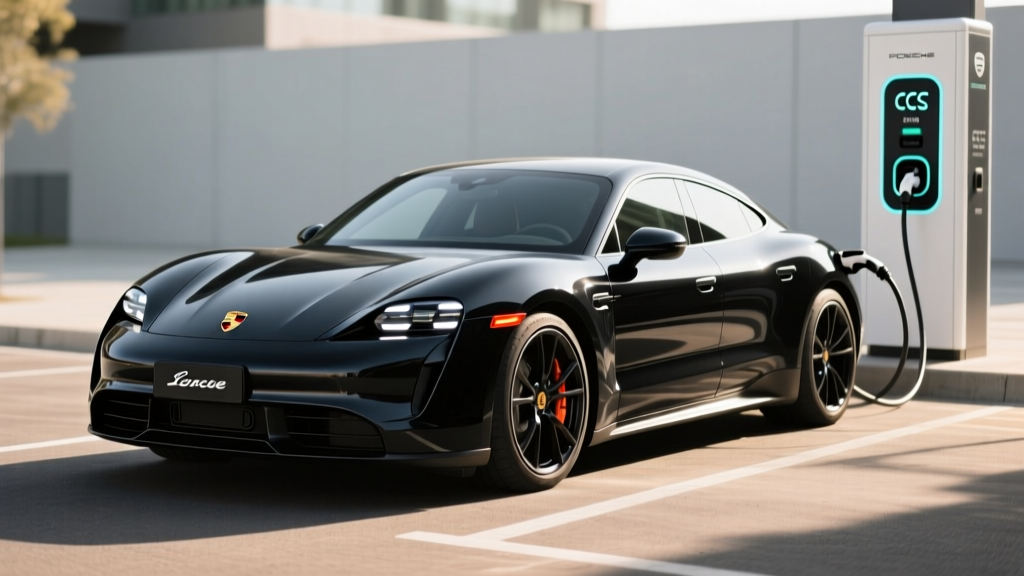
Before we get into the specs, let's clear up the internet's most-debated automotive phonetics: how to pronounce Taycan? It's "TIE-kahn" — rhymes with "eye on." The name derives from a Turkish phrase meaning "lively young horse," a nod to Porsche's Stuttgart crest featuring a stallion. Now that we've settled that, let's talk about whether Porsche's flagship electric sports sedan actually earns its badge in 2026.
The 2026 Porsche Taycan lineup has evolved significantly since its 2020 debut. A major refresh brought larger battery packs, faster charging, improved efficiency, and a new rear-wheel-drive base model that undercuts the competition on price while outperforming it on driving dynamics. Here's everything a prospective buyer needs to know.
2026 Porsche Taycan: Core Specifications at a Glance
| Spec | Base RWD | 4S | Turbo | Turbo S | Turbo GT |
|---|---|---|---|---|---|
| EPA Range | 318 mi | 318 mi | 300 mi | 283 mi | 269 mi |
| Battery (usable kWh) | 97.0 kWh | 97.0 kWh | 97.0 kWh | 97.0 kWh | 97.0 kWh |
| Chemistry | NMC | NMC | NMC | NMC | NMC |
| Horsepower | 402 hp | 590 hp | 870 hp | 944 hp | 1,092 hp |
| 0–60 mph | 4.6 sec | 3.5 sec | 2.5 sec | 2.3 sec | 2.1 sec |
| Drivetrain | RWD | AWD (dual) | AWD (dual) | AWD (dual) | AWD (dual) |
| MPGe (combined) | 92 MPGe | 89 MPGe | 83 MPGe | 78 MPGe | 72 MPGe |
| Base MSRP | $92,950 | $107,350 | $152,750 | $190,450 | $235,700 |
Range and Efficiency: EPA vs. the Real World
Real-World Expectation: ~265–290 miles in mixed highway/city driving at moderate temperatures; expect 220–250 miles in sustained 75+ mph highway runs or cold weather below 30°F. The Turbo GT drops to roughly 210–230 miles real-world on highway stints.
The 2026 Taycan uses a revised 97.0 kWh usable NMC (nickel-manganese-cobalt) battery pack across all trims — a meaningful bump from the pre-refresh 79.2 kWh Performance Battery and 93.4 kWh Performance Battery Plus. Porsche's 800-volt architecture remains the backbone of the platform, enabling both superior charging speeds and efficiency gains through reduced resistive losses in the power electronics.
Efficiency varies considerably by trim. The base RWD achieves 92 MPGe combined (per EPA data on fueleconomy.gov), translating to roughly 36 kWh per 100 miles. The Turbo GT, with its aggressive tire compound and higher aero drag from track-focused bodywork, drops to 72 MPGe. If your commute is primarily city and suburban at speeds under 55 mph, you'll approach or even exceed EPA figures thanks to strong regenerative braking recovery — up to 290 kW of regen, among the highest in the industry.
Cold-weather owners should budget for 20–30% range reduction in sub-freezing temperatures, though the Taycan's heat pump (standard on all 2026 trims) mitigates cabin-heating energy draw substantially compared to resistive heater systems.
Charging Speed: 800V Architecture Still Sets the Standard
Porsche's 800-volt platform was pioneering when it launched, and in 2026 it remains one of the fastest-charging architectures available to consumers. The Taycan can accept a peak DC fast-charge rate of 320 kW at compatible chargers — up from 270 kW on pre-refresh models.
| Charging Level | Power / Rate | Speed / Time |
|---|---|---|
| Level 1 (120V household) | ~1.4 kW | ~4 miles per hour |
| Level 2 (240V home, 48A) | 11.5 kW | ~32 miles per hour; full charge in ~10 hours |
| DC Fast Charge (350 kW station) | Peak 320 kW | 10–80% in ~18 minutes |
| DC Fast Charge (150 kW station) | ~150 kW sustained | 10–80% in ~33 minutes |
The 10–80% time of approximately 18 minutes on a 350 kW charger is legitimate — but only if you precondition the battery. The Taycan's navigation system will automatically begin thermal preconditioning when you route to a DC fast charger, warming the pack to its optimal charging temperature window. Skip preconditioning and you'll see peak rates closer to 150–200 kW even at a capable station.
Like all EVs, the Taycan's charge curve tapers significantly above 80% state of charge. Charging from 80–100% can add another 20+ minutes. For road trips, plan your stops around 10–80% sprints and you'll minimize time at the charger.
Home charging on a Level 2 wall connector at 11.5 kW will replenish the full pack overnight. A standard NEMA 14-50 outlet on a 40-amp circuit delivers about 9.6 kW, adding roughly 27 miles of range per hour — sufficient for most daily driving needs.
Performance, Drivetrain, and What It Feels Like to Drive
Even the "entry-level" rear-wheel-drive Taycan delivers 402 horsepower and a 4.6-second 0–60 mph time. That's sports-car territory, and the instant torque delivery makes it feel even quicker in real-world passing scenarios. The dual-motor all-wheel-drive models add a front-mounted permanent-magnet synchronous motor for superior traction and launch performance.
The Turbo GT — with 1,092 horsepower in launch-control mode — is among the quickest production sedans ever built. Its 2.1-second 0–60 mph time rivals hypercars, and it holds the Nürburgring lap record for production EVs. But the real story is the mid-range: the Taycan's two-speed rear transmission (unique in the EV segment) provides relentless acceleration from 50–100 mph where single-speed competitors begin to taper.
Adaptive air suspension with Porsche Active Suspension Management (PASM) is standard on 4S and above. Rear-axle steering, available across the lineup, shrinks the turning radius and adds high-speed stability. The brake pedal feel — a perennial challenge for EVs blending regen with friction brakes — is the best-tuned in the industry, offering linear, predictable modulation.
Pricing, Trims, and Federal Tax Credit Eligibility
The 2026 Taycan lineup spans a wide price range. Here's what each trim costs and how the federal EV tax credit factors in:
| Trim | Base MSRP | §30D Credit Eligible? | Effective Price (if eligible) |
|---|---|---|---|
| Base RWD | $92,950 | No — exceeds $55,000 sedan cap | $92,950 |
| 4S | $107,350 | No — exceeds $55,000 sedan cap | $107,350 |
| Turbo | $152,750 | No — exceeds $55,000 sedan cap | $152,750 |
| Turbo S | $190,450 | No — exceeds $55,000 sedan cap | $190,450 |
| Turbo GT | $235,700 | No — exceeds $55,000 sedan cap | $235,700 |
The Taycan does not qualify for the §30D new clean vehicle credit. Under current IRS rules (per irs.gov), sedans must have an MSRP at or below $55,000 to be eligible. The Taycan's starting price of $92,950 places it far above this threshold. Additionally, buyer income caps ($150,000 single / $300,000 married filing jointly for modified AGI) would exclude many buyers even if the price cap were met.
No Taycan trim qualifies for the federal credit. However, some states offer their own EV incentives that may apply — check your state's energy or DMV website for specifics. The federal used-EV credit (up to $4,000 for qualifying pre-owned EVs under $25,000) also will not apply to any Taycan on the used market for years given price reality.
Interior, Cargo, and Daily Practicality
The Taycan is a sports sedan first, and interior space reflects that priority. Front passengers enjoy generous legroom (41.3 inches) and supportive, deeply bolstered seats. Rear legroom measures 32.7 inches — adequate for adults on shorter trips but tight for anyone over six feet on long drives. The transmission tunnel hump (a vestige of the platform's architecture) limits the middle rear seat to emergency use.
Cargo capacity is modest: 14.3 cubic feet in the rear trunk, supplemented by a front trunk ("frunk") of approximately 2.9 cubic feet. Total cargo volume of ~17.2 cu ft trails the Tesla Model S (28 cu ft behind rear seats) and Lucid Air (32 cu ft) considerably. The Taycan Cross Turismo wagon variant offers more versatility with a hatchback design and up to 42.5 cu ft with rear seats folded.
The infotainment system centers on a 12.6-inch curved digital instrument cluster, a 10.9-inch central touchscreen, and an optional 10.9-inch passenger-side display. The latest PCM (Porsche Communication Management) software is responsive and supports wireless Apple CarPlay and Android Auto. A touch-sensitive climate control panel sits below the main screen — functional but prone to fingerprint smudges.
Driver Assistance and Safety Technology
The 2026 Taycan includes Porsche InnoDrive as standard on Turbo trims and optional on lower trims. This adaptive cruise system with predictive speed adjustment uses navigation data to anticipate curves, speed limits, and traffic conditions. It's a solid SAE Level 2 system — not self-driving — requiring the driver to maintain hands on the wheel and full situational awareness at all times.
Standard safety features include forward collision warning with automatic emergency braking, lane-keeping assist, blind-spot monitoring, and rear cross-traffic alert. The Taycan holds a 5-star Euro NCAP rating and earns top marks from the IIHS (iihs.org) in crashworthiness testing. Night vision assist with pedestrian detection is available as a standalone option.
Warranty Coverage and Battery Longevity
Porsche provides the following warranty coverage for the 2026 Taycan:
- Limited Vehicle Warranty: 4 years / 50,000 miles
- Battery & Powertrain Warranty: 8 years / 100,000 miles
- Battery Capacity Guarantee: Minimum 70% state of health retained over the 8-year / 100,000-mile warranty period
- Corrosion Perforation Warranty: 12 years, unlimited miles
The 70% capacity retention threshold is consistent with industry norms (Tesla, BMW, Mercedes-Benz all use similar benchmarks). Real-world data from earlier Taycan model years suggests NMC degradation is moderate: most owners report 5–8% capacity loss over the first 50,000 miles, with the curve flattening thereafter. Porsche's 800V system and active thermal management contribute to relatively gentle degradation profiles compared to passively cooled packs.
If you're concerned about long-term battery health: avoid habitual 100% charges for daily use (set your charge limit to 80–90%), minimize repeated DC fast charging when Level 2 is available, and always use battery preconditioning before fast-charge sessions.
Pros, Cons, and the Verdict
Pros
- Class-leading 800V charging architecture (320 kW peak, 10–80% in ~18 min)
- Best-in-class driving dynamics and steering feel
- Two-speed rear transmission delivers unmatched mid-range acceleration
- Excellent brake pedal feel with blended regen
- Strong regenerative braking up to 290 kW
- Premium build quality and materials throughout
- Heat pump standard on all trims
Cons
- No federal tax credit eligibility — MSRP far exceeds $55,000 sedan cap
- Cargo space (17.2 cu ft total) trails Model S and Lucid Air significantly
- Rear seat legroom tight for tall passengers
- Infotainment learning curve; touch-sensitive climate controls
- No hands-free highway driving feature (unlike GM Super Cruise / Ford BlueCruise)
- Options packages escalate price rapidly
Who Should Buy the 2026 Porsche Taycan?
Consider the Tesla Model S, Lucid Air, or BMW i5 instead if: You need maximum cargo versatility, rear-seat space for adults on long trips, hands-free highway driving capability (Super Cruise/BlueCruise), or a lower effective price after tax incentives. The BMW i5 M60, starting around $87,000, offers a compelling balance of performance and practicality at a slightly lower entry point — though it also exceeds the §30D sedan cap.
The Taycan is not the most practical EV in its class, nor the most efficient, nor the most affordable. It is, however, the one that best translates Porsche's sports-car heritage into an electric package without compromise on driving feel. If that's your priority and the budget allows, it remains the driver's choice in the luxury EV sedan segment.
Frequently Asked Questions
How do you pronounce Porsche Taycan?
"TIE-kahn" — the first syllable rhymes with "eye," and the second syllable sounds like "kahn" (similar to "con" but with a broader vowel). The name is inspired by a Turkish expression meaning "spirited young horse."
What is the real-world range of the 2026 Porsche Taycan?
EPA-rated range peaks at 318 miles for the Base RWD and 4S trims. In real-world mixed driving, expect 265–290 miles. Sustained highway driving at 75+ mph or cold weather below 30°F reduces range to approximately 220–250 miles for those trims, and as low as 190–210 miles for the Turbo GT.
How fast does the Taycan charge at home and on the road?
On a 350 kW DC fast charger with battery preconditioning, the Taycan peaks at 320 kW and charges from 10–80% in approximately 18 minutes. At home on a 240V Level 2 charger at 11.5 kW, expect about 32 miles of range per hour, or a full charge in roughly 10 hours.
Does the Porsche Taycan qualify for the federal EV tax credit?
No. Under current IRS §30D rules, new sedans must have an MSRP of $55,000 or less to be eligible. The Taycan starts at $92,950, well above this threshold. Buyer income caps and battery-sourcing requirements impose additional barriers. Check irs.gov for the latest rules.
Is the Taycan worth buying over the Tesla Model S or Lucid Air?
The Taycan wins on driving dynamics, steering feel, charging speed, and build quality. The Tesla Model S offers more cargo space (28 cu ft), access to the Supercharger network (though the Taycan now supports NACS via adapter), and available FSD Supervised. The Lucid Air leads in EPA range (up to 516 miles) and rear-seat space. Your priority — driving engagement vs. practicality vs. range — determines the best choice.
What battery chemistry does the Taycan use?
All 2026 Taycan trims use NMC (nickel-manganese-cobalt) lithium-ion cells in a 97.0 kWh usable battery pack. NMC offers high energy density suitable for the Taycan's performance targets, though it is more sensitive to high-temperature degradation than LFP chemistry. Porsche's active thermal management system mitigates this concern.