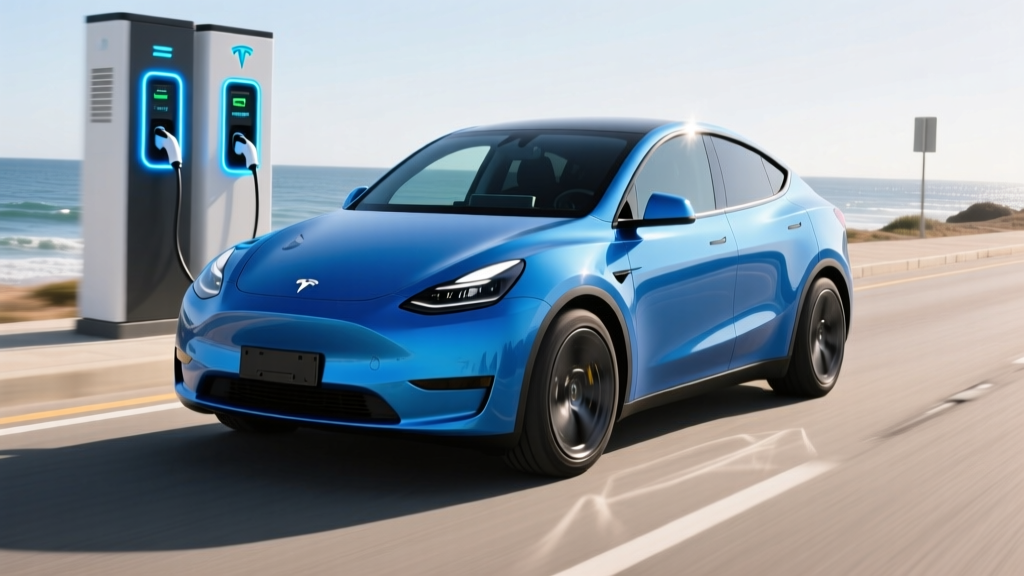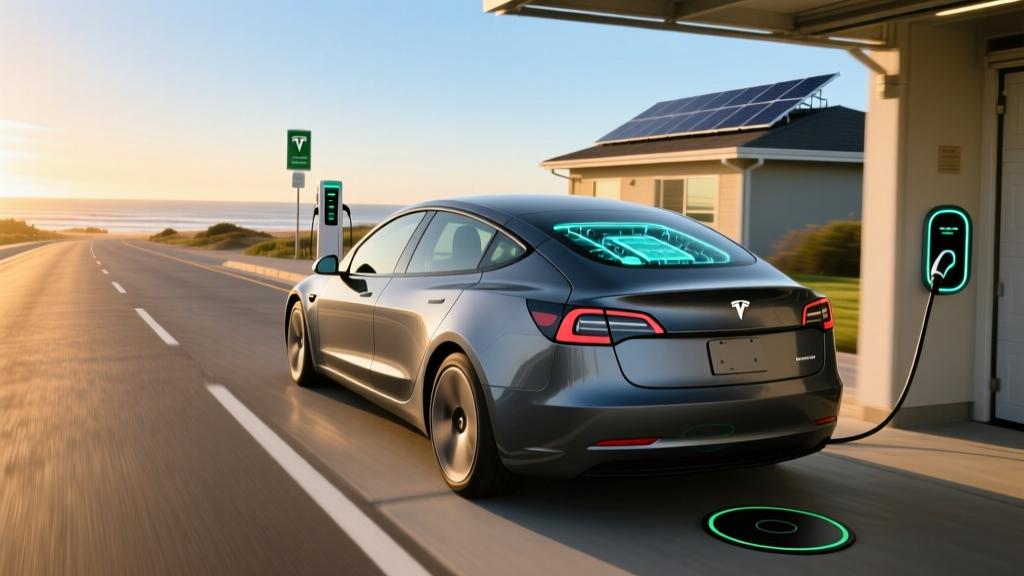
Quick Verdict: Is the Tesla Model 3 Still the EV to Beat?
The refreshed Tesla Model 3 (dubbed "Highland" and carried into 2026 with minor updates) remains one of the most efficient, best-charging, and most technologically integrated electric sedans on the market. If you've searched "how to drive a Tesla Model 3" and landed here, you're likely weighing whether its minimalist approach, Supercharger network access, and strong efficiency translate to daily satisfaction. The short answer: yes, if you value low running costs and fast road-trip charging over plush interiors and physical controls. But there are real trade-offs worth understanding before you sign.
This guide walks you through everything a new or prospective owner needs to know — from real-world range and charging logistics to the quirks of Tesla's driver-assist systems and the current federal tax credit landscape.
Tesla Model 3 Spec Sheet at a Glance
| Spec | RWD (Standard Range) | Long Range AWD | Performance |
|---|---|---|---|
| EPA Range | 272 mi | 342 mi | 316 mi |
| Battery (usable, chemistry) | ~57 kWh, LFP | ~77 kWh, NMC | ~77 kWh, NMC |
| Drivetrain | Rear-Wheel Drive | Dual-Motor AWD | Dual-Motor AWD |
| Horsepower | 271 hp | 384 hp | 510 hp |
| 0-60 mph | 5.8 sec | 4.2 sec | 2.9 sec |
| Peak DC Fast Charge | ~170 kW | ~250 kW | ~250 kW |
| 10-80% DCFC Time | ~25 min | ~18 min | ~18 min |
| Level 2 Home Charge | 11.5 kW (~44 mi/hr) | 11.5 kW (~44 mi/hr) | 11.5 kW (~44 mi/hr) |
| EPA Efficiency | 132 MPGe (25 kWh/100mi) | 131 MPGe (26 kWh/100mi) | 116 MPGe (29 kWh/100mi) |
| Cargo (trunk + frunk) | 23 cu ft trunk + ~3 cu ft frunk | 23 cu ft trunk + ~3 cu ft frunk | 23 cu ft trunk + ~3 cu ft frunk |
| Rear Legroom | 35.3 in | 35.3 in | 35.3 in |
| Base MSRP | $38,990 | $45,990 | $54,990 |
| Battery Warranty | 8 yr / 100,000 mi | 8 yr / 120,000 mi | 8 yr / 120,000 mi |
Sources: fueleconomy.gov, Tesla.com specs.
Real-World Range: What the EPA Sticker Doesn't Tell You
EPA estimate: 342 miles
Real-world highway (70 mph, 70°F): ~280-300 miles
Real-world mixed city/highway: ~300-320 miles
Cold-weather (below 30°F, highway): ~220-260 miles
Plan road trips around ~250 usable miles per charge for comfort.
The Model 3 Long Range's 342-mile EPA figure is genuinely excellent for a sedan in this price range, but several factors compress that number in practice:
- Highway driving at 75-80 mph cuts efficiency by roughly 15-20% versus the EPA's combined cycle. Aerodynamic drag scales with the square of speed.
- Cold weather is the Model 3's biggest range adversary. Below freezing, expect 20-35% loss without preconditioning. The heat pump (standard on all 2026 trims) helps substantially versus older resistive heaters, but physics still wins.
- Preconditioning matters: Use Scheduled Departure or navigate to a Supercharger before arriving — this warms the battery, enabling faster charging and slightly better range recovery.
The RWD trim's LFP battery has an interesting quirk: Tesla recommends charging it to 100% regularly (unlike NMC, where 80% daily is preferred for longevity). This means RWD owners can actually use the full 272 miles daily, while Long Range owners typically keep a 20% buffer, yielding ~270 usable miles in practice.
Charging Speed & Network: The Model 3's Biggest Advantage
| Level | Power | Speed (Long Range) | Typical Use Case |
|---|---|---|---|
| Level 1 (120V) | ~1.4 kW | ~5 mi/hr | Emergency/trickle only |
| Level 2 (240V, 48A) | 11.5 kW | ~44 mi/hr | Home overnight, workplace |
| DC Fast (V3 Supercharger) | Peak 250 kW | 10-80% in ~18 min | Road trips |
| DC Fast (V4 Supercharger) | Peak 250+ kW | Similar to V3 for this car | Newer stations |
The Model 3's 250 kW peak on V3/V4 Superchargers isn't class-leading (Hyundai's Ioniq 6 hits ~240 kW sustained longer thanks to 800V architecture), but Tesla's charge curve is well-managed. The Long Range typically holds 200+ kW from 10-35% SoC, then tapers progressively. Expect 10-80% in roughly 18 minutes under ideal conditions (warm battery, preconditioned).
Critical nuance: Peak kW is not sustained kW. A "250 kW charger" doesn't deliver 250 kW the entire session. The Model 3 averages closer to 140-160 kW across a 10-80% session, which still translates to roughly 170-180 miles added in 15 minutes — enough for most road-trip comfort stops.
At home, an 11.5 kW Wall Connector on a 60A circuit fully replenishes a Long Range overnight (~8-9 hours from near-empty). Most owners who plug in nightly never think about range.
The Model 3 now ships with the NACS (Tesla) connector natively — no adapter needed at Superchargers. For Electrify America, EVgo, or other CCS networks, you'll need Tesla's CCS adapter (~$175) or use a third-party option. Supercharger access remains the Model 3's strongest competitive moat.
Performance & Driving Dynamics
Even the base RWD Model 3 delivers 271 hp and a 5.8-second 0-60 — brisk by any sedan standard. The Long Range's 4.2 seconds and dual-motor AWD make it a genuinely quick all-weather commuter, while the Performance trim's 2.9 seconds puts it in sports-car territory.
The Highland refresh significantly improved ride quality over the pre-2024 Model 3 — softer damping, better sound insulation, and ventilated front seats addressed the most common complaints. Steering remains quick and direct, though some drivers find it overly artificial. Regenerative braking is strong but no longer offers a "low" setting — one-pedal driving is the default experience, and most owners adapt within a week.
Autopilot & FSD: What Level Are We Actually Talking About?
Tesla Autopilot and FSD (Supervised) are SAE Level 2 driver-assistance systems. You must remain attentive, keep hands on the wheel (or demonstrate engagement via camera monitoring), and be ready to take over at any moment. This is NOT autonomous driving.
Basic Autopilot (traffic-aware cruise + lane centering) comes standard and works well on highways. Full Self-Driving (Supervised), a $8,000 option or $99/month subscription in 2026, adds city-street navigation, stop-light recognition, and more assertive lane changes. FSD has improved substantially but still makes errors that require driver intervention — construction zones, unusual intersections, and faded lane markings remain weak points. Treat it as a fatigue-reducer, not a chauffeur.
Pricing, Trims & Federal Tax Credit Eligibility
| Trim | Base MSRP | As-Tested (typical) | Potential §30D Credit | Effective Price |
|---|---|---|---|---|
| RWD | $38,990 | $39,990 (w/ paint) | Up to $7,500* | ~$32,990 |
| Long Range AWD | $45,990 | $47,490 (w/ wheels) | Up to $7,500* | ~$39,990 |
| Performance | $54,990 | $56,990 | Up to $7,500* | ~$49,490 |
*§30D Federal Tax Credit — Critical Caveats (2026 rules per IRS.gov):
- MSRP cap: Sedans must be under $55,000 — the RWD and Long Range qualify; Performance does NOT (over cap).
- Buyer income cap: AGI must not exceed $150k single / $300k joint filer.
- Battery sourcing: Critical minerals and battery component rules phase in annually — verify current-year compliance on Tesla's site or IRS guidance before purchase.
- Point-of-sale transfer: Eligible buyers can apply the credit as a down-payment reduction at delivery (dealer-registered), rather than waiting for tax filing.
- Consult a tax professional — eligibility depends on your specific tax situation and the vehicle's build date/VIN.
The RWD at ~$32,990 after credit is arguably the best value in the EV market. The Long Range at ~$39,990 is the sweet spot for road-trippers. The Performance, while thrilling, loses credit eligibility and faces stiffer competition from the BMW i4 M50 and Hyundai Ioniq 6 N.
Interior, Tech & Notable Drawbacks
The Model 3's cabin is minimalist to a fault. The 15.4-inch touchscreen handles virtually every function — climate, mirrors, glovebox, speedometer — which some owners love and others find distracting. Build quality on the 2026 Highland models is markedly better than pre-2023 units, with tighter panel gaps and higher-quality materials.
Cargo: 23 cubic feet in the trunk (liftback design helps) plus a small ~3 cu ft frunk. Adequate for two adults' luggage on road trips but smaller than the Model Y or Hyundai Ioniq 5.
Rear seat: 35.3 inches of legroom is tight for taller passengers. The Model 3 is a driver's car, not a family hauler — rear occupants on long trips will notice the firm cushion and low roofline.
✅ Pros
- Class-leading Supercharger network access
- Excellent efficiency (25-29 kWh/100mi)
- Fast DC charging (10-80% ~18 min LR)
- Strong performance across all trims
- Over-the-air updates add features post-purchase
- Low running costs vs gas equivalents
❌ Cons
- No physical controls — everything is on-screen
- Rear seat space is tight for adults
- No Apple CarPlay / Android Auto
- FSD still requires full driver attention
- Turn signal buttons on steering wheel (no stalk) take adjustment
- Insurance costs above segment average
Who Should Buy the Model 3 (And Who Shouldn't)
- You commute 30-80 miles daily and can charge at home
- Road trips are frequent — Supercharger access is transformative
- You prioritize efficiency and low running costs over luxury materials
- You want a tech-forward, minimalist driving experience
- You live in an area with harsh winters (AWD Long Range is excellent)
- You regularly carry adults in the rear seat (consider Model Y, Ioniq 5)
- You need Apple CarPlay or physical climate buttons
- You want a luxury-brand badge (BMW i4, Mercedes EQB)
- You can't install home charging — public-only ownership adds friction
Model 3 vs. Key Competitors: Is It Still Worth It?
| Spec | Tesla Model 3 LR | Hyundai Ioniq 6 SEL | BMW i4 xDrive40 |
|---|---|---|---|
| EPA Range | 342 mi | 305 mi | 282 mi |
| Peak DC Charge | 250 kW | ~240 kW (800V) | ~205 kW |
| Base MSRP | $45,990 | ~$46,000 | ~$58,000 |
| Tax Credit Eligible? | Yes | No (Korea-built) | No (Germany-built) |
| Charging Network | Supercharger native | CCS + adapter | CCS + adapter |
The Ioniq 6 charges slightly faster in sustained sessions (800V architecture) and has physical buttons, but loses the tax credit and Supercharger convenience. The BMW i4 is a better-built, quieter luxury car but costs significantly more and has shorter range. For most buyers prioritizing value and road-trip ease, the Model 3 Long Range still wins the spreadsheet.
Ownership Costs: 5-Year Total Cost of Ownership
| Category | Model 3 LR | BMW 330i |
|---|---|---|
| Purchase (after credit) | ~$39,990 | ~$45,000 |
| Fuel / Energy (75k mi) | ~$3,500 | ~$9,000 |
| Maintenance | ~$1,200 | ~$3,800 |
| Insurance (avg) | ~$9,500 | ~$7,500 |
| Depreciation (est.) | ~$18,000 | ~$20,000 |
| Total 5-yr | ~$72,190 | ~$85,300 |
The Model 3 wins on TCO primarily through energy savings, lower maintenance (no oil changes, fewer brake replacements thanks to regen), and the tax credit. Insurance is the notable pain point — Tesla premiums run 20-40% higher than segment averages in most states. Get quotes before committing.
Frequently Asked Questions
What is the real-world range of the Tesla Model 3?
The Long Range AWD delivers roughly 280-300 miles on the highway at 70 mph in moderate temperatures, and 220-260 miles in freezing conditions. The RWD yields ~220-240 real-world highway miles. Always plan road trips around 80% of EPA to stay comfortable.
How fast does the Model 3 charge at home and on the road?
At home on a 240V Level 2 Wall Connector (11.5 kW), you gain ~44 miles per hour of charging — a full overnight session handles most drivers. On DC fast chargers, the Long Range peaks at 250 kW and does 10-80% in about 18 minutes when preconditioned.
Does the Tesla Model 3 qualify for the $7,500 federal tax credit?
The RWD and Long Range trims qualify (MSRP under $55,000 sedan cap), provided the buyer's AGI is under $150k single / $300k joint and the vehicle's battery meets current-year critical mineral and component sourcing rules. The Performance trim exceeds the MSRP cap and does not qualify. Always verify on IRS.gov and with a tax professional.
Is the Model 3 worth it vs. the Hyundai Ioniq 6 or BMW i4?
For value and charging infrastructure, yes — the Model 3 Long Range at ~$39,990 after credit, with native Supercharger access and 342 miles of range, is hard to beat. The Ioniq 6 charges faster but loses the credit. The BMW i4 is more refined but costs significantly more. Test-drive all three to decide how much physical controls and cabin luxury matter to you.
How long will the Model 3 battery last?
Tesla warranties the Long Range/Performance battery for 8 years / 120,000 miles (70% minimum capacity retention) and the RWD LFP battery for 8 years / 100,000 miles. Real-world data from high-mileage owners suggests NMC packs retain ~85-90% after 100k miles with proper care (avoiding frequent 100% charges, using preconditioning). LFP packs tolerate 100% charges better and often show less degradation.
Can I use non-Tesla chargers with the Model 3?
Yes, but you'll need a CCS adapter (sold by Tesla for ~$175) to use Electrify America, EVgo, and most non-Tesla networks. The native NACS connector works at all Superchargers without an adapter. As of 2026, many non-Tesla networks are adding NACS cables, reducing adapter dependency over time.
Is Tesla's FSD (Supervised) worth the cost?
For most buyers, no — the $8,000 purchase or $99/month subscription doesn't yet deliver true autonomy (it's SAE Level 2). Basic Autopilot handles highway cruising well for free. FSD is worth trying via the monthly subscription if you drive long highway stretches frequently, but never treat it as self-driving. Keep your hands on the wheel and eyes on the road.
Always verify current pricing, tax credit eligibility, and specifications on Tesla.com and fueleconomy.gov before purchasing — rules and trims change frequently.