Quick Verdict: The Ioniq 5 Charges Faster Than Almost Any EV Under $60K
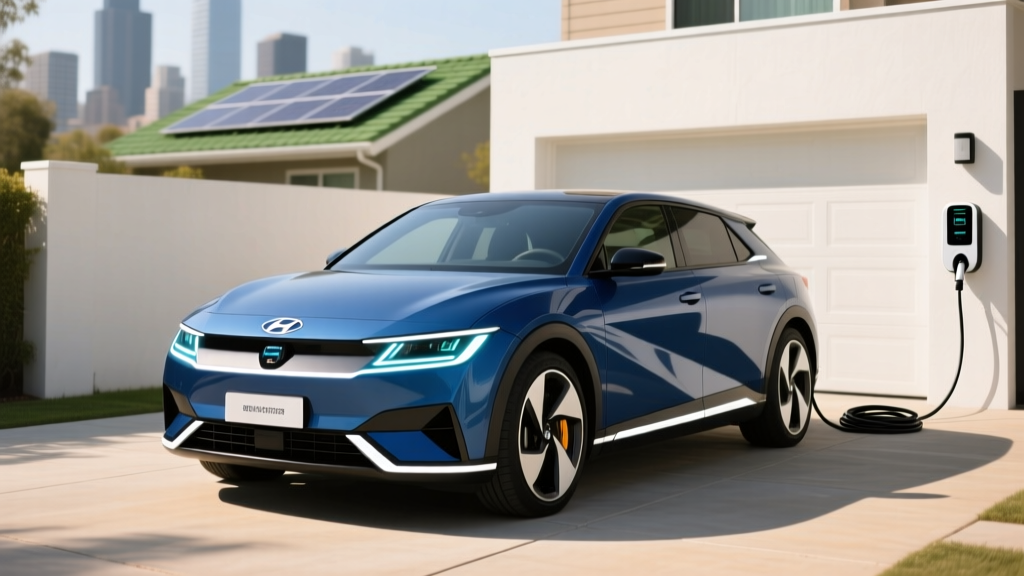
If you've searched "how to charge Ioniq 5" and landed here, the short answer is: you have three options, and the good news is that Hyundai's 800-volt E-GMP architecture makes this one of the fastest-charging electric crossovers you can buy in 2026. On a 350 kW DC fast charger, the Ioniq 5 peaks near 240 kW and can sprint from 10% to 80% state of charge in roughly 18 minutes. At home on a Level 2 wallbox, you'll add about 30 miles of range per hour of charging.
But charging speed is only useful if you understand the full picture — battery size, real-world range, home electrical requirements, and what it actually costs to own. This guide covers every charging scenario the 2026 Hyundai Ioniq 5 supports, plus the ownership context you need to decide if it's the right EV for you.
Ioniq 5 Battery, Range, and Efficiency: The Numbers That Matter
Before we get into how to charge it, you need to know what you're filling up. The 2026 Ioniq 5 comes in two battery configurations:
| Spec | Standard Range (RWD) | Long Range (RWD) | Long Range (AWD) |
|---|---|---|---|
| Usable Battery Capacity | 58 kWh | 77.4 kWh | 77.4 kWh |
| Battery Chemistry | NMC (Nickel Manganese Cobalt) | NMC | NMC |
| EPA Est. Range | 220 miles | 303 miles | 260 miles |
| EPA Combined MPGe | 110 MPGe | 114 MPGe | 101 MPGe |
| Energy Consumption | 30 kWh/100 mi | 29 kWh/100 mi | 33 kWh/100 mi |
| Horsepower | 168 hp | 225 hp | 320 hp |
| 0-60 mph | ~7.4 sec | ~6.7 sec | ~4.5 sec |
| Drivetrain | Rear-Wheel Drive | Rear-Wheel Drive | Dual-Motor AWD |
The EPA numbers above assume a mix of city and highway driving at moderate temperatures. Here's what to actually expect from the Long Range RWD (303 mi EPA):
• Highway-only at 75 mph: Expect roughly 250–270 miles. Sustained high speeds reduce efficiency by 10–15%.
• City/suburban mixed driving: You can hit or slightly exceed 303 miles thanks to regenerative braking recovering energy at lower speeds.
• Cold weather (below 32°F): Plan for 20–30% range loss. That 303-mile sticker drops to roughly 210–240 miles in freezing conditions, especially on short trips where the cabin heater cycles frequently. The Ioniq 5 uses a heat pump (standard on Long Range trims), which mitigates this somewhat compared to resistive heating systems.
• Towing (max 2,300 lbs with tow package): Expect range to drop by 30–50% depending on trailer weight and aerodynamics.
For authoritative EPA figures, cross-reference the official data at fueleconomy.gov.
How to Charge the Ioniq 5: All Three Levels Explained
The Ioniq 5 supports every mainstream charging standard in North America. Starting with the 2025 model year, Hyundai adopted the NACS (North American Charging Standard / Tesla-style) port on new vehicles, and the 2026 Ioniq 5 ships with a NACS port natively. If you're buying a 2024 or earlier model, it will have a CCS1 port and you'll need a CCS-to-NACS adapter for Tesla Supercharger access.
Here's the key distinction every EV owner must internalize: kW (kilowatts) measures power — how fast energy flows into the battery. kWh (kilowatt-hours) measures energy — how much the battery holds. Think of kW as the width of a hose and kWh as the size of the bucket.
| Charging Level | Power (kW) | Connector | Miles of Range Added Per Hour | Typical Use Case |
|---|---|---|---|---|
| Level 1 (120V household outlet) | ~1.4 kW | J1772 (included cable) | ~4–5 mi/hr | Emergency / overnight trickle |
| Level 2 (240V home wallbox) | 10.9 kW (max onboard) | J1772 / NACS | ~30–35 mi/hr | Daily home charging |
| DC Fast Charge (350 kW station) | Peak ~240 kW | NACS (2025+) / CCS1 (2024 and earlier) | ~200+ mi in 18 min (10-80%) | Road trips |
| DC Fast Charge (150 kW station) | ~120–150 kW sustained | NACS / CCS1 | ~130 mi in 18 min (10-80%) | Common public chargers |
Level 1: The Emergency Backup
Every Ioniq 5 ships with a portable charging cable that plugs into a standard 120V household outlet. At roughly 1.4 kW, you'll gain about 4 to 5 miles of range per hour. Charging a depleted Long Range battery from 10% to 80% would take approximately 38 hours. This isn't a daily solution — it's for emergencies or extremely low-mileage drivers who can leave the car plugged in overnight and only need 30–40 miles back by morning.
Level 2: Your Primary Home Charging Solution
This is how the vast majority of Ioniq 5 owners charge daily. A 240V Level 2 wallbox delivering 48 amps (11.5 kW) will max out the Ioniq 5's onboard charger at 10.9 kW. That translates to roughly 30–35 miles of range per hour, or a full 10–80% charge in about 5.5 hours.
Home installation requirements:
- A dedicated 60-amp circuit breaker (for a 48-amp charger, the NEC requires a 125% safety margin: 48A × 1.25 = 60A breaker)
- 240V wiring run from your electrical panel to your garage or driveway
- Most homes with a 200-amp electrical panel can accommodate this without an upgrade
- Typical installation cost: $800–$2,500 depending on panel proximity, wall material, and local permit fees
Popular Level 2 chargers compatible with the Ioniq 5 include the ChargePoint Home Flex, Emporia Vue, and Wallbox Pulsar Plus. If you opt for a NACS-connector charger (increasingly common for 2025+ vehicles), it'll plug directly into the 2026 Ioniq 5's native port.
DC Fast Charging: Road-Trip Speeds and the Charge Curve Reality
The Ioniq 5's 800-volt architecture is its standout feature. While most EVs in this price class use 400-volt systems (limiting peak charge rates), the Ioniq 5 can accept up to ~240 kW on a 350 kW charger like those found at Electrify America stations.
But here's the charging-curve reality that marketing materials gloss over: The Ioniq 5 does NOT sustain 240 kW for the entire session. The peak rate applies roughly between 10–30% state of charge. As the battery fills, the charge rate tapers to protect cell health:
- 10–30% SoC: Peaks near 235–240 kW
- 30–55% SoC: Sustains roughly 180–200 kW
- 55–80% SoC: Tapers to 120–150 kW
- 80–100% SoC: Drops sharply to ~50 kW and below (this is why you rarely charge past 80% on road trips)
The 10–80% time of ~18 minutes is legitimate on a 350 kW station. On a more common 150 kW charger, expect 25–30 minutes for the same session. Always use the Ioniq 5's battery preconditioning feature — activate navigation to a charger and the car will warm the battery to optimal temperature, which is critical for achieving peak charge speeds, especially in cool weather.
Charging Networks and Connector Compatibility
With the 2026 Ioniq 5's native NACS port, you now have access to the largest fast-charging network in North America:
- Tesla Superchargers: Direct plug-in, no adapter needed (17,000+ stalls in the US)
- Electrify America: NACS-compatible stations rolling out; CCS stations may require adapter for 2025+ models
- EVgo, ChargePoint, and other networks: Increasingly adding NACS cables
If you own a 2024 or earlier Ioniq 5 with a CCS1 port, Hyundai offers a NACS adapter (approximately $200–$250) that unlocks Tesla Supercharger access. Check Hyundai's official owner portal for the approved adapter part number.
Pricing, Trims, and Federal Tax Credit Eligibility
| Trim | Drivetrain | Base MSRP | Est. After §30D Credit* |
|---|---|---|---|
| SE Standard Range | RWD | $42,600 | ~$35,100 |
| SE | RWD | $47,400 | ~$39,900 |
| SEL | RWD | $50,900 | ~$43,400 |
| Limited | AWD | $58,200 | ~$50,700 |
| XRT | AWD | $56,500 | ~$49,000 |
*Tax credit estimates assume full $7,500 eligibility. Actual credit depends on your individual tax situation, battery sourcing compliance, and income limits.
To qualify for the full $7,500 credit on the Ioniq 5, you must meet ALL of the following per IRS guidelines:
• Income caps: Modified AGI ≤ $150,000 (single), $225,000 (head of household), $300,000 (married filing jointly)
• MSRP cap: The Ioniq 5 is classified as an SUV/crossover, so the cap is $80,000. All trims fall under this limit.
• Battery sourcing: A percentage of critical minerals and battery components must be sourced from the US or free-trade-agreement countries. Hyundai has been working to shift Ioniq 5 production to the Georgia Metaplant, which significantly improves sourcing compliance for 2025–2026 models.
• Point-of-sale transfer: You can transfer the credit to the dealer at purchase, reducing your out-of-pocket cost immediately rather than waiting for a tax refund.
Important: Sourcing requirements tighten annually. Verify current-year eligibility on the IRS Clean Vehicle credit page before purchasing. Consult a tax professional for your specific situation.
Interior Space, Tech, and Daily Livability
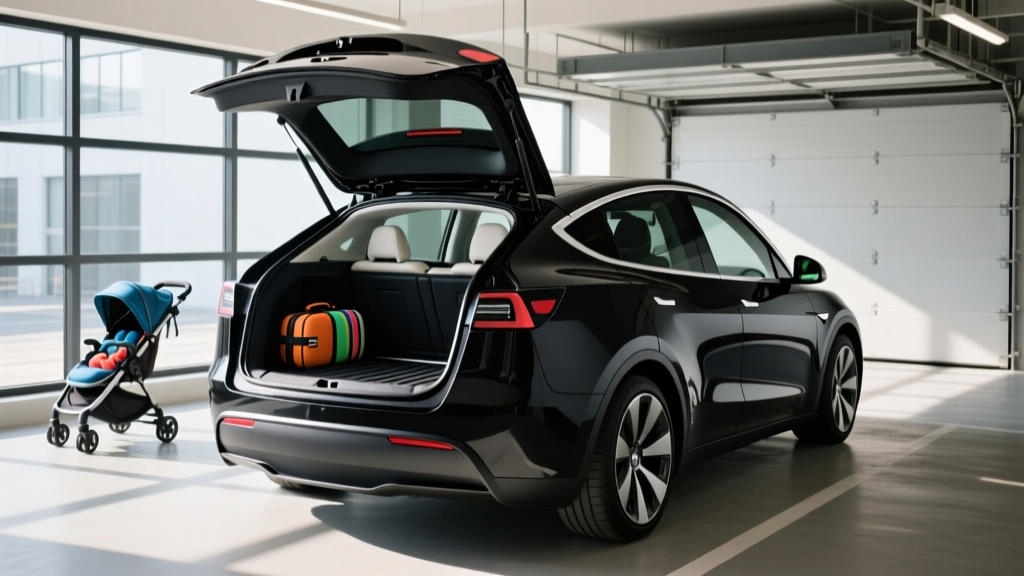
The Ioniq 5's flat floor and long 118.1-inch wheelbase (on a relatively compact exterior) create genuinely impressive interior volume:
- Front legroom: 41.7 inches
- Rear legroom: 39.4 inches (more than many midsize SUVs)
- Cargo behind rear seats: 27.2 cu ft
- Cargo with rear seats folded: 59.3 cu ft
- Front trunk (frunk): 2.0 cu ft (AWD) / 3.3 cu ft (RWD) — enough for a charging cable bag and small items
Standout tech features:
- Dual 12.3-inch displays (instrument cluster + infotainment) with wireless Apple CarPlay and Android Auto
- Vehicle-to-Load (V2L): The Ioniq 5 can output up to 3.6 kW of AC power from its battery, enough to run appliances, power tools at a campsite, or even provide limited backup power to your home during an outage
- Hyundai SmartSense ADAS suite: includes Highway Driving Assist 2 (HDA2), which provides adaptive cruise control with lane-centering on highways — this is SAE Level 2 driver assistance, meaning you must keep your hands on the wheel and eyes on the road at all times
- Augmented reality head-up display (Limited trim)
- Heat pump (standard on Long Range) for improved cold-weather range
Notable drawbacks:
- No rear wiper (visibility issue in rain/snow on the hatchback glass)
- Infotainment can be menu-heavy; physical shortcut buttons are limited
- Road noise is noticeable at highway speeds compared to luxury competitors
- The frunk is small and not weather-sealed on some trims
Warranty Coverage
Hyundai backs the Ioniq 5 with one of the strongest warranty packages in the EV segment:
- Battery warranty: 10 years / 100,000 miles (covers capacity loss below 70% of original)
- Powertrain warranty: 10 years / 100,000 miles
- New vehicle limited warranty: 5 years / 60,000 miles
- Complimentary maintenance: 3 years / 36,000 miles
- Roadside assistance: 5 years / unlimited miles
The 10-year battery warranty is a significant ownership advantage. Independent data from fleet operators and owners tracking State of Health (SoH) via apps like Car Scanner shows most Ioniq 5 batteries degrading less than 5% in the first 50,000 miles — well within warranty tolerance.
Who Should Buy the Ioniq 5 — And Who Shouldn't
• Daily commuters who can charge at home: 303 miles of range covers weeks of commuting without visiting a public charger
• Small families needing generous rear-seat space without a three-row SUV footprint
• Road trippers who value fast DC charging — 18-minute stops are competitive with gas-station breaks
• Tech-forward buyers who want V2L capability and 800V architecture without paying luxury-EV prices
Look elsewhere if:
• You need three rows of seating (consider the Ioniq 9 or Kia EV9)
• You want over 350 miles of range (the Tesla Model Y Long Range offers ~330 mi; the Lucid Air exceeds 400 mi but at much higher cost)
• You frequently tow heavy loads — the 2,300-lb tow rating is modest
• You lack home charging access and your area has sparse DC fast-charging infrastructure
Pros and Cons at a Glance
- Class-leading DC fast-charge speed (800V architecture)
- Spacious rear seat and cargo area for the footprint
- 303-mile EPA range on Long Range RWD
- 10-year/100,000-mile battery warranty
- V2L power output capability
- Competitive pricing with tax credit eligibility
- Native NACS port for Tesla Supercharger access (2025+)
- No rear wiper
- Frunk is small (especially on AWD)
- Highway road noise above 70 mph
- Infotainment learning curve
- Cold-weather range loss of 20–30%
- Modest 2,300-lb tow rating
- Some ADAS features require subscription for remote smart parking
Frequently Asked Questions
What is the real-world range of the Hyundai Ioniq 5?
The Long Range RWD Ioniq 5 carries an EPA rating of 303 miles. In real-world mixed driving, most owners report 270–310 miles depending on conditions. Highway-only driving at 75+ mph typically yields 250–270 miles. In freezing temperatures, expect 210–240 miles. The AWD Long Range drops to a 260-mile EPA rating, with real-world results around 220–250 miles.
How fast does the Ioniq 5 charge at home and on DC fast chargers?
At home on a Level 2 (240V, 48-amp) charger, the Ioniq 5 accepts up to 10.9 kW, adding roughly 30–35 miles of range per hour — a full overnight charge is easy. On a 350 kW DC fast charger, it peaks near 240 kW and charges from 10–80% in approximately 18 minutes. On a 150 kW charger (more common), expect 25–30 minutes for the same session.
How much does the Ioniq 5 cost after the federal tax credit?
The 2026 Ioniq 5 starts around $42,600 for the SE Standard Range and climbs to roughly $58,200 for the Limited AWD. If you qualify for the full $7,500 §30D federal tax credit (subject to income, MSRP, and battery-sourcing requirements), effective prices range from approximately $35,100 to $50,700 depending on trim. Verify eligibility at irs.gov before purchasing.
Is the Ioniq 5 worth buying vs. the Tesla Model Y or Kia EV6?
The Ioniq 5 competes directly with the Tesla Model Y and its corporate sibling, the Kia EV6. The Ioniq 5 wins on interior space (especially rear legroom), DC fast-charge speed, and warranty coverage. The Model Y offers more Supercharger stalls (though the gap has closed with NACS adoption), slightly better efficiency, and OTA updates. The EV6 shares the same platform and 800V architecture but has a sportier design with slightly less cargo room. If charging speed and interior comfort are priorities, the Ioniq 5 is the strongest pick in this trio.
Does the Ioniq 5 qualify for the federal EV tax credit?
Yes, the 2026 Ioniq 5 qualifies for up to $7,500 under IRS §30D, provided you meet income caps (≤$150K single / ≤$300K joint), the vehicle MSRP is under $80,000 (all trims qualify), and the battery meets critical-mineral and component-sourcing thresholds. Hyundai's shift to US production at the Georgia Metaplant has improved sourcing compliance. Always verify current-year rules on the IRS website, as requirements tighten annually. The credit can be transferred to the dealer at point of sale, reducing your purchase price immediately.
Do I need to upgrade my electrical panel for a Level 2 home charger?
Most homes with a 200-amp electrical panel can add a 60-amp dedicated circuit for a 48-amp Level 2 charger without a panel upgrade. If your home has a 100-amp panel or your panel is already near capacity, an upgrade to 200 amps may be required, adding $1,500–$3,500 to installation costs. Have a licensed electrician perform a load calculation before installation.
Can I use Tesla Superchargers with my Ioniq 5?
Yes. The 2026 Ioniq 5 ships with a native NACS port and can plug directly into Tesla Superchargers. For 2024 and earlier models with CCS1 ports, Hyundai provides a NACS adapter. Activate the charger through the Tesla app or the vehicle's infotainment system (depending on the network integration).