Quick Answer: How Do You Charge an EV?
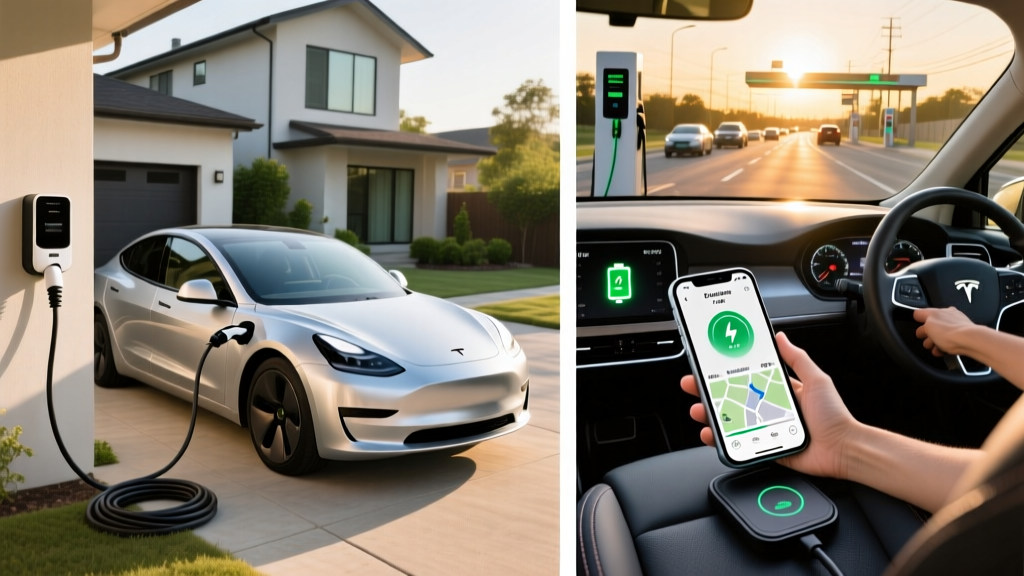
There are three ways to charge an electric vehicle: Level 1 (120V household outlet, ~1.4 kW, adds 3–5 miles of range per hour), Level 2 (240V home or public charger, 7–19 kW, adds 25–60 miles per hour), and DC fast charging (public stations, 50–350 kW, adds 150–1,000+ miles per hour, typically reaching 10–80% in 18–40 minutes). Most EV owners do 80–90% of their charging at home on Level 2, relying on DC fast chargers only for road trips.
Understanding EV Charging Levels: kW, kWh, and What They Mean
Before plugging in, you need to understand two units that get confused constantly:
- kW (kilowatts) = the rate of power delivery. Think of it as how fast water flows from a hose.
- kWh (kilowatt-hours) = the total energy stored in your battery. Think of it as the size of the bucket.
A 75 kWh battery charged at 7 kW takes roughly 10.7 hours from empty to full (75 ÷ 7 = 10.7). That same battery on a 150 kW DC fast charger can go from 10% to 80% in about 25–30 minutes, though the rate tapers significantly above 80% to protect the cells.
| Level | Voltage | Power (kW) | Miles Added/Hour | Typical Use Case | 10–80% Time* |
|---|---|---|---|---|---|
| Level 1 | 120V AC | 1.2–1.9 kW | 3–5 mi | Overnight trickle, PHEVs, low-mileage drivers | 30–50+ hours |
| Level 2 | 240V AC | 7.2–19.2 kW | 25–60 mi | Home daily charging, workplace, public destinations | 5–11 hours |
| DC Fast | 200–800V DC | 50–350 kW | 150–1,000+ mi | Road trips, quick top-ups, commercial fleets | 15–40 min |
*Times vary by vehicle battery size, chemistry, and thermal management. Peak kW is sustained only during a portion of the charge curve — typically between 10% and 50% SoC — before tapering.
Home Charging Setup: What It Costs and What You Need
For most EV owners, a Level 2 home charger is the backbone of daily ownership. You wake up to a full battery every morning, and your "fuel" cost is a fraction of gasoline. But installation isn't free, and your home's electrical panel may need an upgrade.
Equipment and Installation Cost Breakdown
| Item | Low Estimate | High Estimate | Notes |
|---|---|---|---|
| Level 2 charger (hardware) | $350 | $750 | Brands: ChargePoint Home Flex, Emporia Vue, Wallbox Pulsar Plus, Tesla Wall Connector |
| Electrician labor | $500 | $2,000 | Depends on run length from panel to garage/driveway |
| Permit and inspection | $50 | $300 | Varies by municipality; some jurisdictions waive for EV installs |
| Electrical panel upgrade (if needed) | $1,500 | $4,000 | Required if your panel is 100A or maxed out; 200A is standard for modern EV homes |
| Total (no panel upgrade) | $900 | $3,050 | Most homes with 200A service fall here |
| Total (with panel upgrade) | $2,400 | $7,050 | Older homes with 100A panels |
The federal Residential Clean Energy Credit does not cover EV chargers for most taxpayers after 2022, but some states and utilities offer rebates of $250–$1,000 for Level 2 equipment. Check your local utility's website before purchasing.
Key Decision: 32A vs 48A Charger
A 48A charger (11.5 kW on a 60A circuit) charges roughly 35% faster than a 32A unit (7.7 kW on a 40A circuit). If your daily driving exceeds 60 miles or you frequently need quick turnaround charges at home, the 48A unit is worth the marginal cost increase. For drivers covering under 40 miles daily, 32A is more than sufficient — you'll replenish a full day's driving in under 3 hours.
Public DC Fast Charging: Networks, Connectors, and Real-World Speeds
DC fast charging is essential for road trips but should not be your primary charging method. Frequent DC fast charging accelerates battery degradation slightly compared to Level 2, and it costs significantly more per kWh.
Connector Compatibility in 2026
| Connector | Brands Using It | Max DC Rate Available | Notes |
|---|---|---|---|
| NACS (Tesla standard) | Tesla, Ford, GM, Rivian, Volvo, Polestar, Hyundai, Kia (2025+) | Up to 350 kW | Now the dominant North American standard; access to Tesla Supercharger network |
| CCS1 | Volkswagen, BMW, some Stellantis, legacy models | Up to 350 kW | Still widely available at Electrify America, EVgo; adapters exist for NACS vehicles |
| CHAdeMO | Nissan Leaf (legacy) | Up to 100 kW | Being phased out; limited new-station deployment |
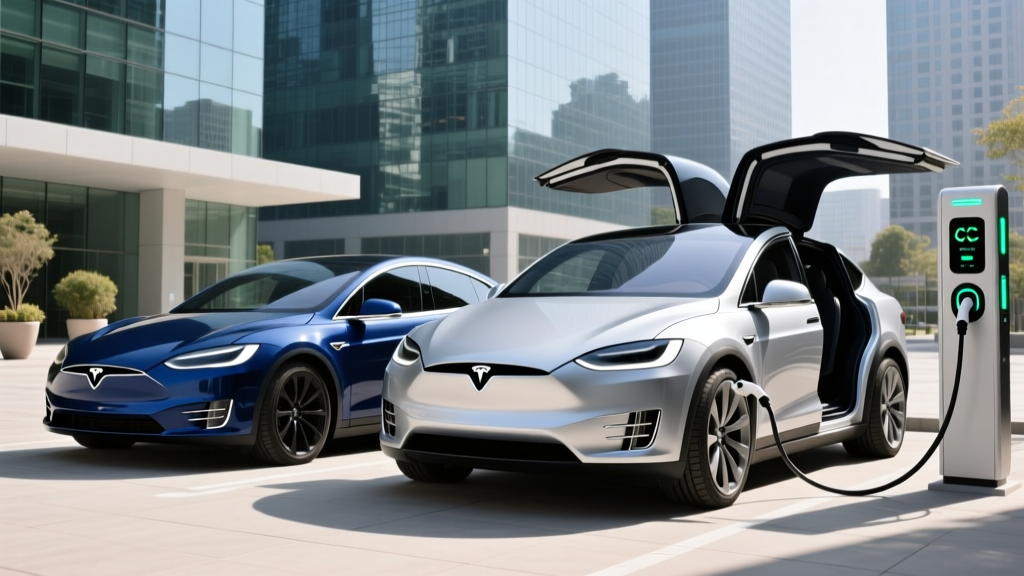
The shift to NACS means that by 2026, most new EVs sold in the U.S. can access the Tesla Supercharger network — over 28,000 stalls nationwide — either natively or via an included adapter. This has dramatically improved public charging reliability compared to 2022–2023.
The Charging Curve Reality
Advertised peak charge rates (e.g., "250 kW max") are sustained only during a portion of the session. A typical charge curve looks like this:
- 10–40% SoC: Near-peak kW (e.g., 230–250 kW)
- 40–60% SoC: Moderate taper (e.g., 150–180 kW)
- 60–80% SoC: Significant taper (e.g., 70–100 kW)
- 80–100% SoC: Slow trickle (e.g., 20–40 kW) — avoid charging past 80% on road trips unless necessary
This is why manufacturers quote "10–80%" times rather than 0–100%. Charging from 80% to 100% on a DC fast charger can take as long as the 10–80% portion.
Common EV Charging Misconceptions
| Myth | Fact |
|---|---|
| "You can't charge an EV in the rain." | EV chargers and ports are sealed to IP67 or better. Charging in rain, snow, or at a car wash is perfectly safe. |
| "Fast charging destroys the battery." | Modern thermal management systems limit damage. Data from Recurrent shows vehicles with frequent DC fast charging retain 90%+ capacity after 100,000 miles. Occasional fast charging is fine; daily fast charging slightly accelerates degradation. |
| "EV batteries need replacing every few years." | Federal law mandates a minimum 8-year/100,000-mile battery warranty. Most NMC and LFP packs lose only 8–15% capacity over 150,000 miles based on fleet data. |
| "You need a special outlet to charge at home." | Level 1 uses a standard 120V household outlet. Level 2 requires a 240V outlet (same as a dryer), which an electrician can install. |
| "Charging takes too long for road trips." | A 10–80% charge on a 250 kW-capable vehicle takes 18–25 minutes — roughly a rest stop and meal. Planning apps like A Better Routeplanner optimize stops automatically. |
EV Charging Costs vs. Gasoline: The Real Numbers
The per-mile fuel cost advantage of EVs is substantial, but it depends heavily on your local electricity rate and whether you charge at home or rely on public DC fast chargers.
| Fuel Source | Average Cost | Vehicle Efficiency | Cost Per Mile |
|---|---|---|---|
| Home Level 2 (national avg $0.17/kWh) | $0.17/kWh | 3.5 mi/kWh (typical midsize EV) | $0.049/mi |
| Home Level 2 (California avg $0.30/kWh) | $0.30/kWh | 3.5 mi/kWh | $0.086/mi |
| Public DC fast charger (avg $0.48/kWh) | $0.48/kWh | 3.5 mi/kWh | $0.137/mi |
| Gasoline (national avg $3.40/gal) | $3.40/gal | 28 MPG (typical midsize ICE) | $0.121/mi |
| Gasoline (California avg $4.80/gal) | $4.80/gal | 28 MPG | $0.171/mi |
Key takeaway: Home charging is 50–65% cheaper per mile than gasoline in most U.S. markets. Public DC fast charging is often more expensive than gasoline on a per-mile basis — which is why home access is the single most important factor in EV ownership satisfaction. Data from fueleconomy.gov lets you compare specific models' kWh/100mi efficiency ratings.
Five-Year Cost Snapshot: EV vs. Gas
Assuming 12,000 miles/year, home charging at $0.17/kWh, and gas at $3.40/gallon at 28 MPG:
- 5-year EV "fuel" cost (home charging): ~$2,914
- 5-year gas cost: ~$7,286
- Fuel savings over 5 years: ~$4,372
Add reduced maintenance (no oil changes, fewer brake replacements due to regenerative braking) — typically saving $500–$1,000/year — and the operational savings become significant, though they must offset the EV's typically higher purchase price and insurance premiums.
Real-World Ownership: Climate, Driving Patterns, and Access
EV ownership satisfaction correlates strongly with three factors: reliable home charging access, moderate climate, and daily driving under 80 miles. If you check all three boxes, an EV will likely exceed your expectations. If you don't, you need to plan more carefully.
Cold-Weather Range Loss
Batteries lose efficiency in cold temperatures. At 20°F, expect 20–35% range reduction compared to the EPA sticker. A vehicle rated at 300 miles EPA may deliver only 195–240 miles in freezing conditions, especially with cabin heating. Vehicles equipped with a heat pump (standard on most 2025–2026 Hyundai, Kia, Tesla, and BMW EVs) reduce this penalty to roughly 15–25% by efficiently harvesting waste heat rather than using resistive heating.
Apartment and Street-Parking Challenges
If you lack a garage or dedicated parking spot with electrical access, EV ownership becomes significantly harder. Options include:
- Workplace Level 2 charging (increasingly common at large employers)
- Public Level 2 chargers near your home or routine destinations
- Curbside charging programs (available in select cities like Los Angeles, NYC, and Chicago)
- Choosing a PHEV instead, which can rely on gasoline when charging access is limited
Decision Framework: Is an EV Right for Your Situation?
| If you have a garage/driveway with 240V access... | ✅ A BEV is likely an excellent fit. Install a Level 2 charger and enjoy low daily operating costs. |
| If you drive under 60 miles daily and have Level 1 access (120V)... | ✅ A BEV or PHEV works. Level 1 adds ~40 miles overnight — enough for most commutes. |
| If you lack home charging but have workplace charging... | ⚠️ A BEV is feasible but less convenient. Consider a PHEV as a lower-risk option. |
| If you frequently drive 300+ miles in a single day... | ⚠️ A BEV with 300+ mile EPA range and 200+ kW DC fast charging can work, but requires route planning. A PHEV or HEV may be more practical. |
| If you live in extreme cold (below 0°F regularly) without a garage... | ⚠️ Prioritize a vehicle with a heat pump and preconditioning. Expect significant range loss. A PHEV provides a gasoline safety net. |
| If you tow heavy loads (5,000+ lbs) frequently... | ❌ EV towing range drops 40–60%. A diesel or HEV truck is currently more practical for heavy towing. |
Federal Tax Credits and Incentives: What You Can Actually Claim
The IRS §30D Clean Vehicle Credit offers up to $7,500 for qualifying new EVs and up to $4,000 for qualifying used EVs. However, eligibility depends on multiple factors that change frequently:
- MSRP caps: Vans, SUVs, and pickup trucks must have an MSRP ≤ $80,000; sedans and other vehicles ≤ $55,000.
- Buyer income limits: Modified AGI must not exceed $300,000 (joint), $225,000 (head of household), or $150,000 (single).
- Battery sourcing: Increasing percentages of critical minerals and battery components must be sourced from the U.S. or FTA partners — requirements tighten annually, and some previously qualifying models lose eligibility.
- Point-of-sale transfer: As of 2024, you can transfer the credit to the dealer at purchase, reducing your out-of-pocket cost immediately rather than waiting for a tax refund.
- Final assembly: Vehicle must undergo final assembly in North America.
Always verify current eligibility on the IRS website and consult a tax professional. Credit rules have changed multiple times since 2023, and model-level eligibility can shift mid-year as manufacturers adjust supply chains.
Frequently Asked Questions
Can I charge an EV with a regular household outlet?
Yes. A standard 120V outlet provides Level 1 charging at roughly 1.4 kW, adding about 3–5 miles of range per hour. For a driver covering 30 miles daily, plugging in overnight (10 hours) replenishes 30–50 miles — enough for most commutes. However, for EVs with large batteries (80+ kWh), a full Level 1 charge from empty can take 50+ hours, which is impractical for road-trip recovery. Level 2 is strongly recommended for BEVs.
How long does it take to charge an EV at a public fast charger?
For a 2026 EV with 200+ kW DC fast charging capability (e.g., Hyundai Ioniq 5, Tesla Model 3, Kia EV6), a 10–80% session takes approximately 18–25 minutes. Vehicles limited to 150 kW (some base trims, older models) take 30–40 minutes. Charging past 80% adds significant time due to the taper — plan to charge to 80% and drive on unless you need the extra range to reach your next stop.
Is it bad to charge my EV to 100% every night?
For vehicles with NMC/NCA battery chemistry, regularly charging to 100% accelerates degradation. Most manufacturers recommend a daily limit of 80–90% and charging to 100% only before long trips. For vehicles with LFP (lithium iron phosphate) batteries — found in many Tesla Model 3/Y RWD trims and some Ford and Hyundai models — charging to 100% regularly is acceptable and even recommended periodically for cell balancing. Check your owner's manual for chemistry-specific guidance.
How much does it cost to install a Level 2 charger at home?
Expect $900–$3,050 for a typical installation in a home with an adequate 200A electrical panel. If a panel upgrade is needed, add $1,500–$4,000. The charger hardware itself costs $350–$750. Always get quotes from at least two licensed electricians, and confirm whether your utility offers an EV charger rebate before purchasing equipment.
What happens if I run out of charge on the road?
Running an EV battery to 0% is rare if you use navigation-based route planning (built into most EV navigation systems or available via apps like A Better Routeplanner). If it happens, the vehicle will enter a low-power "turtle mode" with severely limited speed before stopping. You'll need a flatbed tow to the nearest charger — standard tow-truck dollies can damage the electric drivetrain. Most EV roadside assistance programs cover this scenario.
Should I buy a BEV or a PHEV if I'm unsure about charging?
If you lack reliable home charging access, frequently drive over 300 miles in a day, or live in an area with sparse public charging infrastructure, a PHEV (plug-in hybrid) is the lower-risk choice. PHEVs like the Toyota RAV4 Prime (42 miles electric-only, 38 MPG combined on gas) or the Jeep Wrangler 4xe (22 miles electric) give you electric commuting capability without range anxiety. If you have home Level 2 access and drive under 250 miles daily, a BEV offers lower operating costs and less maintenance over time.