Why the Used Rivian R1T Deserves Your Shortlist
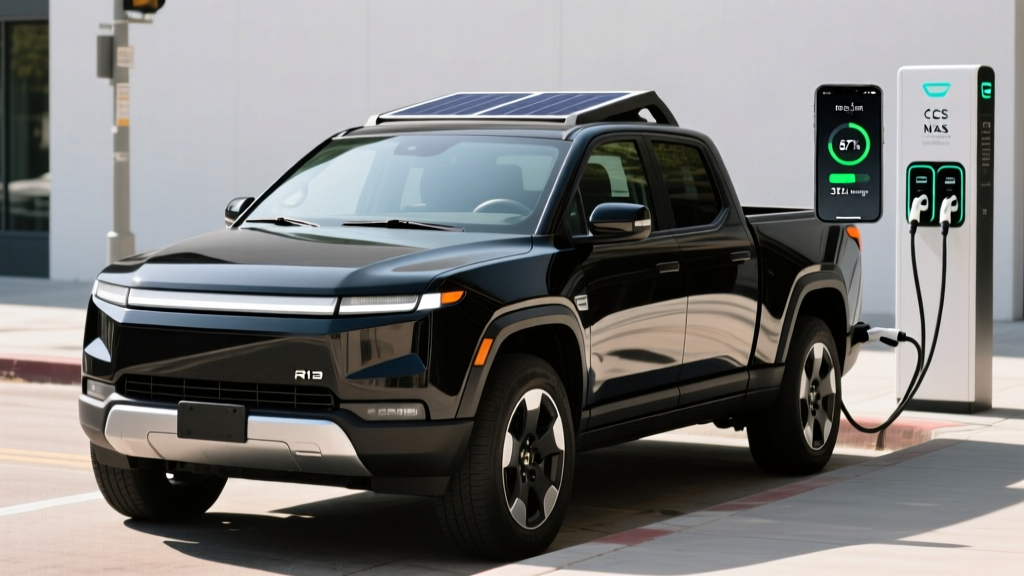
The Rivian R1T remains the only fully electric pickup truck that blends serious off-road capability with sports-car acceleration and a practical 4-foot bed. With deliveries starting in late 2021, the used market now offers 2022–2025 models at meaningful discounts from their original $73,000–$99,000 MSRPs. But buying a used EV pickup requires scrutiny that goes beyond checking for rust and tire tread. Battery health, charging hardware revisions, software update history, and federal tax credit transferability all shape the total cost of ownership.
This guide dissects every generation of the R1T you'll encounter on the used market, with exact specs, real-world range data, and the ownership math that matters in 2026.
Specs at a Glance: R1T by Model Year
| Spec | 2022–2023 (Gen 1 Dual-Motor) | 2024 (Gen 1 Quad-Motor) | 2025 (Gen 2 Dual-Motor) |
|---|---|---|---|
| EPA Range (Large Pack) | 328 mi | 328 mi | 352 mi (Standard) / 420 mi (Max) |
| Battery Capacity (usable) | 128.9 kWh (NMC) | 128.9 kWh (NMC) | 106 kWh (Std, LFP) / 141 kWh (Max, NMC) |
| Horsepower | 533 hp | 835 hp | 533 hp (Dual) / 665 hp (Performance Dual) |
| 0–60 mph | 4.5 sec | 3.0 sec | 4.5 sec (Dual) / 3.4 sec (Perf Dual) |
| Max DC Fast Charge | ~200 kW | ~200 kW | ~220 kW (Std) / ~250 kW (Max) |
| 10–80% DC Charge Time | ~42 min | ~42 min | ~30 min (Std) / ~35 min (Max) |
| Level 2 Home Charging | 11.5 kW (~25 mi/hr) | 11.5 kW (~25 mi/hr) | 11.5 kW (~25 mi/hr) |
| MPGe (combined) | 70 MPGe | 65 MPGe | 73 MPGe (Std) |
| Efficiency (kWh/100 mi) | 48 kWh/100 mi | 52 kWh/100 mi | 46 kWh/100 mi (Std) |
| Towing Capacity | 11,000 lb | 11,000 lb | 11,000 lb |
| Payload | 1,760 lb | 1,760 lb | 1,764 lb |
| Bed Length | 54 in (4.5 ft) | 54 in (4.5 ft) | 54 in (4.5 ft) |
| Original Base MSRP | $73,000 | $87,600 | $69,900 |
Sources: EPA fueleconomy.gov, Rivian official specifications.
Real-World Range: What the EPA Sticker Doesn't Tell You
EPA Estimated: 328 miles (2022–2024) / 352 miles (2025 Standard) / 420 miles (2025 Max)
Real-World Highway (70 mph, mild weather): ~260–280 miles (2022–2024) / ~280–300 miles (2025 Standard)
Real-World Cold Weather (below 30°F): ~210–240 miles — a 25–35% reduction
Towing a 5,000 lb Trailer: ~150–180 miles — expect roughly half the EPA range
The R1T's boxy, truck-profile shape generates significantly more aerodynamic drag than a sedan or crossover, which is why highway efficiency drops sharply above 65 mph. In real-world testing by multiple owners and EV publications, 2022–2024 Dual-Motor Large Pack models consistently deliver 260–280 miles on flat highways at 70 mph in moderate temperatures. The 2025 Gen 2 models with their improved heat pump and more efficient drive units squeeze out roughly 10–15 additional miles in similar conditions.
Cold weather is the R1T's kryptonite for range. Lithium-ion batteries lose efficiency in low temperatures, and the energy required to heat the cabin and battery pack can cut range by 25–35%. Owners in northern climates routinely report 210–240 miles of usable range in sub-freezing winter driving. Rivian's battery preconditioning feature helps mitigate DC charging slowdowns in cold weather, but it doesn't recover lost range.
If you plan to tow regularly, plan your routes around charging. Towing at highway speeds with a 5,000 lb camper can halve your effective range, bringing the 328-mile Large Pack down to 150–180 miles between stops. The Rivian's NACS adapter (included with newer models, available as a retrofit for older ones) opens the Supercharger network, which helps on towing road trips where Electrify America coverage may be sparse.
Charging Speed: DC Fast Charging and Home Setup
| Charging Level | Power / Rate | Miles Added Per Hour | Notes |
|---|---|---|---|
| Level 1 (120V household) | 1.4 kW | ~3 mi/hr | Emergency/trickle only — 128 kWh pack takes 90+ hours |
| Level 2 (240V home, 48A) | 11.5 kW | ~25 mi/hr | Full overnight charge in 10–14 hours depending on pack |
| Level 2 (240V home, 32A) | 7.7 kW | ~17 mi/hr | Common with lower-amperage circuits; full charge in 16+ hours |
| DC Fast Charge (Gen 1, 2022–2024) | Peak ~200 kW | N/A — 10-80% in ~42 min | Sustained rate drops significantly above 80% SoC |
| DC Fast Charge (Gen 2, 2025) | Peak ~220–250 kW | N/A — 10-80% in ~30–35 min | Improved charge curve, faster taper management |
The R1T charges at a peak of approximately 200 kW on DC fast chargers for 2022–2024 models, and up to 250 kW for 2025 Gen 2 Max Pack models. However, peak kW is not sustained kW. The charging curve tapers noticeably after 50% state of charge (SoC), and slows dramatically above 80%. This is normal lithium-ion behavior designed to protect battery longevity, but it means a 10–90% charge takes considerably longer than the often-cited 10–80% time.
For home charging, the R1T's onboard charger accepts up to 11.5 kW on a 240V/48A Level 2 circuit. Most owners install a NEMA 14-50 outlet or hardwired EVSE rated for 40–48 amps. Expect to pay $800–$2,000 for a professional Level 2 installation depending on your electrical panel's capacity and the run distance from panel to garage. Homes with older 100-amp service panels may need a $2,000–$4,000 panel upgrade to support a 48A charger alongside existing household loads — always consult a licensed electrician before committing to equipment.
Rivian sells its own Wall Charger ($550) rated at 11.5 kW/48A, but any J1772-compatible Level 2 EVSE (ChargePoint Home Flex, Emporia Level 2, Tesla Wall Connector with J1772 adapter) works. With NACS becoming the standard, 2025 R1Ts ship with a NACS port; earlier models use CCS1 and include or can be retrofitted with a NACS adapter for Supercharger access.
Battery Chemistry, Health, and Warranty Coverage
The 2022–2024 R1T Large Pack uses a 128.9 kWh usable-capacity NMC (nickel manganese cobalt) battery supplied primarily by Samsung SDI. NMC chemistry offers high energy density — critical for fitting 328 miles of range into a truck platform — but is more sensitive to sustained high SoC and extreme heat than LFP (lithium iron phosphate).
The 2025 Gen 2 Standard Pack uses a 106 kWh LFP battery, which is heavier but more durable over thousands of cycles and tolerates regular 100% charging without accelerated degradation. The Gen 2 Max Pack remains NMC at 141 kWh usable for maximum range.
Warranty coverage: Rivian provides an 8-year/120,000-mile battery warranty that guarantees the pack will retain at least 70% of its original capacity. The powertrain warranty covers 8 years/120,000 miles as well. For a used buyer, this means a 2022 model's battery warranty extends through September 2030 at the earliest — still several years of coverage remaining in 2026.
When evaluating a used R1T, ask the seller for the battery's State of Health (SoH) readout from the Rivian app or service center. Most 2022 models with 30,000–50,000 miles show 94–97% SoH, which is consistent with NMC packs that experience an initial 3–5% capacity loss in the first year before stabilizing. A SoH below 90% on a low-mileage truck warrants a deeper diagnostic check.
Performance, Capability, and Daily Drivability
Even the "base" Dual-Motor R1T produces 533 horsepower and 610 lb-ft of torque, reaching 60 mph in 4.5 seconds — quicker than a Ford F-150 Lightning Extended Range and dramatically faster than any diesel truck. The Quad-Motor variant (2023–2024) pushes 835 hp and a 3.0-second 0–60, putting it in supercar territory while maintaining a 11,000-lb tow rating.
The R1T's air suspension provides 6.5 to 14.9 inches of ground clearance (adjustable), enabling genuine off-road capability in Rock Mode. The quad-motor system with individual wheel torque vectoring handles technical trails with precision that a traditional locked-differential setup can't match. Rivian's Gear Tunnel — a lockable, pass-through storage compartment behind the rear seats — is a unique feature that adds roughly 11 cubic feet of secure cargo space beyond the 4.5-foot bed.
Interior dimensions:
- Front legroom: 41.3 inches
- Rear legroom: 38.2 inches
- Bed volume: ~26 cu ft (to top of bed sides)
- Gear Tunnel: ~11 cu ft
- Front trunk (frunk): ~11 cu ft
The cabin seats five adults comfortably, though the rear seat cushion sits slightly low due to the battery pack beneath the floor. Build quality on 2022 models drew some early complaints about panel gaps and interior rattles, which Rivian largely addressed through service campaigns and running production changes by mid-2023.
Pricing, Tax Credits, and Total Cost of Ownership
| Model / Trim | Original MSRP | Typical Used Price (2026) | Used EV Tax Credit (§25E) |
|---|---|---|---|
| 2022 R1T Adventure Dual-Motor (Large) | $79,900 | $48,000–$56,000 | Up to $4,000 (if ≤$80,000 sale price) |
| 2023 R1T Adventure Quad-Motor (Large) | $93,500 | $58,000–$68,000 | Up to $4,000 (if ≤$80,000 sale price) |
| 2024 R1T Ascend Quad-Motor (Max) | $99,000 | $65,000–$78,000 | Up to $4,000 (if ≤$80,000 sale price) |
| 2025 R1T Dual-Motor (Standard) | $69,900 | $58,000–$65,000 | Up to $4,000 (if ≤$80,000 sale price) |
Tax credit details for used buyers: The IRS §25E Used Clean Vehicle Credit offers up to $4,000 (or 30% of the sale price, whichever is less) for qualifying used EVs. Key eligibility rules for 2026:
- Vehicle sale price cap: $25,000 maximum — meaning most used R1Ts priced above $25,000 do not qualify for the used EV credit. This effectively excludes the R1T from §25E at current market prices.
- Income limits: $75,000 single / $112,500 head of household / $150,000 joint filers (modified AGI).
- Vehicle requirements: Must be at least 2 model years old, purchased from a licensed dealer, and have a battery capacity of at least 7 kWh.
Important: Because used R1Ts currently sell for $48,000–$78,000, they exceed the $25,000 sale price cap and do not qualify for the §25E used credit. However, if you purchased a new R1T in 2022–2024, the §30D New Clean Vehicle Credit may have applied at the time of purchase (up to $7,500), but this credit does not transfer to subsequent owners. Always consult a tax professional for your specific situation.
The R1T carries higher-than-average insurance premiums due to its repair costs, aluminum-intensive construction, and high replacement parts pricing. Expect annual premiums of $2,800–$4,200 depending on your state, driving record, and coverage level. Get quotes before purchasing — insurance can add $150–$250/month to your ownership cost.
Pros, Cons, and the Competition
- Best-in-class combination of off-road capability and on-road performance
- Quad-motor torque vectoring is unmatched in any production truck
- Gear Tunnel adds unique, lockable storage competitors lack
- Over-the-air updates have meaningfully improved the vehicle since launch
- NACS adapter enables Tesla Supercharger access for road trips
- Air suspension adjustable ride height (6.5–14.9 in ground clearance)
- 8-year/120,000-mile battery and powertrain warranty
- Short 4.5-foot bed limits utility vs. full-size trucks
- Real-world highway range drops significantly (260–280 mi from 328 EPA)
- Cold-weather range loss of 25–35% is substantial
- High insurance premiums ($2,800–$4,200/year)
- Early 2022 build quality issues (panel gaps, software bugs) — check service history
- Gen 1 DC charging tops out at ~200 kW — slower than newer competitors
- No access to Apple CarPlay or Android Auto (Rivian's native system only)
- Used prices remain high; no federal tax credit at current market values
Key competitors on the used market:
- Ford F-150 Lightning (2022–2024): Larger bed (5.5 ft), lower used prices ($38,000–$55,000), more conventional truck feel. Less off-road capable, slower (4.0–6.0 sec 0–60 depending on trim), but more practical as a work truck.
- Chevrolet Silverado EV (2024–2025): Larger battery options, available 4WT steering, but limited used availability and a much higher original MSRP.
- GMC Hummer EV Pickup (2022–2024): More extreme off-road hardware (CrabWalk, Extract Mode), but far less efficient (~47 MPGe), much heavier, and used prices start around $65,000.
- Tesla Cybertruck (2024–2025): Stainless steel body, faster DC charging (250+ kW), but polarizing design, limited off-road suspension travel, and early build quality concerns.
Choose the used Rivian R1T if: You want a lifestyle truck that excels at weekend adventures, camping, light-to-moderate towing, and daily commuting — and you value acceleration, tech, and off-road capability over maximum bed length.
Look at the F-150 Lightning instead if: You need a larger bed for work use, want lower used pricing, prefer a more traditional truck driving experience, or need to maximize value per dollar.
Consider the Hummer EV if: You want maximum off-road spectacle and don't care about efficiency or charging costs.
Pre-Purchase Checklist for a Used R1T
- Request battery State of Health (SoH): Ask the seller or a Rivian Service Center for the SoH percentage. Above 94% is excellent for a 2022 model; below 90% warrants investigation.
- Check for open recalls and service campaigns: Early R1Ts had recalls related to seat belt fasteners, airbag wiring, and windshield wiper modules. Verify completion at NHTSA.gov using the VIN.
- Review OTA update history: Rivian has issued dozens of over-the-air updates since 2021. A truck still running early 2022 software may have unresolved bugs that newer firmware has fixed.
- Inspect the Gear Tunnel seals and tonneau cover: Water intrusion complaints were common on early builds. Check for moisture, mildew, or water stains.
- Test all drive modes: Cycle through All-Purpose, Sport, Conserve, Snow, Off-Road, and Rock modes. Listen for unusual sounds from the air suspension compressor.
- Verify NACS adapter inclusion: Rivian began shipping NACS adapters to CCS-equipped owners in 2024. Confirm the adapter is included or budget $200–$300 for one.
- Check tire condition: R1Ts are heavy (7,100+ lb curb weight) and wear tires faster than lighter vehicles. Replacement EV-rated tires (Pirelli Scorpion, Michelin Defender LTX) run $250–$350 each.
- Confirm Rivian account transfer: The vehicle's connected services, warranty, and OTA updates are tied to the Rivian account. Ensure a clean transfer at point of sale.
Frequently Asked Questions
What is the real-world range of a used Rivian R1T?
For 2022–2024 Dual-Motor Large Pack models, expect 260–280 miles on the highway at 70 mph in mild weather, versus the EPA's 328-mile estimate. City driving with regenerative braking can approach or match the EPA number. Cold weather (below 30°F) typically reduces range to 210–240 miles. The 2025 Gen 2 Standard Pack delivers roughly 280–300 real-world highway miles from its 352-mile EPA rating.
How fast does the R1T charge at home and on the road?
On a 240V/48A Level 2 home charger, the R1T adds approximately 25 miles of range per hour (11.5 kW), fully charging a 128.9 kWh Large Pack overnight in about 12 hours. On DC fast chargers, 2022–2024 models peak at ~200 kW and charge from 10–80% in roughly 42 minutes. The 2025 Gen 2 models charge faster, with 10–80% in 30–35 minutes at up to 250 kW peak.
Does a used Rivian R1T qualify for any federal tax credit?
Practically no. The IRS §25E used EV credit caps the vehicle sale price at $25,000, and used R1Ts sell for $48,000–$78,000 in 2026 — well above that threshold. The §30D new vehicle credit does not transfer to second owners. Some state and local incentives may apply; check your state's energy office or the AFDC state law database for details.
Is the Rivian R1T reliable as a used purchase?
The R1T has improved substantially since its 2022 launch. Early models experienced software glitches, panel gap inconsistencies, and a handful of recalls (seat belts, wiper modules, airbag wiring). Most issues were addressed through OTA updates and service campaigns. The battery and drive unit hardware has proven durable, with few reports of major powertrain failures. A thorough pre-purchase inspection at a Rivian Service Center is strongly recommended.
How much does it cost to charge an R1T vs. fueling a gas truck?
At the national average electricity rate of ~$0.16/kWh, charging a 128.9 kWh Large Pack from empty to full costs approximately $20.62 at home, yielding about 260 real-world miles — roughly $0.08 per mile. A comparable gas truck getting 18 MPG at $3.40/gallon costs $0.19 per mile. DC fast charging on road trips costs more ($0.30–$0.48/kWh, or $38–$62 per full charge) but is still typically cheaper per mile than gasoline.
Can the R1T tow long distances on electric power?
Yes, but with planning. Towing a 5,000 lb trailer at highway speeds reduces range to approximately 150–180 miles. You'll need to stop at DC fast chargers every 2–2.5 hours. Rivian's built-in route planner accounts for towing when estimating range and suggesting charge stops. The NACS adapter significantly expands your charging options for towing road trips by enabling Tesla Supercharger access.