The Short Answer: How to Charge an EV
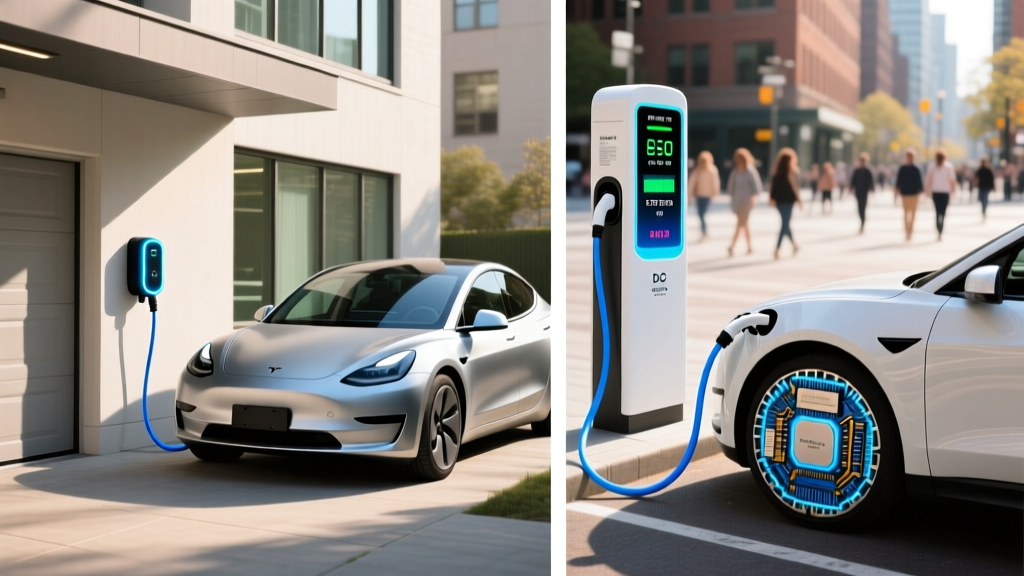
You charge an EV by plugging it into one of three power levels: Level 1 (120V household outlet, ~1.4 kW, adds 3–5 miles of range per hour), Level 2 (240V home or public charger, 7–19 kW, adds 20–60 miles per hour), or DC fast charging (public stations, 50–350 kW, adds 150–300+ miles in 15–25 minutes). Most EV owners do 80% or more of their charging at home on Level 2, topping up overnight like a smartphone. Public DC fast chargers handle road trips and quick top-ups when you're away from home.
Understanding how to charge an EV isn't complicated once you separate the three levels and know which connector your car uses. But the details — actual charge speeds, real-world costs, connector compatibility, and whether you need a panel upgrade — are where most new buyers get tripped up. This guide gives you the exact numbers so you can plan your setup, budget accurately, and avoid the most common first-owner mistakes.
The Three Charging Levels: Speeds, Costs, and Use Cases
Every EV sold in the U.S. today supports all three charging levels. The difference is how fast energy (measured in kWh, kilowatt-hours — think of it as gallons of fuel) flows into the battery, which is determined by the power output (measured in kW, kilowatts — think of it as the flow rate of a hose).
| Level | Voltage | Power (kW) | Miles Added/Hour | Typical Use | Full Charge Time (80 kWh battery) |
|---|---|---|---|---|---|
| Level 1 | 120V AC | 1.0–1.4 kW | 3–5 mi/hr | Overnight trickle, PHEVs, low-mileage drivers | 55–80 hours |
| Level 2 | 240V AC | 7.2–19.2 kW | 20–60 mi/hr | Home daily charging, workplace, shopping centers | 4–11 hours |
| DC Fast Charge | 200–800V DC | 50–350 kW | 150–300+ mi in 15–25 min | Road trips, highway corridors, quick top-ups | 15–40 min (10–80%) |
Key nuance: DC fast charging doesn't sustain its peak rate. A vehicle rated at 250 kW peak might only hold that rate from roughly 10–30% State of Charge (SoC), then taper progressively. A "10–80% in 18 minutes" claim assumes ideal battery temperature and a capable charger. In cold weather without preconditioning, that same session could stretch to 30+ minutes. Always look at the 10–80% time, not the peak kW number, when evaluating charge speed.
Home Charging Setup: What It Actually Costs
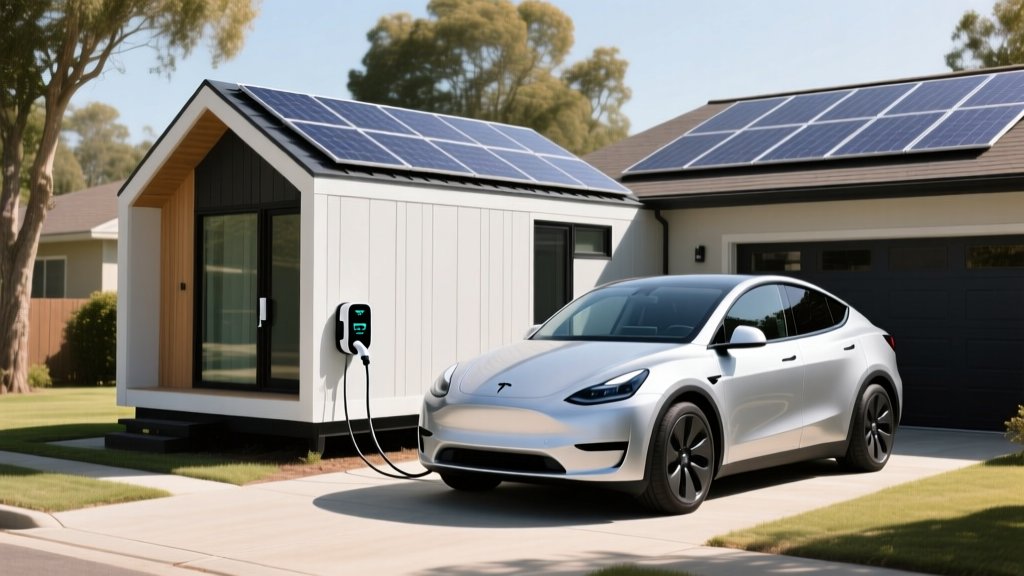
For most EV owners, a Level 2 home charger is the backbone of daily life. You plug in when you get home, and the car is full every morning. But installation costs vary wildly based on your electrical panel, the distance from panel to charger location, and local permit fees.
| Component | Low End | High End | Notes |
|---|---|---|---|
| Level 2 charger (hardware) | $250 | $700 | ChargePoint Home Flex, Emporia, Wallbox — 32A–48A units |
| Electrician labor | $400 | $2,500 | Depends on run length, conduit, drywall work |
| Electrical panel upgrade (if needed) | $1,500 | $4,000 | Required if panel is 100A or maxed out; 200A recommended |
| Permit and inspection | $50 | $350 | Varies by municipality |
| Total (no panel upgrade) | $700 | $3,550 | Most homes with 200A service fall here |
| Total (with panel upgrade) | $2,200 | $7,550 | Older homes with 100A service |
Federal incentive: The Alternative Fuel Vehicle Refueling Property Credit (§30C) covers 30% of home charger hardware and installation costs, up to $1,000, but only if you live in an eligible census tract (typically rural or low-income areas). Check the IRS §30C page for eligibility maps. Some utilities also offer rebates of $250–$500 on Level 2 hardware — check your local provider.
Circuit sizing matters: A 48-amp charger requires a 60-amp dedicated circuit (EVSE must be derated to 80% of breaker capacity per NEC). A 32-amp charger needs a 40-amp circuit. Your electrician will determine what your panel can support. Don't buy a charger before confirming your circuit capacity.
Public Charging Networks: Connectors, Speeds, and Reliability
When you're away from home, you'll rely on public DC fast charging networks. As of 2026, the U.S. charging landscape has largely consolidated around two connector standards:
| Connector | Also Known As | Compatible Brands (2026) | Max Speed Available |
|---|---|---|---|
| NACS | North American Charging Standard (Tesla-style) | Tesla, Ford, GM, Rivian, Hyundai, Kia, Volvo, Polestar, BMW, Mercedes | Up to 350 kW (CCS-to-NACS adapters available for non-Tesla) |
| CCS1 | Combined Charging System | Volkswagen, legacy models from most brands pre-2025, some Stellantis | Up to 350 kW |
| CHAdeMO | — | Nissan Leaf (legacy only, no new U.S. models) | Up to 100 kW (network support declining) |
Network landscape: Tesla's Supercharger network — now open to NACS-equipped non-Tesla EVs — remains the most reliable option, with uptime consistently above 95%. Electrify America, EVgo, and ChargePoint operate the largest non-Tesla networks. Reliability on non-Tesla networks has improved but still lags; expect occasional broken stalls, payment-app glitches, or slower-than-advertised speeds at older stations.
Cost at public chargers typically ranges from $0.30–$0.55 per kWh for DC fast charging, with some networks charging idle fees of $0.50–$1.00 per minute after your session completes. Tesla Superchargers average $0.25–$0.40/kWh depending on location and time of day.
EV Charging Cost vs. Gas: The Real Numbers
The most common reason people switch to electric is fuel savings. But the actual savings depend heavily on how you charge. Let's compare a typical midsize EV (3.0 miles/kWh efficiency, like a Tesla Model Y or Hyundai Ioniq 5) against a comparable gas car (28 MPG combined) over 12,000 miles per year.
| Charging/Fueling Method | Cost per Unit | Cost per Mile | Annual Cost (12,000 mi) | vs. Gas Savings |
|---|---|---|---|---|
| Home Level 2 (national avg. electricity $0.16/kWh) | $0.16/kWh | $0.053 | $640 | $1,503 saved |
| Home Level 2 (California avg. $0.30/kWh) | $0.30/kWh | $0.10 | $1,200 | $943 saved |
| Public DC Fast Charging (avg. $0.40/kWh) | $0.40/kWh | $0.133 | $1,600 | $543 saved |
| Gasoline (28 MPG, $3.50/gallon) | $3.50/gal | $0.125 | $2,143 | Baseline |
The takeaway: If you charge mostly at home at national-average electricity rates, you'll spend roughly $640/year on "fuel" — about 70% less than gas. But if you rely exclusively on public DC fast charging in a high-cost state, your savings shrink dramatically. In some California and Northeast scenarios with expensive utility rates and heavy public-charging dependence, the per-mile cost can approach or even exceed gas. Home charging access is the single biggest factor in whether an EV saves you money.
What First-Time EV Buyers Need to Know Before Plugging In
Beyond the hardware and costs, there are practical ownership realities that no spec sheet will tell you:
Preconditioning is non-negotiable for fast charging
Lithium-ion batteries charge fastest when warm (roughly 70–95°F at the cell level). Most modern EVs automatically precondition the battery when you navigate to a charger — the Tesla Model 3, Hyundai Ioniq 5, and Ford Mustang Mach-E all do this. If you manually start a DC fast charge on a cold-soaked battery in winter, expect charge speeds 30–50% slower than rated. Always use the car's navigation to route to a fast charger so preconditioning engages.
Cold weather cuts range 15–30%
An EV rated at 300 miles EPA might deliver 210–255 real-world miles at 20°F, due to battery resistance and cabin heating demands. Vehicles with heat pumps (standard on most 2024+ models) mitigate this somewhat, but the loss is unavoidable. Plan winter road trips with 25–30% less range than the EPA sticker.
Highway driving reduces efficiency
EPA range tests include a mix of city and highway driving. At sustained 75–80 mph, expect 10–20% less range than the EPA combined figure. Aerodynamic drag scales with the square of speed — this affects EVs more than gas cars because there's no multi-gear transmission to optimize efficiency at speed.
Don't charge to 100% daily (for NMC batteries)
If your EV uses an NMC (nickel manganese cobalt) or NCA battery, daily charging to 100% accelerates degradation. Most manufacturers recommend setting a daily charge limit of 80–90% and only charging to 100% before long trips. LFP (lithium iron phosphate) batteries — found in base Tesla Model 3/Y RWD and some other models — are the exception; manufacturers actually recommend periodic 100% charges to keep the BMS calibrated.
Common EV Charging Myths, Corrected with Data
| Myth | Fact (with data) |
|---|---|
| "EV batteries need replacing every few years and cost $20,000." | Federal law mandates EV battery warranties of at least 8 years/100,000 miles. Real-world degradation data from fueleconomy.gov and fleet studies show most EVs retain 85–92% of original capacity after 100,000 miles. Replacement is rare before 150,000+ miles. |
| "Charging takes too long for road trips." | Modern EVs on 250–350 kW chargers add 150–200 miles in 15–20 minutes (10–80%). That's roughly the time it takes to use the restroom, grab food, and stretch — similar to a gas stop when you account for the full stop, not just pumping. |
| "You can't charge an EV in an apartment." | It's harder but not impossible. Solutions include workplace charging, public Level 2 at grocery stores/gyms, and DC fast charging once or twice a week. Several cities now mandate EV-ready wiring in new multifamily construction. It's a real limitation — acknowledge it — but not a dealbreaker for low-mileage drivers. |
| "EVs are worse for the environment because of battery mining." | Lifecycle analyses from Argonne National Laboratory and the ICCT consistently show EVs produce 50–70% fewer lifetime greenhouse gas emissions than comparable gas cars in the U.S., even accounting for battery manufacturing and the current grid mix. The grid is getting cleaner every year, widening this gap. |
| "Level 1 charging is useless." | For PHEVs with 25–40 miles of electric range (Toyota RAV4 Prime, Jeep Wrangler 4xe), Level 1 fully replenishes the battery in 5–8 hours — perfectly adequate for overnight. For BEVs with 250+ mile batteries, Level 1 is impractical as a primary strategy but works as emergency trickle charging. |
Decision Framework: Which Charging Setup Is Right for You?
If you own your home and have a garage or driveway: Install a Level 2 charger (48A, hardwired) on a dedicated 60A circuit. Budget $1,000–$3,000 total (hardware + electrician + permit). This handles 95%+ of your charging needs and maximizes fuel savings. Use DC fast charging only for road trips.
If you own your home but have a 100A electrical panel: Get a quote for a panel upgrade to 200A ($1,500–$4,000) before committing to a 48A charger. Alternatively, install a 32A charger on a 40A circuit — it still adds ~25 miles/hour, enough to replenish a daily commute overnight. Some newer load-management chargers (e.g., Emporia, Wallbox) can dynamically share capacity with other appliances, avoiding a panel upgrade.
If you rent or live in an apartment without charging: Before buying a BEV, map out your charging options: workplace Level 2, public Level 2 near your routine (gym, grocery), and reliable DC fast chargers within 10 minutes of home. If you can't identify at least two convenient options, consider a PHEV instead — it eliminates range and charging-access risk while still giving you 25–45 miles of electric driving for daily commutes.
If you drive less than 40 miles/day and have any 120V outlet: Level 1 charging adds 3–5 miles per hour, or ~40 miles over an 8–10 hour overnight session. This is sufficient for many commuters. No installation cost. Just use the mobile charger that came with your EV.
If you regularly tow or drive 300+ miles in winter: Prioritize EVs with large batteries (100+ kWh usable) and fast charge curves (10–80% under 20 minutes). Expect 40–50% range reduction when towing. Plan charging stops every 120–150 miles in heavy-tow scenarios. The Rivian R1T, Ford F-150 Lightning extended-range, and Chevrolet Silverado EV are among the better-equipped options for this use case.
Frequently Asked Questions
Do I need to buy a Tesla to use Superchargers?
No. As of 2026, Tesla has opened its Supercharger network to most non-Tesla EVs equipped with the NACS connector. Ford, GM, Rivian, Hyundai, Kia, and several other brands now ship vehicles with native NACS ports. If your EV has CCS1, you can purchase a Tesla-approved CCS-to-NACS adapter ($150–$250) to access Superchargers, though speeds may be limited depending on the adapter and vehicle.
Can I install a Level 2 charger myself?
Only if you're a licensed electrician or your jurisdiction allows homeowner electrical work with permits and inspection. Most municipalities require a licensed electrician for 240V circuit installation. DIY mistakes on high-amperage circuits carry fire risk and may void your home insurance. Budget for professional installation.
Does fast charging damage the battery?
Exclusively relying on DC fast charging does accelerate degradation slightly — studies show roughly 2–5% additional capacity loss over 100,000 miles compared to Level 2-only charging. However, modern battery thermal management systems (liquid cooling) significantly mitigate this. If you fast-charge a few times per week on road trips, the impact is minimal. If you DC fast-charge daily, expect slightly faster degradation over 8–10 years.
How do I find chargers on a road trip?
Use your vehicle's built-in navigation (most EVs route through charging stations automatically) and supplement with apps like A Better Routeplanner (ABRP), PlugShare, or the Tesla app for Supercharger locations. ABRP is particularly useful because it factors in your specific vehicle's charge curve, elevation changes, temperature, and driving speed to predict arrival SoC at each stop.
What happens if I run out of charge?
Unlike running out of gas, you can't walk to a station with a jerrycan. If you deplete the battery, you'll need a flatbed tow to the nearest charger (standard wheel-lift towing can damage EV motors). Roadside assistance from AAA and most manufacturers covers EV towing. The practical lesson: treat 10% SoC as your "reserve tank" and plan stops before you reach it, especially in cold weather or mountainous terrain.
Do I qualify for a tax credit on my EV or charger?
The §30D New Clean Vehicle Credit offers up to $7,500 for qualifying new EVs, but eligibility depends on your income (AGI caps: $150K single, $300K joint), vehicle MSRP (cap: $55K sedans, $80K SUVs/trucks), battery component and critical-mineral sourcing requirements, and North American assembly. The charger credit (§30C) covers 30% up to $1,000 but is limited to eligible census tracts. Rules shift frequently — consult a tax professional and check current IRS guidance before purchasing.