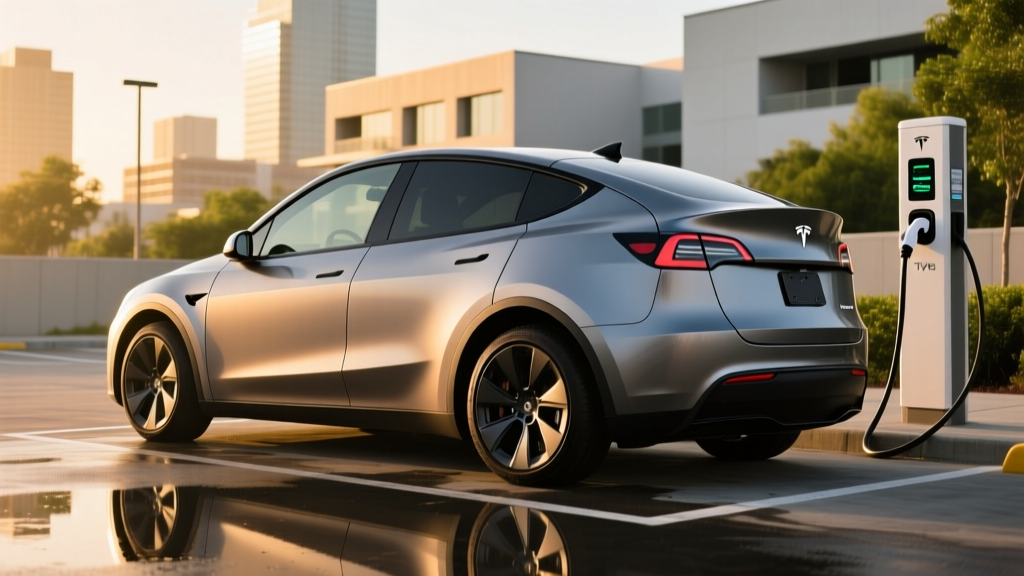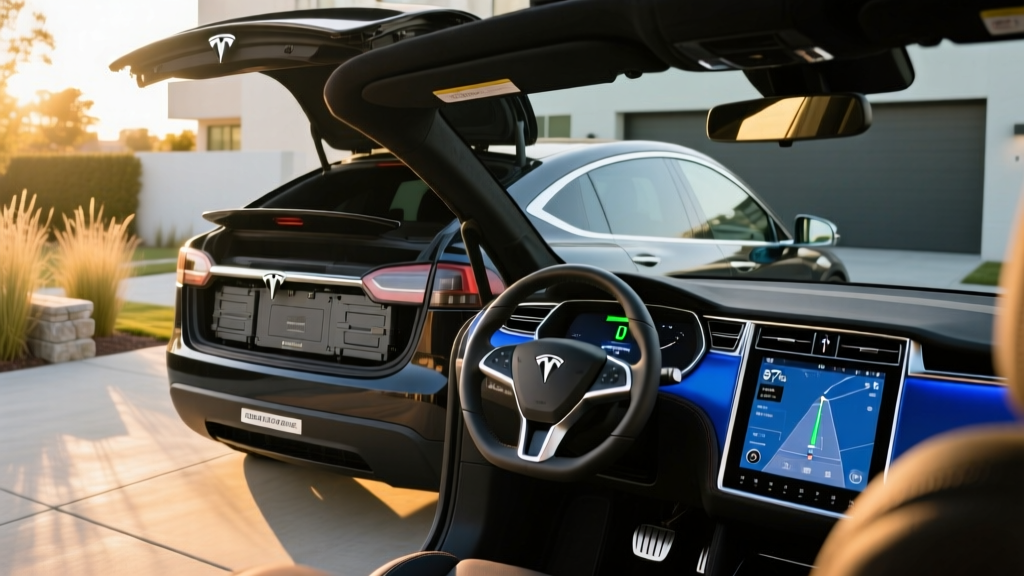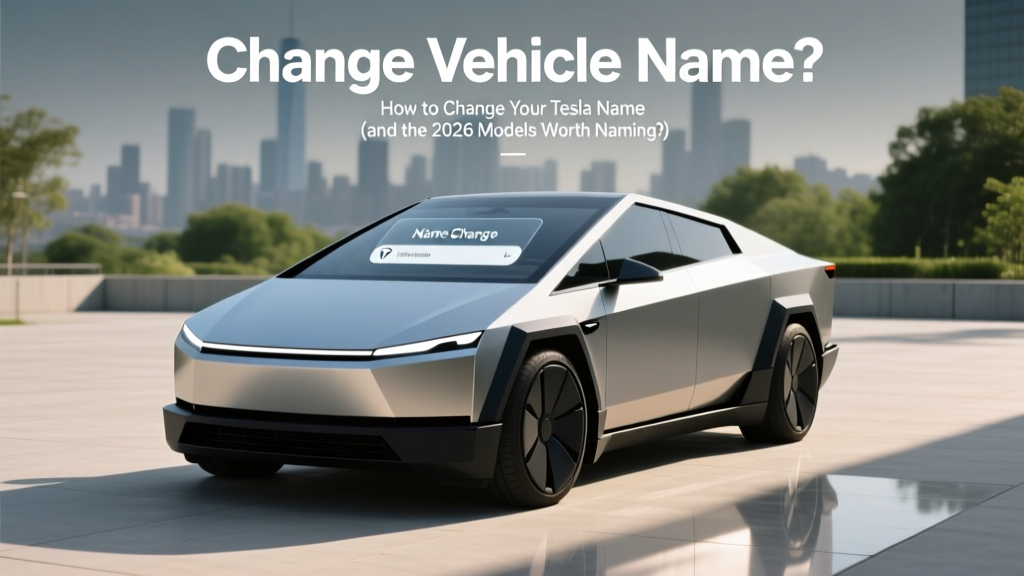
If you have just taken delivery of a new Tesla, or if you are picking up a used Model 3 or Model Y from a previous owner, one of the first personalization steps is renaming the vehicle. Tesla lets you customize the car's name through both the mobile app and the in-car touchscreen. Below, we walk through exactly how to change your Tesla name, then dive into what makes the current 2026 Tesla lineup worth getting attached to — with real specs, charging data, and tax-credit reality checks.
How to Change Your Tesla Name: Step-by-Step
There are two ways to rename your Tesla. Both update the name across the app, the touchscreen, and your vehicle's Bluetooth identifier.
Method 1: Using the Tesla Mobile App
- Open the Tesla app on your iOS or Android device.
- Tap the vehicle name displayed at the top of the main screen (e.g., "My Tesla" or the previous owner's name).
- A text field will appear — delete the existing name and type your preferred name.
- Tap Save or confirm. The change syncs to the vehicle within seconds when it has cellular connectivity.
Method 2: Using the In-Car Touchscreen
- Sit in the vehicle and tap the car icon at the bottom-left corner of the touchscreen.
- Navigate to Controls > Software.
- Tap the current vehicle name at the top of the screen.
- Enter your new name using the on-screen keyboard and confirm.
2026 Tesla Model 3: Range, Battery, and Charging Specs
Once your Model 3 has a proper name, here is what you are actually driving. The 2026 Tesla Model 3 continues with the "Highland" refresh architecture introduced for the 2024 model year, with minor software and efficiency tweaks.
| Specification | RWD (Base) | Long Range AWD | Performance AWD |
|---|---|---|---|
| EPA Range | 341 miles | 363 miles | 315 miles |
| Battery (usable) | 57.5 kWh (LFP) | 75 kWh (NMC) | 75 kWh (NMC) |
| Drivetrain | Rear-Wheel Drive | Dual-Motor AWD | Dual-Motor AWD |
| Horsepower | 271 hp | 384 hp | 510 hp |
| 0-60 mph | 5.8 sec | 4.2 sec | 2.9 sec |
| MPGe (combined) | 132 MPGe | 125 MPGe | 113 MPGe |
| Efficiency | 25 kWh/100mi | 27 kWh/100mi | 30 kWh/100mi |
| Base MSRP | $38,990 | $44,990 | $52,990 |
| DC Fast-Charge Peak | 170 kW | 250 kW | 250 kW |
| 10-80% DCFC Time | ~25 min | ~18 min | ~18 min |
| Level 2 Home Rate | 11.5 kW (~44 mi/hr) | 11.5 kW (~44 mi/hr) | 11.5 kW (~44 mi/hr) |
2026 Tesla Model Y: The Family-Focused Option
The Model Y remains Tesla's best-selling vehicle globally, and the 2026 "Juniper" refresh brings updated styling, a refined interior, and improved efficiency. Here is how the numbers stack up.
| Specification | RWD | Long Range AWD | Performance AWD |
|---|---|---|---|
| EPA Range | 320 miles | 350 miles | 303 miles |
| Battery (usable) | 60 kWh (LFP) | 75 kWh (NMC) | 75 kWh (NMC) |
| Drivetrain | Rear-Wheel Drive | Dual-Motor AWD | Dual-Motor AWD |
| Horsepower | 295 hp | 384 hp | 510 hp |
| 0-60 mph | 6.5 sec | 4.8 sec | 3.5 sec |
| MPGe (combined) | 126 MPGe | 119 MPGe | 110 MPGe |
| Cargo (rear seats up) | 30.2 cu ft | ||
| Cargo (rear seats folded) | 72.1 cu ft | ||
| Rear Legroom | 41.6 in | ||
| Base MSRP | $44,990 | $49,990 | $55,990 |
| DC Fast-Charge Peak | 170 kW | 250 kW | 250 kW |
| 10-80% DCFC Time | ~27 min | ~20 min | ~20 min |
| Level 2 Home Rate | 11.5 kW (~40 mi/hr) | 11.5 kW (~40 mi/hr) | 11.5 kW (~40 mi/hr) |
Charging Deep Dive: What Owners Actually Experience
Peak charge rate in kW tells only part of the story. The charge curve — how fast the battery charges across the full 10-80% session — matters more for real road trips.
| Charging Level | Power | Model 3 LR (mi/hr added) | Model Y LR (mi/hr added) |
|---|---|---|---|
| Level 1 (120V outlet) | 1.4 kW | ~5 mi/hr | ~4 mi/hr |
| Level 2 (240V, 48A) | 11.5 kW | ~44 mi/hr | ~40 mi/hr |
| DC Fast (Supercharger V3) | Up to 250 kW | ~18 min 10-80% | ~20 min 10-80% |
| DC Fast (Supercharger V4) | Up to 325 kW* | ~15 min 10-80%* | ~17 min 10-80%* |
*V4 Supercharger speeds depend on vehicle firmware support and battery preconditioning. Not all Model 3/Y vehicles currently achieve peak V4 rates; 250 kW remains the reliable real-world ceiling for most sessions.
A critical ownership insight: the LFP batteries in the RWD trims accept charge at a lower peak rate (170 kW) and sustain a narrower charge curve than the NMC packs. On a road trip, the Long Range NMC models will get you back on the road faster from a 10-80% session, even though the RWD models are cheaper to buy.
For home charging, a Wall Connector on a 60-amp circuit delivers the full 11.5 kW (48 amps continuous). Budget $500-$1,500 for professional installation depending on panel proximity and whether your home needs a panel upgrade. See our Level 2 home charging guide for a full cost breakdown.
Federal Tax Credit Eligibility: What Actually Qualifies
The IRS §30D clean vehicle credit remains a major factor for Tesla buyers in 2026, but eligibility is not automatic. Here is what you need to know:
- Credit amount: Up to $7,500, split into $3,750 for critical-minerals sourcing and $3,750 for battery-component sourcing.
- MSRP cap: Sedans (Model 3) must have an MSRP at or below $55,000. SUVs (Model Y) must be at or below $80,000.
- Buyer income cap: Adjusted gross income must not exceed $150,000 (single), $225,000 (head of household), or $300,000 (joint filing).
- Battery sourcing: Both critical-mineral and battery-component requirements tighten annually. Verify current-year compliance on fueleconomy.gov.
- Point-of-sale transfer: As of 2024, you can transfer the credit to the dealer at purchase, reducing your out-of-pocket cost immediately rather than waiting for tax filing.
| Model / Trim | MSRP | Under MSRP Cap? | Max Potential Credit |
|---|---|---|---|
| Model 3 RWD | $38,990 | Yes ($55K cap) | $7,500* |
| Model 3 Long Range | $44,990 | Yes ($55K cap) | $7,500* |
| Model 3 Performance | $52,990 | Yes ($55K cap) | $7,500* |
| Model Y RWD | $44,990 | Yes ($80K cap) | $7,500* |
| Model Y Long Range | $49,990 | Yes ($80K cap) | $7,500* |
| Model Y Performance | $55,990 | Yes ($80K cap) | $7,500* |
*Actual credit depends on buyer income eligibility and current battery-sourcing compliance. Always verify on fueleconomy.gov and consult a tax professional before relying on credit amounts. Sourcing rules change annually and may reduce the credit to $3,750 or $0 for specific production batches.
Tech, Driver Assistance, and What Tesla Still Does Best
Tesla's software ecosystem remains a key differentiator. Both the Model 3 and Model Y come with a 15.4-inch center touchscreen running Tesla's proprietary OS, over-the-air updates, and the Supercharger network — which, as of 2026, includes over 25,000 V3/V4 stalls across North America with NACS connectors native to all Tesla vehicles.
Standard Features
- Basic Autopilot (SAE Level 2): Traffic-aware cruise control and autosteer on marked roads.
- Wireless phone charging (front and rear for Model Y Juniper)
- Ventilated front seats and heated rear seats
- Dashcam and Sentry Mode with built-in cameras
- Frunk storage (3.1 cu ft Model 3 / 4.1 cu ft Model Y)
Notable Drawbacks
- No turn signal stalk (Model 3 Highland): Turn signals are now steering-wheel buttons, which takes adaptation and frustrates some drivers.
- Minimalist interior: No instrument cluster behind the steering wheel; all information routes through the center screen.
- FSD costs extra: Full Self-Driving (Supervised) adds $8,000 to the purchase price or $99/month, and it remains a Level 2 system despite the name.
- Ride firmness: The Performance trims with 20-inch wheels can feel harsh on rough pavement.
Tesla Model 3 vs. Model Y vs. Key Competitors
| Attribute | Tesla Model 3 LR | Hyundai Ioniq 6 SEL | Tesla Model Y LR | Ford Mustang Mach-E Premium |
|---|---|---|---|---|
| EPA Range | 363 mi | 342 mi | 350 mi | 320 mi |
| Battery | 75 kWh NMC | 77.4 kWh NMC | 75 kWh NMC | 91 kWh NMC |
| DCFC 10-80% | ~18 min | ~18 min | ~20 min | ~30 min |
| Base MSRP | $44,990 | $42,500 | $49,990 | $48,995 |
| Charging Network | Supercharger (native) | NACS adapter needed | Supercharger (native) | NACS adapter needed |
| 0-60 mph | 4.2 sec | 5.1 sec | 4.8 sec | 5.1 sec |
The Model 3 Long Range still leads its segment in combined range and Supercharger access. The Ioniq 6 is a strong competitor with comparable DC fast-charge speeds and a slightly lower price, but non-Tesla EVs require a NACS adapter to access Superchargers as of 2026. The Model Y's cargo advantage is significant for families — 72.1 cu ft with seats folded dwarfs the Model 3's 23 cu ft trunk.
Warranty Coverage
| Coverage | Term |
|---|---|
| Basic Vehicle | 4 years / 50,000 miles |
| Battery & Drive Unit (RWD) | 8 years / 100,000 miles |
| Battery & Drive Unit (AWD) | 8 years / 120,000 miles |
| Battery Retention Threshold | 70% capacity during warranty period |
Tesla's battery warranty guarantees that the pack will retain at least 70% of its original capacity during the warranty term. Real-world degradation data from owner communities suggests most Model 3/Y batteries lose approximately 5-8% capacity in the first 50,000 miles, then degrade more slowly — meaning most owners will not approach the 70% threshold within the warranty window. According to NHTSA, Tesla vehicles have earned 5-star overall safety ratings across Model 3 and Model Y variants.
Who Should Buy a Tesla in 2026?
Choose the Model 3 RWD if: You commute under 60 miles daily, have reliable home charging, want the lowest entry price, and prefer LFP battery longevity with 100% daily charging tolerance. Effective price after potential $7,500 credit: ~$31,490.
Choose the Model 3 Long Range if: You take regular road trips, need faster DC charging, want AWD for snow-belt states, and value the 363-mile EPA range buffer. Effective price: ~$37,490.
Choose the Model Y Long Range if: You need family cargo space (72 cu ft), want crossover ride height, and road-trip frequently. It's the pragmatic family hauler of the lineup. Effective price: ~$42,490.
Look elsewhere if: You want a traditional instrument cluster, physical buttons, a plush ride, or the ability to service your car at any local shop. Tesla's service-center model and minimalist controls are not for everyone.
Frequently Asked Questions
Can I change my Tesla name remotely?
Yes. Using the Tesla mobile app, you can rename your vehicle from anywhere. The change syncs to the car the next time it connects to cellular, which is nearly instantaneous if the car is awake or plugged in.
Does changing the Tesla name affect Bluetooth pairing?
Renaming the vehicle updates the Bluetooth identifier. If you previously paired your phone under the old name, you may need to delete the old Bluetooth entry from your phone and re-pair under the new name.
What is the real-world range of a 2026 Tesla Model 3?
The EPA rates the Model 3 Long Range AWD at 363 miles. In real-world highway driving at 70-75 mph, expect 290-320 miles in mild weather and 240-280 miles in freezing temperatures. The RWD model's real-world highway range is closer to 260-290 miles in moderate conditions.
How fast does a Tesla charge at home?
On a 240V Level 2 Wall Connector with a 60-amp circuit, both the Model 3 and Model Y charge at 11.5 kW, adding approximately 40-44 miles of range per hour. A full overnight charge (8 hours) easily replenishes a daily commute.
Does the 2026 Tesla Model 3 qualify for the federal EV tax credit?
All Model 3 trims fall under the $55,000 MSRP cap for sedans. Eligibility for the full $7,500 credit depends on your income (under $150K single / $300K joint) and whether Tesla's current battery sourcing meets IRS critical-mineral and component requirements for the current tax year. Verify at fueleconomy.gov and consult a tax professional.
Is Tesla Autopilot self-driving?
No. Tesla Autopilot and FSD (Supervised) are SAE Level 2 driver-assistance systems. The driver must remain fully engaged, with hands near the wheel and eyes on the road, at all times. These systems assist with steering and speed but do not replace the driver.