The Quick Verdict: Is the 2026 Tesla Model 3 Still the Default EV?
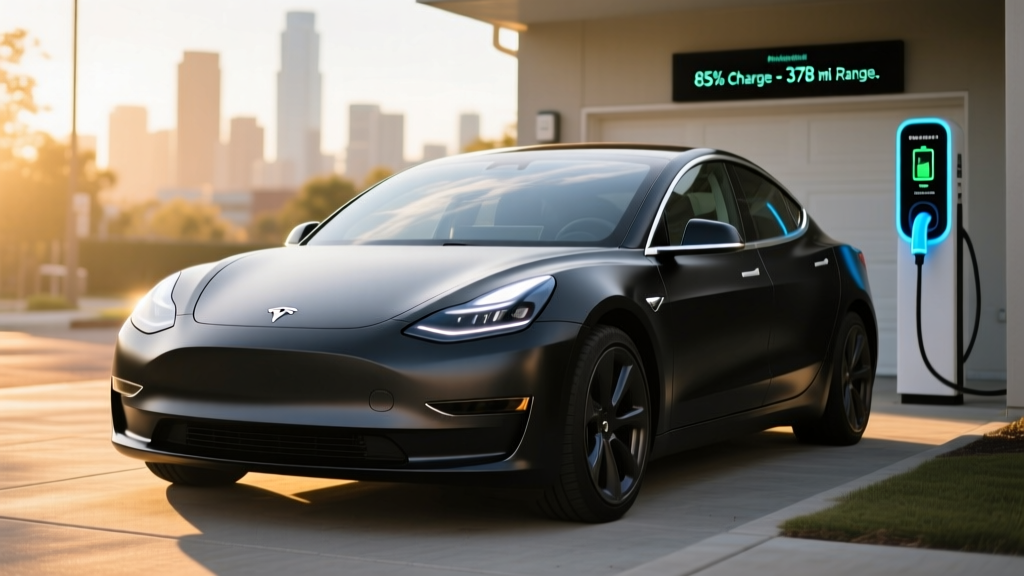
If you've searched "how to buy a Tesla car" in the past month, you're not alone — the Tesla Model 3 remains one of the most researched electric vehicles on the market. After the "Highland" refresh introduced for the 2024 model year and carried into 2026, the Model 3 Long Range AWD delivers an EPA-estimated 341 miles of range, a refined cabin, and access to Tesla's Supercharger network — all starting at $42,490 before incentives. The base Rear-Wheel Drive model undercuts it at $38,990 with 272 miles of EPA range.
But the EV landscape in 2026 is crowded. The Hyundai Ioniq 6, BMW i4, and refreshed Chevrolet Bolt offer compelling alternatives. This guide walks through exactly what you need to know — real-world range, charging speeds, tax credit math, and whether the Model 3 still earns its reputation — so you can buy with confidence, not marketing hype.
| Spec | RWD (Base) | Long Range AWD | Performance AWD |
|---|---|---|---|
| EPA Range | 272 mi | 341 mi | 315 mi |
| Battery (usable) | ~57 kWh (LFP) | ~75 kWh (NMC) | ~75 kWh (NMC) |
| Peak DC Fast Charge | 170 kW | 250 kW | 250 kW |
| 10–80% DC Time | ~25 min | ~22 min | ~22 min |
| Level 2 Home Rate | 11.5 kW (~44 mi/hr) | 11.5 kW (~44 mi/hr) | 11.5 kW (~44 mi/hr) |
| 0–60 mph | 5.8 sec | 4.2 sec | 2.9 sec |
| Horsepower | 271 hp | 346 hp | 510 hp |
| Drivetrain | RWD (single motor) | AWD (dual motor) | AWD (dual motor) |
| Base MSRP | $38,990 | $42,490 | $52,990 |
Real-World Range: What the EPA Sticker Doesn't Tell You
The EPA's fueleconomy.gov lists the 2026 Model 3 Long Range AWD at 341 miles combined. That number is measured under controlled lab conditions and represents a blend of city and highway driving. In practice, your mileage will vary — sometimes significantly.
- City / mild-weather commuting: 330–350 mi (regen braking recovers energy in stop-and-go)
- Highway (70–75 mph, 65°F): ~280–300 mi (aerodynamic drag dominates at speed)
- Highway in winter (30°F, heater on): ~230–260 mi (cold reduces battery efficiency + cabin heating load)
- Worst-case (80 mph, 15°F, mountain terrain): ~200–220 mi
Bottom line: plan road trips around ~270 miles of usable range in temperate conditions, and ~220 in deep winter.
The base RWD model's LFP (lithium iron phosphate) battery behaves differently than the Long Range's NMC chemistry. LFP cells tolerate regular 100% charges without accelerated degradation, so Tesla recommends charging the RWD to full daily. NMC owners should target 80–90% for daily use and reserve 100% for road trips. This means the RWD's real daily range is effectively ~272 miles, while the Long Range's daily usable range is closer to ~270–305 miles at 80–90% SoC — narrowing the gap more than the sticker suggests.
Charging Speed: Home, Destination, and DC Fast Charging
Charging speed is where Tesla still holds an edge, thanks to the Supercharger network's reliability and the vehicle's thermal management. But peak kW ratings only tell part of the story — the charge curve matters more.
| Charging Level | Power (kW) | Speed (mi/hr added) | Notes |
|---|---|---|---|
| Level 1 (120V outlet) | ~1.4 kW | ~3–5 mi/hr | Emergency/trickle only; 272 mi takes ~60+ hours |
| Level 2 (240V home, 48A) | 11.5 kW | ~44 mi/hr | Full charge overnight (~7–8 hrs for Long Range) |
| Level 2 (public, 19.2 kW) | 11.5 kW (vehicle-limited) | ~44 mi/hr | Model 3 onboard charger caps at 11.5 kW |
| DC Fast (V3 Supercharger) | Up to 250 kW peak | ~180–200 mi in 15 min | Peak only below 50% SoC; tapers sharply above 80% |
| DC Fast (V4 Supercharger) | Up to 250 kW | Similar to V3 | Newer stalls; CCS-native cabinet, NACS connector |
Charge curve reality: The Long Range AWD hits 250 kW only between roughly 10–30% state of charge. From 30–60%, expect ~175–200 kW. From 60–80%, the rate drops to ~100–120 kW. The advertised "10–80% in ~22 minutes" assumes optimal battery preconditioning (navigating to a Supercharger in the Tesla app or in-car nav). Arrive at a Supercharger without preconditioning, especially in cold weather, and that 10–80% session can stretch to 35+ minutes.
Home charging setup: Tesla's Wall Connector ($475) delivers up to 11.5 kW on a 60A circuit (48A continuous). Professional installation typically runs $500–$2,000 depending on panel proximity and whether your home needs a 200A service upgrade ($1,500–$3,500). Always have a licensed electrician assess your panel before purchasing equipment.
Pricing, Trims, and Federal Tax Credit Math
Tesla sells direct — no dealerships, no haggling. You configure and order online at tesla.com, pay a non-refundable order fee (typically $250), and take delivery at a local service center or via doorstep drop-off in select markets. Here's what each trim costs before and after potential incentives.
| Trim | Base MSRP | As-Tested (common config) | §30D Credit Eligible? | Est. After Credit |
|---|---|---|---|---|
| RWD | $38,990 | $39,990 (w/ paint + wheels) | Yes — up to $7,500* | ~$31,490–$32,490 |
| Long Range AWD | $42,490 | $44,490 (w/ FSD + paint) | Yes — up to $7,500* | ~$34,990–$36,990 |
| Performance AWD | $52,990 | $54,490 (w/ paint) | Yes — up to $7,500* | ~$45,490–$46,990 |
*Eligibility depends on buyer income, battery sourcing, and MSRP caps. See tax credit section below.
Important on the IRS §30D federal tax credit: As of 2026, the $7,500 credit requires meeting both a critical-minerals requirement ($3,750) and a battery-components requirement ($3,750). Tesla sources and manufactures battery components domestically, and the Model 3 has historically qualified for the full $7,500 — but sourcing rules tighten annually. You can also elect to transfer the credit to the point of sale, reducing your purchase price at delivery rather than waiting for a tax refund.
Buyer eligibility caps for 2026:
- Adjusted gross income: ≤$150,000 (single), ≤$225,000 (head of household), ≤$300,000 (joint)
- Vehicle MSRP cap: ≤$55,000 for sedans (all Model 3 trims qualify)
- Vehicle must be new, assembled in North America (all US-market Model 3s are built in Fremont, CA or Austin, TX)
Always verify current eligibility on fueleconomy.gov's credit lookup tool before ordering, as battery-sourcing compliance can shift with supply-chain changes.
Performance, Efficiency, and Daily Drivability
The Model 3's efficiency is among the best in its class. The Long Range AWD achieves an EPA-rated 130 MPGe combined (approximately 26 kWh per 100 miles), which translates to roughly 3.5–4.0 miles per kWh in real-world mixed driving. That's meaningfully better than the Ford Mustang Mach-E (~2.8 mi/kWh) and comparable to the Hyundai Ioniq 6 (~3.8 mi/kWh).
Performance varies dramatically by trim:
- RWD: 271 hp, 5.8-second 0–60. Adequate for commuting, but the single-motor setup lacks the instant-torque shove of dual-motor Teslas.
- Long Range AWD: 346 hp, 4.2-second 0–60. The sweet spot — quick, sure-footed in rain and light snow, and the most range-efficient.
- Performance AWD: 510 hp, 2.9-second 0–60. Supercar territory, but you sacrifice ~26 miles of EPA range and pay a $10,500 premium over Long Range.
Ride quality improved substantially with the Highland refresh: revised dampers, acoustic glass, and ventilated front seats address the two loudest complaints about pre-2024 Model 3s (harsh ride and cabin noise). The cabin is minimalist — a single 15.4-inch touchscreen handles everything, including climate controls and the glovebox release. There is no traditional instrument cluster; speed and navigation appear on the upper-left corner of the center display.
Cargo and passenger space:
- Rear cargo (behind 2nd row): 23 cu ft
- Front trunk (frunk): 3.1 cu ft
- Total cargo: ~26 cu ft
- Rear legroom: 35.2 in
- Front headroom: 40.3 in
The Model 3 is a compact sedan, not a crossover. If you need more than 26 cu ft of cargo or regularly carry rear-seat adults over 6 feet tall, the Model Y (or a competitor like the Ioniq 5) offers more volume.
Tech, Driver Assistance, and What You Should Know
Every Model 3 ships with Basic Autopilot — a Level 2 driver-assistance system that includes Traffic-Aware Cruise Control and Autosteer (lane-centering on marked highways). This is a hands-on, eyes-on system: you must keep your hands on the wheel and remain engaged at all times.
Tesla's Autopilot and available Full Self-Driving (Supervised) are SAE Level 2 systems. The driver is always responsible for vehicle operation. "Full Self-Driving" is a feature name, not a capability — it does not make the car autonomous. Only Level 4 services (like Waymo in select cities) operate without a human driver.
Full Self-Driving (Supervised) adds $8,000 as a one-time purchase or $99/month as a subscription (pricing as of early 2026). FSD handles highway interchanges, traffic lights, and some city-street navigation, but requires constant supervision. It's impressive in controlled scenarios and occasionally baffling in construction zones or unusual intersections. Most owners report it reduces highway fatigue but isn't a replacement for attention.
Infotainment: Tesla's proprietary OS remains the benchmark for responsiveness. Over-the-air updates add features regularly — recent additions include adaptive high beams, improved Sentry Mode recording, and Dashcam viewer upgrades. There is no Apple CarPlay or Android Auto; Tesla's native navigation, Spotify, and Netflix (while parked) cover most needs, but CarPlay-dependent buyers should test-drive before committing.
- No physical buttons for climate, mirrors, or glovebox — everything routes through the touchscreen
- No Apple CarPlay or Android Auto
- Rear visibility is compromised by the sloping roofline and small rear window
- Turn-signal stalks removed in Highland refresh — signals are now on the steering wheel (controversial)
- Insurance premiums run 15–30% higher than comparable gas sedans in most states
Warranty, Battery Longevity, and Ownership Costs
Tesla's warranty structure is straightforward:
- Basic vehicle: 4 years / 50,000 miles (whichever comes first)
- Battery & drive unit (RWD): 8 years / 100,000 miles
- Battery & drive unit (Long Range / Performance): 8 years / 120,000 miles
- Capacity retention threshold: Tesla warrants the battery will retain at least 70% of original capacity during the warranty period
Real-world degradation data from owner surveys (aggregated by sources like Recurrent Auto) shows NMC Model 3 batteries typically lose 5–8% capacity over the first 100,000 miles, with the curve flattening significantly after year three. LFP batteries in the RWD model show comparable or slightly better longevity, partly because daily 100% charging keeps the battery management system well-calibrated.
A full battery replacement out of warranty currently costs approximately $12,000–$16,000 depending on the pack, but the vast majority of Model 3 batteries outlast the vehicle's useful life. Tesla's official warranty page details full terms.
5-year estimated ownership cost highlights:
- Electricity (15,000 mi/yr, $0.14/kWh avg): ~$1,950/year vs. ~$2,400/year for a 30-MPG gas sedan at $3.50/gal
- Maintenance: minimal — no oil changes, cabin air filter every 2 years (~$50), tire rotation every 6,250 mi
- Insurance: $1,800–$2,800/year depending on state and driving record (get a quote before ordering)
- Depreciation: Model 3 holds value well relative to other EVs, but EV depreciation broadly outpaces Toyota/Honda sedans
Model 3 vs. Key Competitors: Which Should You Buy?
The Model 3 doesn't exist in a vacuum. Here's how it stacks against the three most cross-shopped alternatives in 2026:
| Attribute | Tesla Model 3 LR AWD | Hyundai Ioniq 6 SEL | BMW i4 eDrive40 | Chevrolet Bolt EUV (refreshed) |
|---|---|---|---|---|
| EPA Range | 341 mi | 361 mi | 307 mi | 247 mi |
| Peak DC Charge | 250 kW | 233 kW | 205 kW | 115 kW |
| 10–80% Time | ~22 min | ~18 min (800V arch) | ~31 min | ~35 min |
| Base MSRP | $42,490 | $42,500 | $52,200 | $29,990 |
| §30D Credit | Up to $7,500 | Up to $7,500 | Up to $7,500 | Up to $7,500 |
| Charging Network | Tesla Supercharger (NACS) | NACS (Tesla SC access) | NACS (Tesla SC access) | NACS (Tesla SC access) |
| Cargo Volume | 23 cu ft | 12.3 cu ft | 16.6 cu ft | 28.1 cu ft |
- You want the most proven Supercharger network and seamless charging experience
- You value OTA updates, integrated navigation, and Tesla's software ecosystem
- Performance-per-dollar matters (2.9s 0–60 on the Performance trim)
- Maximum range and fastest 10–80% charging are your top priorities (800V architecture)
- You prefer physical buttons and a more traditional interior layout
- Build quality, cabin materials, and driving dynamics are paramount
- You don't mind paying a premium for luxury-brand fit and finish
- Budget is the primary constraint — it's the most affordable long-range EV available
- You can accept slower DC charging (115 kW peak) for a significantly lower entry price
Step-by-Step: How to Actually Buy a Tesla in 2026
- Test drive first. Order online at tesla.com or schedule a demo drive at a Tesla showroom. The lack of CarPlay, touchscreen-only controls, and steering-wheel turn signals are dealbreakers for some — don't skip this step.
- Choose your trim. Long Range AWD is the value sweet spot for most buyers. RWD is ideal if you charge at home daily and rarely road-trip. Performance is for enthusiasts who accept the range trade-off.
- Verify tax credit eligibility. Check fueleconomy.gov for the specific VIN's credit status, confirm your AGI is within limits, and decide whether to take the credit at point of sale or on your tax return.
- Arrange home charging. Get a quote from a licensed electrician for a NEMA 14-50 outlet ($300–$800) or a hardwired Wall Connector install ($800–$2,000+). Factor in potential panel upgrades.
- Order and configure. Select paint, wheels, interior color, and whether to add FSD. Delivery timelines typically range from 2–6 weeks depending on inventory and region.
- Secure insurance before delivery. Get quotes from at least three carriers. Tesla also offers its own insurance product in many states, priced using real-time driving data.
- Inspect at delivery. Check panel gaps, paint quality, and screen responsiveness before signing. Tesla's delivery centers allow a brief inspection period.
Pros, Cons, and the Bottom Line
- Best-in-class Supercharger network reliability (now opening to NACS-equipped competitors, but Tesla vehicles still get preferential stall access)
- Excellent efficiency — 26 kWh/100 mi means lower electricity costs
- Strong performance across all trims; Long Range hits 4.2s 0–60
- Over-the-air updates continuously add features post-purchase
- Low maintenance costs — no fluid changes beyond washer fluid
- Full $7,500 §30D credit eligibility (verify at purchase)
- No Apple CarPlay or Android Auto — a dealbreaker for some
- All controls on one touchscreen; no physical buttons or stalks for turn signals
- Rear seat is tighter than Model Y or Ioniq 5
- Insurance costs above segment average
- FSD ($8,000) is optional and still requires full driver supervision
- Panel gap and paint quality inconsistency still reported by some owners
The 2026 Tesla Model 3 Long Range AWD remains the EV benchmark for buyers who prioritize range, charging infrastructure, and software integration. It isn't the cheapest option, the most luxurious, or the most spacious — but as a complete package for a daily-commuter-meets-road-trip use case, it's still the car to beat. If you've been researching how to buy a Tesla car, the Long Range at ~$35,000 after the federal credit is where the value proposition peaks.
Frequently Asked Questions
What is the real-world range of the 2026 Tesla Model 3?
The EPA rates the Long Range AWD at 341 miles combined. Expect ~280–300 miles on highway road trips in mild weather, ~230–260 in winter, and up to ~350 in city commuting with regenerative braking. The RWD model's 272-mile EPA rating translates to ~220–240 highway miles in temperate conditions.
How fast does the Model 3 charge at home and on the road?
On a Level 2 home charger (240V, 48A), the Model 3 charges at 11.5 kW, adding roughly 44 miles of range per hour — enough for a full overnight charge. On a V3 or V4 Supercharger, the Long Range peaks at 250 kW and charges from 10–80% in approximately 22 minutes with proper battery preconditioning. Without preconditioning, add 10–15 minutes.
How much does the Tesla Model 3 cost after tax credits?
The Long Range AWD starts at $42,490. With the full $7,500 federal §30D tax credit (if you meet income and sourcing requirements), the effective price drops to ~$34,990. The base RWD can reach as low as ~$31,490 after credit. State incentives (like Colorado's $5,000 credit or California's CVRP) can reduce the price further — check your state's energy office for current programs.
Does the 2026 Tesla Model 3 qualify for the federal EV tax credit?
Yes — as of early 2026, all Model 3 trims built for the US market qualify for up to $7,500 under IRS §30D, provided the buyer meets income caps ($150K single / $300K joint) and the vehicle MSRP stays under $55,000 (sedan cap). Battery-sourcing rules tighten annually, so verify on fueleconomy.gov at the time of purchase. You can elect to transfer the credit to Tesla at point of sale for an instant price reduction.
Is the Tesla Model 3 worth buying vs. the Hyundai Ioniq 6 or BMW i4?
It depends on priorities. The Model 3 wins on charging-network reliability, software integration, and performance-per-dollar. The Ioniq 6 offers more EPA range (361 mi) and faster 10–80% charging (~18 min via 800V architecture) at a similar price. The BMW i4 delivers superior cabin quality and driving dynamics but costs $10,000+ more. For most buyers who want a single-vehicle solution for commuting and road trips, the Model 3 Long Range remains the strongest all-around choice.
What are the biggest pros and cons of owning a Model 3?
Pros: Supercharger access, outstanding efficiency (~26 kWh/100 mi), strong performance, continuous OTA improvements, and low running costs. Cons: no CarPlay/Android Auto, touchscreen-only controls, tight rear seat, higher-than-average insurance, and FSD remains a Level 2 system despite its name.