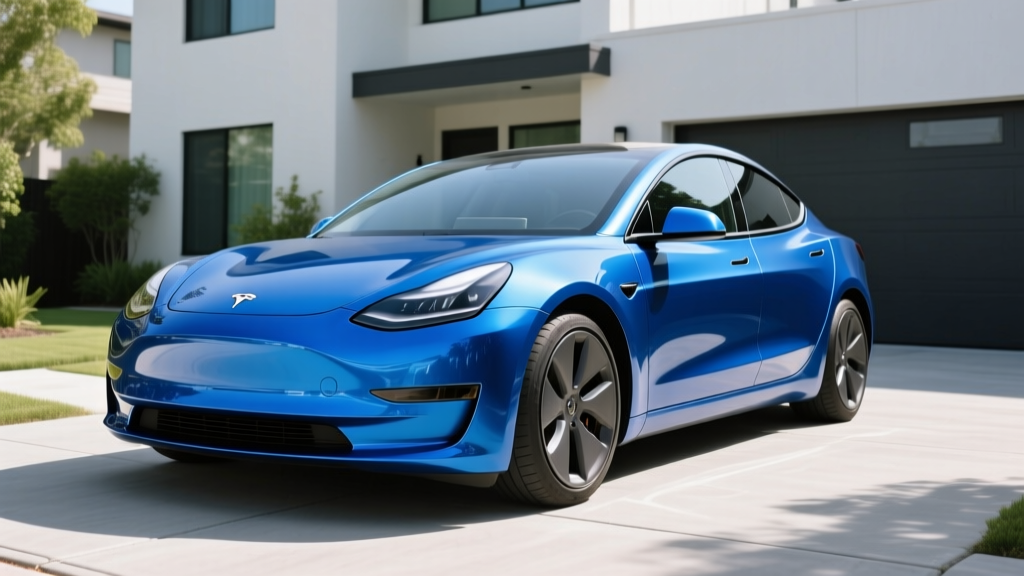
If you've just ordered a Tesla Model 3 — or you're researching one — you've probably seen wrapped examples on Instagram and wondered: how much to wrap a Tesla Model 3? The short answer is that a professional full-body vinyl wrap runs between $2,500 and $6,000 in 2026, depending on material quality, shop reputation, and your local market. But before you budget for a color change, it's worth understanding what you're wrapping — because the 2026 Tesla Model 3 (the "Highland" refresh generation) is a markedly different car than the pre-2024 versions, with updated range, charging, and interior tech that affect your total ownership picture.
This guide breaks down wrap costs, paint protection considerations specific to the Model 3, and — critically — the real-world EV specs you need to evaluate before buying.
How Much Does It Cost to Wrap a Tesla Model 3?
Vinyl wrapping a Model 3 isn't a one-price-fits-all proposition. Here's what the market looks like in 2026:
| Wrap Type | Typical Cost Range | Material | Longevity |
|---|---|---|---|
| Full body (standard gloss/matte) | $2,500 – $3,800 | Cast vinyl (3M, Avery Dennison) | 5–7 years |
| Full body (premium/specialty finish) | $4,000 – $6,000+ | Chrome, satin, color-shift films | 5–7 years |
| Partial wrap (roof + hood + mirrors) | $800 – $1,500 | Cast vinyl | 5–7 years |
| Paint Protection Film (PPF) — full body | $4,500 – $7,500 | Thermoplastic polyurethane (TPU) | 7–10 years |
| PPF — front-end only (bumper, hood, fenders, mirrors) | $1,500 – $2,500 | TPU | 7–10 years |
What Drives the Price Up or Down?
Several factors shift where your quote lands within those ranges:
- Material brand and grade: 3M 2080 and Avery Dennison Supreme Wrapping Film are industry standards. Budget shops may use calendared vinyl that shrinks, cracks, or leaves adhesive residue — avoid these on a car you plan to keep more than two years.
- Shop expertise: A certified installer with a climate-controlled bay charges more but produces cleaner edges around the Model 3's tight panel gaps, flush door handles, and complex front bumper geometry.
- Color complexity: Chrome and satin finishes require more careful handling and waste more material. Color-shift and textured films (carbon fiber look, forged metal) sit at the top of the range.
- Geographic market: Expect to pay 15–30% more in Los Angeles, New York, or Miami compared to smaller metro areas.
- Paint correction before wrapping: Most reputable shops recommend a single-stage paint correction ($300–$600) before applying vinyl or PPF, since the film will conform to — and highlight — any swirl marks or imperfections underneath.
Wrap vs. PPF: Which Makes Sense for a Model 3?
A vinyl wrap changes your car's color and provides minimal protection against light scratches. Paint Protection Film (PPF) is a clear, self-healing urethane layer designed to absorb rock chips, bug acids, and road debris. Many Model 3 owners opt for a combination: PPF on high-impact zones (front bumper, hood, fenders, side mirrors) plus a full vinyl wrap over the entire car for color change and an additional sacrificial layer.
The Model 3's relatively flat hood and low front end make it more susceptible to highway rock chips than taller SUVs, which is why front-end PPF is one of the most popular add-ons among Tesla owners who drive frequently on interstates.
2026 Tesla Model 3: The EV Specs That Matter
Whether you're wrapping an existing Model 3 or evaluating one to buy, here are the numbers that define daily ownership. The 2026 Model 3 continues the Highland-generation platform introduced for the 2024 model year, with incremental battery and software refinements.
| Spec | Model 3 RWD (Base) | Model 3 Long Range AWD | Model 3 Performance |
|---|---|---|---|
| EPA Range | 272 miles | 341 miles | 315 miles |
| Battery Capacity (usable) | ~57.5 kWh | ~75 kWh | ~75 kWh |
| Battery Chemistry | LFP (Lithium Iron Phosphate) | NMC (Nickel Manganese Cobalt) | NMC |
| Drivetrain | Rear-Wheel Drive (single motor) | Dual-Motor AWD | Dual-Motor AWD |
| Horsepower | 271 hp | 346 hp | 510 hp |
| 0–60 mph | 5.8 seconds | 4.2 seconds | 2.9 seconds |
| Max DC Fast-Charge Rate | 170 kW | 250 kW | 250 kW |
| 10–80% DC Fast Charge | ~25 minutes | ~18 minutes | ~18 minutes |
| Level 2 Home Charging (11.5 kW) | ~30 mi/hr | ~44 mi/hr | ~44 mi/hr |
| Efficiency (EPA) | 132 MPGe / 25 kWh/100mi | 132 MPGe / 25 kWh/100mi | 121 MPGe / 28 kWh/100mi |
| Base MSRP | $38,990 | $47,490 | $53,990 |
| Federal Tax Credit (§30D) | Up to $7,500 | Up to $7,500 | Up to $7,500 |
| Battery Warranty | 8 yr / 100,000 mi | 8 yr / 120,000 mi | 8 yr / 120,000 mi |
Sources: fueleconomy.gov, Tesla Model 3 official specs.
Real-World Range: What the EPA Sticker Doesn't Tell You
EPA estimate: 341 miles
Real-world highway (70–75 mph, mild weather): ~280–305 miles
Real-world mixed city/highway (moderate climate): ~310–330 miles
Cold weather (below 32°F, highway): ~230–270 miles
Cold weather with cabin preconditioning + seat heaters: ~260–290 miles
Tesla's efficiency engineering is among the best in the industry — the Model 3 consistently ranks near the top of EPA efficiency charts — but physics still applies. At sustained highway speeds above 70 mph, aerodynamic drag consumes energy exponentially. Add winter temperatures and the battery's internal resistance increases, reducing both available capacity and regenerative braking effectiveness.
The LFP battery in the RWD trim behaves differently than the NMC packs in Long Range and Performance models. LFP cells tolerate — and actually prefer — being charged to 100% regularly, which gives you the full 272 EPA miles to work with in daily driving. NMC packs benefit from an 80–90% daily charge limit (roughly 273–307 miles in the Long Range) to maximize long-term longevity, reserving 100% for road trips.
Charging Speed and Infrastructure: What Model 3 Owners Need to Know
| Charging Level | Power | Speed (Long Range AWD) | Best For |
|---|---|---|---|
| Level 1 (120V household outlet) | ~1.4 kW | ~3–5 miles/hour | Emergency / overnight top-up |
| Level 2 (240V home charger, 48A) | 11.5 kW | ~44 miles/hour | Daily home charging |
| DC Fast Charge (Tesla Supercharger V3/V4) | Up to 250 kW | 10–80% in ~18 min | Road trips |
| DC Fast Charge (CCS adapter at EA/others) | Up to 250 kW (station-dependent) | 10–80% in ~20–25 min | Non-Tesla networks |
A few practical notes from real-world charging experience:
Charge curve reality: The 250 kW peak rate on Long Range and Performance trims only holds between roughly 10–30% State of Charge (SoC). From 30–60%, expect ~150–180 kW. Above 80%, the rate drops sharply to ~50 kW and below — this is why Tesla's navigation system typically routes you to arrive at Superchargers at low SoC and depart around 80%, optimizing total trip time rather than chasing a full battery.
NACS native advantage: The Model 3 uses the North American Charging Standard (NACS) connector natively, giving you seamless access to Tesla's Supercharger network — the most reliable and dense DC fast-charging network in the US, with over 25,000 stalls as of early 2026. For non-Tesla networks like Electrify America or EVgo, you'll need a NACS-to-CCS adapter (included with new Model 3 deliveries since late 2024).
Home charging setup: Most Model 3 owners install a Level 2 wall connector on a 60-amp circuit (delivering 48 amps / 11.5 kW continuous). The Tesla Wall Connector costs ~$400; professional installation typically runs $500–$2,000 depending on panel proximity and whether your electrical panel needs an upgrade. A full overnight charge from 10% to 100% takes roughly 6–7 hours on Level 2.
Pricing, Trims, and Federal Tax Credit Eligibility
| Trim | Base MSRP | Est. §30D Credit | Effective Price (Before State Incentives) |
|---|---|---|---|
| Model 3 RWD | $38,990 | Up to $7,500 | ~$31,490 |
| Model 3 Long Range AWD | $47,490 | Up to $7,500 | ~$39,990 |
| Model 3 Performance | $53,990 | Up to $7,500 | ~$46,490 |
Important §30D tax credit caveats (2026 rules): The federal EV tax credit under IRS §30D is subject to multiple eligibility requirements that can reduce or eliminate the $7,500 maximum:
- Buyer income caps: Modified Adjusted Gross Income (MAGI) must not exceed $150,000 (single), $225,000 (head of household), or $300,000 (married filing jointly).
- MSRP cap: The vehicle's MSRP must not exceed $55,000 for sedans — which means the Model 3 Performance ($53,990) qualifies, but adding certain packages or destination charges could push it over. Verify the final MSRP on your purchase agreement.
- Battery sourcing requirements: The credit is split into two $3,750 halves — one for critical minerals sourcing and one for battery component manufacturing. Tesla has worked to qualify for both halves, but sourcing rules tighten annually. Check the latest IRS guidance on qualifying vehicles before relying on the full $7,500.
- Point-of-sale transfer: As of 2024, you can transfer the credit to the dealer at purchase, reducing your out-of-pocket cost immediately rather than waiting for tax filing. This is available for the Model 3 if the dealer is registered with the IRS Energy Credits portal.
Interior, Tech, and Daily Livability
The Highland-generation Model 3 interior is a meaningful step up from the pre-2024 cabin, addressing many of the earlier model's most common complaints:
- Ventilated front seats — finally standard, a significant comfort upgrade in warm climates.
- Rear-seat touchscreen (8 inches) for climate, media, and entertainment control — passengers are no longer reaching forward to the main display.
- Ambient lighting and upgraded materials throughout the cabin, including textile dashboard trim replacing the previous all-plastic surfaces.
- Acoustic glass all around (previously front-only), dramatically reducing wind and road noise at highway speeds.
- 15.4-inch central touchscreen handles all vehicle controls, navigation, and media. No physical instrument cluster — speed and driving info appear in the upper-left corner of the main display.
Cargo and Passenger Space
| Dimension | Measurement |
|---|---|
| Front legroom | 42.7 inches |
| Rear legroom | 35.2 inches |
| Trunk (rear cargo) | 21.0 cu ft |
| Frunk (front trunk) | 3.1 cu ft |
| Total cargo volume | 24.1 cu ft |
The rear seat remains the Model 3's most debated space. At 35.2 inches of legroom, it's adequate for average-height adults on trips under two hours but tight for taller passengers on long drives. The trunk's 21 cu ft is competitive with compact sedans, and the 60/40 split-folding rear seats open up longer-item hauling. The 3.1 cu ft frunk is useful for charging cables and small bags but won't replace a proper cargo area.
Driver Assistance: Autopilot and FSD (Supervised)
Tesla's Autopilot (standard) and Full Self-Driving Supervised ($8,000 option or $99/month subscription) are SAE Level 2 systems. The driver must remain attentive, keep hands on the wheel (or demonstrate engagement via steering torque), and be prepared to take over at any moment. These systems do not make the Model 3 autonomous. Only Level 4 services like Waymo operate without a human driver in defined geofenced areas.
Autopilot includes Traffic-Aware Cruise Control and Autosteer (lane centering) and is genuinely useful for highway commuting. FSD Supervised adds automatic lane changes, navigation-guided on/off-ramp transitions, and traffic-light/stop-sign recognition — impressive in capability but inconsistent in execution. Expect occasional phantom braking, overly cautious merges, and the need for constant supervision. Many owners find the standard Autopilot sufficient and skip the FSD upgrade.
Who Should Buy the Tesla Model 3 — And Who Should Look Elsewhere?
- You want the best efficiency and real-world range per dollar in the EV sedan segment.
- You value access to the Supercharger network for hassle-free road trips.
- You charge at home most nights and want a car that's "full" every morning.
- You prioritize driving dynamics — the Model 3's low center of gravity and responsive steering remain benchmarks.
- You regularly carry four adults — the rear seat is tighter than the Hyundai Ioniq 6 or BMW i4.
- You need hatchback cargo flexibility — consider the Model Y, Polestar 2, or Ioniq 5.
- You want physical buttons and a traditional instrument cluster — Tesla's all-screen interface isn't for everyone.
- You don't have access to home or workplace charging — public-only charging adds time and cost.
Pros and Cons at a Glance
- Class-leading efficiency (25 kWh/100mi on Long Range)
- Supercharger network access (native NACS)
- Over-the-air updates continuously add features
- Strong resale value relative to most EVs
- LFP option (RWD) allows worry-free 100% daily charging
- Improved cabin quietness and materials (Highland gen)
- Rear seat legroom is tight for taller adults
- No physical buttons — all controls via touchscreen
- FSD (Supervised) remains Level 2, requires constant attention
- Insurance premiums run 15–30% higher than comparable gas sedans
- Limited color options from factory (wraps fill this gap)
- No Apple CarPlay / Android Auto integration
Frequently Asked Questions
Does wrapping a Tesla Model 3 void the warranty?
No. A professionally installed vinyl wrap does not void Tesla's vehicle warranty. However, if wrap removal damages the factory paint (more likely with older repaints or low-quality adhesive), cosmetic repair won't be covered. Tesla's 8-year/100,000–120,000-mile battery and drive unit warranty is entirely unaffected by exterior wraps.
Is a wrap or ceramic coating better for protecting the Model 3's paint?
They serve different purposes. Ceramic coating ($800–$2,000) adds a hydrophobic, UV-resistant layer that makes washing easier and provides minor swirl protection but does nothing against rock chips. PPF ($1,500–$7,500) is the real chip-protection solution. Many owners combine PPF on high-impact areas with ceramic coating over the wrap or PPF for easier cleaning.
Does the Model 3 qualify for the full $7,500 federal tax credit in 2026?
All three Model 3 trims are under the $55,000 sedan MSRP cap. However, the full $7,500 depends on your income (must be under MAGI limits), battery sourcing compliance (which tightens annually), and purchasing from a registered dealer. Check the IRS qualifying vehicle list and consult a tax professional before relying on the credit amount.
How much does it cost to charge a Model 3 at home vs. Supercharging?
At the US average residential electricity rate of ~$0.17/kWh, fully charging the Long Range's 75 kWh battery costs roughly $12.75 — yielding about 3.7 cents per mile. Supercharger pricing varies by location and time of day but typically runs $0.25–$0.40/kWh, or roughly $18.75–$30.00 for a full charge (7–9 cents per mile). Both are significantly cheaper than gasoline at ~12–15 cents per mile for a 30 MPG sedan.
Can I wrap my Model 3 myself with a DIY kit?
DIY wrap kits ($200–$800 in material) exist, but the Model 3's large, flat hood and complex bumper geometry make it one of the harder cars to wrap cleanly without professional tools, heat guns, and experience. Poorly installed vinyl will show seams, trap air bubbles, and potentially damage paint upon removal. For a car in the $39,000–$54,000 range, professional installation is strongly recommended.
What's the real-world range of the Model 3 in winter?
Expect 20–35% range reduction in sustained sub-freezing temperatures, depending on driving style and whether you precondition the battery. The Long Range AWD's 341-mile EPA rating typically drops to 230–270 miles in cold highway driving. Using seat heaters and a heated steering wheel instead of cranking cabin heat can recover 10–15 miles of range. The Model 3's heat pump (standard since 2021) significantly reduces the efficiency penalty compared to older EVs with resistive heaters.