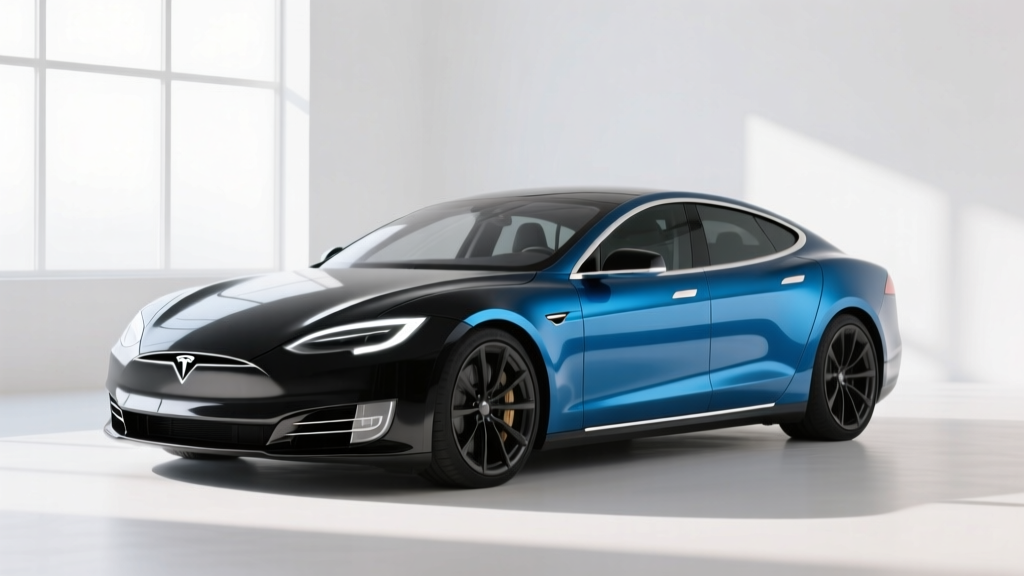
If you've searched "how much to wrap a Tesla" and found only vague forum answers, you're not alone. Vinyl wrapping a Tesla has become one of the most popular ways to personalize the brand's limited factory color palette — and to protect the relatively soft water-based paint Tesla uses. But pricing varies wildly depending on which Tesla you drive, the quality of vinyl, the complexity of the body panels, and whether you're wrapping the full exterior or just accents.
This guide breaks down real 2026 wrap pricing for the Tesla Model 3, Model Y, Model S, and Model X, explains what drives cost differences, and helps you decide whether a wrap, ceramic coating, or PPF (paint protection film) makes more sense for your ownership plan. We'll also cover how wrapping interacts with Tesla's warranty, Autopilot sensor visibility, and resale value.
How Much Does It Cost to Wrap a Tesla? Quick Price Ranges
The short answer: a full exterior vinyl wrap on a Tesla costs between $2,500 and $7,000 in 2026, with most owners paying $3,500–$5,000 for a quality color-change wrap using premium cast vinyl (3M, Avery Dennison, or KPMF). The wide range reflects differences in vehicle size, vinyl grade, finish type, shop labor rates, and regional market variation.
| Tesla Model | Budget Wrap (Calendared Vinyl) | Mid-Range (Cast Vinyl, Standard Finish) | Premium (Cast Vinyl, Specialty Finish) |
|---|---|---|---|
| Model 3 (Sedan) | $2,200–$3,000 | $3,200–$4,500 | $4,500–$6,000 |
| Model Y (Crossover SUV) | $2,500–$3,500 | $3,800–$5,200 | $5,000–$6,500 |
| Model S (Luxury Sedan) | $2,800–$3,800 | $4,000–$5,500 | $5,500–$7,000 |
| Model X (Luxury SUV) | $3,200–$4,200 | $4,500–$6,000 | $6,000–$7,500+ |
Why the Model X costs the most: Beyond its larger surface area, the Model X has complex falcon-wing rear doors with intricate hinge areas, a curved panoramic windshield, and tight panel gaps around the active rear spoiler — all of which demand more installer time and material waste.
What Drives the Cost of Wrapping a Tesla?
Understanding the cost variables helps you evaluate quotes and avoid shops that cut corners. Here are the primary factors:
1. Vinyl Material: Calendared vs. Cast
This is the single biggest cost and quality differentiator.
- Calendared vinyl ($2–$4/sq ft material): Thicker, less conformable, prone to shrinking and lifting over 2–3 years. Suitable for flat panels and short-term use (fleet vehicles, temporary promotions). Not recommended for a Tesla's curved body lines.
- Cast vinyl ($5–$9/sq ft material): Thinner, highly conformable, 5–7 year lifespan. Brands like 3M 2080 Series, Avery Dennison Supreme Wrapping Film, and KPMF K75000 are industry standards. This is what reputable shops use for Tesla wraps.
2. Finish Type
The finish you choose directly affects material cost and installation difficulty:
- Gloss: Standard, most affordable, easiest to install. Adds $0 premium over base material cost.
- Satin / Matte: +$200–$500 over gloss. Shows fingerprints and requires specific cleaning products. Very popular on Teslas for the "stealth" look.
- Metallic / Color-shift: +$500–$1,200. More expensive material and trickier to align on curved panels.
- Chrome / Mirror: +$800–$1,500. Requires exceptionally smooth installation — any imperfection in the underlying paint shows through.
- Textured (carbon fiber, brushed metal): +$400–$800. Primarily used for accent wraps (roof, mirrors, trim).
3. Vehicle Size and Panel Complexity
A Model 3 has roughly 150–170 sq ft of wrapable exterior surface; a Model X approaches 220–240 sq ft. But surface area alone doesn't tell the story. Tesla's design language — flush door handles, minimal panel gaps, large single-piece stampings, and the absence of traditional grilles — actually makes some areas easier to wrap than conventional cars. The challenge areas are the tight radii around headlights, the front bumper's lower air intakes, and the rear diffuser.
4. Shop Labor Rates and Region
Expect labor to account for 60–75% of your total wrap cost. Rates vary significantly:
- Rural / small-market shops: $65–$90/hour
- Suburban metro shops: $90–$130/hour
- Major metro / high-end specialty shops (LA, Miami, NYC, SF): $130–$200/hour
A full Tesla wrap typically requires 25–45 hours of skilled labor depending on vehicle size and finish complexity.
5. Partial Wraps and Accent Packages
Not everyone needs a full color change. Popular partial wrap options include:
- Roof wrap only (gloss black "floating roof" effect): $400–$800
- Chrome delete (wrapping chrome window trim in gloss black): $300–$600
- Mirror caps + rocker panels: $250–$500
- Hood and front fenders: $800–$1,500
Wrap vs. Ceramic Coating vs. PPF: Which Protects Your Tesla Best?
Tesla's factory paint — particularly the water-based formulations used at Fremont and Giga Texas — has a reputation for being thinner and softer than legacy automaker paints. Many owners report swirl marks and rock chips within the first few thousand miles. This makes paint protection a legitimate concern, not just cosmetic vanity.
| Protection Type | Typical Cost (Full Vehicle) | Lifespan | What It Protects Against | Color Change? |
|---|---|---|---|---|
| Vinyl Wrap (Cast) | $3,200–$7,000 | 5–7 years | Minor scratches, UV fading, light rock chips, swirl marks | Yes — full color change |
| PPF (Paint Protection Film) | $4,500–$8,000 (full); $1,500–$2,500 (front-end) | 7–10 years | Rock chips, bug acids, road debris, minor abrasion | No — clear only (some tinted options) |
| Ceramic Coating | $800–$2,500 | 2–5 years | UV oxidation, water spotting, chemical stains, ease of cleaning | No — enhances existing paint |
The enthusiast's combo: Many Tesla owners apply PPF to high-impact zones (front bumper, hood, fenders, mirrors, rocker panels) for $1,500–$2,500, then ceramic-coat the entire vehicle for $1,000–$1,500. This runs $2,500–$4,000 total — comparable to a mid-range full wrap — but doesn't change the color. If you love your Tesla's factory color, this is the protection-first path. If you want a different color and protection, a full wrap is the move.
Does Wrapping a Tesla Affect Autopilot Sensors or Warranty?
This is where EV-specific knowledge matters. Teslas rely on a suite of cameras (typically 8 on current Model 3/Y, 8 on refreshed Model S/X) for Autopilot and FSD (Supervised) — a Level 2 driver-assist system requiring constant driver engagement. These cameras are positioned behind glass (windshield, rear-view mirror housing, front fenders, B-pillars, rear quarter panels) and must not be obstructed.
Warranty impact: Tesla's New Vehicle Limited Warranty covers 4 years / 50,000 miles (basic) and 8 years / 100,000–120,000 miles (battery and drive unit, depending on model). A vinyl wrap does not void this warranty. However, if a wrap installation damages wiring, a camera, or a sensor, that specific repair may not be covered. Document the vehicle's condition with photos before and after installation.
How Long Does a Tesla Wrap Last, and What About Resale Value?
Premium cast vinyl (3M 2080, Avery Supreme) carries a manufacturer-rated lifespan of 5–7 years for horizontal surfaces and 7–10 years for vertical surfaces when properly maintained. Horizontal surfaces (hood, roof, trunk lid) degrade faster due to direct UV exposure and heat.
Maintenance for maximum lifespan:
- Hand-wash only — no automatic car washes with brushes
- Use pH-neutral car wash soap; avoid wax-based products on matte/satin finishes
- Remove bird droppings, tree sap, and bug splatter within 24 hours
- Apply a vinyl-safe sealant (e.g., Ceramic Pro for PPF/Wrap) annually for UV protection
- Garage-park when possible — UV is the #1 enemy of vinyl longevity
Resale value considerations: A professionally installed, well-maintained wrap in a tasteful color can actually help resale by preserving the factory paint underneath. When you're ready to sell, the wrap can be removed (typically $500–$1,000 for professional removal) to reveal pristine original paint. However, extremely niche colors (neon green, chrome rainbow) may limit your buyer pool. Conservative choices — satin black, gloss dark grey, matte navy — tend to be resale-neutral or positive.
Tesla Factory Colors vs. Wrap: The Cost Context
One reason Tesla owners wrap at higher rates than other EV buyers is the brand's limited and expensive factory color menu. Here's what Tesla charges for non-standard colors on the 2026 Model 3 and Model Y:
- Solid Black / Pearl White: Included (no upcharge, varies by model/year)
- Deep Blue Metallic: $1,000–$1,500
- Ultra Red / Red Multi-Coat: $2,000–$2,500
- Quicksilver / Stealth Grey: $1,500–$2,500
For $3,500–$5,000, a wrap gives you any color in the spectrum — including colors Tesla doesn't offer — plus paint protection. If you were already planning to spend $2,000+ on a factory color upgrade, the incremental cost of a wrap (which also protects) starts to look very reasonable.
Frequently Asked Questions
Can I wrap my Tesla myself with a DIY kit?
DIY wrap kits from brands like VViViD cost $400–$800 in material for a full Model 3. However, achieving a bubble-free, edge-tucked, professional result on Tesla's curved panels requires significant skill, a heat gun, squeegees, a dust-free environment, and 30+ hours of patience. Most DIY attempts show visible seams, lifting edges within months, and knife-cut scratches on the paint. For a daily-driven Tesla, professional installation is strongly recommended.
Will a wrap damage my Tesla's paint when removed?
No — provided the paint was in good condition before wrapping and the vinyl is removed within its rated lifespan (5–7 years). Cast vinyl uses pressure-sensitive adhesive that releases cleanly with heat. The risk arises if cheap calendared vinyl is left on for years (it can bond permanently), or if the paint was already failing (peeling clear coat) before wrapping. Always document your paint condition pre-wrap.
Does wrapping a Tesla affect insurance?
Most insurers treat a wrap as a modification. You should notify your carrier. Some will add a custom-equipment endorsement for the wrap's value ($3,000–$5,000), which may increase your premium by $5–$15/month. If you don't declare the wrap and file a claim, the insurer will only pay to restore the factory paint color — not replace the wrap.
How much does it cost to remove a wrap from a Tesla?
Professional wrap removal typically costs $500–$1,000 for a full vehicle, depending on vinyl age and condition. Older vinyl that has been UV-baked for 6+ years can be more difficult to remove and may leave adhesive residue requiring a solvent cleanup ($100–$200 additional).
What's the best wrap color for a Tesla in 2026?
Based on wrap-shop order data and Tesla community trends, the most popular wrap colors for Teslas in 2026 are satin chrome black, gloss Nardo grey, matte British racing green, satin desert sand, and gloss frozen white. Chrome deletes (gloss black window trim) remain the single most requested partial wrap service.