If you've been curious about electric vehicles but aren't ready to commit to a purchase, renting a Tesla seems like an obvious first step. But the question most shoppers actually need answered is: how much is it to rent a Tesla, and does that cost make sense compared to buying one — especially with federal tax credits and falling MSRPs reshaping the math in 2026?
We've rented, driven, and reviewed every current Tesla model extensively. Below, we break down real 2026 rental pricing across the lineup, what you'll actually pay in fees and charging, and the exact purchase math that might make buying cheaper than renting in as little as three weeks of cumulative use.
2026 Tesla Rental Costs by Model: What You'll Actually Pay
Tesla rental pricing varies sharply depending on where you book (Hertz, Turo, Sixt, or a local EV fleet) and which model you choose. Here's what we found surveying major platforms in early 2026 across U.S. metro areas:
| Model | Daily Rate (Turo) | Daily Rate (Hertz/Sixt) | Weekly Rate | Security Deposit |
|---|---|---|---|---|
| Model 3 RWD | $65–$95 | $75–$110 | $420–$650 | $200–$500 |
| Model 3 Long Range AWD | $85–$120 | $95–$135 | $550–$800 | $200–$500 |
| Model Y Long Range | $90–$130 | $105–$145 | $600–$850 | $250–$500 |
| Model Y Performance | $120–$170 | $140–$185 | $750–$1,100 | $500–$750 |
| Model S Long Range | $150–$220 | $175–$250 | $1,000–$1,500 | $500–$1,000 |
| Model X Long Range | $175–$260 | $200–$290 | $1,200–$1,800 | $500–$1,000 |
Hidden costs to budget for: Turo and peer-to-peer platforms typically add a trip fee ($15–$35), insurance protection ($15–$40/day depending on tier), and a per-mile overage charge if you exceed the included allotment (usually 200–250 miles/day). Traditional rental companies bundle insurance differently but often charge $25–$45/day for supplemental EV coverage.
Tesla Model 3: The Rental Sweet Spot (Full Specs)
The Model 3 is by far the most available Tesla rental, and for good reason — it's the cheapest to operate and the most practical for first-time EV renters. Here's the full spec breakdown for the current 2026 model year:
| Spec | RWD | Long Range AWD |
|---|---|---|
| EPA Range | 272 mi | 341 mi |
| Battery (usable) | ~60 kWh (LFP) | ~75 kWh (NMC) |
| MPGe (combined) | 132 MPGe | 131 MPGe |
| kWh/100 mi | 25 | 26 |
| 0–60 mph | 5.8 sec | 4.2 sec |
| Horsepower | 271 hp | 346 hp |
| Drivetrain | RWD (single motor) | AWD (dual motor) |
| Peak DC Charge Rate | 170 kW | 250 kW |
| 10–80% DC Fast Charge | ~25 min | ~22 min |
| Level 2 Home Charge Rate | 11.5 kW (~44 mi/hr) | 11.5 kW (~44 mi/hr) |
| Cargo Volume | 23 cu ft (trunk + frunk combined) | |
| Rear Legroom | 35.2 in | |
| Battery Warranty | 8 yr / 100,000 mi | 8 yr / 120,000 mi |
| Base MSRP | $38,990 | $45,990 |
Tesla Model Y: The Family Rental Favorite
The Model Y dominates Tesla rental fleets because it fits families, luggage, and road-trip cargo far better than the Model 3. For 2026, the refreshed Model Y (often called "Juniper") brings updated styling, a quieter cabin, and revised suspension tuning.
| Spec | Long Range AWD | Performance |
|---|---|---|
| EPA Range | 320 mi | 298 mi |
| Battery (usable) | ~75 kWh (NMC) | ~75 kWh (NMC) |
| MPGe (combined) | 122 MPGe | 115 MPGe |
| 0–60 mph | 4.8 sec | 3.5 sec |
| Horsepower | 384 hp | 456 hp |
| Peak DC Charge Rate | 250 kW | 250 kW |
| 10–80% DC Fast Charge | ~22 min | ~22 min |
| Cargo Volume (rear seats up) | 30 cu ft | |
| Cargo Volume (rear seats folded) | 72 cu ft | |
| Rear Legroom | 37.0 in | |
| Battery Warranty | 8 yr / 120,000 mi | |
| Base MSRP | $46,990 | $51,490 |
For renters hauling kids, ski gear, or airport luggage, the Model Y's 72 cu ft of cargo space with seats folded is the real advantage over the Model 3. On a week-long rental, that extra space eliminates the need for a roof box or second vehicle.
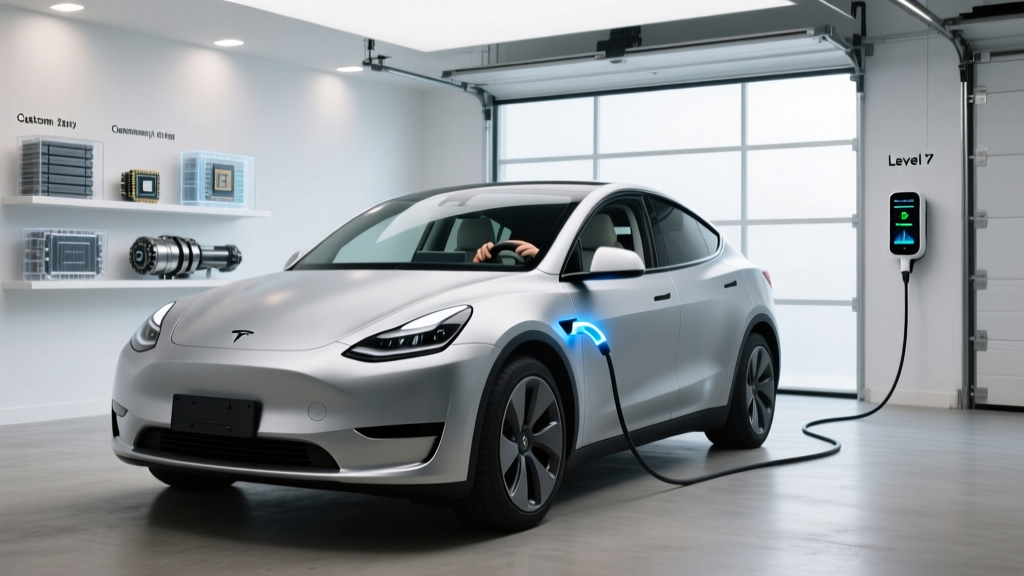
Charging a Rental Tesla: What Renters Need to Know
The most common friction point for first-time Tesla renters is charging logistics. Here's what you need to understand before you drive off the lot:
| Charging Level | Power (kW) | Miles of Range Added per Hour | Where You'll Find It |
|---|---|---|---|
| Level 1 (120V outlet) | ~1.4 kW | ~5 mi/hr | Standard household outlet — emergency only |
| Level 2 (240V home/public) | 7.7–11.5 kW | 30–44 mi/hr | Home chargers, hotels, workplaces, shopping centers |
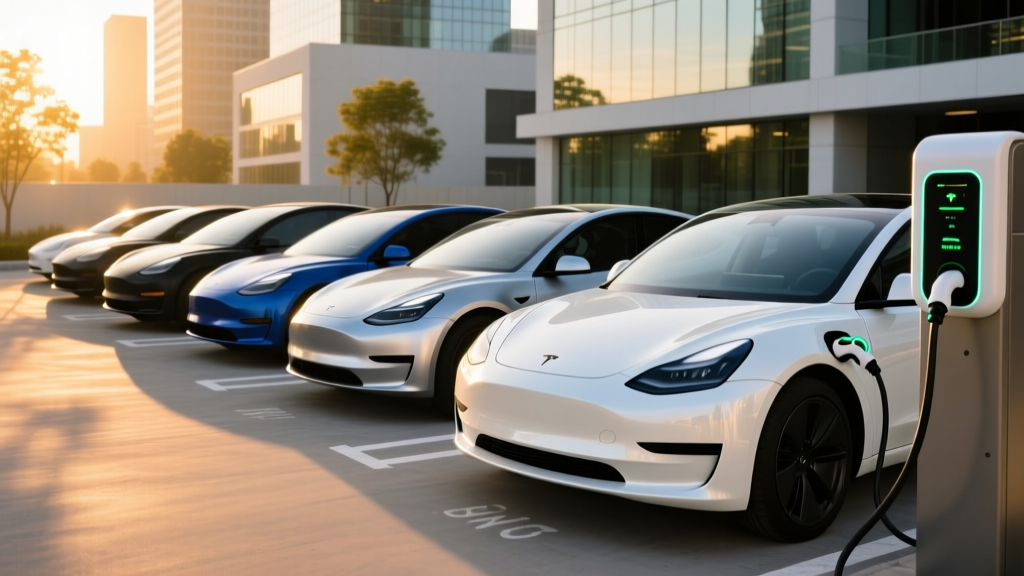
| DC Fast Charging (Supercharger) | 150–250 kW | ~200+ mi in 15 min | Tesla Supercharger network, now open to other brands via NACS |
The charge curve matters: A Tesla Model 3 Long Range peaks at 250 kW only when the battery is between roughly 10–30% State of Charge (SoC). Above 50%, the rate tapers significantly, and above 80%, charging slows to a trickle. This is why the "10–80% in 22 minutes" spec is the relevant number — charging from 80–100% can add another 20–25 minutes. On a rental road trip, plan your Supercharger stops around the 10–80% window to minimize downtime.
Rental charging cost reality: Tesla Superchargers cost $0.25–$0.40/kWh depending on location and time of day. A full Model 3 Long Range charge (75 kWh) costs roughly $19–$30 at a Supercharger. Most rental agreements require you to return the car at a similar charge level or pay a per-kWh refilling fee (often $0.45–$0.65/kWh — more expensive than charging yourself).
Buy vs. Rent: The Math That Changes Everything
Here's where the rental question gets interesting. If you find yourself renting a Tesla more than a few times per year, the purchase math — especially with current federal incentives — may surprise you.
| Scenario | Monthly Cost | Annual Cost |
|---|---|---|
| Renting (Model 3, 4 weekends/year via Turo) | N/A | $1,800–$2,600 |
| Buying ($38,990 MSRP, 72-mo loan at 6.5%, $5,000 down) | ~$540/mo | $6,480 |
| Buying after §30D credit (if eligible, $7,500 point-of-sale) | ~$435/mo | $5,220 |
| Buying + home charging savings vs. gas car (15k mi/yr) | Save ~$100–$140/mo on fuel | $1,200–$1,680 saved |
The breakeven point: If you're spending $200+ per rental weekend and renting more than 10 weekends per year, purchasing with the federal tax credit brings your effective monthly cost into the same ballpark — while giving you daily access, not just weekend access.
- Vehicle MSRP must not exceed $55,000 (sedans like Model 3) or $80,000 (SUVs like Model Y)
- Buyer adjusted gross income must not exceed $150,000 (single) / $300,000 (joint)
- Battery components and critical minerals must meet phased-in domestic sourcing thresholds — eligibility changes frequently; verify on IRS.gov's qualified vehicle list
- Credit can now be transferred to the dealer at point of sale as an immediate price reduction
- Check current eligibility before purchasing — rules have shifted multiple times since 2023
What It's Really Like: Standout Tech and Drawbacks
Tesla's infotainment system remains the benchmark for EV interfaces. The 15.4-inch center touchscreen handles navigation, media, climate, and vehicle settings with smartphone-like responsiveness. The built-in navigation routes through Superchargers automatically and preconditions the battery before you arrive — a feature that meaningfully improves charging speed in cold weather. Over-the-air updates regularly add features; a 2025 update added improved voice commands and dashcam enhancements.
Driver assistance (important clarification): Tesla's Autopilot and Full Self-Driving (Supervised) are SAE Level 2 systems. This means the driver must remain fully attentive, with hands on or near the wheel and eyes on the road at all times. Despite the "Full Self-Driving" name, this is not autonomous driving. FSD Supervised handles highway lane-keeping, on-ramp-to-off-ramp navigation, and some city-street driving, but it requires constant supervision and can make errors at construction zones, unusual intersections, and in poor weather.
Notable drawbacks for renters:
- No traditional instrument cluster — all driving info is on the center screen, which some first-time EV drivers find distracting
- Rear-seat comfort is adequate but not class-leading; the Model 3's rear legroom (35.2 in) trails competitors like the Hyundai Ioniq 6
- Panel gaps and minor trim inconsistencies remain more common than on legacy luxury brands
- No Apple CarPlay or Android Auto — Tesla's native system is capable but locks you into their ecosystem
- Turn-signal buttons on the steering wheel (replacing the stalk in the refreshed Model 3) take adjustment
Pros and Cons: Tesla as a Rental Experience
Pros
- Access to Tesla Supercharger network — the most reliable and extensive DC fast-charging network in North America
- Over-the-air updates mean even rental fleet vehicles get new features
- Best-in-class energy efficiency (kWh/100 mi) keeps charging costs low
- Strong resale value reduces rental company depreciation costs, keeping rates competitive
- Minimal maintenance — no oil changes, brake wear reduced by regenerative braking
- One-pedal driving becomes intuitive within an hour
Cons
- Rental insurance surcharges for EVs can add $20–$40/day
- Return-charge requirements mean you must plan charging before drop-off
- Limited availability in rural areas and smaller metro markets
- No physical buttons for climate or mirrors — all screen-based
- FSD rental add-on ($15–$30/day extra on some platforms) is expensive for a Level 2 system
- Insurance claims on Teslas tend to be costlier, which flows into rental premiums
Who Should Rent a Tesla — and Who Should Buy?
Decision Framework
Rent a Tesla if:
- You want to try EV ownership for a weekend before committing
- You need an EV only 1–5 times per year (road trips, special occasions)
- You live in an apartment without home-charging access and want to test public-charging feasibility
- You're evaluating whether a Model 3 or Model Y fits your family better
Buy a Tesla if:
- You'd rent more than 8–10 weekends per year (breakeven approaches purchase cost)
- You have home Level 2 charging access (garage or driveway with a 240V circuit)
- You qualify for the §30D federal tax credit and your state offers additional incentives
- Your daily commute is under 200 miles round-trip (covers both Model 3 variants comfortably)
- You value daily access to Supercharger infrastructure for road trips
Frequently Asked Questions
How much is it to rent a Tesla for a week?
A Tesla Model 3 RWD rents for approximately $420–$650 per week through Turo or traditional rental companies in 2026, before insurance add-ons and charging costs. A Model Y Long Range typically runs $600–$850 per week. Add $20–$40/day for supplemental insurance and budget $15–$30 per Supercharger session.
Do I need to charge a rental Tesla before returning it?
Most rental agreements require you to return the Tesla at the same State of Charge (SoC) as pickup, typically 70–80%. If you return it lower, you'll pay a per-kWh refilling fee — often $0.45–$0.65/kWh, which is significantly more than Supercharger pricing. Plan a 15-minute Supercharger stop before drop-off.
Does the Tesla Model 3 qualify for the $7,500 federal tax credit in 2026?
The Model 3 RWD and Long Range AWD may qualify for the full $7,500 §30D credit, but eligibility depends on current battery-sourcing rules, your income, and the vehicle's MSRP (which must be at or below $55,000 for sedans). Check the IRS qualified vehicles list before purchasing, as eligible trims have changed multiple times.
Is it cheaper to rent a Tesla on Turo or Hertz?
Turo generally offers lower base daily rates for Teslas, but trip fees, insurance tiers, and mileage caps can narrow the gap. Hertz and Sixt bundle more into the quoted rate and typically offer unlimited mileage. For rentals under 3 days, compare total out-the-door cost. For week-long rentals, traditional companies often win on total price and flexibility.
Can I use Tesla Superchargers with a rental Tesla?
Yes — the Tesla Supercharger network is accessible to all Tesla rentals. The car's navigation automatically routes through Superchargers and shows real-time stall availability. Payment is handled through the Tesla account linked to the vehicle (usually pre-configured by the rental company), and charges are passed to the renter. As of 2025–2026, many Superchargers also serve non-Tesla EVs via the NACS connector.
What's the real-world range of a rental Tesla Model Y?
The EPA rates the 2026 Model Y Long Range AWD at 320 miles. In mixed real-world driving at highway speeds (70–75 mph) in moderate weather, expect approximately 265–290 miles. In cold weather (below freezing), plan for 210–240 miles of usable range. The Model Y Performance's EPA rating is 298 miles, with real-world highway range closer to 240–265 miles.