The Real Cost to Charge a Tesla Model 3 in 2026
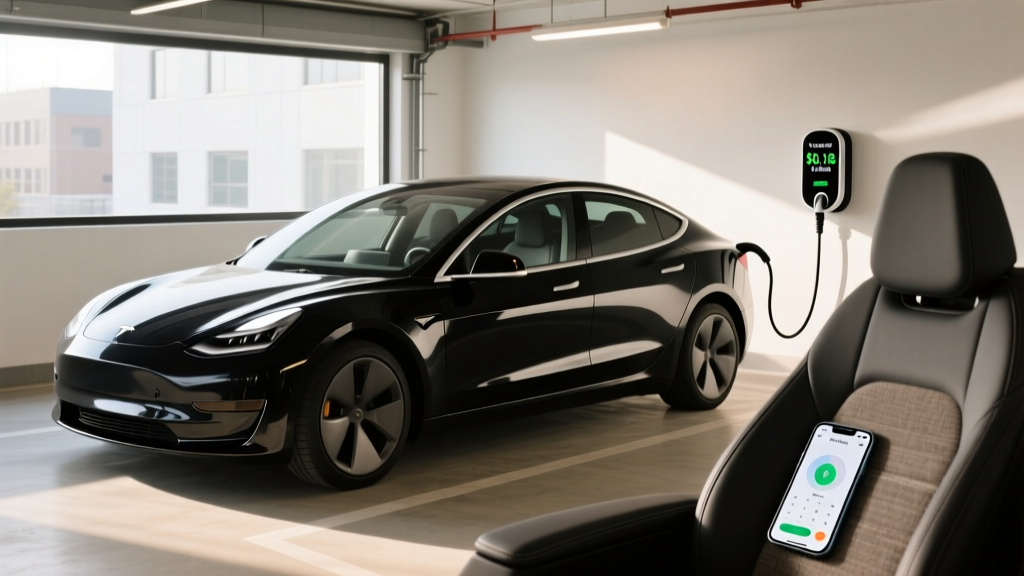
If you're researching the Tesla Model 3, one question dominates the decision: how much money does it cost to charge a Tesla? The answer depends entirely on where and how you charge. A Tesla Model 3 Long Range AWD owner charging exclusively at home on a utility rate of $0.14/kWh might spend under $600 per year on electricity. That same driver relying solely on Tesla Superchargers could spend closer to $1,800 annually. The spread is enormous, and understanding it requires a granular look at the vehicle's efficiency, battery capacity, and the charging infrastructure available to you.
This review covers the 2026 Tesla Model 3 lineup — the Rear-Wheel Drive, Long Range AWD, and Performance trims — with exact EPA data, real-world range expectations, charging speeds, and a detailed cost-per-mile analysis that answers the charging-cost question with hard numbers.
2026 Tesla Model 3: Core Specifications at a Glance
| Spec | RWD | Long Range AWD | Performance |
|---|---|---|---|
| EPA Range | 272 mi | 341 mi | 315 mi |
| Battery (usable, est.) | ~60 kWh (LFP) | ~79 kWh (NMC) | ~79 kWh (NMC) |
| MPGe (combined) | 142 MPGe | 132 MPGe | 121 MPGe |
| Efficiency (kWh/100 mi) | 24 kWh | 26 kWh | 28 kWh |
| 0-60 mph | 5.8 sec | 4.2 sec | 2.9 sec |
| Horsepower | 271 hp | 346 hp | 510 hp |
| Drivetrain | RWD (single motor) | AWD (dual motor) | AWD (dual motor) |
| Peak DC Fast Charge | 170 kW | 250 kW | 250 kW |
| 10-80% DCFC Time | ~30 min | ~25 min | ~25 min |
| Level 2 Home Charge Rate | 11.5 kW (~44 mi/hr) | 11.5 kW (~44 mi/hr) | 11.5 kW (~44 mi/hr) |
| Base MSRP | $38,990 | $44,990 | $52,990 |
| Battery/Drive Unit Warranty | 8 yr / 100,000 mi | 8 yr / 120,000 mi | 8 yr / 120,000 mi |
Real-World Range: What the EPA Number Doesn't Tell You
The Model 3's efficiency is among the best in its class. At 24-28 kWh per 100 miles depending on trim, it extracts more miles per kilowatt-hour than most competing sedans. That efficiency directly reduces your charging cost regardless of where you plug in.
City driving with frequent regenerative braking can actually exceed the EPA combined estimate — some owners report 350+ miles on the Long Range in stop-and-go traffic with preconditioning enabled. But highway cruising at sustained speeds is where range contracts most noticeably.
Charging Speed and Infrastructure: DC Fast, Level 2, and Level 1
| Level | Power (kW) | Miles Added per Hour | Typical Use Case |
|---|---|---|---|
| Level 1 (120V household) | ~1.4 kW | ~5-6 mi/hr | Emergency / overnight trickle |
| Level 2 (240V home wall connector) | 11.5 kW | ~44 mi/hr | Daily home charging |
| DC Fast Charge (Supercharger V2) | Up to 150 kW | ~180-200 mi in 15 min | Road trips |
| DC Fast Charge (Supercharger V3/V4) | Up to 250 kW | ~200 mi in 15 min | Road trips (Long Range/Perf) |
The Model 3 Long Range and Performance trims accept a peak 250 kW at V3/V4 Superchargers. However, peak rate is not sustained rate. The charge curve tapers significantly above 60% State of Charge (SoC). A typical 10-80% session takes about 25 minutes, but an 80-100% top-off can add another 20-30 minutes. For road trips, the practical strategy is to charge in short 15-20 minute bursts between 10% and 70%, where the charge rate stays highest.
The RWD trim with its LFP battery is rated for 170 kW peak — slightly slower, but LFP chemistry tolerates frequent 100% charging without the degradation concerns that NMC batteries carry. Tesla recommends charging LFP vehicles to 100% at least once per week for battery calibration, which simplifies daily routine.
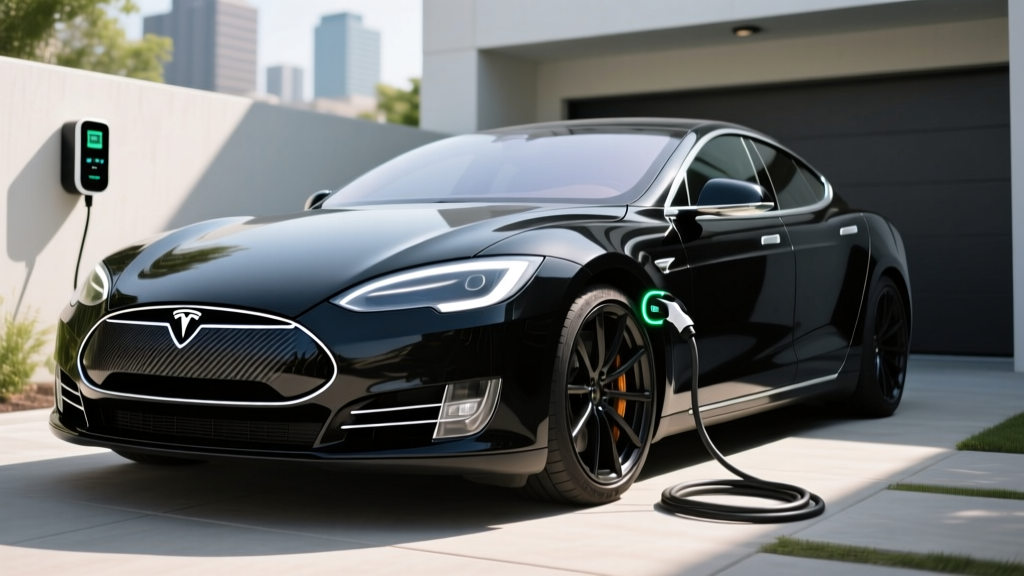
At home, the Tesla Wall Connector delivers up to 11.5 kW on a 60-amp circuit (48 amps continuous). That's roughly 44 miles of range per hour of charging — enough to fully replenish any Model 3 overnight in 6-8 hours. Installation costs for a dedicated 240V circuit typically range from $500 to $2,000 depending on panel proximity and local permitting, with a possible panel upgrade adding $1,500-$3,000 if your home's service is maxed out.
How Much Does It Actually Cost to Charge? The Numbers
This is the core question — how much money does it cost to charge a Tesla? Let's break it down by scenario using the Long Range AWD (79 kWh usable battery, 26 kWh/100 mi efficiency) as the baseline.
Home Charging (Level 2)
The national average residential electricity rate in 2026 is approximately $0.16 per kWh (per EIA data). Charging a Long Range Model 3 from 10% to 90% requires roughly 63 kWh:
- Cost per full charge cycle (10-90%): 63 kWh × $0.16 = $10.08
- Cost per mile: $0.16 × 0.26 kWh/mi = $0.042 per mile
- Annual cost (12,000 miles): 12,000 × $0.042 = $504
If you have access to time-of-use (TOU) rates and charge overnight during off-peak hours, rates can drop to $0.08-$0.10/kWh, cutting annual cost to $250-$312. Some utilities offer EV-specific rates that make this even cheaper.
Tesla Supercharger Network
Supercharger pricing varies by location, time of day, and membership tier. As of 2026, typical rates range from $0.28 to $0.48 per kWh, with a national average around $0.35/kWh:
- Cost per 10-90% session: 63 kWh × $0.35 = $22.05
- Cost per mile: $0.35 × 0.26 kWh/mi = $0.091 per mile
- Annual cost (12,000 miles, 100% Supercharger): $1,092
Public Level 2 Chargers (Non-Tesla Networks)
ChargePoint, EVgo, and Electrify America Level 2 stations typically charge $0.25-$0.49/kWh or by-session fees. Expect costs similar to or slightly above Supercharger rates, with the added inconvenience of slower speeds (typically 6.6-19.2 kW).
Cost Comparison: Model 3 vs. Gas Equivalent
A comparable gas sedan averaging 30 MPG combined at $3.50/gallon costs $0.117 per mile in fuel, or $1,400 annually for 12,000 miles. Even exclusive Supercharger use undercuts gasoline. Home charging cuts fuel cost by 65-75%.
Pricing, Trims, and Federal Tax Credit Eligibility
| Trim | Base MSRP | As-Tested (typical) | §30D Credit Eligible? |
|---|---|---|---|
| RWD | $38,990 | $40,490 (w/ paint, wheels) | Yes — up to $7,500 (subject to sourcing/income) |
| Long Range AWD | $44,990 | $47,490 (w/ FSD, paint) | Yes — up to $7,500 (subject to sourcing/income) |
| Performance | $52,990 | $55,990 (w/ additions) | Yes — under $55,000 MSRP sedan cap |
All three Model 3 trims fall under the IRS §30D sedan MSRP cap of $55,000. However, qualifying for the full $7,500 federal tax credit depends on multiple factors per current IRS rules:
- Buyer income caps: Modified AGI must not exceed $150,000 (single), $225,000 (head of household), or $300,000 (joint).
- Battery sourcing: The credit splits into two $3,750 halves — one for critical minerals sourcing and one for battery component manufacturing. Sourcing requirements tighten annually. Consult the IRS qualified vehicles list before purchasing.
- Point-of-sale transfer: As of 2024+, buyers can transfer the credit to the dealer at purchase, reducing the upfront price rather than waiting for a tax refund.
- Assembly: All Model 3 vehicles are assembled in Fremont, California — meeting the North American final assembly requirement.
Tax credit eligibility is subject to change. Consult a tax professional and verify the vehicle's qualification on the IRS qualified vehicles list at the time of purchase.
Interior, Tech, and Daily Livability
The Model 3 cabin follows Tesla's minimalist ethos — a single 15.4-inch touchscreen controls virtually all vehicle functions, climate, and media. The "Highland" refresh (introduced for the 2024 model year and continuing into 2026) brought meaningful improvements: ventilated front seats, ambient lighting, rear-seat touchscreen, improved sound insulation, and a stiffer suspension tuning that rides more compliantly than pre-refresh models.
Space and Cargo
- Front headroom: 40.3 inches
- Rear legroom: 35.2 inches — adequate for adults but tighter than a Hyundai Ioniq 6 or BMW i4
- Trunk: 23 cu ft (including under-floor storage)
- Frunk (front trunk): 3.1 cu ft — useful for charging cables or a small bag
- Total cargo: 26.1 cu ft — competitive for the segment but less than crossover alternatives
Driver Assistance: Autopilot and FSD (Supervised)
Autopilot includes adaptive cruise control, lane centering, and automatic emergency braking. FSD Supervised adds traffic light/stop sign recognition, autosteer on city streets, and smart summon. Real-world FSD performance varies significantly by geography and road complexity — it excels on well-mapped suburban arterials but can struggle with construction zones, unmapped roads, and adverse weather.
Standout Tech
- Over-the-air (OTA) software updates that add features post-purchase
- Tesla Supercharger network — the most reliable and extensive DC fast-charging network in North America, now open to other brands via NACS adoption
- Sentry Mode (cameras record surroundings when parked — requires subscription or premium connectivity)
- Dog Mode, Camp Mode, and Theater (streaming on the center screen while parked)
- Heat pump standard on all trims — improves cold-weather range and cabin heating efficiency
Notable Drawbacks
- No physical buttons or stalks — turn signals are on the steering wheel face, gear selection is via screen (with backup console buttons). This learning curve frustrates some drivers.
- Rear visibility is limited by the sloping roofline; the camera-based mirror helps but isn't standard on all trims.
- No Apple CarPlay or Android Auto — Tesla's native infotainment is capable but closed.
- Insurance premiums tend to run 15-30% higher than comparable gas sedans due to repair costs and parts pricing.
Pros and Cons: The Honest Summary
Pros
- Best-in-class efficiency (24-28 kWh/100 mi) keeps charging costs low
- Access to the Tesla Supercharger network — 6,000+ stations in North America
- Strong performance across all trims (2.9s 0-60 on Performance)
- OTA updates continuously improve the vehicle
- Lowest charging cost per mile when using home Level 2
- Heat pump standard for cold-weather efficiency
- Federal tax credit eligible across all trims (subject to sourcing rules)
Cons
- No physical controls — all-screen interface isn't for everyone
- Rear seat space is tighter than key competitors (Ioniq 6, BMW i4)
- Insurance costs run higher than segment average
- FSD Supervised is expensive ($8,000) and still requires full driver attention
- RWD trim's 170 kW peak charge rate is slower than rivals at non-Tesla DCFC stations
- Repair wait times and body shop availability remain a pain point in some regions
Who Should Buy the 2026 Tesla Model 3?
Commuters (15-50 miles/day): The ideal use case. Home Level 2 charging means you start every morning with a full battery. At $0.04/mile on residential electricity, a 40-mile daily commute costs roughly $1.60/day in energy — a fraction of gasoline.
Road trippers: The Supercharger network makes the Model 3 one of the most practical EVs for long-distance travel. The Long Range AWD's 341-mile EPA range (280-310 real-world) and 25-minute fast-charge sessions minimize downtime.
Tech-forward buyers: If OTA updates, a robust app ecosystem, and continuous feature additions matter to you, Tesla's software advantage remains significant.
Families needing maximum space: Look elsewhere. The Model 3's rear seat and cargo area are adequate for two adults and a child, but the Model Y, Ioniq 5, or Kia EV6 offer substantially more room.
Buyers without home charging access: Proceed with caution. Exclusive Supercharger reliance raises your annual fuel cost to ~$1,100 — still below gasoline, but the convenience gap of public-only charging is real. Verify your nearest Supercharger or destination charger before committing.
Frequently Asked Questions
What is the real-world range of the Tesla Model 3?
The Long Range AWD achieves 341 miles EPA, but expect 280-310 miles in real-world highway driving and 240-270 miles in sub-freezing temperatures. The RWD trim delivers 272 miles EPA with roughly 220-250 miles real-world highway. City driving with regen braking can exceed EPA estimates.
How fast does the Model 3 charge at home and on the road?
At home on a Level 2 Tesla Wall Connector (11.5 kW), the Model 3 gains about 44 miles of range per hour — a full overnight charge in 6-8 hours. On a V3 Supercharger, the Long Range and Performance trims peak at 250 kW and charge from 10-80% in approximately 25 minutes. The RWD peaks at 170 kW with a 10-80% time of about 30 minutes.
How much does it cost to charge a Tesla Model 3 per month?
At 1,000 miles per month on home electricity ($0.16/kWh), expect to pay roughly $42/month for the Long Range AWD. On Superchargers exclusively ($0.35/kWh average), that jumps to about $91/month. Most owners blend both — home charging for daily use and Superchargers for road trips — landing around $50-65/month.
Does the Tesla Model 3 qualify for the $7,500 federal EV tax credit?
All 2026 Model 3 trims fall under the $55,000 MSRP sedan cap and are assembled in the US, meeting two key IRS §30D requirements. However, the full $7,500 credit depends on battery critical-mineral sourcing and component manufacturing rules that tighten annually, plus buyer income limits ($150K single / $300K joint). Check the IRS qualified vehicles list and consult a tax professional before relying on the credit.
Is the Tesla Model 3 worth buying vs. the Hyundai Ioniq 6 or BMW i4?
The Model 3 wins on efficiency, Supercharger network access, and software. The Ioniq 6 offers more rear-seat space and 800V ultra-fast charging (10-80% in ~18 minutes on 350 kW chargers). The BMW i4 provides a more traditional luxury interior with physical controls and Apple CarPlay. If charging network reliability and lowest cost-per-mile are your priorities, the Model 3 remains the strongest choice. If interior space or conventional controls matter more, test-drive the alternatives.
How long will the Tesla Model 3 battery last?
Tesla warranties the battery and drive unit for 8 years/100,000 miles (RWD) or 8 years/120,000 miles (Long Range/Performance), guaranteeing at least 70% capacity retention. Real-world data from high-mileage owners suggests NMC batteries degrade roughly 10-15% over 150,000 miles, while LFP batteries in the RWD trim show even slower degradation. A full battery replacement outside warranty currently costs approximately $12,000-$16,000 depending on trim — though this figure is expected to decline as battery costs fall.