The Real Cost to Charge a Tesla: What Owners Actually Pay
If you're researching how much electricity to charge a Tesla, the answer depends on three variables: your local electricity rate, which Tesla model you drive, and whether you charge at home or on the road. In 2026, the national average residential electricity rate hovers around $0.17 per kilowatt-hour (kWh), but state-level variation is enormous — from $0.11/kWh in Washington to $0.30/kWh in California during peak hours. That means a full charge can cost anywhere from $6 to $25 depending on where you plug in.
This guide breaks down the exact kWh capacity, efficiency ratings, and real-world charging costs for every current Tesla model. We'll also cover the hardware you need, the tax credits that offset purchase price, and how Tesla's efficiency compares to the broader EV market.
Tesla Model Lineup: Battery Capacity, Range, and Efficiency
Tesla's 2026 lineup spans four consumer models, each with distinct battery chemistries and usable capacities. Understanding the difference between kilowatts (kW — the rate of energy flow) and kilowatt-hours (kWh — the total energy stored) is essential here. Your electricity bill charges you per kWh consumed, not per kW.
| Model / Trim | Battery (usable kWh) | Chemistry | EPA Range (mi) | Efficiency (kWh/100 mi) | MPGe (combined) |
|---|---|---|---|---|---|
| Model 3 RWD | 57.5 kWh | LFP | 272 | 25 | 132 |
| Model 3 Long Range AWD | 75 kWh | NMC | 363 | 24 | 134 |
| Model Y RWD | 57.5 kWh | LFP | 260 | 27 | 123 |
| Model Y Long Range AWD | 75 kWh | NMC | 330 | 26 | 127 |
| Model S Long Range | 95 kWh | NMC | 402 | 26 | 124 |
| Model X Long Range | 95 kWh | NMC | 348 | 30 | 109 |
Source: fueleconomy.gov (EPA) and Tesla spec sheets. Efficiency figures rounded.
How Much Does a Full Charge Actually Cost?
Here's the math most buyers want: the dollar figure to go from near-empty to full. We calculate this using each model's usable battery capacity and three common electricity rate scenarios.
| Model | Usable kWh | Cost at $0.11/kWh (WA, ID) | Cost at $0.17/kWh (US Avg) | Cost at $0.30/kWh (CA Peak) |
|---|---|---|---|---|
| Model 3 RWD | 57.5 | $6.33 | $9.78 | $17.25 |
| Model 3 Long Range | 75 | $8.25 | $12.75 | $22.50 |
| Model Y RWD | 57.5 | $6.33 | $9.78 | $17.25 |
| Model Y Long Range | 75 | $8.25 | $12.75 | $22.50 |
| Model S Long Range | 95 | $10.45 | $16.15 | $28.50 |
| Model X Long Range | 95 | $10.45 | $16.15 | $28.50 |
Cost Per Mile: Tesla vs Gasoline
At the US average rate of $0.17/kWh, a Model 3 Long Range costs roughly $0.041 per mile to fuel (24 kWh/100 mi × $0.17). A comparable 30 MPG gas sedan at $3.40/gallon costs $0.113 per mile — nearly three times more. Over 15,000 annual miles, that's a fuel savings of approximately $1,080 per year with the Tesla, before accounting for time-of-use rate optimization.
Home Charging Setup: What You Need and What It Costs
Most Tesla owners do 80-90% of their charging at home. Here's the hardware and electrical infrastructure required.
| Level | Voltage / Amperage | Power (kW) | Miles of Range per Hour | Full Charge Time (Model Y LR) |
|---|---|---|---|---|
| Level 1 (Standard Outlet) | 120V / 12A | ~1.4 kW | 3-5 mi/hr | ~55 hours |
| Level 2 (Mobile Connector + 240V) | 240V / 32A | ~7.7 kW | 22-30 mi/hr | ~10 hours |
| Level 2 (Tesla Wall Connector) | 240V / 48A | ~11.5 kW | 33-44 mi/hr | ~7 hours |
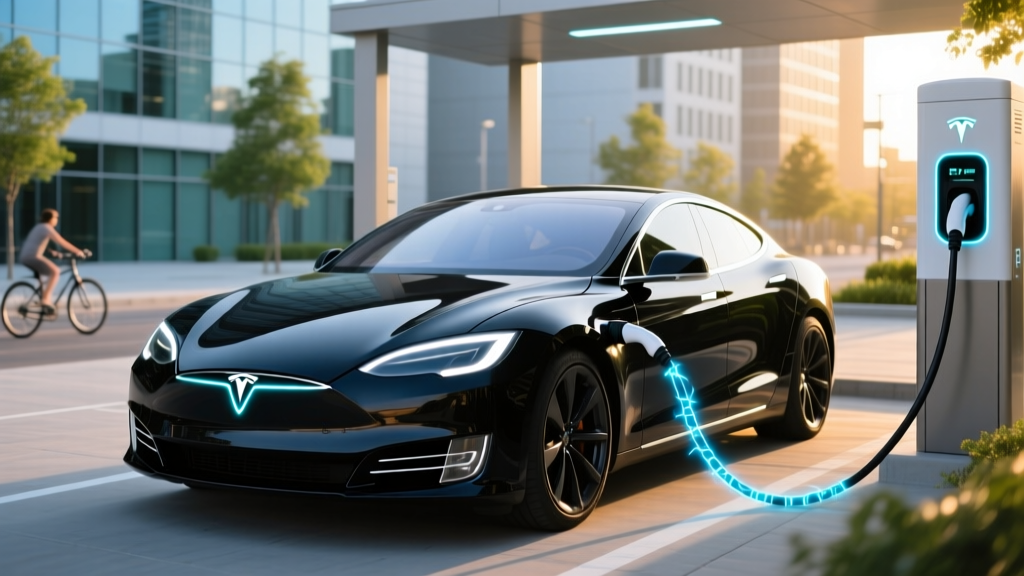
The Tesla Wall Connector ($420 for the unit) is the recommended home solution. It delivers up to 11.5 kW on a 60-amp circuit, adding roughly 44 miles of range per hour to a Model Y Long Range. Installation by a licensed electrician typically runs $800-$2,000 depending on panel proximity, conduit length, and whether your electrical panel needs an upgrade from 100A to 200A service (a $1,500-$3,000 job on its own).
Supercharger Costs: DC Fast Charging on the Road
Tesla's Supercharger network remains the gold standard for road-trip charging, with over 6,500 US stalls in 2026 including an expanding V4 architecture capable of 350 kW peak delivery. But DC fast charging costs significantly more than home charging.
| Charger Type | Peak Power (kW) | 10-80% Time (Model 3 LR) | Avg Cost per kWh | Typical Full-Charge Cost |
|---|---|---|---|---|
| V2 Supercharger (150 kW) | 150 kW | ~28 min | $0.28-$0.36 | $21-$27 (75 kWh pack) |
| V3 Supercharger (250 kW) | 250 kW | ~22 min | $0.28-$0.42 | $21-$31 |
| V4 Supercharger (350 kW) | 350 kW | ~18 min* | $0.30-$0.48 | $22-$36 |
*10-80% time depends on battery preconditioning. Without preconditioning, expect 5-8 additional minutes as the battery warms to optimal charging temperature.
Charge curve reality check: Peak kW ratings are not sustained. A Model 3 Long Range on a V3 Supercharger may hit 250 kW briefly at 10-15% state of charge, then taper to ~150 kW by 50%, and drop below 75 kW above 70%. The advertised 10-80% time reflects this taper. Always precondition your battery via the car's navigation-routed charging for fastest speeds.
Real-World Range: What the EPA Sticker Doesn't Tell You
EPA range estimates assume a mix of city and highway driving at moderate temperatures. Real-world results diverge based on speed, climate, and terrain.
Model 3 Long Range (EPA 363 mi): Expect 310-330 mi on mixed driving. Sustained 75+ mph highway travel drops this to ~280-300 mi. In sub-freezing winter conditions (20°F), range can fall to 240-270 mi due to cabin heating demand and battery resistance.
Model Y Long Range (EPA 330 mi): Expect 280-300 mi mixed. Highway-heavy trips at 80 mph yield ~250-270 mi. Winter range: 220-250 mi.
Model S Long Range (EPA 402 mi): Expect 340-370 mi mixed. Its larger 95 kWh pack provides a buffer, but its heavier mass and higher drag at speed still cut highway range to ~310-330 mi.
Tesla's heat pump (standard on all 2026 models) significantly reduces winter range loss compared to older resistive-heater EVs — typically limiting cold-weather penalty to 15-25% rather than the 30-40% seen in EVs without heat pumps. Still, if you live in the Upper Midwest or Northeast, budget for meaningful range reduction from December through February.
Tesla Pricing, Tax Credits, and Total Cost of Ownership
| Model / Trim | Base MSRP | §30D Credit Eligible? | Est. Price After Credit |
|---|---|---|---|
| Model 3 RWD | $38,990 | Up to $7,500* | ~$31,490 |
| Model 3 Long Range AWD | $44,990 | Up to $7,500* | ~$37,490 |
| Model Y RWD | $39,990 | Up to $7,500* | ~$32,490 |
| Model Y Long Range AWD | $45,990 | Up to $7,500* | ~$38,490 |
| Model S Long Range | $74,990 | No (exceeds MSRP cap) | $74,990 |
| Model X Long Range | $79,990 | No (exceeds MSRP cap) | $79,990 |
*The IRS §30D federal tax credit requires meeting ALL of the following: buyer AGI below $150K single / $300K joint; vehicle MSRP under $55K (sedans) or $80K (SUVs); battery components and critical minerals sourced per 2026 phased-in requirements. The credit is available as a point-of-sale transfer at participating dealers. Eligibility details shift annually — verify with a tax professional before purchase.
5-Year Electricity Cost Projection
Assuming 15,000 miles/year, 80% home charging at $0.17/kWh and 20% Supercharger at $0.35/kWh, a blended rate of ~$0.21/kWh applies. A Model Y Long Range (26 kWh/100 mi) would consume roughly 3,900 kWh annually at a cost of ~$819/year — or $4,095 over five years. A comparable gas SUV at 25 MPG and $3.40/gallon would spend ~$10,200 on fuel over the same period.
Performance, Tech, and Daily Ownership
| Model | Drivetrain | Horsepower | 0-60 mph | Cargo (cu ft) | Battery Warranty |
|---|---|---|---|---|---|
| Model 3 RWD | RWD | 271 hp | 5.8 sec | 23 (trunk + frunk) | 8 yr / 100,000 mi |
| Model 3 LR AWD | Dual Motor AWD | 346 hp | 4.2 sec | 23 | 8 yr / 120,000 mi |
| Model Y RWD | RWD | 295 hp | 6.6 sec | 76 (rear seats folded) | 8 yr / 100,000 mi |
| Model Y LR AWD | Dual Motor AWD | 384 hp | 4.8 sec | 76 | 8 yr / 120,000 mi |
| Model S LR | Dual Motor AWD | 670 hp | 3.1 sec | 79 | 8 yr / 150,000 mi |
| Model X LR | Dual Motor AWD | 670 hp | 3.8 sec | 92 | 8 yr / 150,000 mi |
Standout Tech
- Supercharger Network: Over 6,500 US stalls with native NACS connectors — still the most reliable DC fast-charging network by a wide margin.
- Over-the-Air Updates: Tesla pushes meaningful feature additions (not just bug fixes) multiple times per year, including efficiency improvements and UI overhauls.
- Autopilot (Standard): SAE Level 2 adaptive cruise + lane centering. Competent for highway use but requires continuous driver supervision. This is not self-driving.
- FSD (Supervised): $8,000 option (or $99/month subscription) adds city-street navigation, stop-sign recognition, and parking features. Still SAE Level 2 — you remain the driver.
- 15.4-inch Touchscreen: All vehicle controls, media, and navigation route through a single central display. No physical instrument cluster.
Notable Drawbacks
- No Apple CarPlay or Android Auto — Tesla's proprietary infotainment only.
- Rear-seat comfort in Model 3 is tight for adults over 6 feet on long trips.
- Panel gaps and paint quality remain inconsistent across Fremont and Austin builds.
- Insurance premiums run 20-40% higher than equivalent gas vehicles in most states.
- Model S and X are aging platforms with no major redesign since 2021.
✅ Pros
- Industry-leading efficiency (kWh/100 mi)
- Best-in-class Supercharger network
- LFP packs tolerate daily 100% charging
- Low per-mile electricity cost
- Strong OTA update cadence
- Point-of-sale tax credit transfer available
❌ Cons
- No smartphone mirroring (CarPlay/Android Auto)
- Supercharger costs 2-3× home charging
- Insurance premiums above average
- Model S/X aging, no credit eligibility
- FSD still requires full driver attention
- Cold-weather range loss (15-25%)
Who Should Buy a Tesla — and Who Shouldn't
Choose Tesla if: You have reliable home charging access, prioritize low per-mile fuel costs, take regular road trips (where Supercharger coverage matters), and want an EV with strong software and efficiency.
Look elsewhere if: You rely exclusively on apartment/curbside parking with no charging access, need Apple CarPlay, want a traditional dealership service experience, or need a 3-row SUV (Model X pricing is steep — consider the Rivian R1S or Kia EV9 instead).
Frequently Asked Questions
How much electricity does it take to charge a Tesla Model 3 from empty to full?
A Model 3 RWD has a usable battery of 57.5 kWh. Accounting for ~12% AC charging losses, you'll draw approximately 64-65 kWh from your electrical panel for a full charge. At the US average rate of $0.17/kWh, that costs roughly $10.90-$11.05.
Is it cheaper to charge a Tesla at home or at a Supercharger?
Home charging is dramatically cheaper. At $0.17/kWh (US average residential rate), home charging costs roughly $0.04/mile in a Model Y Long Range. Supercharger rates of $0.28-$0.48/kWh push that to $0.07-$0.12/mile. Supercharging exclusively can double or triple your fueling cost versus home charging.
Does charging a Tesla significantly increase my electric bill?
For a typical driver covering 15,000 miles/year in a Model Y Long Range, expect to add roughly 3,900 kWh annually — about $663/year at the national average rate. That's roughly $55/month added to your electric bill, offset by the elimination of gasoline purchases (typically $150-$200/month for a comparable gas vehicle).
Do Teslas qualify for the $7,500 federal tax credit in 2026?
Model 3 and Model Y trims priced under the MSRP cap ($55K sedans, $80K SUVs) can qualify for up to $7,500 under IRS §30D, provided the buyer meets income limits ($150K single / $300K joint AGI) and the vehicle's battery meets critical-mineral and component-sourcing thresholds. Model S and X exceed the MSRP cap and do not qualify. Always verify current eligibility on irs.gov before purchasing.
How long does a Tesla battery last before needing replacement?
Tesla warranties its batteries for 8 years / 100,000-150,000 miles (depending on model) with a minimum 70% capacity retention guarantee. Real-world degradation data from fleet sources shows most Tesla NMC packs retain 85-90% capacity at 100,000 miles. LFP packs show even slower degradation. Full battery replacement, if needed out of warranty, costs $12,000-$20,000 depending on the model.
Can I charge a Tesla on a regular 120V household outlet?
Yes, using the included Mobile Connector with a NEMA 5-15 adapter. However, Level 1 charging delivers only ~1.4 kW, adding 3-5 miles of range per hour. A full charge of a Model 3 RWD takes roughly 40+ hours on Level 1. It's viable for overnight top-ups of 30-40 miles but impractical as a primary charging strategy for most drivers.