The Original Tesla Roadster: How Many Were Made and Why It Still Matters
Before the Model S redefined the luxury sedan and the Model 3 brought EVs to the mass market, there was the Tesla Roadster — the car that proved battery-electric vehicles could be fast, desirable, and capable of real-world range. For collectors, EV historians, and curious shoppers asking how many Tesla Roadsters were made, the answer is remarkably precise: Tesla produced approximately 2,450 units of the original Roadster between 2008 and 2012.
That low production number makes the first-generation Roadster one of the rarest modern EVs on the road. But rarity alone doesn't explain the enduring fascination. This was the car that launched an industry. Let's break down exactly what Tesla built, how the specs hold up in 2026, and what ownership of this pioneering EV looks like today.
Production Numbers: A Complete Breakdown
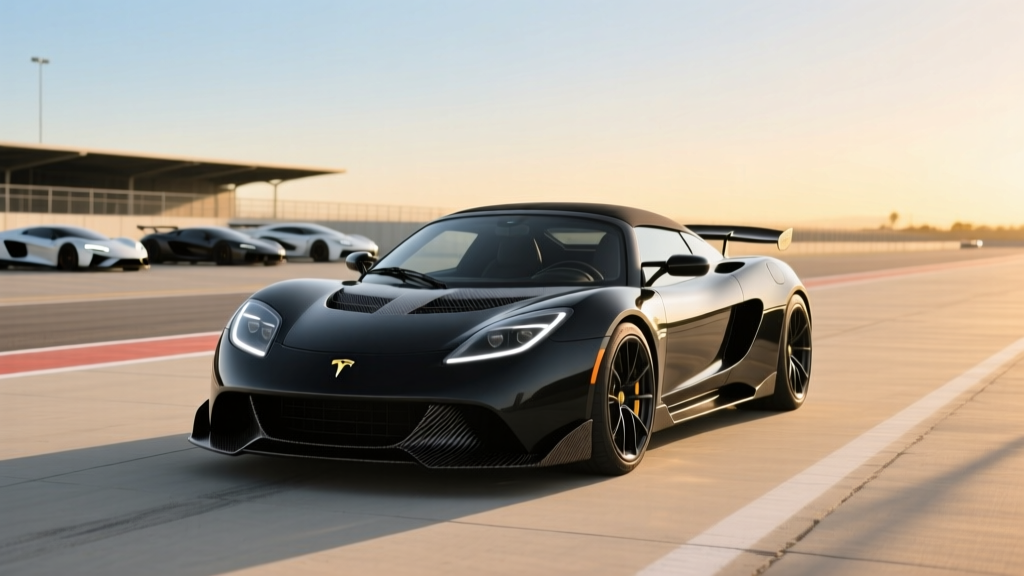
The original Tesla Roadster (internally designated the Roadster 1.0, later updated to Roadster 1.5, 2.0, and 2.5) was based on the Lotus Elise chassis, heavily modified to accommodate an electric powertrain. Here's what we know about production:
- Total units produced: ~2,450 (2008–2012)
- Markets sold: 31 countries, with the majority delivered in the United States and Europe
- Base price at launch: $109,000 (2008); later Roadster 2.5 models started around $128,500
- Notable units: Car #1 went to Elon Musk; several were allocated to early investors and celebrities; one was famously launched into space aboard a SpaceX Falcon Heavy in 2018
For context, Tesla's next vehicle, the Model S, would go on to sell over 250,000 units in its first decade. The Roadster was never intended to be a volume car — it was a proof-of-concept that lithium-ion batteries could power a serious performance vehicle.
Specs and Performance: The Roadster by the Numbers
| Specification | Tesla Roadster (2008–2012) |
|---|---|
| EPA Estimated Range | 244 miles (Roadster 1.5/2.0/2.5) |
| Battery Capacity | 53 kWh (usable ~48 kWh), NMC lithium-ion |
| Motor Output | 288 hp (215 kW) / 295 lb-ft torque |
| 0–60 mph | 3.7 seconds (Roadster 2.5 Sport: 3.4 sec) |
| Top Speed | 125 mph (electronically limited) |
| Drivetrain | Rear-wheel drive (single motor) |
| Curb Weight | ~2,690 lbs |
| Efficiency | ~135 MPGe / 25 kWh per 100 miles |
| Cargo Space | ~3.5 cu ft (rear trunk area) |
| Seating | 2 passengers |
| Production Run | 2008–2012 (~2,450 units) |
The Roadster's battery pack was groundbreaking for its time. It used approximately 6,831 individual 18650-format NMC (nickel-manganese-cobalt) lithium-ion cells — essentially consumer laptop cells — wired together in a complex series-parallel configuration. This same cell-format philosophy would later scale to the Model S and Model 3, though with progressively larger and more energy-dense cells.
Charging: What Roadster Owners Face in 2026
Charging technology has evolved dramatically since the Roadster was designed, and this is where ownership in 2026 gets complicated. The original Roadster predates the CCS, CHAdeMO, and NACS connector standards entirely.
| Charging Level | Connector / Method | Power (kW) | Speed |
|---|---|---|---|
| Level 1 (120V) | Standard outlet via Tesla adapter | ~1.4 kW | ~5 miles per hour |
| Level 2 (240V) | Tesla Roadster-specific connector (proprietary) | Up to 16.8 kW (70A) | ~50–55 miles per hour; full charge in ~3.5 hours |
| DC Fast Charging | Not supported natively | N/A | N/A |
The Roadster uses a proprietary AC charging connector that is not compatible with modern J1772, CCS, NACS, or CHAdeMO plugs without a custom adapter. Tesla provided a High Power Connector (HPC) wall unit for home use, and a Mobile Connector with adapters. The car charges exclusively on AC — there is no DC fast charging capability.
This is the single biggest practical limitation of owning a Roadster in 2026. A full Level 2 charge takes roughly 3.5 hours from empty, which is fine for overnight home charging but makes road trips impractical. You cannot pull into a Supercharger or Electrify America station and top up in 20 minutes. For a car with 150–190 miles of degraded range and no fast charging, long-distance travel requires meticulous planning and multi-hour stops.
Adapter note: Some third-party adapters exist to convert J1772 public Level 2 stations to the Roadster's proprietary connector, but availability is limited and compatibility varies. Roadster owners should verify adapter compatibility before relying on public infrastructure.
Battery Longevity and the $30,000 Replacement Question
The Roadster's 53 kWh NMC battery pack was engineered for approximately 7-year/100,000-mile useful life under the original warranty. In 2026, most surviving Roadsters are 14–18 years old, and battery health is the defining ownership variable.
Degradation data: Tesla's early NMC chemistry showed roughly 2–3% capacity loss per year under typical use patterns. Owners who stored the car at moderate state-of-charge (40–60%) and avoided frequent full charges have reported packs retaining 75–85% of original capacity. Packs that were regularly charged to 100% and left in hot climates can show 30–40% degradation.
Replacement cost: Tesla offered a battery replacement program for the Roadster, with costs historically quoted around $29,000–$40,000 depending on the replacement pack configuration. Tesla's current support for Roadster battery replacement is extremely limited — the company has shifted resources to its volume models. Some specialist EV shops offer cell-level refurbishment for $12,000–$20,000, replacing degraded individual cells within the existing pack housing.
The original powertrain warranty was 3 years / 36,000 miles for the vehicle and 7 years / 100,000 miles for the battery pack (guaranteeing 70% capacity retention). All original warranties have long since expired.
Technology, Interior, and the Driving Experience
The Roadster's interior is essentially a Lotus Elise cabin with Tesla-specific instrumentation. That means:
- Infotainment: A small 3.5-inch touchscreen display (upgraded in Roadster 2.5) showing energy consumption, range, and basic vehicle settings. No navigation, no Bluetooth audio streaming, no smartphone integration.
- Driver assistance: None. No Autopilot, no lane-keeping, no adaptive cruise control. This is a pure analog driving experience — power steering, ABS, and traction control are the extent of electronic aids.
- Climate control: Basic A/C and heating. No heat pump (the Roadster uses resistive heating, which draws heavily from the battery in cold weather).
- Storage: A small rear trunk (~3.5 cu ft) and a shallow front compartment where the "frunk" would be on a modern Tesla. Practically, this is a weekend bag and a laptop — nothing more.
What the Roadster lacks in technology, it compensates for in driving dynamics. At 2,690 lbs, it's roughly 1,500 lbs lighter than a modern Model 3. The instant 295 lb-ft of torque, rear-wheel-drive layout, and Lotus-tuned suspension deliver a raw, connected driving experience that no current Tesla replicates. The 3.7-second 0–60 mph time still holds up in traffic, though modern EVs like the Model S Plaid (1.99 sec) and Porsche Taycan Turbo S (2.4 sec) have left it behind in straight-line performance.
Pros
- Extreme rarity (~2,450 made) — appreciating collector value
- Lightweight Lotus chassis with instant EV torque — uniquely engaging drive
- Historical significance as the car that launched Tesla and the modern EV industry
- Low running costs when charged at home (no oil changes, minimal brake wear from regen)
- Strong enthusiast community and specialist support network
Cons
- No DC fast charging — road trips require multi-hour Level 2 stops
- Proprietary charging connector limits public charging access
- Battery degradation reduces range to 150–190 miles; replacement costs $12K–$40K
- Virtually no modern tech (no Autopilot, no navigation, no smartphone integration)
- Minimal cargo and passenger space — strictly a two-seat weekend car
- Expired warranty; Tesla's official support for the model is minimal
Pricing in 2026: Collector Value vs. Practical Ownership
The Tesla Roadster is no longer sold new, and its market has shifted entirely to the collector and enthusiast secondary market. Here's what pricing looks like in 2026:
| Condition / Configuration | Approximate Market Price (2026) |
|---|---|
| High-mileage, original battery (degraded) | $45,000 – $65,000 |
| Low-mileage, original battery (good SoH) | $80,000 – $120,000 |
| Low-mileage, battery replaced/refurbished | $100,000 – $150,000 |
| Ultra-low-mileage collector examples (<5,000 mi) | $150,000 – $200,000+ |
Federal tax credit: The used EV tax credit under IRS §25E provides up to $4,000 (or 30% of the sale price, whichever is lower) for qualifying used EVs. However, the vehicle must have a sale price of $25,000 or less to qualify. At current Roadster market prices ($45,000+), no Roadster purchase will qualify for the federal used-EV credit. The new-vehicle §30D credit is irrelevant, as the Roadster is long out of production.
For buyers evaluating this purchase, the Roadster is a collector's item and a driving toy — not a daily commuter or practical EV. Compare the ownership proposition against other collectible sports cars (Porsche Boxster, Lotus Elise) rather than against modern EVs like the Model 3 or Porsche Taycan.
Who Should (and Shouldn't) Buy an Original Roadster in 2026
Buy the original Roadster if:
- You want a historically significant, appreciating collector car that also happens to be electric
- You have home Level 2 charging and will drive it primarily on weekends and local roads
- You value lightweight, analog driving dynamics over technology and comfort
- You understand and accept the battery replacement risk ($12K–$40K) as part of ownership
Look elsewhere if:
- You need a daily driver with reliable range, fast charging, and modern safety features
- You plan to take road trips — the lack of DC fast charging makes this impractical
- You want Autopilot, a modern infotainment system, or over-the-air updates
- You're budget-conscious — total cost of ownership (insurance, battery, specialist maintenance) can exceed $10,000/year
The Roadster 2.0: A Brief Note on Tesla's Unreleased Successor
Tesla announced the next-generation Roadster (sometimes called Roadster 2.0) in November 2017, with preliminary specs including a 200 kWh battery pack, 620+ miles of range, a 1.9-second 0–60 mph time, and a $200,000 base price. As of 2026, this vehicle remains unreleased and is not available for purchase. Tesla has periodically updated the timeline but has not entered production. Any specs associated with the Roadster 2.0 should be considered preliminary and subject to change. This article covers only the original 2008–2012 Roadster.
Frequently Asked Questions
How many Tesla Roadsters were made in total?
Tesla produced approximately 2,450 original Roadsters between 2008 and 2012 across all variants (1.0, 1.5, 2.0, and 2.5). This makes it one of the lowest-production EVs ever built by a major manufacturer.
What is the real-world range of the original Tesla Roadster in 2026?
The original EPA rating was 244 miles. In 2026, with battery degradation, most Roadsters deliver 150–190 miles of real-world range depending on pack health, driving style, and ambient temperature. Cold weather and highway speeds reduce this further.
Can I charge a Tesla Roadster at a Supercharger?
No. The original Roadster predates the Supercharger network and uses a proprietary AC connector. It cannot charge at any Supercharger, CCS, CHAdeMO, or NACS station without a third-party adapter — and even then, only at Level 2 AC speeds, not DC fast charging.
Does the original Tesla Roadster qualify for any federal tax credit?
No. The IRS §25E used-EV credit requires a sale price of $25,000 or less. Original Roadsters sell for $45,000+ on the collector market, making them ineligible. The new-vehicle §30D credit does not apply since the car is out of production.
How much does it cost to replace a Tesla Roadster battery?
A full battery replacement through Tesla (when available) has historically cost $29,000–$40,000. Specialist EV shops offer cell-level refurbishment for approximately $12,000–$20,000. Given the car's age, most buyers should budget for a battery replacement within their first few years of ownership unless the pack has been recently serviced.
Is the original Tesla Roadster a good investment?
Roadster values have appreciated since production ended, with ultra-low-mileage examples exceeding $150,000. However, the collector car market is unpredictable, and battery replacement costs can erode returns. It's best viewed as a passion purchase with investment upside — not a guaranteed financial return.
How does the original Roadster compare to modern EVs?
By 2026 standards, the Roadster's 244-mile range, lack of fast charging, and minimal tech are outclassed by virtually every new EV. A 2025 Tesla Model 3 Long Range offers 341 miles of range, 250 kW DC fast charging, Autopilot, and a full infotainment system for under $48,000. The Roadster's value lies in rarity, driving feel, and historical significance — not specifications.
Sources: fueleconomy.gov (EPA range and efficiency data), IRS.gov (§25E used-EV credit rules), Tesla press archives (2008–2012 production data).