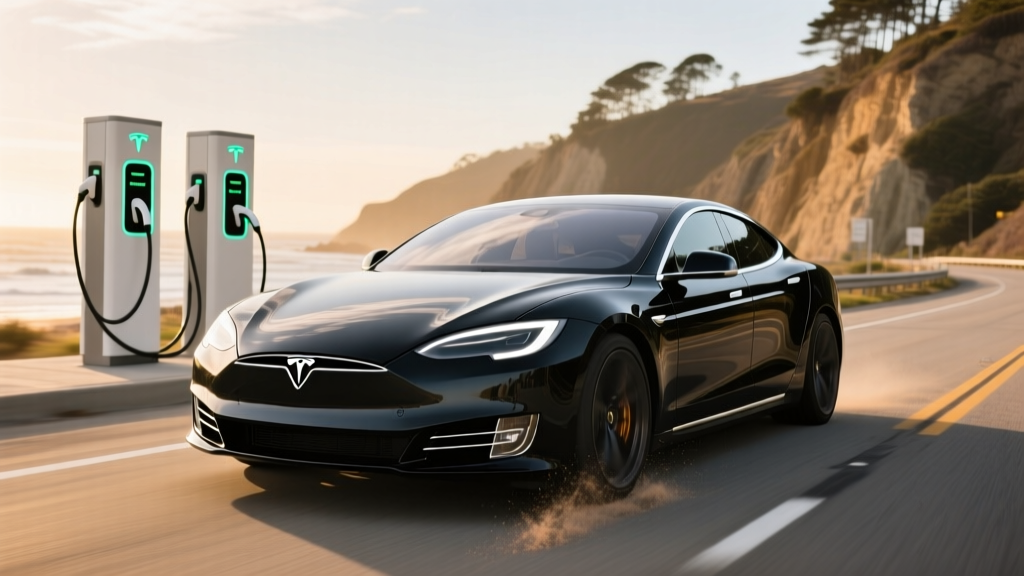
The question "how many miles will a Tesla last" ranks among the most searched EV ownership queries for good reason. Unlike a gas car where engine longevity depends on oil changes and timing belts, an electric vehicle's lifespan hinges almost entirely on its battery pack — the single most expensive component in the car. In this guide, we examine Tesla battery degradation data, real-world mileage expectations, warranty protections, and what the numbers actually mean for buyers considering a Model 3, Model Y, Model S, or Model X in 2026.
Tesla Battery Chemistry: LFP vs. NMC and What It Means for Lifespan
Not all Tesla batteries are created equal. The chemistry inside the pack determines not just range and performance, but also how many charge cycles the battery can endure before meaningful degradation occurs.
| Attribute | LFP (Lithium Iron Phosphate) | NMC (Nickel Manganese Cobalt) |
|---|---|---|
| Used in | Model 3 RWD, Model Y RWD (2026) | Model 3 Long Range, Model Y Long Range/Performance, Model S, Model X |
| Cycle life | 3,000–5,000+ cycles | 1,000–2,000 cycles |
| Energy density | Lower (heavier pack for same kWh) | Higher (more range per pound) |
| Degradation profile | Slower, more linear | Faster initial drop, then plateaus |
| Recommended daily charge | 100% (Tesla recommends weekly 100%) | 80% daily, 100% for trips only |
| Cold-weather performance | More range loss in cold (~35-40%) | Less cold-weather loss (~25-30%) |
| Estimated lifespan | 300,000–500,000+ miles | 200,000–350,000 miles |
The key takeaway: if longevity is your top priority and you don't need maximum range, the LFP-equipped Model 3 RWD or Model Y RWD offers the longest potential battery lifespan. LFP chemistry tolerates full state-of-charge (SoC) far better than NMC, meaning daily 100% charging won't accelerate degradation the way it would in a Long Range model.
Real-World Degradation Data: What Owners Actually Report
Tesla's own Impact Report has historically shown that Model 3 and Model Y battery packs retain roughly 85% of their original capacity at 150,000 miles. Independent data from fleet operators and owner surveys paint a consistent picture:
- 0–30,000 miles: Expect a 3–5% capacity drop. This is the steepest part of the degradation curve and is normal for both LFP and NMC chemistries.
- 30,000–100,000 miles: Degradation slows significantly, losing roughly 1–2% per 15,000–20,000 miles.
- 100,000–200,000 miles: Most packs settle around 80–88% of original capacity. NMC packs trend toward the lower end; LFP packs often remain above 85%.
- 200,000+ miles: Data is thinner here, but fleet vehicles (taxis, rideshare) have documented Teslas surpassing 300,000 miles on original packs, particularly LFP variants.
For context, a Model 3 Long Range AWD with an EPA-estimated 341 miles of range would realistically deliver about 290–305 miles at 100,000 miles of driving, and approximately 270–290 miles at 200,000 miles. That's still enough range for the vast majority of daily commutes and road trips.
2026 Tesla Lineup: Range, Battery, and Longevity Specs at a Glance
| Spec | Model 3 RWD | Model 3 Long Range AWD | Model Y RWD | Model Y Long Range AWD | Model S | Model X |
|---|---|---|---|---|---|---|
| EPA Range | 272 mi | 341 mi | 280 mi | 320 mi | 402 mi | 335 mi |
| Battery (usable) | ~57 kWh (LFP) | ~75 kWh (NMC) | ~57 kWh (LFP) | ~75 kWh (NMC) | ~95 kWh (NMC) | ~95 kWh (NMC) |
| Efficiency | 132 MPGe / 25 kWh/100mi | 134 MPGe / 25 kWh/100mi | 128 MPGe / 26 kWh/100mi | 125 MPGe / 27 kWh/100mi | 124 MPGe / 27 kWh/100mi | 110 MPGe / 31 kWh/100mi |
| 0–60 mph | 5.8 sec | 4.2 sec | 6.5 sec | 4.8 sec | 3.1 sec (Plaid 1.99) | 3.8 sec (Plaid 2.5) |
| Horsepower | 271 hp | 346 hp | 295 hp | 384 hp | 670 hp (Plaid 1,020) | 670 hp (Plaid 1,020) |
| Drivetrain | RWD | Dual-Motor AWD | RWD | Dual-Motor AWD | Dual/Tri-Motor AWD | Dual/Tri-Motor AWD |
| Max DC Charge | 170 kW | 250 kW | 170 kW | 250 kW | 250 kW | 250 kW |
| 10–80% DC Time | ~25 min | ~28 min | ~25 min | ~28 min | ~30 min | ~32 min |
| Level 2 Rate | 11.5 kW (~44 mi/hr) | 11.5 kW (~44 mi/hr) | 11.5 kW (~44 mi/hr) | 11.5 kW (~44 mi/hr) | 11.5 kW (~44 mi/hr) | 11.5 kW (~44 mi/hr) |
| Base MSRP | $38,990 | $45,990 | $41,990 | $48,990 | $79,990 | $84,990 |
| Cargo Volume | 23 cu ft | 23 cu ft | 30 cu ft (76 rear seats down) | 30 cu ft (76 rear seats down) | 28 cu ft | 88 cu ft (seats folded) |
Charging Habits That Maximize Tesla Battery Life
How you charge matters as much as what chemistry is in the pack. Here are the evidence-based practices that extend battery longevity:
For NMC Battery Owners (Long Range, Performance, Model S/X)
- Set daily charge limit to 80%. Only charge to 100% when departing on a road trip.
- Avoid leaving the car at 100% SoC for extended periods. If you charge to full, drive within a few hours.
- Minimize DC fast charging when Level 2 home charging is available. Occasional Supercharging is fine — Tesla's thermal management system is excellent — but daily DC fast charging accelerates degradation slightly.
- Don't let SoC drop below 10% regularly. Deep discharges stress NMC cells.
For LFP Battery Owners (Model 3/Y RWD)
- Charge to 100% at least once per week. LFP cells need periodic full charges for the battery management system (BMS) to calibrate accurately.
- Daily 100% charging is acceptable — LFP chemistry handles high SoC far better than NMC.
- Still avoid deep discharges below 5% when possible, though LFP is more tolerant of low SoC than NMC.
Universal Best Practices
- Keep the car plugged in during extreme heat or cold so the thermal management system can maintain optimal battery temperature without draining the pack.
- Use Scheduled Departure to precondition the battery before driving, especially in winter.
- Monitor State of Health (SoH) through the Tesla app or third-party tools like Tessie or TeslaFi, which track degradation trends over time.
Tesla Battery Warranty: What's Actually Covered
Tesla's battery and drive unit warranty is among the most straightforward in the industry, but the details matter:
| Model | Battery Warranty | Minimum Capacity Retention | Drive Unit Warranty |
|---|---|---|---|
| Model 3 RWD (LFP) | 8 years / 100,000 miles | 70% | 8 years / 100,000 miles |
| Model 3 Long Range / Performance | 8 years / 120,000 miles | 70% | 8 years / 120,000 miles |
| Model Y (all trims) | 8 years / 120,000 miles | 70% | 8 years / 120,000 miles |
| Model S / Model X | 8 years / 150,000 miles | 70% | 8 years / 150,000 miles |
The 70% threshold means Tesla will replace or refurbish the battery if it degrades below 70% of its original capacity within the warranty period. In practice, very few Tesla batteries fall below this threshold within warranty limits. The more common scenario is a gradual, linear decline that keeps the battery well above 70% even at 150,000+ miles.
Important caveat: the warranty covers defects and excessive degradation, not damage from accidents, flooding, or improper modifications. It also does not cover cosmetic issues or minor capacity loss above the 70% line. If your 100,000-mile Model 3 Long Range still has 72% capacity, Tesla will not replace the battery under warranty — even though you've lost nearly a third of your original range.
Out-of-Warranty Battery Replacement: What Does It Cost?
If your Tesla battery fails after the warranty expires, replacement costs depend on the model and pack size:
- Model 3 (57 kWh LFP): $8,000–$12,000 for a refurbished pack
- Model 3/Y Long Range (75 kWh NMC): $12,000–$16,000
- Model S/X (95 kWh NMC): $15,000–$22,000
These prices have been trending downward as Tesla's refurbishment program matures and third-party EV battery shops become more common. For context, a comparable engine or transmission replacement on a luxury gas vehicle often costs $5,000–$10,000 — so while a Tesla battery replacement is a significant expense, it's not as catastrophic as some headlines suggest, especially when amortized over 200,000+ miles of driving.
Pricing, Tax Credits, and Total Cost of Ownership
| Model | Base MSRP | Federal §30D Credit | Effective Price |
|---|---|---|---|
| Model 3 RWD | $38,990 | Up to $7,500* | ~$31,490* |
| Model 3 Long Range AWD | $45,990 | Up to $7,500* | ~$38,490* |
| Model Y RWD | $41,990 | Up to $7,500* | ~$34,490* |
| Model Y Long Range AWD | $48,990 | Up to $7,500* | ~$41,490* |
| Model S | $79,990 | $0 (MSRP cap exceeded) | $79,990 |
| Model X | $84,990 | $0 (MSRP cap exceeded) | $84,990 |
- MSRP cap: Sedans (Model 3) must be under $55,000; SUVs/trucks (Model Y) under $80,000. Model S and Model X exceed these limits.
- Buyer income cap: Modified adjusted gross income must not exceed $150,000 (single), $225,000 (head of household), or $300,000 (joint filing).
- Battery sourcing: A percentage of critical minerals and battery components must be sourced from the U.S. or free-trade-agreement partners. The required percentage increases annually — verify current-year rules at IRS.gov.
- Point-of-sale transfer: As of 2024, eligible buyers can transfer the credit to the dealer at purchase, receiving the discount upfront rather than waiting for tax filing.
- *Eligibility varies. Consult a tax professional and check fueleconomy.gov for the latest qualifying configurations.
Tesla vs. Competitors: How Does Longevity Compare?
When evaluating how many miles a Tesla will last versus key rivals, the comparison centers on battery management sophistication, thermal system design, and track record:
- Hyundai Ioniq 5 / Kia EV6: Excellent 800V architecture and competitive NMC packs, but fewer high-mileage data points. Hyundai/Kia warranty is 10 years/100,000 miles — slightly longer calendar coverage than Tesla but the same mileage cap for base trims.
- Ford Mustang Mach-E: NMC packs with active liquid cooling. Ford's battery warranty mirrors Tesla's 8 years/100,000 miles (extended range gets 100,000). Less real-world high-mileage data available.
- Chevrolet Equinox EV / Blazer EV: GM's Ultium platform uses NMC with robust thermal management. Warranty is 8 years/100,000 miles. Too new for long-term degradation data.
- BMW i4 / iX: NMC packs, 8 years/100,000 miles warranty. BMW's thermal management is strong, but Tesla's larger data set gives it an evidence advantage.
Tesla's primary longevity advantage isn't necessarily superior chemistry — most competitors use similar NMC or LFP cells from suppliers like CATL, Panasonic, or LG. The advantage is Tesla's thermal management system, which actively heats and cools the battery to keep cells in their optimal temperature window. This reduces degradation from both extreme heat (which accelerates chemical breakdown) and extreme cold (which can cause lithium plating during charging).
Pros: Why Teslas Last
- Industry-leading thermal management reduces degradation
- LFP options on Model 3/Y RWD offer 3,000–5,000+ cycle life
- Over-the-air updates continuously optimize battery management
- Extensive real-world data set validates long-term durability
- Supercharger network reduces reliance on third-party DC chargers with inconsistent power quality
- Drive units (motors) have minimal wear components — no timing belts, oil, or spark plugs
Cons: What to Watch
- LFP models lose more range in cold weather (35–40% vs. 25–30%)
- Out-of-warranty battery replacement costs $8,000–$22,000
- 70% warranty threshold means you keep the car even with significant range loss
- Model S/X are expensive and no longer qualify for federal tax credits
- Build quality inconsistencies (panel gaps, interior rattles) may require service visits unrelated to the powertrain
- Autopilot and FSD (Supervised) are SAE Level 2 driver-assist systems — the driver must remain fully engaged at all times
Who Should Buy a Tesla for the Long Haul?
Choose a Tesla Model 3/Y RWD (LFP) if: You want maximum battery lifespan, have home Level 2 charging, commute under 60 miles round-trip, and don't regularly need 300+ miles of range. The LFP pack's 3,000–5,000 cycle life means you could theoretically drive 300,000+ miles before hitting 70% capacity.
Choose a Tesla Model 3/Y Long Range (NMC) if: You take frequent road trips, live in a cold climate where LFP's winter range loss is a problem, or need AWD. Plan to keep the car 150,000–250,000 miles and accept slightly faster degradation in exchange for more daily range.
Choose Model S/X if: You need maximum range, cargo space, or performance, and the higher purchase price (and lack of tax credit) fits your budget. The 8-year/150,000-mile battery warranty provides the longest mileage coverage in the lineup.
Look at competitors if: You prefer a traditional dealership experience, want a longer calendar-year warranty (Hyundai/Kia's 10-year), or need a body style Tesla doesn't offer (truck, minivan, compact hatchback).
Frequently Asked Questions
How many miles will a Tesla Model 3 last?
A Tesla Model 3 with the LFP battery (RWD trim) can realistically last 300,000–500,000 miles before the battery degrades below 70% capacity. The NMC-equipped Long Range model typically lasts 200,000–350,000 miles. The electric motors and drive unit have fewer wear components than a gas engine and often outlast the battery.
Is it expensive to replace a Tesla battery?
Out-of-warranty Tesla battery replacement costs between $8,000 and $22,000 depending on the model and pack size. However, most Tesla batteries retain above 70% capacity well past 150,000 miles, meaning many owners never need a replacement during their ownership period.
Does Supercharging damage the Tesla battery?
Occasional DC fast charging at Tesla Superchargers (up to 250 kW) does not significantly harm the battery thanks to Tesla's active thermal management system. However, exclusive reliance on DC fast charging over many years can accelerate degradation slightly compared to primarily using Level 2 home charging. Tesla's battery preconditioning feature — which heats the pack before you arrive at a Supercharger — minimizes stress during fast charging.
What is Tesla's battery warranty?
Tesla covers the battery and drive unit for 8 years / 100,000 miles on Model 3 RWD, 8 years / 120,000 miles on Model 3 Long Range and all Model Y trims, and 8 years / 150,000 miles on Model S and Model X. The warranty guarantees at least 70% capacity retention. If the battery falls below this threshold within the warranty period, Tesla will replace or refurbish it at no cost.
Do Teslas last longer than gas cars?
In terms of powertrain longevity, yes. A Tesla's electric motors have roughly 20 moving parts compared to hundreds in an internal combustion engine. There are no oil changes, timing belts, spark plugs, or transmission fluid to maintain. The limiting factor is the battery pack, which typically lasts 200,000–400,000 miles depending on chemistry and charging habits. A well-maintained gas car engine can also reach 200,000+ miles, but it will require significantly more maintenance spending along the way.
Does a Tesla qualify for the federal EV tax credit?
The Model 3 RWD and Long Range, and the Model Y RWD and Long Range, qualify for up to $7,500 under IRS §30D, provided the buyer meets income caps ($150K single / $300K joint) and the vehicle meets battery-sourcing requirements. The Model S and Model X do not qualify because their MSRPs exceed the federal cap ($55,000 for sedans, $80,000 for SUVs). Always verify current eligibility at IRS.gov before purchasing.
How does cold weather affect Tesla battery life?
Cold weather temporarily reduces range — by 25–30% in NMC models and 35–40% in LFP models — but this loss is reversible as temperatures warm. Cold weather does not cause permanent battery damage as long as you avoid charging at high power when the battery is cold. Tesla's preconditioning feature warms the battery before driving and charging, which protects cell health. Keeping the car plugged in during extreme cold allows the thermal management system to maintain safe temperatures without draining the pack.