Quick Verdict: The 2025 Mercedes EQS at a Glance
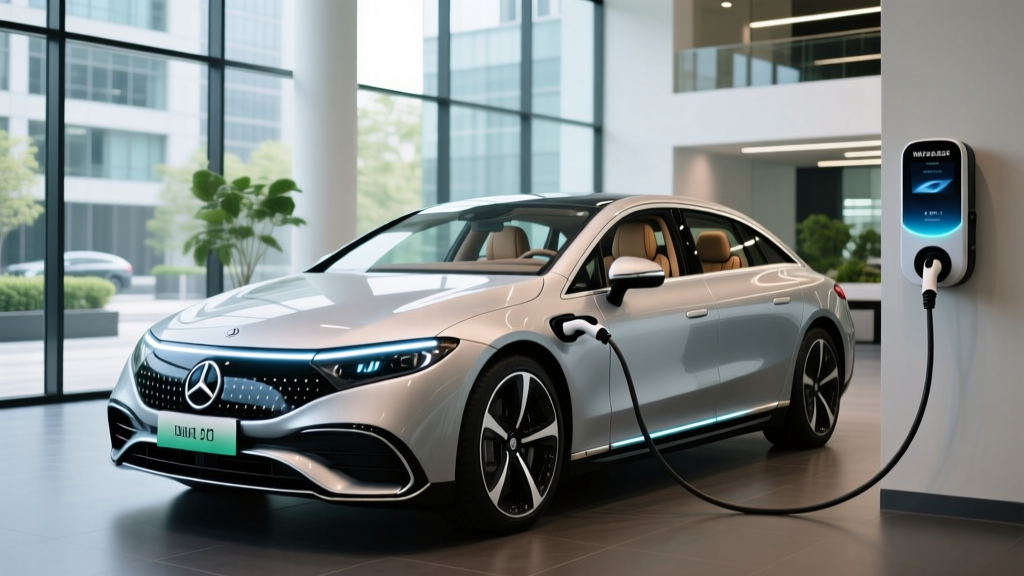
The 2025 Mercedes EQS remains the brand's flagship electric sedan — a vehicle engineered around one idea: making long-distance electric travel as serene and effortless as possible. With an EPA-estimated range of up to 390 miles on the EQS 450+ and a cabin that rivals the S-Class, it targets buyers who want luxury, technology, and genuine cross-country EV capability without compromise.
But at a starting MSRP of $104,400, the EQS competes in rarefied air against the Tesla Model S, Lucid Air, and BMW i7. This review breaks down the exact numbers — range, charging curves, real-world efficiency, and tax-credit eligibility — so you can decide whether the EQS delivers on its premium promise or falls short against sharper rivals.
| Specification | EQS 450+ Sedan | EQS 450 4MATIC | EQS 580 4MATIC | AMG EQS |
|---|---|---|---|---|
| EPA Range | 390 mi | 365 mi | 371 mi | 315 mi |
| Battery (usable) | 118 kWh NMC | 118 kWh NMC | 118 kWh NMC | 118 kWh NMC |
| Horsepower | 355 hp | 355 hp | 536 hp | 649 hp |
| 0–60 mph | 5.9 sec | 5.3 sec | 4.1 sec | 3.4 sec |
| Drivetrain | RWD (single motor) | AWD (dual motor) | AWD (dual motor) | AWD (dual motor) |
| MPGe (combined) | 97 MPGe | 92 MPGe | 92 MPGe | 79 MPGe |
| Efficiency | 35 kWh/100mi | 37 kWh/100mi | 37 kWh/100mi | 43 kWh/100mi |
| Base MSRP | $104,400 | $107,900 | $125,950 | $149,900 |
Range and Real-World Efficiency
EPA Estimate: 390 miles (EQS 450+ sedan)
Real-World Expectation: Expect 310–340 miles on highway-heavy trips at 70–75 mph. In cold weather (below 32°F), range can drop 20–30%, putting realistic winter range around 250–290 miles without preconditioning.
The EQS 450+ achieves its 390-mile EPA figure thanks to a combination of factors: a massive 118 kWh usable battery pack, a slippery 0.20 drag coefficient (one of the lowest of any production car), and a single rear motor that avoids the efficiency penalty of a second drivetrain. According to fueleconomy.gov, the 450+ returns 97 MPGe combined — competitive with much smaller EVs.
In real-world driving, the EQS excels in city and suburban conditions where regenerative braking recovers energy and speeds stay moderate. On sustained highway runs at 75 mph, efficiency typically settles around 38–42 kWh/100mi, translating to roughly 310–330 miles before you'll want to stop. The heat pump — standard on all 2025 EQS models — mitigates cold-weather losses compared to EVs without one, but any battery-electric vehicle will see meaningful range reduction in sub-freezing temperatures. Preconditioning the battery while plugged in (via the Mercedes me app) is essential for preserving range and enabling peak charging speeds in cold conditions.
The AWD 450 4MATIC and 580 4MATIC sacrifice 25 and 19 miles of EPA range respectively due to the second motor's weight and friction losses. The AMG EQS, with its performance-oriented tuning and wider tires, drops to 315 miles — still respectable for a 649-hp luxury sedan, but a significant gap from the base model.
Charging Speed: DC Fast Charging and Home Level 2
Mercedes equips the 2025 EQS with a 200 kW peak DC fast-charging capability on CCS-equipped models. The vehicle also supports NACS via an included adapter (Mercedes-Benz began transitioning to NACS for Supercharger access in late 2024).
| Charging Level | Power / Rate | Time / Miles Added |
|---|---|---|
| Level 1 (120V household) | ~1.4 kW | ~3–4 miles per hour |
| Level 2 (240V, 48A home charger) | 11 kW | ~28–30 miles per hour; full charge in ~11 hours |
| DC Fast Charge (peak) | 200 kW | 10–80% in approximately 31 minutes |
| DC Fast Charge (sustained avg 10–80%) | ~140–160 kW avg | ~180 miles added in 20 minutes |
The 200 kW peak figure is just that — a peak. In practice, the EQS sustains roughly 170–190 kW between 10% and 40% state of charge (SoC), then tapers progressively. By 60% SoC, you'll see roughly 120–130 kW, and above 80%, charging slows sharply to protect the NMC cells. This taper behavior is typical of large NMC packs and is why Mercedes quotes the 10–80% time of 31 minutes rather than a full 0–100% figure.
At home on a Level 2 Mercedes-Benz Wallbox or equivalent 48-amp charger, the onboard 11 kW AC charger replenishes the 118 kWh battery from empty in roughly 11 hours. Most owners who plug in nightly will never need a full charge — a typical day of 40–50 miles of driving requires only about 1.5–2 hours of Level 2 charging to recover.
For road trips, the EQS's navigation system includes intelligent route planning that factors in charger locations, battery preconditioning (warming the pack before you arrive at a DC fast charger to enable peak speeds), and estimated SoC at arrival. Mercedes-Benz has also partnered with Electrify America and other networks to offer complimentary charging periods on new vehicle purchases — check your dealer for current offers.
Performance and Driving Dynamics
The EQS lineup spans a wide performance envelope. The base 450+ with its single rear motor and 355 hp delivers adequate acceleration — 0–60 mph in 5.9 seconds — with a smooth, linear power delivery that suits the car's luxury character. The dual-motor 450 4MATIC adds all-weather traction and shaves the sprint to 5.3 seconds.
The 580 4MATIC is the performance sweet spot for most buyers: 536 hp, 0–60 in 4.1 seconds, and standard rear-axle steering (up to 10 degrees) that makes this 17-foot sedan handle like a much smaller car in parking lots and tight city streets. The AMG EQS pushes 649 hp (751 hp with launch control) and 3.4 seconds to 60, but the ride firmness and efficiency penalty make it a niche choice.
All EQS models feature standard air suspension with adaptive damping, providing a pillowy ride quality that absorbs road imperfections with genuine S-Class composure. Rear-axle steering is optional on 450 models (4.5 degrees) and standard on the 580 (10 degrees), dramatically improving low-speed maneuverability — the turning circle shrinks from 39.4 feet to as little as 35.8 feet with the 10-degree system.
Interior, Technology, and Cargo
The EQS cabin is dominated by the available MBUX Hyperscreen — a 56-inch curved glass panel spanning the entire dashboard, incorporating a 17.7-inch central OLED touchscreen, a 12.3-inch passenger display, and a 12.3-inch driver cluster. The Hyperscreen is standard on the 580 and optional on 450 trims (a conventional 12.8-inch central screen is the base setup). The system runs Mercedes' latest MBUX software with zero-layer navigation, wireless Apple CarPlay/Android Auto, and natural-language voice control.
Passenger space is generous for four adults. Rear legroom measures 41.7 inches — competitive with the long-wheelbase S-Class — though the sloping roofline cuts headroom for taller passengers compared to a traditional sedan. The trunk offers 22 cubic feet of cargo volume (with the rear seats upright), expanding to 63 cubic feet with the 40/20/40 split rear seats folded. That's significantly more than the Tesla Model S (28 cu ft max) and competitive with hatchback-liftback rivals.
Driver assistance technology includes standard Active Distance Assist DISTRONIC (adaptive cruise), Active Steering Assist, Active Lane Keeping, and Active Brake Assist. The optional Driver Assistance Package adds Active Lane Change Assist and route-based speed adaptation. Important: These are SAE Level 2 systems — the driver must remain fully engaged with hands on the wheel and eyes on the road at all times. This is not autonomous driving.
Pricing, Trims, and Federal Tax Credit Eligibility
The 2025 EQS lineup starts at $104,400 for the 450+ sedan and climbs to $149,900 for the AMG EQS. A well-equipped 450 4MATIC with the Hyperscreen, Driver Assistance Package, and premium leather typically lands between $120,000 and $130,000 out the door.
| Trim | Base MSRP | Federal §30D Credit | Effective Price |
|---|---|---|---|
| EQS 450+ Sedan | $104,400 | $0 (exceeds MSRP cap) | $104,400 |
| EQS 450 4MATIC | $107,900 | $0 (exceeds MSRP cap) | $107,900 |
| EQS 580 4MATIC | $125,950 | $0 (exceeds MSRP cap) | $125,950 |
| AMG EQS | $149,900 | $0 (exceeds MSRP cap) | $149,900 |
Federal tax credit reality: The 2025 EQS does not qualify for the IRS §30D clean vehicle credit. Under current rules, sedans must have an MSRP at or below $55,000 to be eligible. Every EQS trim exceeds this cap by a wide margin. Additionally, the buyer income caps ($150,000 single / $300,000 joint AGI) and battery critical-mineral sourcing requirements further restrict eligibility for luxury EVs in this price range. For the latest rules, consult the IRS clean vehicle credit page or a qualified tax professional.
Some states offer separate EV incentives that are not subject to the federal MSRP cap — check your state's energy or DMV website for details. Additionally, leasing the EQS may allow the lessor to claim the commercial clean vehicle credit (§45W) and pass savings through as a capitalized-cost reduction, though this depends on the leasing company's structure.
Warranty and Long-Term Ownership
Mercedes-Benz covers the 2025 EQS with a 4-year/50,000-mile new-vehicle limited warranty and an 8-year/100,000-mile high-voltage battery warranty. The battery warranty guarantees that the pack will retain at least 70% of its original capacity during the coverage period — if degradation exceeds 30%, Mercedes will repair or replace the battery at no cost.
The 118 kWh NMC battery is liquid-cooled with an advanced thermal management system that actively conditions cells during driving, charging, and while parked in extreme temperatures. Based on industry data from similar large-format NMC packs (including those in earlier EQS model years), typical degradation after 100,000 miles falls in the 8–12% range — well within the warranty threshold. Owners who regularly charge to 100% and use DC fast charging exclusively may see slightly higher degradation; Mercedes recommends setting a daily charge limit of 80–90% and using DC fast charging primarily for road trips.
Long-term maintenance costs are low compared to internal-combustion S-Class models — no oil changes, no transmission fluid, no spark plugs. Expect to replace cabin air filters, brake fluid (every 2 years), wiper blades, and tires. The regenerative braking system significantly extends brake pad life; many EV owners report original pads lasting well beyond 80,000 miles.
Competitive Comparison: EQS vs. the Luxury EV Field
The 2025 EQS competes against several formidable rivals, each with distinct strengths:
- Lucid Air Grand Touring ($125,600): 516 miles EPA range, 819 hp, 300 kW DC charging. Superior range and charging speed, but a smaller service network and less brand cachet.
- Tesla Model S Long Range (~$79,990): 402 miles EPA range, 670 hp, Supercharger network access. Lower price and strong efficiency, but interior quality and ride comfort fall well short of the EQS.
- BMW i7 xDrive60 ($119,300): 318 miles EPA range, 536 hp. More traditional luxury sedan styling and a slightly firmer driving feel, but 70 fewer miles of range.
- Porsche Taycan ($99,400+): 283–318 miles EPA range, up to 750 hp. Sharper handling and 270 kW charging, but significantly less range and rear-seat space.
Choose the EQS 450+ if: You prioritize maximum range, ride comfort, and cabin technology above all else, and you frequently drive 200+ mile highway trips where the 390-mile EPA range provides genuine peace of mind.
Choose the EQS 580 4MATIC if: You want the luxury and range of the EQS platform but need all-wheel drive for snow-belt climates and prefer stronger acceleration for highway merging and passing.
Look elsewhere if: You need federal tax credit eligibility (consider the BMW iX, Genesis GV60, or Tesla Model Y), you want the fastest possible DC charging (Lucid Air or Porsche Taycan), or you prioritize driving dynamics over ride comfort (Porsche Taycan or BMW i7 M Sport).
Pros, Cons, and Who Should Buy
Pros
- Class-leading EPA range (390 mi on 450+)
- Exceptional ride quality with standard air suspension
- MBUX Hyperscreen is visually stunning and functional
- Generous rear-seat legroom (41.7 in) and cargo space (22 cu ft)
- Rear-axle steering transforms low-speed maneuverability
- Whisper-quiet cabin at highway speeds
- Strong DC fast-charge speeds with battery preconditioning
Cons
- Starting price above $104,000; no federal tax credit
- Heavy vehicle (5,600+ lbs) — felt in corners and braking
- Hyperscreen can be distracting; steep learning curve
- Real-world highway range ~310–340 mi (below EPA sticker)
- Cold-weather range loss of 20–30% without preconditioning
- Touch-sensitive steering wheel controls frustrate some drivers
- Depreciation steeper than equivalent ICE S-Class (early data)
Who the 2025 EQS suits best: The EQS is ideal for luxury sedan buyers who want a true electric S-Class experience — long-distance commuters, executives who drive 300+ miles per week, and couples who take regular road trips and value a quiet, composed cabin above sporty handling. It's less suited to buyers on a strict budget (the lack of a federal tax credit hurts), those who prioritize driving engagement over comfort, or anyone who needs a third row or serious towing capacity.
Frequently Asked Questions
What is the real-world range of the 2025 Mercedes EQS?
The EPA rates the EQS 450+ at 390 miles, but real-world highway driving at 70–75 mph typically yields 310–340 miles. In cold weather below freezing, expect 250–290 miles without battery preconditioning. City driving with regenerative braking can approach or even exceed the EPA estimate.
How fast does the 2025 EQS charge?
On a DC fast charger, the EQS peaks at 200 kW and charges from 10–80% in approximately 31 minutes. Average sustained power during that session is roughly 140–160 kW. At home on a 48-amp Level 2 charger (11 kW), a full charge takes about 11 hours, adding roughly 28–30 miles per hour of charging.
Does the 2025 Mercedes EQS qualify for the federal EV tax credit?
No. Under IRS §30D rules, sedans must have an MSRP of $55,000 or less to qualify for the up-to-$7,500 federal credit. Every 2025 EQS trim starts well above that threshold. Buyer income caps and battery-sourcing requirements add further restrictions. Some state-level incentives may still apply, and leasing may offer an indirect credit path through the lessor. Consult irs.gov or a tax professional for your specific situation.
Is the EQS worth buying over the Tesla Model S or Lucid Air?
It depends on priorities. The EQS wins on ride comfort, cabin quietness, and traditional luxury build quality. The Lucid Air offers significantly more range (516 mi) and faster charging (300 kW). The Tesla Model S costs $25,000+ less and has Supercharger network convenience, but its interior and ride quality don't match the EQS. Test-drive all three before deciding.
What battery chemistry does the EQS use, and how long will it last?
The 2025 EQS uses an NMC (nickel manganese cobalt) lithium-ion battery with 118 kWh of usable capacity. NMC offers high energy density, which is why the EQS achieves its class-leading range. The battery is warranted for 8 years or 100,000 miles with a 70% capacity retention guarantee. Real-world data from similar NMC packs suggests 8–12% degradation over 100,000 miles with normal use.
How much cargo space does the EQS have?
The EQS sedan provides 22 cubic feet of trunk space behind the rear seats, expanding to 63 cubic feet with the 40/20/40 split rear seats folded. There is no front trunk (frunk), as the space is occupied by HVAC components and the HEPA filtration system.