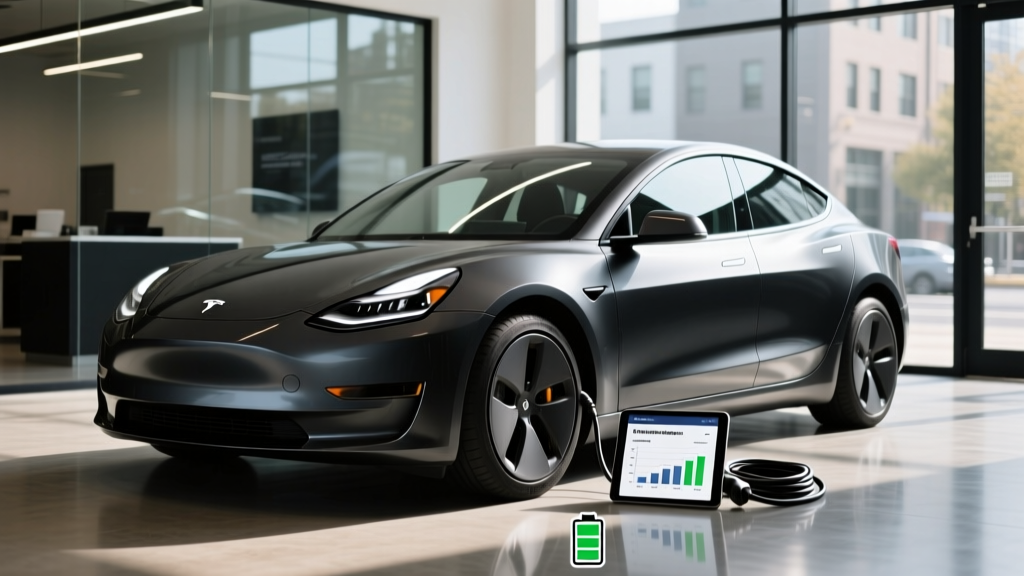
If you're shopping for an electric vehicle, one question likely dominates your research: how many miles does a Tesla get on a full charge? Tesla's lineup in 2026 spans four consumer models, and the answer depends heavily on which one you choose, how you drive it, and what the weather is doing outside. This guide cuts through marketing claims to give you exact EPA figures, real-world range expectations, battery specifications, charging speeds, and pricing for every current Tesla model.
2026 Tesla Range at a Glance: EPA vs. Real World
Tesla publishes EPA-estimated range figures for every model, but real-world results rarely match the sticker perfectly. Highway speeds above 70 mph, cold temperatures, and aggressive acceleration all reduce range. Below, we pair each model's EPA rating with what you can realistically expect.
| Model & Trim | EPA Range (mi) | Real-World Highway (est.) | Real-World Cold (est.) | Battery (kWh, usable) | Chemistry | MPGe (combined) | kWh/100 mi |
|---|---|---|---|---|---|---|---|
| Model 3 Long Range AWD | 363 | 290–320 | 240–275 | 79 kWh | NMC | 134 | 25 |
| Model 3 RWD | 272 | 220–245 | 180–210 | 60 kWh | LFP | 132 | 25 |
| Model 3 Performance | 315 | 255–285 | 210–240 | 79 kWh | NMC | 124 | 27 |
| Model Y Long Range AWD | 320 | 260–290 | 215–245 | 79 kWh | NMC | 122 | 27 |
| Model Y RWD | 260 | 210–235 | 175–200 | 60 kWh | LFP | 120 | 28 |
| Model S Long Range | 402 | 325–365 | 270–310 | 100 kWh | NMC | 124 | 27 |
| Model S Plaid | 359 | 290–325 | 240–275 | 100 kWh | NMC | 116 | 29 |
| Model X Long Range | 335 | 270–305 | 225–260 | 100 kWh | NMC | 111 | 30 |
| Model X Plaid | 311 | 250–280 | 210–240 | 100 kWh | NMC | 104 | 32 |
Sources: EPA Fuel Economy, Tesla.com specifications.
Battery Chemistry Explained: LFP vs. NMC in Teslas
Not all Tesla batteries are created equal. The base RWD trims of the Model 3 and Model Y use lithium iron phosphate (LFP) cells, while Long Range and Performance trims use nickel manganese cobalt (NMC). Here's why that matters for your daily driving:
| Factor | LFP (RWD trims) | NMC (Long Range / Performance) |
|---|---|---|
| Energy density | Lower — smaller battery, less range | Higher — more range per kWh |
| Cycle life | 3,000+ cycles — excellent longevity | 1,500–2,000 cycles |
| Charging to 100% | Recommended regularly for calibration | Tesla recommends 80% daily; 100% for trips |
| Cold-weather performance | More range loss in freezing temps | Better cold-weather retention |
| Cost | Lower — enables cheaper RWD trims | Higher — premium for range |
| Cobalt content | Zero cobalt | Contains cobalt |
If you can charge at home nightly and don't need maximum range, LFP is arguably the better long-term ownership choice due to its superior cycle life and the ability to charge to 100% without degradation concern. If you road-trip frequently or live in a cold climate, NMC's higher energy density and cold tolerance justify the premium.
Charging Speed: DC Fast Charging and Home Level 2
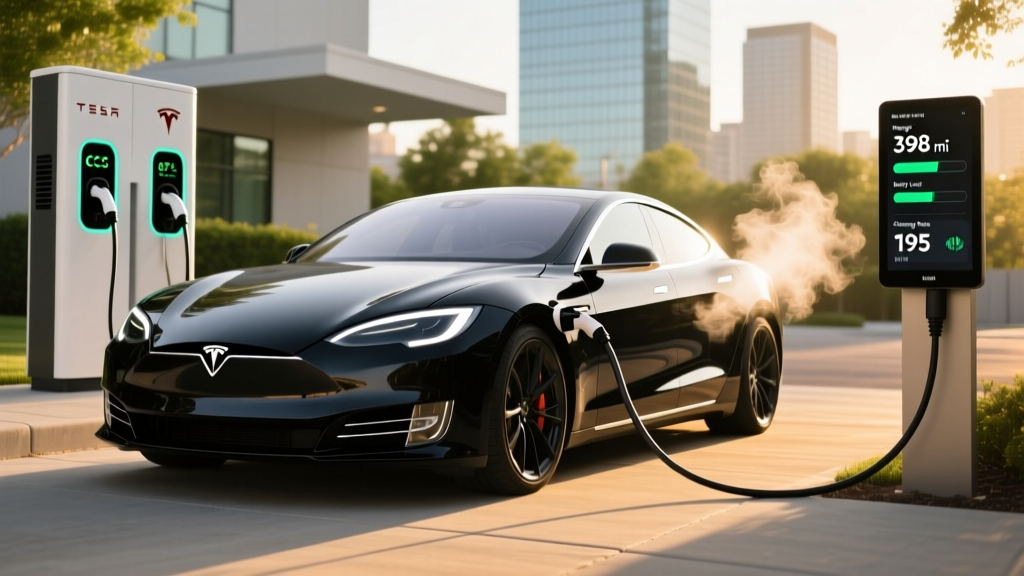
Range only matters if you can replenish it efficiently. Tesla's Supercharger network remains one of the most reliable public charging ecosystems, but charge speeds vary by model and battery size. Note that kW (kilowatts) measures charge power — the rate of energy delivery — while kWh (kilowatt-hours) measures battery capacity.
| Model | Max DC Fast Charge | 10–80% Time | Level 2 Rate (kW) | Level 2 Miles/Hr |
|---|---|---|---|---|
| Model 3 Long Range / Perf | 250 kW | ~25 min | 11.5 kW | ~44 mi/hr |
| Model 3 RWD (LFP) | 175 kW | ~28 min | 11.5 kW | ~44 mi/hr |
| Model Y Long Range | 250 kW | ~27 min | 11.5 kW | ~40 mi/hr |
| Model Y RWD (LFP) | 175 kW | ~30 min | 11.5 kW | ~40 mi/hr |
| Model S / X (all trims) | 250 kW | ~28 min | 11.5 kW | ~34 mi/hr |
For home charging, all 2026 Teslas accept 11.5 kW on Level 2 (48 amps on a 60-amp circuit). A typical overnight session from 20% to 80% takes 5–7 hours depending on battery size — more than enough for daily commuting. Installation of a NEMA 14-50 outlet or a hardwired Tesla Wall Connector typically costs $500–$2,000 depending on your electrical panel's proximity to the garage.
Performance and Drivetrain Breakdown
Tesla's instant electric torque delivers acceleration that embarrasses many performance gas cars. Here's the 2026 lineup by the numbers:
| Model & Trim | 0–60 mph | Horsepower | Drivetrain | Top Speed |
|---|---|---|---|---|
| Model 3 RWD | 5.8 sec | 271 hp | RWD (single motor) | 125 mph |
| Model 3 Long Range AWD | 4.2 sec | 346 hp | AWD (dual motor) | 125 mph |
| Model 3 Performance | 2.9 sec | 510 hp | AWD (dual motor) | 163 mph |
| Model Y RWD | 6.6 sec | 295 hp | RWD (single motor) | 135 mph |
| Model Y Long Range AWD | 4.8 sec | 384 hp | AWD (dual motor) | 135 mph |
| Model S Long Range | 3.1 sec | 670 hp | AWD (dual motor) | 155 mph |
| Model S Plaid | 1.99 sec | 1,020 hp | AWD (tri-motor) | 200 mph |
| Model X Long Range | 3.8 sec | 670 hp | AWD (dual motor) | 155 mph |
| Model X Plaid | 2.5 sec | 1,020 hp | AWD (tri-motor) | 163 mph |
Pricing, Tax Credits, and Total Cost
Tesla pricing fluctuates more frequently than legacy automakers, but here are the approximate MSRPs for the 2026 model year. Federal tax credit eligibility under IRS §30D depends on MSRP caps, buyer income limits, and battery mineral sourcing requirements.
| Model & Trim | Base MSRP | Federal Credit (§30D) | Effective Price (est.) |
|---|---|---|---|
| Model 3 RWD | $38,990 | Up to $7,500* | ~$31,490 |
| Model 3 Long Range AWD | $42,490 | Up to $7,500* | ~$34,990 |
| Model 3 Performance | $52,990 | Up to $7,500* | ~$45,490 |
| Model Y RWD | $39,990 | Up to $7,500* | ~$32,490 |
| Model Y Long Range AWD | $44,990 | Up to $7,500* | ~$37,490 |
| Model S Long Range | $79,990 | Not eligible (MSRP cap) | $79,990 |
| Model X Long Range | $79,990 | Not eligible (MSRP cap) | $79,990 |
- §30D MSRP cap: $55,000 for sedans (Model 3); $80,000 for SUVs/trucks/vans (Model Y, X). Models above these caps do not qualify.
- Income cap: Modified AGI must not exceed $150,000 (single), $225,000 (head of household), or $300,000 (joint).
- Battery sourcing: The full $7,500 requires meeting both critical minerals and battery component requirements per IRS guidelines. Partial credit ($3,750) may apply if only one requirement is met. Sourcing rules tighten annually.
- Point-of-sale transfer: As of 2024+, eligible buyers can transfer the credit to the dealer at purchase, reducing the upfront price rather than waiting for a tax refund.
*Verify current eligibility at purchase time — rules change frequently. Consult a tax professional and check the IRS Clean Vehicle Provisions page for updates.
Cargo, Passenger Space, and Practicality
Range means little if the vehicle doesn't fit your life. Here's how Tesla's 2026 lineup stacks up on interior dimensions:
| Model | Cargo (rear seats up) | Cargo (rear seats folded) | Frunk | Rear Legroom |
|---|---|---|---|---|
| Model 3 | 23 cu ft | ~60 cu ft | 3.1 cu ft | 35.2 in |
| Model Y | 30 cu ft | 72 cu ft | 4.1 cu ft | 36.5 in |
| Model S | 28 cu ft | ~63 cu ft | 5.3 cu ft | 35.4 in |
| Model X (5-seat) | 37 cu ft | ~82 cu ft | 6.6 cu ft | 38.4 in |
The Model Y's combination of 72 cu ft with seats folded and a usable frunk makes it the most practical family hauler in the lineup. The Model 3 is adequate for two adults with luggage but tight for family road trips with gear.
Warranty, Reliability, and Ownership Costs
Tesla's warranty structure is straightforward but varies by model:
- Basic Vehicle Warranty: 4 years / 50,000 miles (all models)
- Battery & Drive Unit (Model 3 RWD / Model Y RWD — LFP): 8 years / 100,000 miles, minimum 70% capacity retention
- Battery & Drive Unit (Long Range / Performance / Model S / Model X): 8 years / 120,000 miles (Model 3/Y) or 150,000 miles (Model S/X), minimum 70% capacity retention
The 70% retention threshold is standard across the industry. Real-world Tesla battery degradation data from fleet studies shows most packs retain 85–90% capacity at 100,000 miles, with LFP packs showing particularly strong longevity. A full battery replacement outside warranty is expensive — roughly $12,000–$16,000 for a Model 3/Y pack and $18,000–$22,000 for Model S/X — but is rarely needed within the first decade of ownership.
Insurance premiums for Teslas tend to run 15–30% higher than comparable gas vehicles due to repair costs, though Tesla Insurance (available in many states) can sometimes offer competitive rates.
Technology, Driver Assistance, and Drawbacks
Every 2026 Tesla comes standard with:
- 15.4-inch (Model 3/Y) or 17-inch (Model S/X) touchscreen with Tesla OS
- Over-the-air software updates that add features post-purchase
- Basic Autopilot (adaptive cruise control + lane centering)
- Navigation with real-time Supercharger routing and battery preconditioning
- Tesla mobile app with remote climate, location, and charging control
Full Self-Driving (Supervised) is available as an $8,000 add-on or $99/month subscription. It's a polarizing feature: impressive in many scenarios but imperfect, with occasional phantom braking, missed turns, and disengagements that require instant driver takeover.
Pros
- Class-leading Supercharger network with reliable plug-and-charge experience
- Industry-best efficiency (kWh/100 mi) translates to lower charging costs
- Over-the-air updates continuously improve the vehicle
- Strong resale value relative to most EV competitors
- LFP battery option offers exceptional cycle life and 100% daily charging
- Instant torque delivers effortless acceleration across all trims
Cons
- Minimalist interior lacks physical controls — everything routes through the screen
- No Apple CarPlay or Android Auto integration
- Model 3/Y ride quality is firm; road noise noticeable on rough surfaces
- FSD (Supervised) is expensive and still requires full driver attention
- Model S/X pricing puts them above the §30D MSRP cap — no federal credit
- Service center availability varies widely by region
Who Should Buy a Tesla — and Who Should Look Elsewhere?
- You want access to the most reliable DC fast-charging network for road trips
- You value OTA updates and a tech-forward ownership experience
- You prioritize efficiency and low per-mile charging costs
- You want strong performance even in base trims
- You prefer physical buttons, traditional gauges, or Apple CarPlay (consider Hyundai Ioniq 5, BMW i4)
- You need a luxury interior with premium materials at the Model S price point (consider BMW i5, Mercedes EQE)
- You want a three-row electric SUV (Model X is expensive; consider Kia EV9 or Rivian R1S)
- You live in an area with limited Tesla Service Center access
Frequently Asked Questions
What is the real-world range of a Tesla?
It depends on the model and conditions. A Model 3 Long Range AWD with a 363-mile EPA rating typically delivers 290–320 miles on highway road trips at 70–75 mph, and 240–275 miles in freezing weather. The Model Y Long Range achieves roughly 260–290 miles on the highway. City driving with regenerative braking often matches or slightly exceeds EPA figures.
How fast does a Tesla charge at home and on the road?
At home on a Level 2 charger (11.5 kW / 48A), all Teslas add roughly 34–44 miles of range per hour, fully replenishing overnight. On DC fast chargers, Long Range and Performance models peak at 250 kW and charge from 10–80% in about 25–28 minutes. RWD LFP models peak at 175 kW with similar 10–80% times due to their smaller batteries.
How much does a Tesla cost after federal tax credits?
The Model 3 RWD starts around $38,990 and can drop to approximately $31,490 with the full $7,500 federal credit — if you meet income caps and the vehicle meets battery sourcing requirements. The Model Y Long Range at $44,990 can reach roughly $37,490 after credit. Model S and X exceed the §30D MSRP cap and do not qualify.
Does Tesla qualify for the federal EV tax credit?
The Model 3 and Model Y qualify for up to $7,500 under IRS §30D, subject to buyer income limits ($150K single / $300K joint), MSRP caps ($55K sedans / $80K SUVs), and battery sourcing rules that tighten each year. The credit can be transferred to the dealer at point of sale. Verify current eligibility on IRS.gov before purchasing.
Is a Tesla worth buying vs. competitors in 2026?
For buyers prioritizing charging infrastructure, efficiency, and tech, Tesla remains the benchmark. The Supercharger network is a significant advantage for road-trippers. However, competitors like the Hyundai Ioniq 5, BMW i4, and Chevrolet Equinox EV offer compelling alternatives with more traditional interiors, Apple CarPlay, and competitive range. Test-drive both before deciding.
How long do Tesla batteries last?
Tesla warranties batteries for 8 years / 100,000–150,000 miles (depending on trim) with a minimum 70% capacity retention guarantee. Real-world fleet data shows most Tesla batteries retain 85–90% capacity at 100,000 miles. LFP batteries in RWD trims show particularly strong longevity, often exceeding 3,000 charge cycles with minimal degradation.