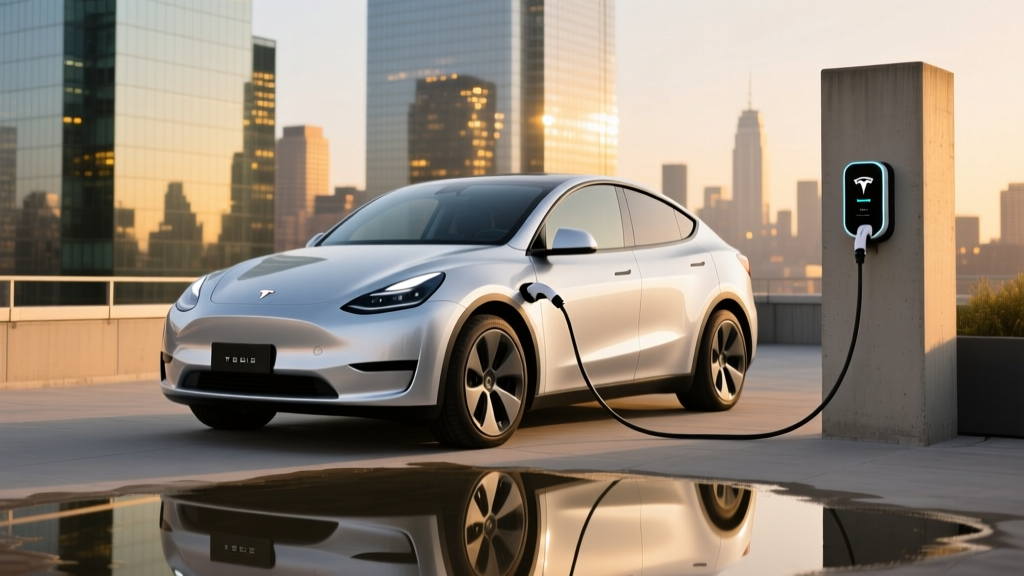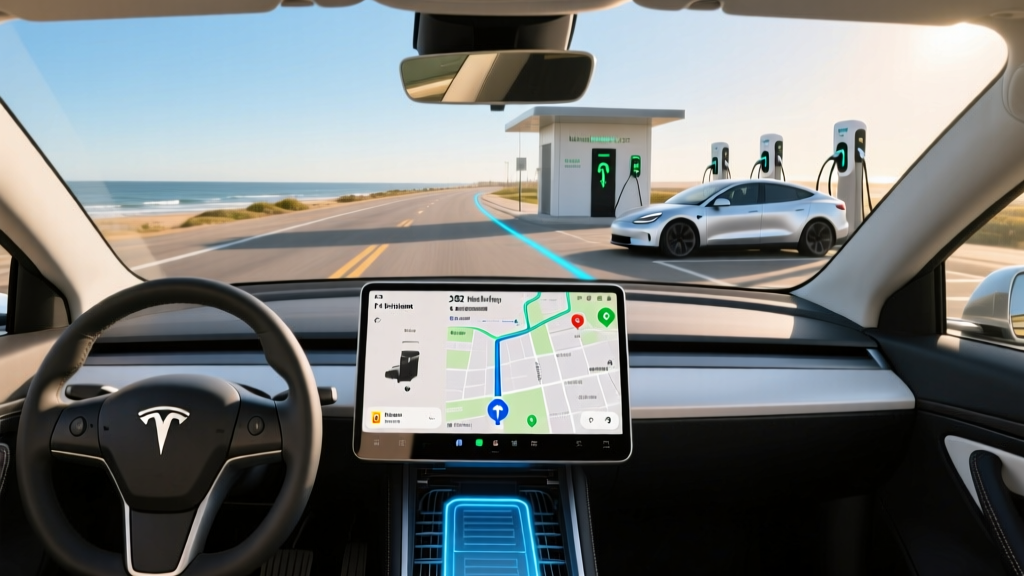
If you're shopping for your first electric vehicle, the single most practical question is probably this: how long does it take to charge an electric car? The honest answer spans a huge range depending on the equipment you use. Plugged into a standard 120V household outlet (Level 1), expect to add roughly 3 to 5 miles of range per hour — meaning a full charge on a 300-mile EV could take 60 to 100 hours. Install a 240V Level 2 home charger (the most common setup for EV owners) and you'll recover a full battery in 6 to 12 hours, typically overnight. Use a public DC fast charger and you can go from 10% to 80% state of charge in roughly 18 to 40 minutes on most modern EVs.
Quick Answer: EV Charging Times at a Glance
- Level 1 (120V household outlet): 3–5 miles of range per hour; full charge in 60–100+ hours
- Level 2 (240V home/public charger, 7–19 kW): 20–60 miles per hour; full charge in 6–12 hours
- DC Fast Charging (50–350 kW public stations): 10–80% in 18–40 minutes depending on vehicle and station
Real-world times vary based on battery size (kWh), charger power (kW), ambient temperature, and the vehicle's charge curve.
Understanding the Three Charging Levels
EV charging is categorized into three levels, and understanding the difference between kW (power — how fast energy flows) and kWh (energy — how much the battery holds) is essential. Think of kW as the width of a hose and kWh as the size of the bucket. A wider hose fills the bucket faster, but a bigger bucket always takes longer regardless.
| Level | Voltage | Power (kW) | Miles of Range Added/Hour | Best For |
|---|---|---|---|---|
| Level 1 | 120V AC | 1.0–1.4 kW | 3–5 mi/hr | Overnight top-ups, PHEVs, low-mileage drivers |
| Level 2 | 240V AC | 3.3–19.2 kW | 12–60 mi/hr | Daily home charging, workplace charging |
| DC Fast Charge | 400–800V DC | 50–350 kW | 150–1,000+ mi/hr (peak) | Road trips, rapid top-ups away from home |
Level 1: The Emergency Backup
Every EV comes with a Level 1 cord that plugs into a standard household outlet. It's adequate for plug-in hybrids (PHEVs) with smaller batteries — a Toyota RAV4 Prime's 18.1 kWh battery fills in roughly 12 hours at Level 1. For a full-size BEV like the Ford F-150 Lightning (131 kWh usable battery), Level 1 is impractical as a primary strategy. Plan on Level 1 only if you drive under 30 miles daily and can leave the car plugged in for 10+ hours.
Level 2: The Daily Workhorse
Most EV owners install a Level 2 charger at home — a 240V circuit similar to what a clothes dryer uses. A typical 48-amp Level 2 station delivers about 11.5 kW. At that rate, a Hyundai Ioniq 5 (77.4 kWh usable battery, NMC chemistry) charges from empty to full in roughly 7 hours. A Tesla Model Y Long Range (75 kWh usable) takes about 6.5 hours. Level 2 is the sweet spot: plug in when you get home, wake up with a full battery every morning.
DC Fast Charging: Road-Trip Essential
DC fast chargers bypass the vehicle's onboard charger and send current directly to the battery. Peak rates on modern EVs range from 150 kW (Chevrolet Equinox EV) to 350 kW (Hyundai Ioniq 5, Kia EV6, Porsche Taycan on 800V architecture). But here's the nuance most buyers miss: peak kW is not sustained kW. A vehicle that advertises "250 kW peak" may only hold that rate between 10% and 30% state of charge, then taper progressively. The more useful metric is 10–80% charge time.
Representative 10–80% DC fast charge times for popular 2026 models:
- Hyundai Ioniq 5 (84 kWh, 800V): ~18 minutes at a 350 kW station
- Tesla Model Y Long Range (75 kWh): ~25 minutes at a V3 Supercharger (250 kW)
- Ford F-150 Lightning Extended Range (131 kWh): ~41 minutes at a 150 kW station
- Chevrolet Equinox EV (85 kWh): ~30 minutes at a 150 kW station
- BMW iX xDrive50 (111.5 kWh): ~34 minutes at a 200 kW station
Real-World Factors That Change Charging Speed
Manufacturer-quoted charge times assume ideal conditions. In practice, several variables compress or stretch your actual charging experience.
Battery Temperature and Preconditioning
Lithium-ion batteries charge most efficiently between roughly 70°F and 90°F (21–32°C). In cold weather — below 40°F — the battery management system restricts charge rate to protect the cells. Without preconditioning (warming the battery before you arrive at the charger), a 20-minute fast charge in summer can stretch to 45+ minutes in winter. Most modern EVs precondition automatically when you navigate to a charging station in the infotainment system. Always use this feature in cold weather.
The Charge Curve: Why 80–100% Takes So Long
DC fast charging follows a curve, not a flat rate. Charge speed peaks at low states of charge and tapers significantly above 80%. Going from 80% to 100% on a DC fast charger can take as long as going from 10% to 80%. This is why the industry standard metric is 10–80% time. For road trips, charge to 80% and get back on the road — it's dramatically faster per mile added.
Station Power and Shared Cabinets
A 350 kW charger delivers peak speed only if the station's power cabinet isn't being shared with another vehicle. Many older Electrify America and EVgo stations split a 150 kW cabinet between two stalls. If both are in use, you might receive 75 kW instead of 150 kW. Tesla Superchargers handle power sharing more dynamically, but the effect still exists at some older V2 (150 kW) sites.
EV Charging vs. Gas Fueling: Honest Comparison
The most common objection to EVs is that charging takes longer than pumping gas. That's true for any individual stop — but it frames the question wrong. Most EV charging happens at home, while you sleep, work, or watch TV. You never make a special trip to "refuel." Let's compare the actual time commitment.
| Metric | Electric Vehicle (Home Level 2) | Gasoline Car |
|---|---|---|
| "Refuel" stops per week | 0 (charges at home overnight) | 1–2 trips to gas station |
| Time per refuel session | ~10 seconds (plug in at home) | 5–10 minutes + drive to station |
| Weekly refueling time | ~1 minute total | 15–30 minutes total |
| Road-trip refuel time (per stop) | 20–40 minutes (DC fast charge) | 5–10 minutes |
| Cost per mile (fuel/energy) | $0.03–$0.05 (home, national avg electricity) | $0.12–$0.16 (gas at $3.20/gal, 25 MPG avg) |
| Annual fuel/energy cost (12,000 mi) | $360–$600 | $1,440–$1,920 |
Data sourced from fueleconomy.gov and the U.S. Energy Information Administration. Home electricity cost assumes $0.16/kWh national average; actual rates vary by utility and time-of-use plans.
The road trip is where gas still wins on convenience. On a 500-mile drive, you'll likely make one 25–35-minute DC fast charging stop in an EV versus one 8-minute gas stop. For drivers who road-trip more than a few times a year, planning charging stops with apps like A Better Routeplanner becomes part of the routine. The time gap is real, but most owners report that the daily home-charging convenience more than compensates.
Home Charging Installation: What It Costs and What You Need
The biggest ownership variable is whether you can charge at home. Roughly 70–80% of EV charging happens at a residence, according to the U.S. Department of Energy. If you have a garage or driveway with access to a 240V circuit (or room in your electrical panel to add one), home Level 2 charging makes EV ownership effortless.
| Item | Typical Cost Range |
|---|---|
| Level 2 charger hardware (40–48 amp, hardwired or NEMA 14-50) | $300–$700 |
| Electrician labor (run 240V circuit, 50–60 amp breaker) | $500–$2,000 |
| Electrical permit | $50–$200 |
| Panel upgrade (if needed — 200A service) | $1,500–$4,000 |
| Total (no panel upgrade) | $850–$2,900 |
| Total (with panel upgrade) | $2,350–$6,900 |
A few practical notes from real installations: If your panel is close to the garage (under 30 feet of wire run), expect the lower end of the range. Longer runs, conduit through finished walls, or sub-panel additions push costs up. Always get a quote from a licensed electrician before purchasing a charger — the electrician should specify wire gauge, breaker size, and whether your existing panel has capacity. The federal Alternative Fuel Vehicle Refueling Property Credit covers up to 30% of home charging equipment and installation costs (capped at $1,000), though eligibility depends on your census tract. Consult a tax professional for your specific situation.
What If You Can't Charge at Home?
Apartment dwellers, street parkers, and condo residents face a real barrier. Solutions are improving — workplace charging, curbside Level 2 installations in some cities, and faster public DC networks — but relying exclusively on public charging adds cost (DC fast charging averages $0.30–$0.48/kWh nationally, roughly double the home rate) and time. If you cannot install or reliably access Level 2 charging, a plug-in hybrid (PHEV) may be a more practical bridge. PHEVs like the Toyota RAV4 Prime (42 miles EPA electric range) or Jeep Wrangler 4xe (22 miles) let you charge overnight on Level 1 and burn gas on longer drives.
Charging Costs: Home vs. Public vs. Gasoline
Charging economics vary dramatically depending on where you plug in. Here's a realistic annual cost comparison for a driver covering 12,000 miles per year:
| Scenario | Cost per kWh/Gallon | Efficiency | Annual Cost |
|---|---|---|---|
| EV — Home Level 2 (national avg electricity) | $0.16/kWh | 3.0 mi/kWh (112 MPGe avg) | $640 |
| EV — Home with time-of-use (off-peak) | $0.09/kWh | 3.0 mi/kWh | $360 |
| EV — Public DC fast charging only | $0.40/kWh | 3.0 mi/kWh | $1,600 |
| Gas car (25 MPG combined) | $3.20/gallon | 25 MPG | $1,536 |
| Hybrid (50 MPG combined) | $3.20/gallon | 50 MPG | $768 |
Key takeaway: Home-charged EVs are the cheapest option by a wide margin. Public-only DC charging can actually cost more than gasoline per mile. This is why home charging access is the single most important factor in EV satisfaction. If your utility offers time-of-use rates, scheduling charges for overnight off-peak hours can cut your energy cost nearly in half.
Total Cost of Ownership: Beyond the Fuel Savings
Fuel savings are the headline, but a complete EV purchase decision requires looking at the full financial picture over five years.
| Category | EV (e.g., Tesla Model Y LR, ~$46,000 MSRP) | Gas SUV (e.g., Toyota RAV4, ~$32,000 MSRP) | Hybrid (e.g., RAV4 Hybrid, ~$35,000 MSRP) |
|---|---|---|---|
| Purchase price (before incentives) | $46,000 | $32,000 | $35,000 |
| Federal tax credit (§30D, if eligible) | –$7,500* | $0 | $0 |
| Home charger installation | $1,500 | $0 | $0 |
| Net purchase cost | $40,000 | $32,000 | $35,000 |
| Fuel/energy (5 years, 12K mi/yr, home charging) | $3,200 | $7,680 | $3,840 |
| Maintenance (5 years) | $1,500 | $3,500 | $3,200 |
| Insurance (5 years, avg) | $9,500 | $7,000 | $7,200 |
| Estimated depreciation (5 years) | $18,000 | $12,000 | $13,000 |
| 5-Year Total Cost | $72,200 | $62,180 | $62,240 |
*Federal §30D tax credit eligibility depends on MSRP caps ($55,000 for SUVs, $80,000 for vans/pickups), buyer income limits ($150K single / $300K joint AGI), battery critical-mineral and component sourcing requirements, and point-of-sale transfer availability. See IRS guidelines for current-year rules. Many EVs no longer qualify due to battery sourcing restrictions — always verify before purchasing.
EVs typically cost more upfront and carry higher insurance premiums (15–25% more than comparable gas vehicles, according to industry data). But maintenance costs are significantly lower — no oil changes, no transmission fluid, fewer brake replacements thanks to regenerative braking, and far fewer moving parts. Depreciation has been volatile; some EVs depreciated faster than gas cars as price cuts and new model introductions reshuffled used values. The 5-year gap narrows considerably with the tax credit, and if you can access off-peak electricity rates, the EV pulls ahead on operating costs.
Common EV Charging Myths — Fact-Checked
| Myth | Fact |
|---|---|
| "Charging an EV takes hours no matter what." | Level 1 takes hours, yes. But DC fast charging adds 150–300 miles in 20–35 minutes. And home Level 2 charging happens while you sleep — zero active waiting time. |
| "You need to charge to 100% every time." | Most manufacturers recommend daily charging to 80% for NMC batteries to maximize longevity. Only charge to 100% before long trips. LFP batteries (used in standard-range Teslas and some others) tolerate daily 100% charges better. |
| "Public chargers are always broken." | Reliability has improved. Tesla's Supercharger network consistently reports 99%+ uptime. Electrify America and EVgo have improved but still lag. Check PlugShare or the charger's app for real-time status before you go. |
| "EV batteries degrade quickly and cost $20K to replace." | Modern EV batteries typically lose 5–10% capacity over 100,000 miles. Federal law mandates a minimum 8-year/100,000-mile battery warranty (10 years in CARB states). Replacement costs range from $5,000–$20,000 depending on the vehicle, but full replacements are rare — individual module repairs are often possible. |
| "Cold weather makes EVs useless." | Cold weather reduces range by 15–30% (verified by AAA and IIHS testing). Preconditioning and using a heat pump (standard on most 2025+ EVs) mitigate this. EVs start reliably in any temperature — no cold-crank issues like gas engines. |
First-Time EV Buyer Decision Framework
Not every driver is ready for a full battery-electric vehicle, and that's fine. Use this framework to decide what's right for your situation.
Choose Your Electrified Path
Choose a full BEV (battery-electric vehicle) if:
- You can install Level 2 charging at home or have reliable workplace Level 2 access
- Your daily driving is under 200 miles (well within any modern EV's range)
- You road-trip fewer than 6–8 times per year, or are comfortable planning charging stops
- You want the lowest per-mile energy cost and minimal maintenance
- The vehicle you want qualifies for the §30D tax credit or a state incentive, narrowing the price gap
Choose a plug-in hybrid (PHEV) if:
- You can't install Level 2 charging but have access to a standard 120V outlet
- You want to drive electric daily (20–45 miles covers most commutes) but need gas flexibility for longer trips
- You live in a region with sparse public DC charging infrastructure
- You're not ready to commit to full-electric but want to reduce fuel consumption
Choose a conventional hybrid (HEV) if:
- You have no access to any charging (apartment, street parking, no outlet)
- You want maximum MPG with zero behavior change — no plugging in required
- Your budget doesn't accommodate the EV or PHEV premium
- You drive very high annual mileage and want proven long-term reliability with minimal upfront cost
Wait on an EV if:
- You frequently tow heavy loads over long distances (towing can cut EV range by 40–50%)
- You live in extreme cold and regularly drive 250+ miles between charging options
- Your only vehicle must handle every possible use case without compromise
Frequently Asked Questions
Can I charge an EV from a regular wall outlet?
Yes — every EV includes or offers a Level 1 cord that plugs into a standard 120V outlet. You'll add roughly 3–5 miles of range per hour. For a driver covering 30 miles daily who parks for 10 hours overnight, that's often enough. For higher-mileage drivers or larger batteries, Level 1 is too slow as a primary charging method.
How much does it cost to charge an EV at home per month?
At the national average electricity rate of $0.16/kWh and an efficiency of 3 miles per kWh, driving 1,000 miles per month costs about $53. With time-of-use off-peak rates ($0.09/kWh), that drops to roughly $30. Compare that to $128/month in gasoline for a 25 MPG car at $3.20/gallon.
Does fast charging damage the battery?
Occasional DC fast charging does not meaningfully harm modern batteries. However, exclusive reliance on DC fast charging (daily, for months) can accelerate degradation slightly. Studies from NREL and real-world fleet data suggest the impact is modest — perhaps 1–3% additional capacity loss over 100,000 miles compared to Level 2 charging. Battery thermal management systems in current EVs are designed to handle fast charging; just don't make it your only charging method if you have alternatives.
What happens if I run out of charge on the road?
The same thing that happens if you run out of gas — you're stranded until help arrives. Roadside assistance services (AAA, manufacturer programs) can provide a tow to the nearest charger. Some services now carry mobile DC chargers. The best prevention is the same as with gas: don't ignore the fuel gauge. Modern EV navigation systems route through charging stations automatically and warn you if your destination exceeds your remaining range.
How long do EV batteries last before needing replacement?
Data from millions of EVs on the road shows typical battery degradation of 5–10% over the first 100,000 miles, with the curve flattening after initial break-in. Most manufacturers warrant the battery for 8 years/100,000 miles against degradation below 70% of original capacity. Real-world reports suggest many EV batteries last 200,000+ miles while retaining 80%+ capacity. Full battery replacement is uncommon and typically only needed after collision damage or rare manufacturing defects.
Are all EV chargers compatible with all EVs?
Connector standards matter. As of 2025–2026, most new EVs are transitioning to the NACS (North American Charging Standard) connector, pioneered by Tesla and now adopted by Ford, GM, Hyundai, Rivian, and others. CCS1 remains common on older models and some current vehicles. CHAdeMO is largely legacy (Nissan Leaf). Adapters exist between standards, and Tesla Superchargers are opening to non-Tesla EVs via NACS or adapter. Always verify the connector type on any EV you're considering and check compatibility with the charging networks in your area.