The Short Answer: Tesla Charging Times at a Glance
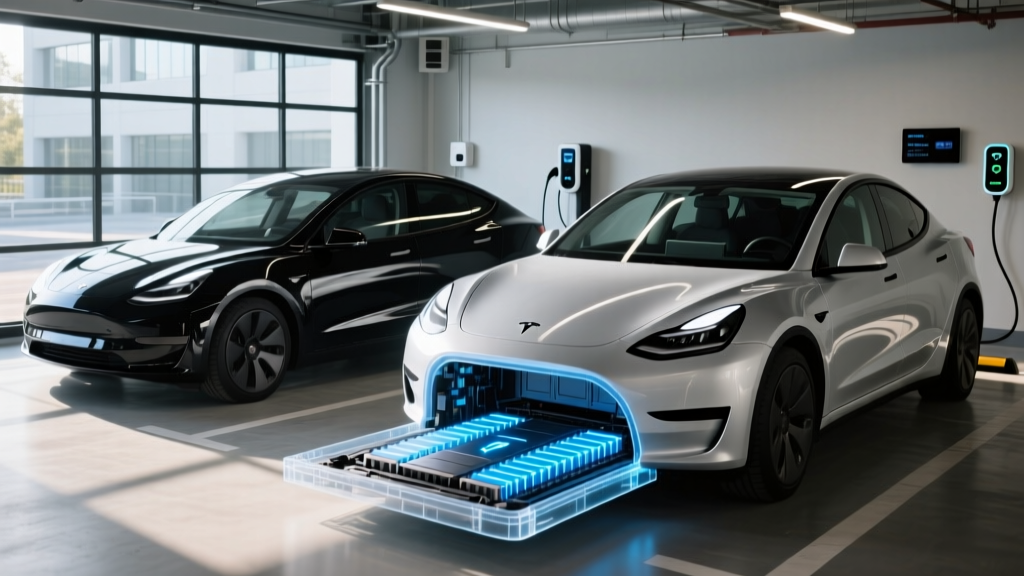
If you're searching for how long does it take a Tesla to charge, the answer depends on three variables: which Tesla model you own, what charger you're using, and how depleted the battery is. A Tesla Model 3 Long Range on a V4 Supercharger can recover from 10% to 80% in roughly 18 minutes, while the same car on a standard 240-volt home outlet takes about 9 hours for a full charge. Plug into a 120-volt wall outlet and you're looking at several days.
Below, we break down every 2026 Tesla model — Model 3, Model Y, Model S, Model X, and Cybertruck — with exact battery capacities, peak charge rates, real-world range expectations, and the ownership math that determines whether a Tesla makes sense for your daily driving and road trips.
Charging Speed by Tesla Model: Spec Table
Before diving into each model, here's the consolidated data buyers need. Note that kW (kilowatts) measures charging power — the rate of energy flow — while kWh (kilowatt-hours) measures battery energy capacity. Confusing these two is the single most common mistake in EV research.
| Spec | Model 3 LR | Model Y LR | Model S LR | Model X LR | Cybertruck AWD |
|---|---|---|---|---|---|
| Battery Capacity (usable) | ~75 kWh (NMC) | ~75 kWh (NMC) | ~95 kWh (NMC) | ~95 kWh (NMC) | ~123 kWh (NMC) |
| EPA Range | 363 mi | 320 mi | 402 mi | 348 mi | 340 mi |
| Peak DC Fast Charge | 250 kW | 250 kW | 250 kW | 250 kW | 350 kW (800V) |
| 10–80% DC Time | ~25 min | ~27 min | ~30 min | ~32 min | ~15 min |
| Level 2 Home (11.5 kW) | ~44 mi/hr | ~40 mi/hr | ~41 mi/hr | ~36 mi/hr | ~52 mi/hr |
| Level 1 (120V / 1.4 kW) | ~3–4 mi/hr | ~3–4 mi/hr | ~3–4 mi/hr | ~3–4 mi/hr | ~3–4 mi/hr |
| 0–60 mph | 4.2 sec | 4.8 sec | 3.1 sec | 3.8 sec | 3.9 sec |
| Horsepower | 346 hp | 384 hp | 670 hp | 670 hp | 600 hp |
| Drivetrain | Dual Motor AWD | Dual Motor AWD | Dual Motor AWD | Dual Motor AWD | Dual Motor AWD |
| Efficiency (MPGe) | 132 MPGe | 122 MPGe | 120 MPGe | 108 MPGe | 76 MPGe |
| Base MSRP | $47,740 | $48,380 | $79,990 | $84,990 | $79,990 |
Sources: EPA / fueleconomy.gov, Tesla spec sheets. Figures reflect 2026 model year where published; some specs carry over from late 2025 updates.
Understanding the Three Charging Levels
Every Tesla charges at one of three levels. The hardware you connect to determines the speed — and whether you need an electrician visit before delivery day.
Level 1: Standard 120V Household Outlet
Every Tesla ships with a Mobile Connector and a 120V adapter. Plugging into a standard wall outlet delivers roughly 1.4 kW, adding about 3 to 4 miles of range per hour. For a Model 3 with a depleted battery, a full charge takes over 50 hours. Level 1 works for overnight top-ups if you drive fewer than 30 miles daily, but it is not a primary charging strategy for most owners.
Level 2: 240V Home Charging (The Daily Workhorse)
A Level 2 home setup — either a Tesla Wall Connector or a universal J1772/NACS charger on a 240V circuit — is how roughly 80% of Tesla charging happens. The Tesla Wall Connector on a 60-amp circuit delivers up to 11.5 kW, recovering 36 to 52 miles of range per hour depending on the model. A full overnight charge from 20% to 100% takes 7 to 9 hours for most models.
Installation typically costs $500 to $2,000 depending on your electrical panel's capacity, the distance from the panel to the parking spot, and local permitting. Homes with older 100-amp panels may need a $1,500–$3,000 panel upgrade to support a dedicated 60-amp EV circuit alongside existing loads. Always have a licensed electrician assess your panel before committing to equipment.
DC Fast Charging: Superchargers and Beyond
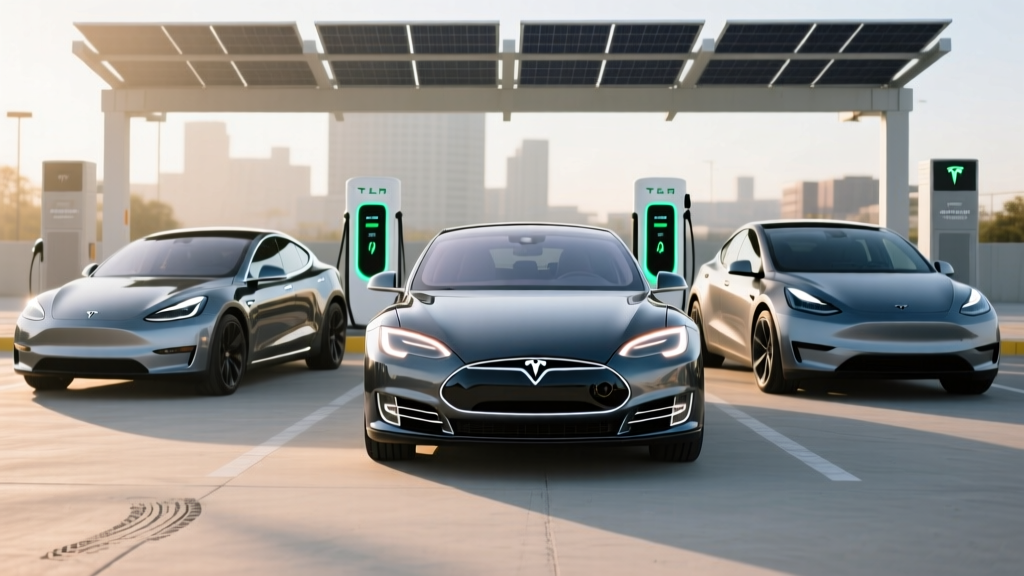
Tesla's Supercharger network operates at up to 250 kW for most V3 stalls and up to 350 kW on newer V4 architecture (currently available primarily for the Cybertruck's 800-volt platform). At peak power, a Model 3 can add roughly 175 miles of range in 15 minutes. However, peak kW is not sustained kW — the charge curve tapers significantly above 50–60% state of charge to protect battery health, which is why 10–80% times are the industry-standard measurement.
Real-World Range: What the EPA Sticker Doesn't Tell You
The EPA test cycle blends city and highway driving at moderate temperatures. In practice:
- Highway driving at 75 mph reduces range by roughly 10–15% vs. EPA due to aerodynamic drag. Expect ~310 miles from a Model 3 LR at sustained interstate speeds.
- Cold weather (below 32°F) can reduce range by 20–30%, depending on cabin heating use. Tesla's heat pump (standard on all current models) mitigates this significantly vs. older resistive heaters, but physics wins. A Model Y LR rated at 320 mi EPA may deliver ~230–260 mi in single-digit temperatures.
- City/regenerative driving often exceeds EPA numbers slightly, especially in mild climates where the heat pump runs minimally.
For the Model 3 Long Range, the 363-mile EPA figure is achievable in mixed suburban driving at 65–70 mph in 50–80°F conditions. Push above 75 mph on the interstate in winter and plan for 250–280 miles between stops. The Model Y's boxier profile costs it roughly 40 miles of EPA range vs. the Model 3 despite sharing a nearly identical battery pack — aerodynamics matter at highway speed.
Tesla Model 3 Long Range: The Volume Benchmark
The Model 3 Long Range AWD remains Tesla's best-selling sedan and the entry point most buyers research first. At $47,740 before incentives, it undercuts nearly every premium electric sedan while delivering 363 miles of EPA range — the highest of any non-luxury EV in its class.
Charging Deep Dive
On a V3 Supercharger, the Model 3 LR peaks near 250 kW but sustains that rate only briefly before tapering. The 10–80% charge takes approximately 25 minutes in warm conditions with battery preconditioning active. Without preconditioning (if you navigate to a Supercharger without setting it as your destination in the nav system), that time stretches to 30–35 minutes because the battery must warm to optimal charging temperature.
At home on an 11.5 kW Wall Connector, the 75 kWh battery charges from 10% to 100% in roughly 8.5 hours — ideal for overnight recovery. The onboard charger limits AC charging to 11.5 kW, so a higher-amperage home circuit won't speed things up.
Interior, Cargo, and Tech
The refreshed Model 3 ("Highland") interior features a 15.4-inch center touchscreen, ventilated front seats, ambient lighting, and a rear-seat entertainment screen. Cargo volume is 23 cu ft (trunk + frunk combined), adequate for a week of luggage for two but tight for a family of four on a road trip. Rear legroom is 35.3 inches — comfortable for adults under 6 feet, snug for taller passengers.
Autopilot comes standard with lane-centering and adaptive cruise control. Full Self-Driving (Supervised) is a $8,000 option or $99/month subscription. It is critical to understand that FSD is a SAE Level 2 driver-assistance system — the driver must remain fully engaged, hands on the wheel, eyes on the road. It does not make the car autonomous.
Tesla Model Y Long Range: The Family Crossover Standard
The Model Y Long Range AWD ($48,380) trades ~43 miles of range for crossover practicality. EPA-rated at 320 miles, it offers 76 cu ft of cargo space with the rear seats folded — enough for a full Costco run or a family camping trip. Rear legroom is 41.6 inches, genuinely spacious for child seats or adult passengers.
Charging Profile
The Model Y shares the Model 3's 250 kW peak and ~27-minute 10–80% time. On Level 2, the slightly lower efficiency (122 MPGe vs. 132) means marginally fewer miles added per hour of charging (~40 mi/hr vs. ~44). For most families charging overnight, this difference is irrelevant — the car is fully charged by morning regardless.
The Juniper Refresh
The 2025–2026 Model Y "Juniper" update brought a quieter cabin, revised suspension tuning, a front light bar, and a rear touchscreen. These changes address the most common complaints from early Model Y owners (road noise, ride harshness) without altering the powertrain. If buying used, note that pre-refresh and post-refresh Model Ys differ meaningfully in refinement.
Model S, Model X, and Cybertruck: Premium and Utility Options
Model S Long Range — $79,990
The Model S delivers 402 miles of EPA range (the longest of any current Tesla) and a 3.1-second 0–60 time from its 670-hp dual-motor setup. Its ~95 kWh battery requires longer charging sessions — roughly 30 minutes for 10–80% on a V3 Supercharger. Interior quality has improved with the 2024–2025 refresh, though it still trails the Mercedes EQS and Lucid Air in material luxury. Cargo space is generous at 28 cu ft combined, aided by a large liftback.
Model X Long Range — $84,990
The Model X offers 348 miles of EPA range, falcon-wing rear doors, and available six- or seven-seat layouts. Its 10–80% charge time stretches to ~32 minutes due to the larger, heavier vehicle and the same 250 kW peak. Efficiency (108 MPGe) is the lowest of Tesla's car lineup. Towing capacity is 5,000 lbs, making it viable for light trailers. The Model X exists in a narrow niche — buyers who need three rows and want a Tesla specifically.
Cybertruck AWD — $79,990
The Cybertruck is Tesla's only 800-volt architecture vehicle, enabling up to 350 kW peak charging at compatible V4 Superchargers. This translates to a 10–80% time of roughly 15 minutes — the fastest in the Tesla lineup. With a ~123 kWh battery and 340 miles of EPA range, it's the most energy-dense pack Tesla ships. However, real-world range drops sharply at highway speeds due to the truck's aerodynamic profile; expect 260–290 miles on the interstate. Towing capacity is 11,000 lbs, though towing cuts range roughly in half. At 76 MPGe, it's the least efficient Tesla by a wide margin.
Pricing, Tax Credits, and Total Cost
| Model | Base MSRP | §30D Credit Eligibility | Est. After Credit |
|---|---|---|---|
| Model 3 LR AWD | $47,740 | Up to $7,500 (subject to income, sourcing) | ~$40,240 |
| Model Y LR AWD | $48,380 | Up to $7,500 (subject to income, sourcing) | ~$40,880 |
| Model S LR | $79,990 | Not eligible (above MSRP cap) | $79,990 |
| Model X LR | $84,990 | Not eligible (above MSRP cap) | $84,990 |
| Cybertruck AWD | $79,990 | Not eligible (truck MSRP cap $80k, sourcing TBD) | $79,990 |
The federal §30D EV tax credit offers up to $7,500 for qualifying new EVs, but eligibility is layered. For 2026, the rules require:
- MSRP cap: $55,000 for sedans (Model 3), $80,000 for SUVs/trucks/vans (Model Y, Cybertruck). The Model S and Model X exceed these caps and do not qualify.
- Buyer income cap: Modified adjusted gross income cannot exceed $150,000 (single), $225,000 (head of household), or $300,000 (joint filers).
- Battery sourcing: The credit splits into two $3,750 halves — one for critical minerals sourcing and one for battery component manufacturing. Tesla's North American battery production satisfies most requirements, but the exact credit amount can vary by build date and supply chain changes. Check the latest IRS guidance at irs.gov before relying on a specific dollar figure.
- Point-of-sale transfer: Buyers can transfer the credit to the dealer at purchase, reducing the purchase price directly rather than waiting for a tax refund.
Because the Model 3 and Model Y are the only Teslas under the MSRP cap, they are the primary vehicles where the tax credit applies. Consult a tax professional to confirm your personal eligibility.
Pros, Cons, and the Verdict
- Class-leading Supercharger network reliability and coverage
- Model 3/Y offer exceptional value after tax credit
- Over-the-air updates continuously add features
- Heat pump standard — strong cold-weather efficiency
- Cybertruck's 800V architecture enables fastest DC charging
- Low maintenance (no oil, minimal brake wear via regen)
- Model S/X priced out of tax credit eligibility
- No Apple CarPlay or Android Auto — Tesla-only interface
- Repair costs and insurance premiums above segment average
- Panel gap and paint quality inconsistency reported by owners
- Turn-signal stalk removal on refreshed Model 3/Y frustrates some drivers
- Cybertruck real-world range falls well short of EPA at highway speeds
Who Should Buy a Tesla?
Model 3 LR suits commuters, solo drivers, and couples who prioritize range and efficiency over cargo space. It's the best value in the lineup after the tax credit and the default choice for first-time EV buyers with home charging access.
Model Y LR fits families of up to five who need cargo flexibility. The ~43-mile range trade-off vs. Model 3 is negligible for most daily routines, and the additional space is transformative for child seats and strollers.
Model S targets buyers who want 400+ miles of range and sports-sedan performance without the luxury-badge price of a Lucid Air or Porsche Taycan. It's a strong road-trip car.
Model X is niche — three-row buyers who insist on a Tesla and accept the efficiency penalty. The Hyundai Ioniq 9 or Kia EV9 may offer better value for most three-row shoppers.
Cybertruck is for truck buyers who want EV torque, 800V charging speed, and don't mind being conspicuous. Towing range and real-world efficiency are genuine compromises.
Frequently Asked Questions
How long does it take a Tesla to charge at a Supercharger?
On a V3 Supercharger (250 kW), most Tesla models recover from 10% to 80% in 25–32 minutes, depending on battery size and temperature. The Cybertruck on a V4 Supercharger (350 kW) achieves 10–80% in roughly 15 minutes thanks to its 800-volt architecture. Always precondition the battery by navigating to the Supercharger in the car's nav system for fastest charging.
How long does a Tesla take to charge at home?
On a Level 2 Tesla Wall Connector (11.5 kW, 240V), a full charge from 10% to 100% takes approximately 8 to 11 hours depending on battery size — overnight for all models. On a standard 120V outlet (Level 1), expect 3–4 miles of range per hour, making a full charge impractical for anything beyond emergency use.
Does a Tesla qualify for the $7,500 federal tax credit?
The Model 3 Long Range and Model Y Long Range qualify for up to $7,500 under §30D, provided the buyer meets income caps ($150K single / $300K joint) and the vehicle's battery sourcing satisfies current-year requirements. The Model S, Model X, and most Cybertruck configurations exceed the MSRP cap and are ineligible. Always verify current rules at irs.gov.
What is the real-world range of a Tesla?
Real-world range typically falls 10–15% below EPA at sustained highway speeds, and 20–30% below EPA in freezing temperatures. A Model 3 LR rated at 363 mi EPA delivers roughly 310 mi on the highway in mild weather and 250–280 mi in winter. City driving with regenerative braking often matches or slightly exceeds the EPA figure.
Is a Tesla worth buying vs. competitors?
For buyers who prioritize charging infrastructure, the Tesla Supercharger network remains the most reliable and extensive DC fast-charging system in North America. The Model 3 and Model Y are price-competitive after the tax credit. However, the Hyundai Ioniq 5, Chevrolet Equinox EV, and Ford Mustang Mach-E offer compelling alternatives with CCS/NACS compatibility and growing Supercharger access. If you value CarPlay, interior material quality, or dealership service, competitors may be a better fit. If charging convenience and software integration are paramount, Tesla retains a clear edge.
How much does it cost to charge a Tesla?
Home charging at the U.S. average electricity rate of ~$0.16/kWh costs roughly $12 to fill a Model 3's 75 kWh battery — about $0.04 per mile. Supercharger pricing averages $0.25–$0.35/kWh, translating to roughly $0.07–$0.10 per mile. Compare this to a 25-MPG gas car at $3.50/gallon ($0.14/mile), and home charging delivers clear savings. Public DC charging is cost-competitive with gas but rarely cheaper.