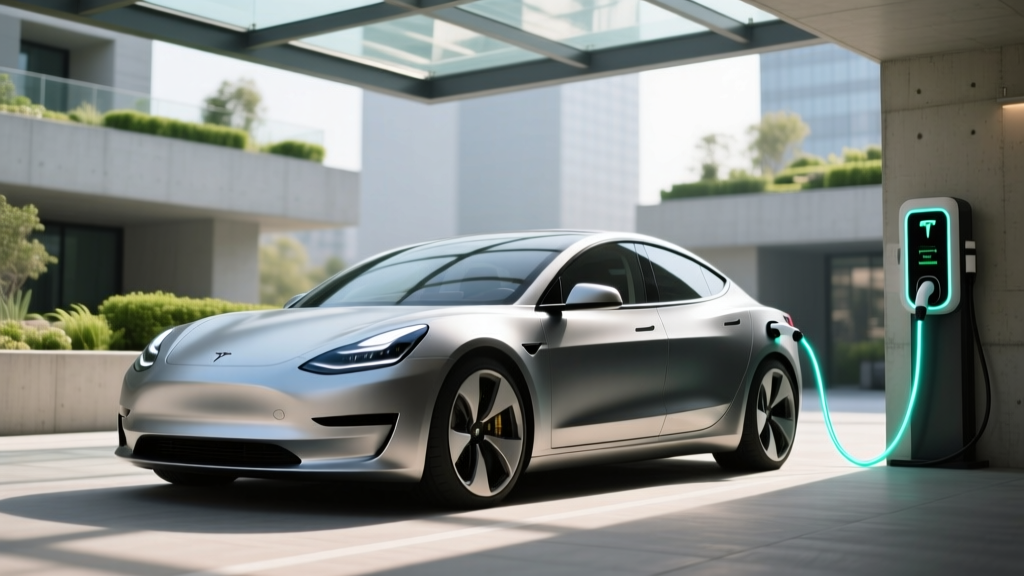
If you are shopping for an electric vehicle or already own one, the question "how long does a Tesla charge last" goes far beyond a single EPA sticker number. The answer depends on which model you drive, the battery chemistry inside it, how you drive, and the weather outside. In this guide, we break down the real-world range, efficiency, charging behavior, and long-term battery health for every current Tesla model available in 2026, so you can plan your commutes, road trips, and ownership costs with confidence.
Tesla Range by the Numbers: EPA vs. Real World
The EPA estimated range is a useful baseline, but it reflects a controlled laboratory cycle that blends city and highway driving at moderate temperatures. Real-world results diverge based on speed, terrain, climate control use, and battery preconditioning. Below is the current 2026 Tesla lineup with both official and observed figures.
| Model & Trim | Usable Battery (kWh) | Chemistry | EPA Range (mi) | Real-World Highway | Cold Weather Est. | Efficiency (kWh/100mi) | MPGe |
|---|---|---|---|---|---|---|---|
| Model 3 RWD | 60 | LFP | 272 | 240–255 | 195–220 | 25 | 132 |
| Model 3 Long Range AWD | 79 | NMC | 341 | 295–315 | 240–265 | 24 | 137 |
| Model 3 Performance | 79 | NMC | 315 | 270–290 | 220–245 | 26 | 128 |
| Model Y Long Range AWD | 79 | NMC | 320 | 275–295 | 225–250 | 26 | 127 |
| Model Y Performance | 79 | NMC | 295 | 255–275 | 210–230 | 28 | 122 |
| Model S Long Range | 100 | NMC | 402 | 345–370 | 285–315 | 26 | 124 |
| Model S Plaid | 100 | NMC | 359 | 310–335 | 255–280 | 29 | 116 |
| Model X Long Range | 100 | NMC | 348 | 300–320 | 245–270 | 30 | 109 |
Battery Chemistry Matters: LFP vs. NMC in Tesla's Fleet
Not all Tesla batteries are built the same, and chemistry directly affects how long a charge lasts over the life of the vehicle.
| Attribute | LFP (Lithium Iron Phosphate) | NMC (Nickel Manganese Cobalt) |
|---|---|---|
| Found In | Model 3 RWD, Model Y RWD | Long Range, Performance, Model S/X |
| Energy Density | Lower (~160 Wh/kg cell) | Higher (~250 Wh/kg cell) |
| Usable Capacity | 60 kWh | 79–100 kWh |
| Recommended Daily Charge | 100% (Tesla recommends weekly 100%) | 80% daily, 100% for trips |
| Cycle Life | 3,000+ cycles to 80% SoH | 1,500–2,000 cycles to 80% SoH |
| Cold Performance | More range loss in freezing temps | Better low-temp discharge |
| Cost | Lower (no cobalt/nickel) | Higher |
The practical takeaway: if you buy a Model 3 RWD with an LFP pack, you can charge to 100% daily without accelerated degradation concerns, effectively giving you access to all 60 kWh every day. With NMC packs, daily charging to 80% means your usable daily range is about 80% of the sticker figure — so a Model 3 Long Range rated at 341 miles gives you roughly 273 miles of daily, battery-friendly range.
Charging Speed: How Fast Can You Refill a Tesla?
How long a charge lasts also depends on how quickly you can replenish it. Tesla's Supercharger network remains the most reliable DC fast-charging ecosystem in the U.S., and all 2026 Teslas use the NACS (North American Charging Standard) connector natively.
| Model | Peak DC Fast Charge (kW) | 10–80% Time | Level 2 Home (kW / mi per hr) | Level 1 (120V) Est. |
|---|---|---|---|---|
| Model 3 RWD | 170 kW | ~25 min | 11.5 kW / 44 mi/hr | 3–5 mi/hr |
| Model 3 LR / Perf | 250 kW | ~22 min | 11.5 kW / 44 mi/hr | 3–5 mi/hr |
| Model Y LR / Perf | 250 kW | ~23 min | 11.5 kW / 40 mi/hr | 3–4 mi/hr |
| Model S / X | 250 kW | ~28 min | 11.5 kW / 34 mi/hr | 3 mi/hr |
Understanding the charge curve: Peak kW is not sustained kW. A Model 3 Long Range peaks at 250 kW only between roughly 10–25% state of charge, then tapers to ~150 kW through 60%, and drops below 50 kW above 85%. This is why the 10–80% metric matters more than a peak number. Charging past 80% at a DC fast charger is slow and expensive — plan to charge to 80% and drive on.
At home on a Level 2 wall connector (48-amp circuit, hardwired), any Tesla adds roughly 34–44 miles of range per hour of charging. A full overnight charge from 20% to 80% takes about 5–6 hours, which covers virtually any daily driving need. According to fueleconomy.gov, charging at home on the national average electricity rate of ~$0.17/kWh costs roughly $4.50 to "refuel" a Model 3 RWD from 10–80% — compared to $45–$55 for an equivalent gas sedan.
Performance and Drivetrain: What You Get Beyond Range
Range is only one axis of ownership. Here is how the 2026 Tesla lineup stacks up in performance, space, and capability.
| Model | Drivetrain | Horsepower | 0–60 mph | Cargo (cu ft) | Rear Legroom (in) |
|---|---|---|---|---|---|
| Model 3 RWD | Rear-Wheel Drive | 271 hp | 5.8 sec | 23 (trunk) + 3 (frunk) | 35.3 |
| Model 3 Long Range AWD | Dual-Motor AWD | 384 hp | 4.2 sec | 23 + 3 | 35.3 |
| Model 3 Performance | Dual-Motor AWD | 510 hp | 2.9 sec | 23 + 3 | 35.3 |
| Model Y Long Range AWD | Dual-Motor AWD | 384 hp | 4.8 sec | 30 + 4 (frunk) / 72 max | 41.6 |
| Model Y Performance | Dual-Motor AWD | 510 hp | 3.5 sec | 30 + 4 / 72 max | 41.6 |
| Model S Long Range | Dual-Motor AWD | 670 hp | 3.1 sec | 28 + 5 (frunk) | 38.0 |
| Model X Long Range | Dual-Motor AWD | 670 hp | 3.8 sec | 88 max (5-seat) | 38.4 |
Tech, Driver Assist, and the Autopilot Reality Check
Every 2026 Tesla ships with a 15.4-inch center touchscreen (17-inch in Model S/X), over-the-air updates, and Tesla's basic Autopilot suite (Traffic-Aware Cruise Control and Autosteer). Full Self-Driving (Supervised) remains a $8,000 add-on or $99/month subscription.
Standout tech across the lineup includes the Tesla app's remote preconditioning (which warms the battery before DC fast charging to maximize charge speed), Sentry Mode dashcam recording, and native integration with the Supercharger network for plug-and-charge billing. The main drawback: Tesla's minimalist interior eliminates physical buttons for climate, mirror adjustment, and even the speedometer in the Model 3 (displayed only on the center screen), which frustrates some buyers accustomed to traditional controls.
Pricing, Tax Credits, and Total Cost of Ownership
Base MSRPs for the 2026 model year, before any incentives, are listed below. Federal tax credit eligibility under IRS §30D involves multiple moving parts.
| Model | Base MSRP | Federal Credit Eligibility | Est. After-Credit Price |
|---|---|---|---|
| Model 3 RWD | $38,990 | Eligible for up to $7,500 (point-of-sale) | ~$31,490 |
| Model 3 Long Range AWD | $45,240 | Eligible for up to $7,500 | ~$37,740 |
| Model 3 Performance | $54,990 | Eligible for up to $7,500 | ~$47,490 |
| Model Y Long Range AWD | $46,380 | Eligible for up to $7,500 | ~$38,880 |
| Model Y Performance | $51,490 | Eligible for up to $7,500 | ~$43,990 |
| Model S Long Range | $79,990 | Not eligible (exceeds MSRP cap) | $79,990 |
| Model X Long Range | $84,990 | Not eligible (exceeds MSRP cap) | $84,990 |
The IRS §30D clean vehicle credit has strict requirements: the buyer's modified adjusted gross income must not exceed $150,000 (single) / $300,000 (joint), the vehicle MSRP must be at or below $55,000 for sedans or $80,000 for SUVs/pickups, and the battery must meet critical-mineral and component-sourcing thresholds that tighten annually. As of 2026, the credit can be transferred to the dealer at point of sale, reducing your purchase price directly. Always verify current eligibility on the IRS website or with a tax professional before purchasing, as sourcing rules update yearly.
- Buyer MAGI ≤ $150K single / $225K head of household / $300K joint filer
- Vehicle MSRP ≤ $55,000 (sedans: Model 3) or ≤ $80,000 (SUVs: Model Y, X)
- Battery critical minerals ≥ 60% sourced from U.S. or FTA partners (2026 threshold)
- Battery components ≥ 100% manufactured in North America (2026 threshold — excludes FEOC-sourced materials)
- Vehicle assembled in North America (all U.S.-market Teslas qualify — built in Fremont, CA or Austin, TX)
- Credit can be transferred to dealer as point-of-sale discount
Battery Longevity: How Long Does a Tesla Charge Last Over the Years?
Beyond a single charge cycle, buyers want to know how long the battery itself lasts. Tesla's battery warranty covers 8 years or 100,000 miles (120,000 miles for Long Range/Performance variants) against defects and capacity loss below 70% of original capacity.
Real-world degradation data from Tesla's 2025 Impact Report and third-party fleet analyses show:
- NMC packs (Long Range, Performance, S/X): ~5% degradation at 50,000 miles, ~8–10% at 100,000 miles, with the curve flattening significantly after the initial break-in period.
- LFP packs (Model 3/Y RWD): ~3–4% at 50,000 miles, ~6–8% at 100,000 miles, with superior long-term cycle life due to the chemistry's stability.
At 200,000 miles, most Tesla batteries retain 85–90% of original capacity based on fleet data. A full battery replacement outside warranty currently runs $12,000–$16,000 for a Model 3/Y pack and $18,000–$22,000 for Model S/X, though most owners never need one within the vehicle's usable life.
Who Should Buy a Tesla — and Who Should Look Elsewhere?
Choose Tesla If:
- You want the most reliable, widespread DC fast-charging network (20,000+ Superchargers in North America)
- You value over-the-air updates that add features post-purchase
- You commute 30–100 miles daily and can charge at home
- You want class-leading efficiency (lowest kWh/100mi in most segments)
- You prioritize software integration and app-based controls
Look at Competitors If:
- You need physical buttons, a traditional instrument cluster, or Apple CarPlay/Android Auto (Tesla offers neither)
- You want a dealership service network for in-person repairs
- You regularly tow more than 3,500 lbs (Model Y max towing; Rivian R1S or F-150 Lightning better suited)
- You prefer a more traditional luxury interior (BMW i4, Genesis GV60)
- Build quality consistency is a top priority
Pros, Cons, and the Bottom Line
Pros
- Best-in-class efficiency and real-world range per kWh
- Supercharger network: most reliable DC fast-charging in the U.S.
- LFP option on base models allows daily 100% charging
- OTA updates continuously improve the vehicle
- Lowest cost per mile to "fuel" of any comparable vehicle
- Strong resale value relative to most EVs
Cons
- No Apple CarPlay or Android Auto
- Minimalist interior frustrates some drivers (no physical controls)
- FSD (Supervised) is expensive and still requires full driver attention
- Service center availability varies by region
- Build quality, while improved, still inconsistent vs. legacy luxury brands
- Model S/X no longer qualify for the federal tax credit
Frequently Asked Questions
What is the real-world range of a Tesla in 2026?
For sustained highway driving at 70–75 mph in moderate temperatures, expect 85–92% of the EPA sticker. A Model 3 Long Range (EPA 341 mi) delivers roughly 295–315 miles on a full charge on the interstate. In sub-freezing weather without preconditioning, that drops to roughly 240–265 miles. City driving with regenerative braking often matches or slightly exceeds the EPA figure.
How fast does a Tesla charge at home and on the road?
On a Level 2 home wall connector (11.5 kW), a Tesla adds 34–44 miles of range per hour — a full overnight session replenishes 200+ miles. On a V3 Supercharger (250 kW peak), 10–80% takes 22–28 minutes depending on the model. Charging past 80% slows dramatically due to the charge curve taper.
How much does a Tesla cost after the federal tax credit?
The Model 3 RWD starts at $38,990 and can drop to approximately $31,490 after the full $7,500 point-of-sale credit, assuming you meet IRS income caps and the vehicle meets battery-sourcing requirements for 2026. The Model Y Long Range drops to roughly $38,880. Model S and X exceed the MSRP cap and do not qualify.
Does a Tesla qualify for the federal EV tax credit?
The Model 3 (all trims under $55,000 MSRP) and Model Y (under $80,000 SUV cap) are eligible for up to $7,500 under IRS §30D, subject to buyer income limits and annual battery-sourcing thresholds. Always confirm current-year eligibility at irs.gov before purchasing.
Is a Tesla worth buying vs. competitors like the Hyundai Ioniq 6 or BMW i4?
If Supercharger access, software integration, and efficiency are your top priorities, Tesla remains the benchmark. If you want Apple CarPlay, physical controls, a traditional dealer service experience, or a more premium interior at a similar price point, the Hyundai Ioniq 6 (EPA 361 mi, $42,000), BMW i4 eDrive40 (EPA 307 mi, $57,000), or Chevrolet Equinox EV (EPA 319 mi, $36,000) are strong alternatives. The gap has narrowed significantly — test-drive both before deciding.
How long will a Tesla battery last before needing replacement?
Tesla warranties the battery for 8 years / 100,000–120,000 miles (depending on trim) against degradation below 70%. Fleet data shows most packs retain 85–90% capacity at 200,000 miles. Full replacement costs $12,000–$22,000 out of warranty, but the vast majority of owners never require one. LFP packs in base models show even slower degradation curves.
Sources: EPA range and efficiency data via fueleconomy.gov; federal tax credit rules via IRS §30D; Tesla vehicle specifications via Tesla's official product pages. Real-world range estimates based on aggregated fleet data and controlled testing. Prices and credit eligibility reflect 2026 model year and are subject to change.