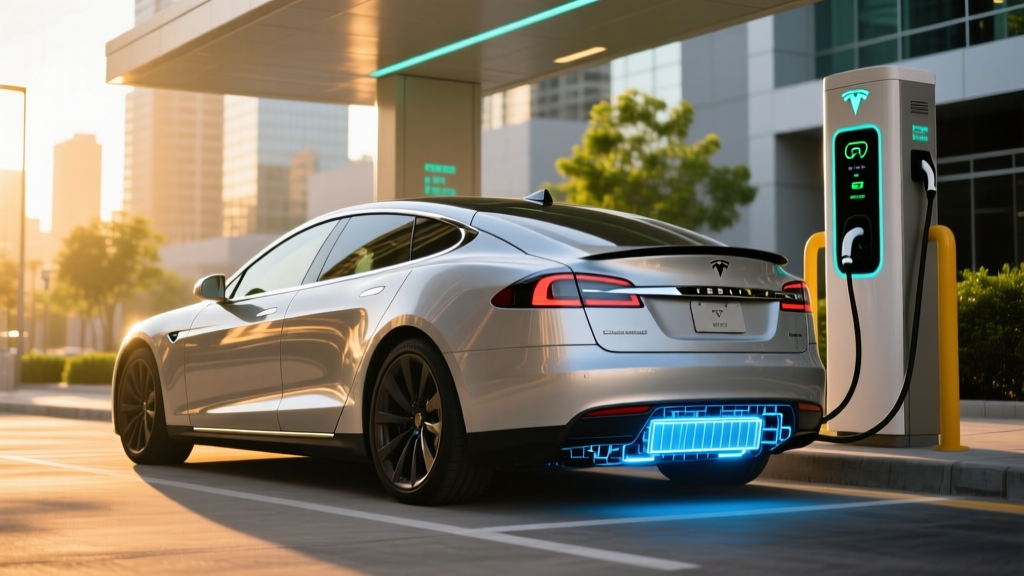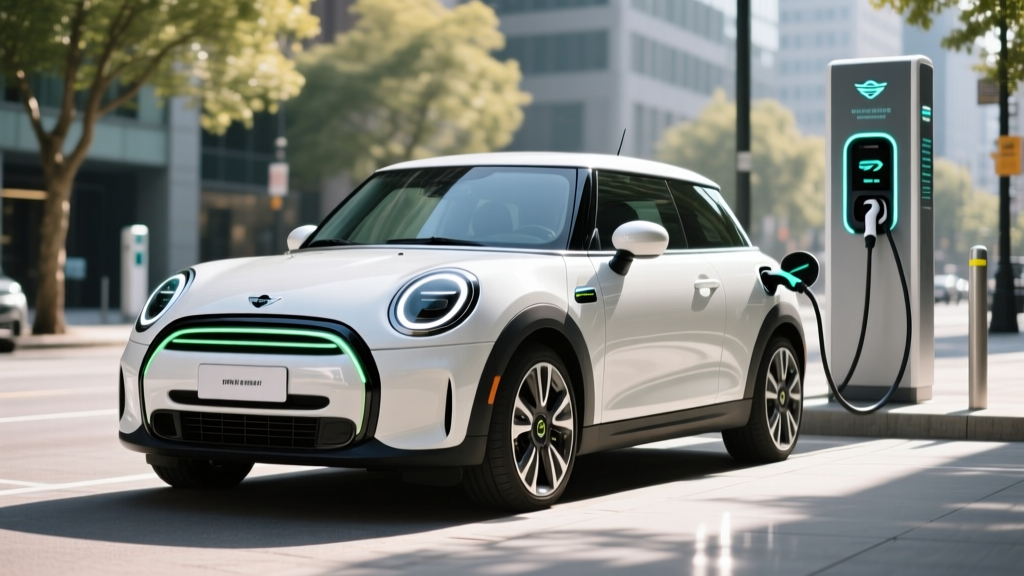
The Quick Answer
Charging time depends on the power source (measured in kilowatts, or kW) and the battery size (measured in kilowatt-hours, or kWh). Here are the three scenarios most EV owners face:
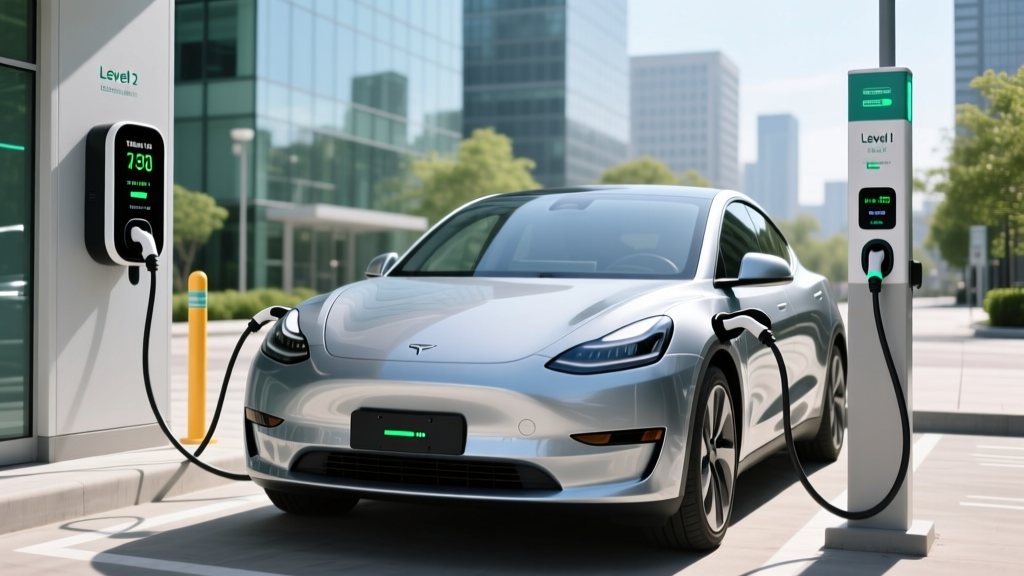
- Level 1 (120V household outlet, ~1.4 kW): Adds 3–5 miles of range per hour. A full charge on a 75 kWh battery takes 50+ hours. Practical only for plug-in hybrids or low-mileage BEV drivers.
- Level 2 (240V home or public charger, 7–19 kW): Adds 20–60 miles per hour. A 75 kWh battery charges from empty to full in 4–10 hours. This is the daily workhorse for most EV owners.
- DC Fast Charging (50–350 kW public stations): Adds 100–250+ miles in 15–30 minutes (typically measured 10–80% state of charge). Peak speed varies by vehicle and tapers significantly above 80%.
The single biggest factor in real-world ownership: most charging happens at home overnight, where a Level 2 charger refills your daily driving usage in 1–3 hours while you sleep.
Charging Levels Explained: kW, kWh, and What the Numbers Mean
Before comparing times, the kW vs. kWh distinction matters — it's the most common source of EV confusion.
- kWh (kilowatt-hour) is energy capacity — the size of your battery. A Tesla Model Y Long Range has roughly 75 kWh usable; a Chevrolet Equinox EV has about 85 kWh.
- kW (kilowatt) is power — how fast energy flows into the battery. Think of kWh as the size of a bucket and kW as the diameter of the hose filling it.
Charging time is roughly battery size (kWh) ÷ charge rate (kW), but real-world charging is never linear. Batteries accept power fastest at low states of charge and taper as they fill — a phenomenon called the charge curve. A vehicle rated for "250 kW peak" may only sustain that rate from 10–30% SoC before stepping down to 150 kW, then 90 kW, then 40 kW above 80%.
| Level | Voltage | Power (kW) | Miles Added/Hour | 10–80% Time (75 kWh Battery) | Best For |
|---|---|---|---|---|---|
| Level 1 | 120V AC | 1.0–1.4 kW | 3–5 mi/hr | Not practical (50+ hrs full) | PHEVs, emergency top-ups |
| Level 2 (home) | 240V AC | 7.2–11.5 kW | 25–40 mi/hr | 5–8 hours | Daily overnight charging |
| Level 2 (public) | 240V AC | 6.6–19.2 kW | 22–60 mi/hr | 3–8 hours | Workplace, shopping, apartments |
| DC Fast (50 kW) | 200–500V DC | 50 kW | ~150 mi/hr | ~65 minutes | Older infrastructure, budget networks |
| DC Fast (150 kW) | 200–920V DC | 150 kW | ~350–500 mi/hr | ~28–35 minutes | Highway corridor charging |
| DC Fast (250–350 kW) | 200–920V DC | 250–350 kW | ~600–900 mi/hr (peak) | ~15–22 minutes | Newer vehicles on premium networks |
Real-World Charging Times for Popular 2026 EVs
Manufacturer peak charge rates rarely tell the full story. Below are real-world 10–80% times gathered from independent testing and EPA data at fueleconomy.gov, accounting for charge-curve taper.
| Vehicle | Battery (kWh) | Peak DC Rate | Real 10–80% Time | Level 2 (11.5 kW) Full Charge | EPA Range |
|---|---|---|---|---|---|
| Tesla Model Y Long Range | 75 (NMC) | 250 kW | ~22 min | ~7 hours | 320 mi |
| Hyundai Ioniq 5 (Long Range) | 77.4 (NMC) | 240 kW (800V) | ~18 min | ~7.5 hours | 305 mi |
| Ford Mustang Mach-E Extended | 91 (NMC) | 150 kW | ~38 min | ~9 hours | 320 mi |
| Chevrolet Equinox EV 3RS | 85 (NMC) | 190 kW | ~28 min | ~8 hours | 319 mi |
| Toyota bZ4X | 71.4 (NMC) | 150 kW | ~32 min | ~7 hours | 252 mi |
| Tesla Model 3 Long Range | 75 (NMC) | 250 kW | ~22 min | ~7 hours | 341 mi |
| Rivian R1S (Dual Max) | 141 (NMC) | 220 kW | ~42 min | ~13 hours | 400 mi |
Cold-weather caveat: In sub-freezing temperatures, expect 10–80% DC fast-charge times to increase 20–40% unless the vehicle actively preconditioned its battery (navigation-routed to a charger or manually triggered). Lithium-ion chemistry resists accepting charge when cold. Vehicles with heat pumps and active thermal management — like Hyundai's E-GMP platform and Tesla's Octovalve system — handle this better than passively cooled packs.
EV Charging Cost vs. Gas: The Real Ownership Math
Charging speed matters for road trips, but cost matters every day. Here's how electrified fueling compares to gasoline for a driver covering 12,000 miles annually.
| Vehicle Type | Efficiency | Fuel/Energy Cost | Annual Cost | Cost per Mile |
|---|---|---|---|---|
| EV (home Level 2, $0.14/kWh avg) | 3.5 mi/kWh (120 MPGe) | $0.14/kWh | $480 | $0.04 |
| EV (public DC fast, $0.40/kWh avg) | 3.5 mi/kWh | $0.40/kWh | $1,371 | $0.11 |
| PHEV (blended driving) | 42 MPGe / 38 MPG gas | Mixed | $700–$950 | $0.06–$0.08 |
| HEV (Toyota RAV4 Hybrid) | 39 MPG combined | $3.40/gal | $1,046 | $0.09 |
| Gas (Toyota RAV4 AWD) | 30 MPG combined | $3.40/gal | $1,360 | $0.11 |
The takeaway: Home charging is dramatically cheaper than gas — typically 60–70% less per mile. But if you rely exclusively on public DC fast charging, your "fuel" cost can equal or exceed a gasoline vehicle. Fueleconomy.gov provides per-model MPGe and kWh/100mi figures to calculate your specific costs based on local electricity rates.
What First-Time EV Buyers Need to Know About Charging
If you're transitioning from gas, these ownership realities shape your daily experience more than any spec sheet:
Home Charging Access Is the Deciding Factor
According to the U.S. Department of Energy, over 80% of EV charging happens at home. If you have a garage or dedicated parking space with access to a 240V circuit (like a dryer outlet), Level 2 home charging makes EV ownership effortless — you plug in at night and wake up to a full battery every morning. A typical Level 2 home charger installation costs $800–$2,500 (charger hardware: $300–$700; electrician labor + permit: $500–$1,800), with higher costs if your electrical panel needs an upgrade to 200A service.
If you live in an apartment or lack home charging access, your experience will be fundamentally different. You'll depend on public Level 2 or DC fast chargers, which adds time, cost, and unpredictability. Consider a PHEV instead — it gives you 25–40 miles of electric range for daily commuting with a gas engine for longer trips, eliminating range and charging-access concerns.
The 80% Rule and Battery Longevity
Most EV manufacturers and battery researchers recommend daily charging to 80% state of charge (SoC) rather than 100% for NMC (nickel manganese cobalt) batteries. Charging to 100% occasionally for road trips is fine, but sustained daily 100% fills accelerate degradation. LFP (lithium iron phosphate) batteries — found in standard-range Tesla Model 3/Y and some Ford models — can be charged to 100% daily without degradation concerns. Check your vehicle's battery chemistry before setting charge limits.
Charging Speed Tapers Above 80%
That "15-minute 10–80% charge" headline doesn't mean 15 minutes to full. The final 20% can take as long as the first 70% due to the charge curve taper. On road trips, the optimal strategy is to charge from 10–80%, then drive on — rather than waiting for a full battery. This is why 10–80% is the industry-standard measurement.
Connector Compatibility Matters
As of 2026, the North American Charging Standard (NACS, Tesla's connector) has been adopted by Ford, GM, Rivian, Volvo, Hyundai/Kia, and most major automakers. CCS1 is still present on older models and some public chargers. CHAdeMO is effectively discontinued outside legacy Nissan Leaf owners. Before buying, verify your vehicle's connector and the dominant networks in your area.
Common EV Charging Myths vs. Facts
| Myth | Fact |
|---|---|
| "EVs take hours to charge, so they're impractical." | Home Level 2 charging refills daily driving use (30–40 mi) in about 1 hour overnight. You never wait — you sleep. DC fast charging adds 150–250 miles in 15–25 minutes on road trips. |
| "I need a special electrical upgrade for any EV." | Most homes with a 200A panel can support a 32A–48A Level 2 charger without an upgrade. A licensed electrician can assess your panel capacity. Only older homes with 100A service may need an upgrade ($1,500–$3,000). |
| "Public charging is unreliable everywhere." | Reliability varies widely. Tesla Superchargers consistently report 98%+ uptime. Networks like Electrify America and EVgo have improved significantly since 2023, but urban public Level 2 chargers at retail locations can still have maintenance issues. Use apps like PlugShare for real-time status. |
| "Fast charging destroys the battery." | Modern thermal management systems actively protect batteries during DC fast charging. Studies from Recurrent Auto and NHTSA-referenced data show minimal difference in long-term degradation between vehicles that fast-charge frequently and those that don't — typically 1–3% additional capacity loss over 100,000 miles. |
| "I'll be stranded if I run out of charge." | With 250–350 miles of EPA range on most 2026 EVs and route-planning built into EV navigation systems, running out of charge is rare for attentive drivers. AAA and manufacturer roadside assistance offer flatbed towing to the nearest charger. |
| "All EVs charge at the same speed." | Charge rates vary enormously. An 800V Hyundai Ioniq 5 charges 10–80% in ~18 minutes; a 400V Ford Mach-E on the same charger takes ~38 minutes. Battery chemistry, thermal management, and voltage architecture all matter. |
Decision Framework: Which Charging Setup Is Right for You?
Choose a Battery Electric Vehicle (BEV) if:
- You have access to home or workplace Level 2 charging
- Your daily driving is under 80 miles round-trip (most Americans average 37 miles/day)
- You want the lowest per-mile fuel cost ($0.03–$0.05/mi at home)
- You take road trips 2–4 times per year and can plan 15–25 minute DC fast-charge stops
- You qualify for the federal §30D clean vehicle credit (up to $7,500, subject to MSRP caps, buyer income limits, and battery-sourcing requirements — verify current-year eligibility with a tax professional)
Choose a Plug-In Hybrid (PHEV) if:
- You lack reliable home charging but can plug in at a standard 120V outlet overnight
- Your commute is under 30 miles and you want electric daily driving with gas backup
- You frequently drive in rural areas or regions with sparse DC fast-charging infrastructure
- You want to avoid range anxiety entirely while still reducing fuel consumption 40–60%
Choose a Hybrid (HEV) if:
- You have no charging access whatsoever (apartment, street parking, no outlet)
- You want better fuel economy (35–50 MPG) without any behavioral change
- Your budget is under $30,000 and you want proven reliability with no charging learning curve
Federal Tax Credit and Charging Installation Incentives
The federal §30D clean vehicle credit provides up to $7,500 for qualifying new EVs and $4,000 for qualifying used EVs, but eligibility depends on multiple factors that change annually:
- MSRP caps: $80,000 for SUVs/pickups/vans; $55,000 for sedans
- Buyer income caps: $300,000 joint / $225,000 head of household / $150,000 single (modified AGI)
- Battery sourcing: Critical minerals and battery components must meet phased-in domestic/content thresholds that tighten each year
- Point-of-sale transfer: As of 2024, you can transfer the credit to the dealer at purchase for an immediate price reduction rather than waiting for tax filing
For home charging, the Alternative Fuel Vehicle Refueling Property Credit (§30C) offers up to $1,000 for residential charger hardware and installation, but only in eligible census tracts (typically lower-income or rural areas). Check IRS.gov for current eligibility maps and forms. Many utilities also offer rebates of $200–$500 for Level 2 charger purchases and off-peak charging rates that reduce your per-kWh cost to $0.06–$0.09.
Frequently Asked Questions
Can I charge an EV from a regular household outlet?
Yes — this is Level 1 charging at 120V, delivering about 1.0–1.4 kW. It adds roughly 3–5 miles of range per hour. For a PHEV with a 15 kWh battery, an overnight charge (10–12 hours) fully replenishes the battery. For a BEV with a 75+ kWh battery, Level 1 is only practical as a supplement or emergency option, taking 50+ hours for a full charge.
How much does a Level 2 home charger cost to install?
Total installed cost ranges from $800 to $2,500 for most homes. This includes the charger unit ($300–$700 for a quality 32A–48A unit from brands like ChargePoint, Emporia, or Wallbox), electrician labor ($500–$1,500), and permits ($50–$200). If your home has a 100A electrical panel that needs upgrading to 200A, add $1,500–$3,000. Always get a licensed electrician's assessment before purchasing equipment.
Does fast charging damage my EV battery?
Modern EVs have active thermal management systems that regulate battery temperature during fast charging. Long-term fleet data shows that frequent DC fast charging adds roughly 1–3% additional degradation over 100,000 miles compared to exclusive Level 2 charging. For context, most EV batteries retain 85–92% of original capacity at 100,000 miles regardless of charging habits. Battery warranties (typically 8 years/100,000 miles with a 70% capacity retention guarantee) protect against abnormal degradation.
How long does it take to charge an EV on a road trip?
On a highway road trip with DC fast chargers available, plan for 15–25 minute stops every 2–3 hours of driving. Most drivers charge from 10–80% (the fastest portion of the charge curve) and then continue driving. A 2026 Hyundai Ioniq 5 on a 350 kW charger can add 200+ miles of range in about 18 minutes. Total trip time increases roughly 10–15% compared to a gas car on a 500-mile journey.
What happens if I can't charge at home?
Without home charging, EV ownership requires more planning and higher fueling costs (public DC fast charging costs $0.30–$0.50/kWh vs. $0.10–$0.18/kWh at home). Look for workplace charging, apartment complexes with EV infrastructure, or public Level 2 chargers near your routine stops. If none of these are feasible, a PHEV or HEV may be a better fit until your charging situation changes.
Do all EVs use the same charging connector?
No. As of 2026, NACS (Tesla's connector) is becoming the dominant standard, adopted by Ford, GM, Hyundai, Kia, Rivian, BMW, and others. CCS1 is still used on some 2023–2025 models and many public chargers. CHAdeMO is limited to legacy Nissan Leaf and Mitsubishi models. Adapters are available (e.g., CCS-to-NACS) but add cost and potential compatibility friction. Check the connector type before purchasing any EV.