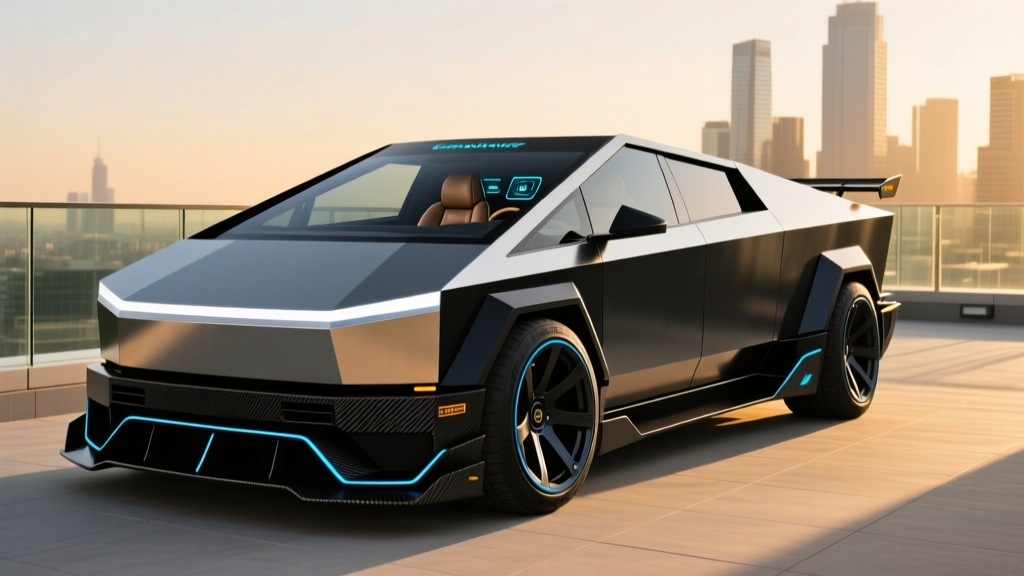
The Tesla Cybertruck already splits opinion like no other EV on the road. Leave it to German aftermarket house Mansory to make it louder, wider, and significantly more expensive. The Mansory Cybertruck isn't a separate vehicle — it's a heavily customized Tesla Cybertruck Beast (dual-motor AWD) or Cyberbeast (tri-motor AWD) that undergoes a comprehensive exterior, interior, and wheel transformation at Mansory's facility. For 2026, the package pushes the already-angular truck into hyper-luxury territory, but underneath the forged carbon and 24-inch wheels, the powertrain, battery, and charging hardware remain pure Tesla.
This review covers what you actually get, what changes (and what doesn't), the real-world range and charging implications of Mansory's aero and wheel modifications, and whether the math works for a truck that starts near $100K from Tesla and lands well past $180K after Mansory's work.
What the Mansory Cybertruck Actually Is
Mansory doesn't manufacture a vehicle. It takes delivery of a finished Tesla Cybertruck — typically the Cyberbeast tri-motor AWD — and applies its customization program. For 2026, the package includes:
- Forged carbon fiber widebody kit (fenders, hood insert, bed cover, rear diffuser)
- Custom 24-inch forged alloy wheels with high-performance rubber
- Full interior retrim in premium leather/Alcantara with contrast stitching and Mansory branding
- Custom steering wheel with carbon and Alcantara wrap
- LED lighting accents integrated into the body kit
- Optional performance ECU tune (software-only, no hardware changes to motors or battery)
Critically, Mansory does not alter the battery pack, motors, onboard charger, or thermal management system. Every EPA, charging, and powertrain figure below reflects the donor Cybertruck's hardware — with real-world adjustments for the added weight and aerodynamic penalty of the body kit.
Specs at a Glance: Mansory Cybertruck (Cyberbeast Donor)
| Spec | Value |
|---|---|
| Drivetrain | Tri-motor AWD |
| Horsepower | 845 hp |
| 0-60 mph | 2.6 sec (stock); ~2.7-2.8 sec with Mansory weight/aero) |
| Battery capacity | ~123 kWh usable, 4680 NMC cells |
| EPA range (donor) | 320 miles |
| Est. real-world range (Mansory) | ~265-285 miles |
| Max DC fast charge | 250 kW peak (V3 Supercharger) |
| 10-80% DC time | ~18-22 min (stock); ~22-26 min (Mansory, higher consumption) |
| Level 2 charge rate | 11.5 kW (~37 mi/hr) |
| MPGe (donor EPA) | 69 MPGe combined |
| Efficiency (Mansory est.) | ~58-62 MPGe combined |
| Towing capacity | 11,000 lbs (stock rating) |
| Cargo (bed + frunk) | ~67 cu ft bed + ~7 cu ft frunk |
| Base donor MSRP | ~$99,990 (Cyberbeast) |
| Mansory package | ~$80,000 - $120,000+ depending on options |
| As-tested total | ~$180,000 - $220,000+ |
| Battery/powertrain warranty | 8 yr / 120,000 mi (Tesla, may be voided by Mansory mods) |
Real-World Range: What Mansory's Kit Costs You
Real-world estimate (Mansory): 265-285 miles combined; 230-250 miles sustained highway at 70+ mph; 200-220 miles in freezing temps with climate control.
The stock Cybertruck Cyberbeast is already one of the least aerodynamically efficient EVs on the road, and Mansory's widebody kit, 24-inch wheels, and aggressive tread tires don't help. Expect a 10-17% range reduction versus the stock EPA figure, depending on driving style and conditions.
In practical terms: a 300-mile highway road trip will require at least one 20-minute Supercharger stop. Cold-weather commuters in the Midwest or Northeast should plan for 200-220 miles of usable range in winter, which is workable for daily driving but means more frequent charging stops on longer trips.
The 4680 NMC (nickel manganese cobalt) cell chemistry in the Cybertruck provides high energy density but is more sensitive to extreme cold than LFP. Preconditioning the battery before DC fast charging is essential — skip it and your peak charge rate will be significantly reduced.
Charging Speed: DC Fast and Home Level 2
Since Mansory doesn't touch the charging hardware, you get the same capability as a stock Cyberbeast — which is quite good, provided you understand the charge curve.
| Level | Power | Miles added per hour | Notes |
|---|---|---|---|
| Level 1 (120V) | ~1.4 kW | ~3-4 mi/hr | Emergency/trickle only |
| Level 2 (240V, 48A) | 11.5 kW | ~37 mi/hr | Full overnight charge in ~9 hrs |
| DC Fast (V3 Supercharger) | 250 kW peak | ~175 mi in 15 min (stock) | Peak rate not sustained; tapers above 60% SoC |
| DC Fast (V4 Supercharger) | Up to 350 kW capable | Faster if truck accepts higher rate | Cybertruck currently limited to ~250 kW acceptance |
The 10-80% DC fast charge time of 18-22 minutes (stock) stretches to roughly 22-26 minutes with the Mansory kit, not because charging is slower, but because the truck's higher energy consumption means each kWh adds fewer miles. On a road trip, you'll stop slightly more often and slightly longer.
At home on a Level 2 wall connector, expect a full 10-100% charge in roughly 10-11 hours. Most owners will charge from 20-80% daily, which takes about 6 hours — easily handled overnight.
Performance and Driving Dynamics
The tri-motor Cyberbeast donor produces 845 horsepower and rockets to 60 mph in 2.6 seconds stock. Mansory's added weight (the widebody kit, larger wheels, and interior retrim add an estimated 200-350 lbs) and increased rolling resistance from wider, stickier tires shave the 0-60 time to roughly 2.7-2.8 seconds — still brutally quick and faster than nearly anything else with a bed.
The optional ECU tune can sharpen throttle response and slightly adjust torque distribution, but without hardware changes to the motors or battery, don't expect dramatic power gains. The real performance story is that a 5,000+ lb truck this quick still feels surreal, Mansory badge or not.
Ride quality may actually suffer slightly. The 24-inch wheels with lower-profile tires transmit more road imperfections than the stock 20-inch setup, and the Cybertruck's adaptive air suspension has to work harder with the added unsprung mass. On smooth highways it's composed; on broken pavement, you'll feel it.
Pricing, Tax Credits, and the Ownership Math
Here's where the Mansory Cybertruck becomes a conversation stopper for most buyers.
| Item | Estimated Cost |
|---|---|
| 2026 Tesla Cyberbeast (donor) | $99,990 |
| Mansory exterior widebody kit | $45,000 - $65,000 |
| Mansory interior retrim | $20,000 - $35,000 |
| 24-inch forged wheels + tires | $12,000 - $18,000 |
| Shipping, installation, paint protection | $5,000 - $10,000 |
| Total (typical build) | $181,990 - $227,990 |
Federal tax credit (§30D): The Tesla Cybertruck has fluctuated in and out of eligibility for the $7,500 federal EV tax credit depending on battery sourcing and critical mineral requirements. As of 2026, buyers should verify current eligibility on IRS.gov's qualified vehicles list. Even if eligible, the §30D credit has income caps ($150K single / $300K married filing jointly) and the Cyberbeast's MSRP is near the $80,000 truck cap. The Mansory customization cost does not count toward the MSRP cap since it's a post-purchase modification — but the donor vehicle's MSRP must still qualify. Consult a tax professional before relying on the credit.
Insurance will be steep. A stock Cyberbeast already carries high premiums due to its stainless steel body (expensive to repair) and performance. Add Mansory's custom bodywork and $24-inch wheels, and expect annual insurance costs of $4,000-$6,000+ depending on your profile and state.
Interior, Tech, and Daily Usability
The Cybertruck's interior is minimalist to a fault — a single 18.5-inch front touchscreen handles nearly everything, with a smaller rear screen for passengers. Mansory's retrim adds significant tactile warmth: hand-stitched leather on the dash, doors, and center console; Alcantara headliner; and a custom steering wheel that actually feels premium in hand.
Tech features carry over from the Tesla donor:
- Tesla Autopilot (SAE Level 2 driver assistance) — adaptive cruise + lane centering
- Full Self-Driving (Supervised) capability — if optioned on the donor ($8,000 or $99/mo subscription)
- Over-the-air updates for powertrain, UI, and feature additions
- Sentry Mode, Dog Mode, and the full Tesla app ecosystem
- 15-speaker premium audio
- Power outlet in the bed (240V capable) for tools or camping
Cargo space remains generous: the 6-foot bed offers ~67 cubic feet with the tonneau closed, and the front trunk (frunk) adds ~7 cubic feet for groceries or cables. The Mansory bed cover integrates with the widebody styling but retains full functionality.
Passenger space is adequate for four adults but not class-leading. Rear legroom is roughly 35-36 inches — fine for average-height passengers but tight for taller riders on longer trips. The rear bench is flat and firm, a common Cybertruck complaint that Mansory's retrim doesn't fully resolve.
Pros and Cons
Pros
- Exclusivity — very few Mansory Cybertrucks exist; guaranteed attention
- Interior quality dramatically improved over stock Tesla minimalism
- Tri-motor AWD performance remains world-class (sub-3-sec 0-60)
- Full Supercharger network access for road trips
- Tesla's OTA update ecosystem continues to add features
- 11,000-lb towing capacity retained
Cons
- Total cost of $180K-$220K+ for a modified truck
- 10-17% range loss from stock EPA due to wheels, weight, and aero
- Warranty risk — Mansory modifications may void Tesla's battery/powertrain coverage
- 24-inch wheels compromise ride quality on rough roads
- Tax credit eligibility uncertain and subject to IRS sourcing rules
- Resale value highly speculative — custom EVs depreciate unpredictably
- Rear seat comfort still mediocre despite interior upgrades
Who Should (and Shouldn't) Buy the Mansory Cybertruck
Buy it if: You already want a Cyberbeast, have the budget for a six-figure customization, prioritize exclusivity and interior luxury over maximum range, and accept the warranty ambiguity. This is a statement vehicle for collectors and enthusiasts who find a stock Cybertruck too common.
Skip it if: You need maximum range and charging efficiency (the stock Cybertruck AWD with 340-mile EPA is more practical), you rely on the full Tesla warranty, you want a comfortable daily driver for rough roads, or you're spending anywhere near this budget and need strong resale confidence.
For the money, alternatives include the Rivian R1T Quad-Motor (~$90K, 352-mile range, more conventional luxury), the Hummer EV Pickup (~$110K, 381-mile range, Watts to Freedom mode), or simply a stock Cyberbeast with Tesla's own accessories. None offer Mansory's visual drama, but all preserve full factory warranties and deliver better efficiency.
Frequently Asked Questions
What is the real-world range of the Mansory Cybertruck?
Expect 265-285 miles combined, with highway driving at 70+ mph reducing that to roughly 230-250 miles. In freezing temperatures with heat running, plan for 200-220 miles. The stock Cyberbeast EPA rating is 320 miles, but Mansory's larger wheels, added weight, and altered aerodynamics reduce efficiency by 10-17%.
How fast does the Mansory Cybertruck charge?
On a V3 Tesla Supercharger, it peaks at 250 kW DC, with a 10-80% charge taking roughly 22-26 minutes (slightly longer than stock due to higher energy consumption per mile). At home on Level 2 (11.5 kW), a full charge takes about 10-11 hours, with daily 20-80% charging completing in ~6 hours.
Does the Mansory Cybertruck qualify for the federal EV tax credit?
Possibly, but it depends on the donor Cybertruck's eligibility under IRS §30D rules. The Cyberbeast's MSRP (~$99,990) is near the $80,000 truck cap, and eligibility depends on battery sourcing and critical mineral requirements that change periodically. Mansory's customization cost is a post-purchase modification and doesn't affect MSRP cap calculations, but the donor must qualify independently. Always check the IRS qualified vehicle list and consult a tax professional.
Does Mansory's modification void the Tesla warranty?
This is the biggest risk. Tesla's 8-year/120,000-mile battery and drive unit warranty may be voided or partially denied if Tesla determines that aftermarket modifications contributed to a failure. Body kit and interior work are less risky, but ECU tunes and wheel/tire changes that affect drivetrain loads are in a gray area. Discuss this directly with Mansory and your Tesla service center before committing.
Is the Mansory Cybertruck worth it vs. a stock Cyberbeast?
For exclusivity and interior luxury, yes — if budget isn't a constraint. For efficiency, warranty peace of mind, and resale predictability, the stock Cyberbeast is the rational choice. The Mansory package adds $80K-$120K+ to the price while reducing range and potentially complicating warranty claims. It's a passion purchase, not a practical one.
Can I Supercharge the Mansory Cybertruck?
Yes. Since Mansory doesn't alter the charging port or hardware, the truck retains full access to the Tesla Supercharger network, including V3 (250 kW) and V4 stations. You can also use NACS-to-CCS adapters for third-party DC fast-charging networks like Electrify America and EVgo, though Tesla's native network remains the most reliable option.