Tesla's Software Advantage: What Owners Actually Wait For
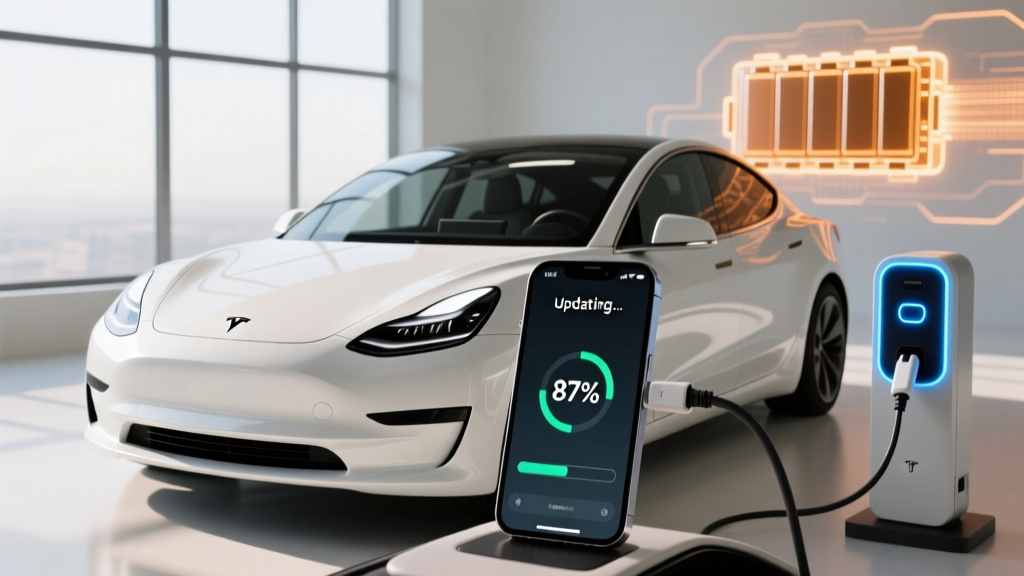
For most automakers, an over-the-air (OTA) update means a navigation patch or a minor UI tweak. For Tesla, software updates can fundamentally alter vehicle behavior — adding range through efficiency optimizations, unlocking new Autopilot capabilities, or even changing suspension damping profiles on Model S and Model X. If you're researching a Tesla purchase in 2026, understanding how long do Tesla updates take is just as important as understanding range and charging speed.
This guide covers the OTA update experience in detail, then provides the full spec-by-spec breakdown of Tesla's current 2026 lineup so you can evaluate each model on the metrics that matter: real-world range, charging time, price after the federal tax credit, and total ownership value.
How Long Do Tesla Updates Take in 2026?
Tesla's OTA updates fall into three categories, each with a different time commitment:
- Minor updates (security patches, bug fixes): Typically 10–25 minutes to download and install. The car remains drivable during the download phase, but you cannot drive during installation.
- Standard feature updates (new UI, app additions, efficiency tweaks): Usually 30–60 minutes total. Download happens over Wi-Fi in the background; installation requires the vehicle to be parked.
- Major version updates (new FSD Supervised stack, significant powertrain recalibration): Can take 60–90 minutes, occasionally longer. These are less frequent — typically 2–4 per year — and often require a strong Wi-Fi connection for the larger file size (sometimes 3–5 GB).
Tesla recommends connecting your vehicle to home Wi-Fi rather than relying on the built-in cellular connection. Updates over cellular are slower, may be throttled, and in some cases Tesla will delay delivery to vehicles without Wi-Fi access until the rollout is nearly complete. Plan your update schedule for evenings or weekends when the car can sit parked and undisturbed.
2026 Tesla Lineup: Full Spec Comparison
Below is the complete specification matrix for every Tesla model currently on sale in the U.S. for the 2026 model year. All range figures are EPA-estimated.
| Spec | Model 3 LR AWD | Model Y LR AWD | Model S LR | Model X LR | Cybertruck AWD |
|---|---|---|---|---|---|
| EPA Range | 341 mi | 320 mi | 402 mi | 335 mi | 340 mi |
| Battery (usable kWh) | 75 kWh (NMC) | 75 kWh (NMC) | 95 kWh (NMC) | 95 kWh (NMC) | 123 kWh (NMC) |
| Max DC Fast Charge | 250 kW | 250 kW | 250 kW | 250 kW | 250 kW |
| 10–80% DC Time | ~25 min | ~25 min | ~30 min | ~30 min | ~35 min |
| Level 2 Home Rate | 11.5 kW / 44 mi/hr | 11.5 kW / 42 mi/hr | 11.5 kW / 41 mi/hr | 11.5 kW / 36 mi/hr | 11.5 kW / 34 mi/hr |
| 0–60 mph | 4.2 sec | 4.8 sec | 3.1 sec | 3.8 sec | 3.9 sec |
| Horsepower | 346 hp | 384 hp | 670 hp | 670 hp | 600 hp |
| Drivetrain | Dual-Motor AWD | Dual-Motor AWD | Dual-Motor AWD | Dual-Motor AWD | Dual-Motor AWD |
| MPGe (combined) | 134 MPGe | 122 MPGe | 120 MPGe | 102 MPGe | 76 MPGe |
| Cargo Volume | 23 cu ft | 76 cu ft (max) | 28 cu ft | 88 cu ft (max) | 67 cu ft (bed) |
| Battery Warranty | 8 yr / 120,000 mi | 8 yr / 120,000 mi | 8 yr / 150,000 mi | 8 yr / 150,000 mi | 8 yr / 120,000 mi |
| Base MSRP | $42,380 | $44,380 | $79,990 | $84,990 | $79,990 |
Sources: EPA / fueleconomy.gov, Tesla.com spec sheets. Prices exclude destination fee. Specs reflect 2026 model year.
Real-World Range: What the EPA Sticker Doesn't Tell You
- Highway driving (70–80 mph): Subtract 10–15% from EPA figures. A Model 3 Long Range rated at 341 miles will deliver approximately 290–305 miles at sustained highway speed.
- Cold weather (below 32°F / 0°C): Subtract 20–30%. The same Model 3 may deliver 240–270 miles in freezing temperatures due to battery resistance and cabin heating load. Teslas use a heat pump (standard on all 2026 models), which reduces but does not eliminate cold-weather range loss.
- City / stop-and-go driving: Range often meets or slightly exceeds EPA estimates thanks to regenerative braking recapturing energy.
Tesla's trip planner and in-car energy app are among the most accurate in the industry. The navigation system factors in elevation changes, wind, temperature, and traffic to project arrival SoC (State of Charge) with remarkable precision — typically within 2–3% of actual. This reduces range anxiety on road trips far more effectively than a large battery alone.
Charging Speed: DC Fast Charging and Home Setup
Charging speed is measured in kW (kilowatts — the rate of power delivery), while battery capacity is measured in kWh (kilowatt-hours — the total energy stored). Understanding this distinction is essential for evaluating any EV.
| Charging Level | Power | Miles Added per Hour | Best Use Case |
|---|---|---|---|
| Level 1 (120V outlet) | ~1.4 kW | 3–5 mi/hr | Overnight top-up, low-mileage commuters |
| Level 2 (240V home charger) | 11.5 kW | 34–44 mi/hr | Daily home charging — full charge in 7–9 hours |
| DC Fast Charging (Supercharger) | Up to 250 kW | ~1,000+ mi/hr (peak) | Road trips — 10–80% in 25–35 minutes |
Charging curve reality: Tesla's 250 kW peak rate is not sustained for the entire session. The battery accepts maximum power between roughly 10–30% SoC, then tapers progressively. From 80–100%, charging slows dramatically to protect battery health. This is why Tesla (and most EV makers) quote 10–80% times rather than full-charge times. On a road trip, charging from 10% to 80% at a V3 or V4 Supercharger takes 25–35 minutes depending on the model and battery temperature.
Preconditioning matters: When you navigate to a Supercharger using the Tesla app or in-car navigation, the car automatically preconditions (warms) the battery to optimize charge acceptance. Skipping preconditioning — for example, by driving to a charger without setting it as your navigation destination — can add 5–10 minutes to your charging session, especially in cold weather.
Pricing, Trims, and Federal Tax Credit Eligibility
| Model / Trim | Base MSRP | §30D Credit Eligible? | Effective Price (est.) |
|---|---|---|---|
| Model 3 Long Range AWD | $42,380 | Yes — up to $7,500 | ~$34,880 |
| Model 3 Performance | $52,380 | Yes — up to $7,500 | ~$44,880 |
| Model Y Long Range AWD | $44,380 | Yes — up to $7,500 | ~$36,880 |
| Model Y Performance | $48,380 | Yes — up to $7,500 | ~$40,880 |
| Model S Long Range | $79,990 | No — exceeds MSRP cap | $79,990 |
| Model X Long Range | $84,990 | No — exceeds MSRP cap | $84,990 |
| Cybertruck AWD | $79,990 | No — exceeds MSRP cap | $79,990 |
Source: IRS §30D Clean Vehicle Credit rules. Eligibility depends on buyer income, vehicle MSRP, battery component sourcing, and critical mineral requirements. Always verify current rules before purchase.
-
Federal §30D Tax Credit Requirements (2026):
- MSRP cap: Sedans (Model 3, Model S) must be under $55,000. SUVs, vans, and trucks (Model Y, Model X, Cybertruck) must be under $80,000.
- Buyer income cap: Modified AGI must not exceed $150,000 (single), $225,000 (head of household), or $300,000 (married filing jointly).
- Battery sourcing: A percentage of critical minerals and battery components must be sourced from the U.S. or free-trade-agreement partners. The required percentages increase annually — consult IRS guidance for the current-year thresholds.
- Point-of-sale transfer: Eligible buyers can transfer the credit to the dealer at purchase, reducing the upfront price rather than waiting for a tax refund.
Who Should Buy a Tesla in 2026?
Choose Model Y if: You need family-friendly cargo capacity (76 cu ft with seats folded), easy car-seat installation, and a slightly higher ride height. The most popular Tesla for a reason — it balances range, space, and price.
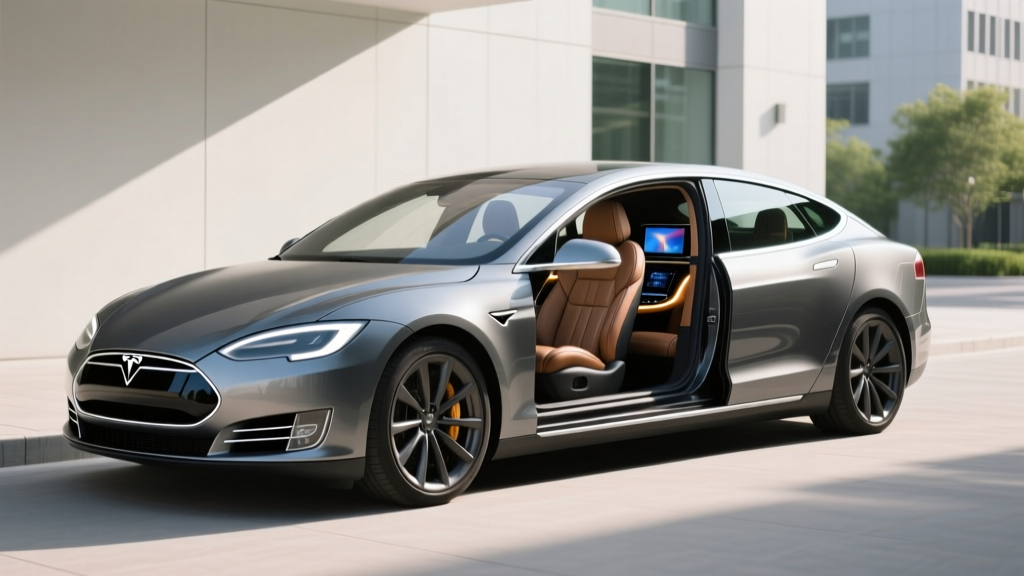
Choose Model S if: You want 402 miles of EPA range (the longest of any current Tesla), premium luxury features, and 670 hp performance — and the $79,990 price tag (no federal credit) fits your budget.
Choose Model X if: You need three-row seating for up to seven passengers and falcon-wing rear doors for tight parking-space access. Cargo volume reaches 88 cu ft.
Choose Cybertruck if: You need a truck bed (67 cu ft), 11,000-lb towing capacity, and want a stainless-steel exoskeleton. At 76 MPGe, efficiency is the lowest in the lineup — this is a capability-first vehicle.
Tech, Safety, and the Software-Defined Experience
Every 2026 Tesla includes a 15.4-inch center touchscreen (17-inch on Model S/X), over-the-air update capability, Tesla's mobile app with remote climate and charging controls, and the Basic Autopilot suite (adaptive cruise control, lane centering, automatic emergency braking). Full Self-Driving (Supervised) remains a $8,000 add-on or $99/month subscription and includes features like automatic lane changes, traffic-light recognition, and Navigate on Autopilot — but always requires active driver supervision.
On safety, the Model 3 and Model Y have earned IIHS Top Safety Pick+ ratings and 5-star NHTSA overall ratings. The Model S and Model X also carry 5-star NHTSA ratings. Tesla's active safety systems are among the most responsive in the industry, though the camera-only Tesla Vision approach (no radar or ultrasonic sensors on current models) has drawn scrutiny in low-visibility conditions.
Biggest Pros and Cons
- Access to the Tesla Supercharger network — the most reliable and widespread DC fast-charging network in the U.S. (20,000+ stalls)
- Best-in-class OTA software updates that add real features over time
- Industry-leading efficiency (kWh per mile) across the lineup
- Strong resale value relative to most EV competitors
- Accurate in-car trip planning with real-time energy projections
- Camera-only Tesla Vision can struggle in heavy rain, fog, or direct sun glare
- No Apple CarPlay or Android Auto — you must use Tesla's native interface
- Model S/X and Cybertruck exceed the §30D MSRP cap — no federal tax credit
- Repair costs and insurance premiums tend to be above average for the segment
- Minimalist interior lacks physical controls — everything routes through the touchscreen
Is a Tesla Worth It vs. Key Competitors?
The Model 3 competes with the Hyundai Ioniq 6 (361 mi EPA, from ~$39,000) and BMW i4 (307 mi, from ~$52,000). Tesla's advantages are Supercharger access, software maturity, and lower effective pricing after the tax credit. The Ioniq 6 counters with faster 800V charging architecture (up to 350 kW) and physical buttons.
The Model Y faces the Hyundai Ioniq 5 (303 mi, ~$42,000), Ford Mustang Mach-E (312 mi, ~$43,000), and Kia EV6 (310 mi, ~$43,000). The Model Y leads in cargo volume and charging network access, while competitors offer 800V charging and, in some cases, CarPlay support.
For luxury buyers, the Model S competes with the Lucid Air (419–516 mi, from ~$70,000) and BMW i5 (295 mi, from ~$67,000). The Model S's 402-mile range remains highly competitive, though the Lucid Air surpasses it at higher price points.
Frequently Asked Questions
How long do Tesla updates take to download?
Download time depends on your connection. Over home Wi-Fi (50+ Mbps), most updates download in 5–20 minutes in the background while you drive. Over the car's built-in cellular connection, downloads can take 30–60 minutes or longer for major updates. Tesla prioritizes Wi-Fi-connected vehicles for early rollout access.
Can I drive my Tesla while it's updating?
You can drive during the download phase, but once the installation begins, the vehicle is immobilized. The touchscreen will display a progress bar and estimated time remaining. Do not attempt to drive or power off the vehicle during installation.
Does Tesla notify you before an update?
Yes. You'll receive a notification in the Tesla app and on the vehicle's touchscreen when an update is available. You can choose to install immediately, schedule it for a specific time, or delay it. However, Tesla does require that updates be installed within a reasonable window — indefinite deferral is not an option.
What is the real-world range of the 2026 Tesla Model 3 Long Range?
The EPA rates the Model 3 Long Range AWD at 341 miles. In real-world highway driving at 70–80 mph, expect approximately 290–305 miles. In freezing temperatures with cabin heating, range can drop to 240–270 miles. City driving with regenerative braking often matches or slightly exceeds the EPA figure.
How fast does the Model Y charge at home?
With a Tesla Wall Connector on a 60-amp circuit, the Model Y charges at 11.5 kW, adding approximately 42 miles of range per hour. A full charge from 10% to 100% takes roughly 7–8 hours. Most owners plug in nightly and wake up with a full battery, making daily charging essentially invisible.
Does the Tesla Model Y qualify for the $7,500 federal tax credit?
Yes, as of 2026, the Model Y (classified as an SUV with an $80,000 MSRP cap) qualifies for the full $7,500 §30D Clean Vehicle Credit, provided the buyer meets income requirements ($300,000 MFJ / $150,000 single) and the vehicle's battery components meet critical-mineral and sourcing thresholds. The credit can be applied at point of sale. Always verify current eligibility at IRS.gov before purchasing.
How long does a major Tesla software update take to install?
Major version updates — such as a new FSD Supervised release or a significant holiday update — typically take 60–90 minutes to install. These larger updates may include 3–5 GB of data and require a strong Wi-Fi connection. Plan accordingly: schedule them for evenings or weekends when the car can remain parked.
Is Tesla's Full Self-Driving actually self-driving?
No. FSD (Supervised) is an SAE Level 2 driver-assistance system. It can handle highway lane changes, navigate on-ramps to off-ramps, and recognize traffic lights, but the driver must remain fully attentive and ready to take over at any moment. True autonomous driving (Level 4) is currently available only through robotaxi services like Waymo in select metro areas.