The Quick Answer: Tesla Model Y Charging Times at Every Level
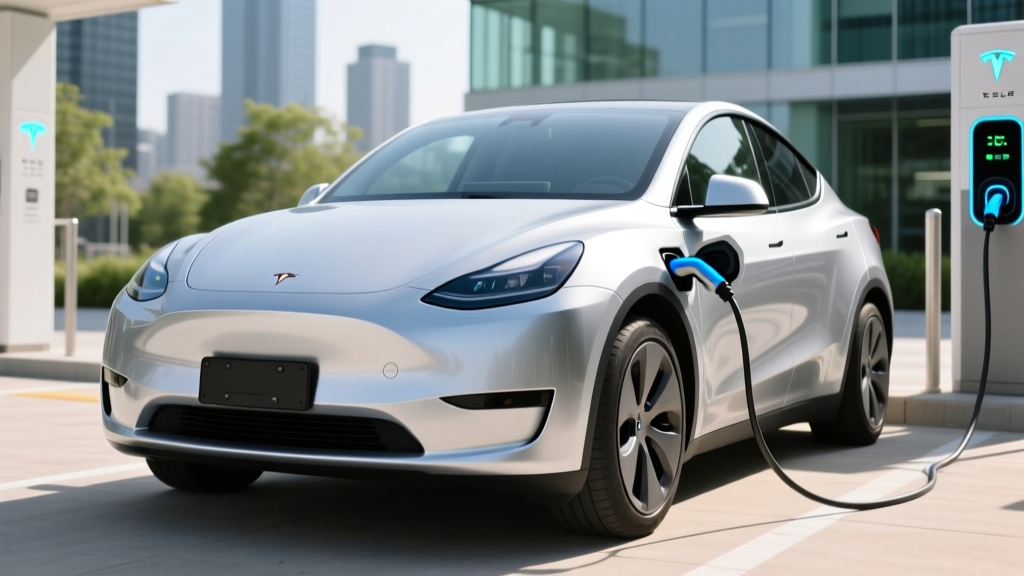
If you're researching how long does it take to charge a Tesla, the answer depends entirely on which charging method you're using. For the 2026 Tesla Model Y Long Range AWD — the best-selling EV in America — here's the executive summary before we get into the data:
- DC Fast Charging (Tesla Supercharger V4, 250 kW peak): 10–80% in approximately 25 minutes
- Home Level 2 (Tesla Wall Connector, 11.5 kW / 48A): ~44 miles of range per hour, full charge in ~8 hours
- Level 1 (standard 120V outlet): ~3–4 miles of range per hour — emergency use only
But peak kW ratings tell only part of the story. Charging speed varies dramatically based on battery state of charge, temperature, and chemistry. Below, we map out exactly what to expect across every scenario, using the 2026 Model Y lineup as our reference point.
| Spec | Long Range AWD | Performance AWD | RWD (Standard) |
|---|---|---|---|
| EPA Range | 320 miles | 295 miles | 260 miles |
| Battery (usable) | ~78 kWh (NMC) | ~78 kWh (NMC) | ~60 kWh (LFP) |
| Peak DC Fast Charge | 250 kW | 250 kW | 175 kW |
| 10–80% DCFC Time | ~25 min | ~25 min | ~30 min |
| Level 2 Home Charge | 11.5 kW (44 mi/hr) | 11.5 kW (44 mi/hr) | 11.5 kW (37 mi/hr) |
| 0–60 mph | 4.8 sec | 3.5 sec | 6.6 sec |
| Horsepower | 384 hp | 456 hp | 295 hp |
| Drivetrain | Dual-Motor AWD | Dual-Motor AWD | Single-Motor RWD |
| Efficiency | 122 MPGe / 28 kWh/100mi | 115 MPGe / 30 kWh/100mi | 128 MPGe / 26 kWh/100mi |
| Base MSRP | $48,990 | $54,990 | $44,990 |
The Charging Curve: Why Peak kW Is Misleading
The single biggest misunderstanding in EV charging is treating the peak kW number as a sustained rate. A 2026 Model Y Long Range can accept up to 250 kW at a V4 Supercharger — but only at a low state of charge (typically 5–20%) and with a preconditioned battery.
Here's what the actual charging curve looks like in practice:
- 5–30% SoC: Peak rates of 220–250 kW — this is where the magic happens
- 30–60% SoC: Rate tapers to roughly 150–180 kW as the battery management system protects cell health
- 60–80% SoC: Further taper to 80–110 kW
- 80–100% SoC: Dramatic slowdown to 20–40 kW — this is why you almost never want to charge past 80% on a road trip
The practical takeaway: a 10–80% session takes about 25 minutes, but 10–100% takes closer to 55–60 minutes. That last 20% is painfully slow due to constant-current to constant-voltage (CC-CV) transition in lithium-ion cells. On road trips, plan to charge to 80% and move on — you'll reach your destination faster with two shorter stops than one long one.
Real-World Range vs. EPA Sticker
EPA Estimate: 320 miles (Long Range AWD)
Real-World Expectation:
- Mixed city/highway (moderate climate): ~290–310 miles
- Sustained 75 mph highway driving: ~260–280 miles
- Cold weather (below 30°F) + highway: ~220–250 miles (20–30% reduction)
- Cold weather + city driving with seat heaters: ~260–280 miles (heat pump helps)
The 2026 Model Y's standard heat pump significantly reduces winter HVAC energy draw compared to resistive heating. But cold still increases battery internal resistance and reduces regenerative braking effectiveness, compounding range loss on highway trips.
Home Charging: Level 2 Setup and What It Costs
For most Tesla owners, home Level 2 charging is the daily reality — and it's where the how long does it take to charge a Tesla question gets its most practical answer. Plug in overnight, wake up to a full battery every morning.
| Charging Level | Power (kW) | Miles of Range Per Hour | 0–100% Full Charge Time |
|---|---|---|---|
| Level 1 (120V / 12A) | ~1.4 kW | 3–4 mi/hr | ~55–65 hours |
| Level 2 (240V / 32A mobile) | 7.7 kW | ~29 mi/hr | ~10–11 hours |
| Level 2 (240V / 48A Wall Connector) | 11.5 kW | ~44 mi/hr | ~7–8 hours |
| DC Fast Charge (V4 Supercharger) | Up to 250 kW | ~1,000+ mi/hr (peak) | 10–80%: ~25 min |
| DC Fast Charge (3rd-party CCS/NACS) | Up to 250 kW | Varies by station | 10–80%: ~25–35 min |
The Tesla Wall Connector ($420 for the unit) on a 60-amp circuit delivers 48 amps / 11.5 kW to the vehicle. This is the sweet spot for home charging. A typical overnight session (10 hours) replenishes roughly 440 miles of range — far more than any daily commute requires.
Installation costs vary widely. If your electrical panel has capacity and the run from panel to garage is short, expect $500–$1,500 for professional installation by a licensed electrician. Longer wire runs, panel upgrades (from 100A to 200A service), or trenching can push costs to $2,500–$5,000+. Always get a quote from a licensed electrician before committing — the Tesla Home Charging page has certified installer locators.
A critical note on kW vs kWh: kW (kilowatts) measures power — how fast energy flows. kWh (kilowatt-hours) measures energy — the total amount stored in the battery. A 78 kWh battery charging at 11.5 kW takes roughly 78 ÷ 11.5 = 6.8 hours in theory (longer in practice due to charging losses of ~5–10%).
DC Fast Charging on the Road: Supercharger Network and Beyond
The 2026 Model Y comes with the NACS (North American Charging Standard) connector natively — no adapter needed for Tesla's Supercharger network. With over 20,000 Supercharger stalls across North America, this remains the most reliable DC fast-charging network available.
At a V4 Supercharger (250 kW capable):
- 10–80% in approximately 25 minutes (Long Range AWD)
- You'll add roughly 200 miles of range in 15 minutes under ideal conditions
- Navigation-based battery preconditioning activates automatically when you route to a Supercharger, warming the battery for faster charge acceptance on arrival
Preconditioning matters enormously. If you arrive at a Supercharger without preconditioning (for instance, in cold weather without routing through navigation), peak charge rates can drop from 250 kW to 120–150 kW, extending your 10–80% time to 35–40 minutes. Always navigate to the charger using the car's built-in routing.
Third-party DC fast charging is also accessible. With the Model Y's NACS port, you can use Tesla's growing network of open Superchargers, and with a NACS-to-CCS adapter (available from Tesla for ~$200), you can access Electrify America, EVgo, and other CCS networks. Charge speeds at third-party stations vary — many older stations cap at 50–150 kW.
Pricing, Trims, and Federal Tax Credit Eligibility
The 2026 Tesla Model Y lineup starts at $44,990 for the RWD trim and climbs to $54,990 for the Performance variant. But the effective price depends heavily on your eligibility for the IRS §30D federal EV tax credit.
| Trim | Base MSRP | Est. As-Tested* | §30D Credit Eligible? | Effective Price (if eligible) |
|---|---|---|---|---|
| RWD | $44,990 | $46,490 | Yes (under $55K cap) | ~$37,490–$38,990 |
| Long Range AWD | $48,990 | $50,990 | Yes (under $55K cap) | ~$41,990–$43,990 |
| Performance AWD | $54,990 | $57,490 | Yes (under $55K cap) | ~$47,990–$49,990 |
*As-tested includes destination fee and common options (FSD capability, paint color). Actual prices vary.
IRS §30D Federal Tax Credit Requirements (2026)
The up-to-$7,500 credit is available as a point-of-sale transfer (reducing your purchase price at the dealer) or as a tax credit on your return. Eligibility depends on all of the following:
- Vehicle MSRP cap: SUVs must be under $80,000 (all Model Y trims qualify)
- Buyer income cap: Modified AGI ≤ $150,000 (single), $225,000 (head of household), $300,000 (joint)
- Battery sourcing: Critical minerals and battery components must meet phased-in domestic/FHA-partner sourcing thresholds — these tighten annually. Check the latest eligibility on IRS.gov §30D page or fueleconomy.gov before purchasing
- Point-of-sale transfer: You can transfer the credit to the dealer at purchase to reduce the sale price directly (effective since Jan 2024)
Caveat: Battery sourcing requirements have disqualified some Tesla configurations in prior years. Always verify current eligibility on the official IRS seller reports or fueleconomy.gov before assuming the full $7,500 applies.
Performance, Efficiency, and Daily Practicality
Beyond charging, the 2026 Model Y remains a benchmark in its segment for efficiency and performance. The Long Range AWD's dual-motor setup delivers 384 hp and a 4.8-second 0–60 mph time — genuinely quick for a family crossover. The Performance trim drops that to 3.5 seconds with 456 hp and track-tuned suspension.
Efficiency is where Tesla's engineering shows. The Long Range AWD achieves 122 MPGe combined (28 kWh/100 miles) per EPA data on fueleconomy.gov. The lighter RWD model is even more efficient at 128 MPGe (26 kWh/100 miles). For context, the Hyundai Ioniq 5 AWD returns 110 MPGe — Tesla's powertrain efficiency remains a competitive advantage that translates directly into more range from a smaller battery and lower charging costs.
Cargo and passenger space:
- Cargo volume (rear seats up): 30.2 cu ft
- Cargo volume (rear seats folded): 72.1 cu ft
- Front trunk (frunk): 4.1 cu ft
- Rear legroom: 40.5 inches
- Front headroom: 41.0 inches
These numbers make the Model Y a practical family vehicle — the cargo area easily swallows two large suitcases and a stroller with the rear seats up, and the flat-load floor with seats folded handles IKEA runs without issue.
Tech, Driver Assistance, and What's Changed for 2026
The 2026 Model Y received a significant "Juniper" refresh (introduced for the 2025 model year), which brought notable improvements:
- Interior: Ventilated front seats, ambient lighting, rear-seat touchscreen, power-folding second row, improved sound insulation
- Ride quality: Retuned suspension and new bushings significantly reduce the harsh ride that plagued pre-2025 models
- Exterior: Full-width light bar front and rear, updated aero for improved efficiency
- Infotainment: 15.4-inch center touchscreen, no longer relying solely on the screen for all controls — steering wheel stalks return for turn signals
Autopilot comes standard and includes adaptive cruise control, lane-centering, and automatic emergency braking. Full Self-Driving (Supervised) remains a $8,000 option (or $99/month subscription).
SAE Automation Level: Level 2
Both Autopilot and FSD (Supervised) are SAE Level 2 driver-assistance systems. This means the driver must remain fully engaged, hands on or near the wheel, eyes on the road, and ready to take over at any moment. Despite the "Full Self-Driving" name, this is not autonomous driving. Level 4 driverless operation (no human required) is currently available only in geofenced robotaxi services like Waymo, not in any consumer vehicle.
Battery Chemistry: LFP vs NMC in the Model Y Lineup
The 2026 Model Y uses two different battery chemistries depending on trim — and this affects charging behavior, longevity, and how you should manage daily charging:
| Attribute | LFP (RWD trim) | NMC (Long Range / Performance) |
|---|---|---|
| Usable Capacity | ~60 kWh | ~78 kWh |
| Energy Density | Lower (heavier per kWh) | Higher (lighter per kWh) |
| Cycle Life | 3,000+ cycles | 1,500–2,000 cycles |
| Daily Charge Recommendation | 100% OK daily | 80% daily; 100% for trips only |
| Cold-Weather Performance | Slightly worse in extreme cold | Better low-temp performance |
| Peak DC Charge Rate | 175 kW | 250 kW |
| Cobalt/Nickel Content | None (iron phosphate) | Contains nickel, cobalt |
Why this matters for charging time: The RWD trim's LFP battery charges slower (175 kW peak vs 250 kW) but can be charged to 100% daily without accelerated degradation. Tesla recommends periodic 100% charges for LFP to help the BMS recalibrate. NMC owners should set their daily charge limit to 80% and only charge to 100% when departing on a road trip — this significantly extends long-term battery health.
Warranty and Long-Term Battery Durability
Tesla's warranty coverage for the 2026 Model Y:
- Basic Vehicle: 4 years / 50,000 miles
- Battery & Drive Unit (Long Range / Performance): 8 years / 120,000 miles
- Battery & Drive Unit (RWD): 8 years / 100,000 miles
- Warranty threshold: Battery retains ≥70% of original capacity during the warranty period
Real-world degradation data from high-mileage Tesla owners suggests NMC packs lose roughly 5–8% capacity in the first 50,000 miles, then degrade very slowly (1–2% per additional 50,000 miles). LFP packs show even slower degradation curves. Most Model Y batteries should comfortably exceed 200,000 miles before dropping below 80% capacity — well beyond the warranty period.
Out-of-warranty battery replacement currently costs approximately $12,000–$16,000 depending on the pack, though prices continue to decline as battery manufacturing scales.
Who Should Buy the 2026 Tesla Model Y?
Choose the Model Y If:
- You want access to the most reliable DC fast-charging network (Superchargers) for road trips
- You can install Level 2 home charging and want to wake up "full" every morning
- Efficiency and range-per-kWh matter to you (lowest charging costs in the segment)
- You need crossover cargo space with sedan-like efficiency
- You value over-the-air updates that add features post-purchase
Consider Alternatives If:
- You want a more luxurious interior (BMW iX, Genesis Electrified GV70)
- You need three rows of seating (Kia EV9)
- You want faster peak charging speeds (Hyundai Ioniq 5 at 350 kW on 800V architecture)
- You prefer traditional dealer service networks over Tesla's mobile-ranger model
Pros
- Best-in-class Supercharger network reliability
- Excellent efficiency (122–128 MPGe) means lower charging costs
- Strong real-world range (290–310 mi mixed driving)
- Spacious cargo area (72 cu ft folded) with frunk
- Juniper refresh fixed ride quality and interior complaints
- OTA updates continuously improve the vehicle
- Strong resale value relative to EV segment average
Cons
- 250 kW peak charge rate trails 800V competitors (Ioniq 5 at 350 kW)
- No Apple CarPlay / Android Auto — Tesla-only infotainment
- FSD (Supervised) remains expensive and is not autonomous
- Insurance costs run 15–30% higher than comparable gas crossovers
- Service center wait times can stretch weeks in some markets
- RWD trim's LFP battery is slower to fast-charge in cold weather
Frequently Asked Questions
How long does it take to charge a Tesla Model Y at a Supercharger?
At a V4 Supercharger (250 kW), a 2026 Model Y Long Range charges from 10–80% in approximately 25 minutes with a preconditioned battery. Expect 30–40 minutes if the battery is cold or not preconditioned. The key is always routing to the Supercharger through the car's navigation to activate battery preconditioning.
How long does a Tesla take to charge at home on Level 2?
Using a Tesla Wall Connector (11.5 kW / 48A), a full charge from near-empty takes about 7–8 hours for the Long Range AWD (~78 kWh battery). In practice, most owners plug in nightly and only need to replenish 30–50% of the battery, which takes 3–4 hours overnight.
Can I charge a Tesla on a regular 120V household outlet?
Yes, using the Mobile Connector with a standard NEMA 5-15 adapter, but it adds only 3–4 miles of range per hour (~1.4 kW). This is adequate only for very low daily mileage (under 20 miles/day) or as an emergency backup. For daily use, a 240V Level 2 installation is strongly recommended.
Does the Tesla Model Y qualify for the $7,500 federal tax credit?
All 2026 Model Y trims fall under the $80,000 SUV MSRP cap for §30D eligibility. However, you must also meet income limits (≤$150K single, $300K joint) and the vehicle must meet battery critical-mineral and component sourcing requirements, which tighten annually. Verify current eligibility at fueleconomy.gov or IRS.gov before purchasing. The credit can be transferred to the dealer at point of sale to reduce your purchase price directly.
Is the Model Y worth buying vs the Hyundai Ioniq 5 or Ford Mustang Mach-E?
The Model Y wins on efficiency, Supercharger network access, and cargo space. The Ioniq 5 charges faster (350 kW on 800V architecture: 10–80% in ~18 minutes) and offers a more distinctive design. The Mach-E offers a more engaging driving experience but trails on range and efficiency. If road-trip charging reliability is your top priority, Tesla's Supercharger network remains the decisive advantage. If you mostly charge at home and want faster DCFC capability, the Ioniq 5 is a compelling alternative.
How long does a Tesla battery last before needing replacement?
Based on fleet data, Tesla NMC batteries typically retain 85–92% capacity at 100,000 miles. LFP batteries degrade even more slowly. Most Model Y batteries should last 200,000+ miles before dropping below 80% capacity. The warranty guarantees ≥70% retention for 8 years / 100,000–120,000 miles depending on trim. Out-of-warranty replacement costs $12,000–$16,000 but is rarely needed within the vehicle's practical lifespan.
Does cold weather affect Tesla charging speed?
Yes, significantly. A cold battery (below 50°F / 10°C) cannot accept charge as quickly due to increased internal resistance. Without preconditioning, peak DC fast-charge rates can drop by 30–50%. Always navigate to a Supercharger using the car's built-in routing — this triggers battery preconditioning, which warms the pack to optimal temperature before you arrive. At home, charging speed is less affected because Level 2 rates are well within what a cold battery can accept.