Tesla Charging Speeds at a Glance: 2026 Lineup
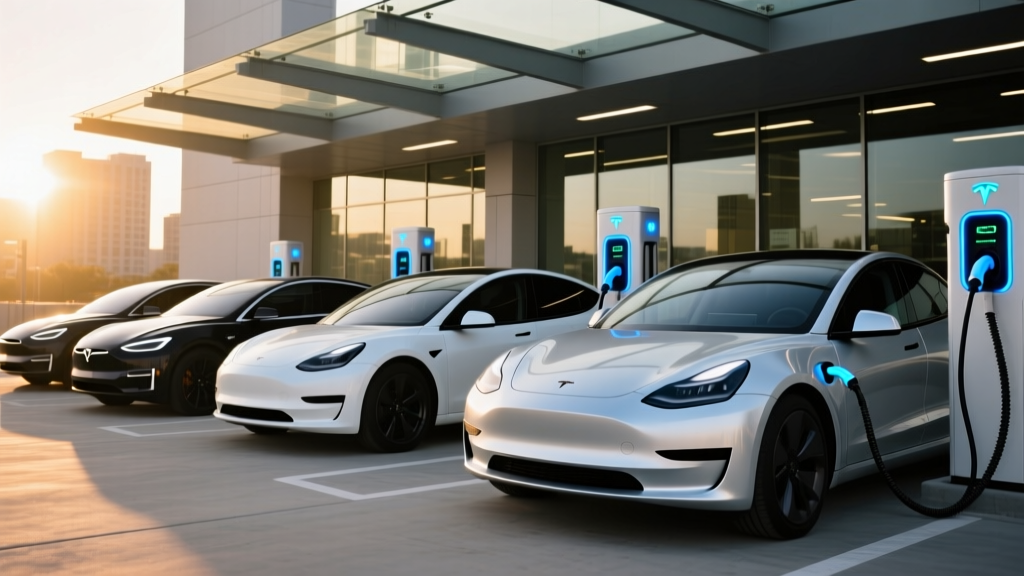
If you're researching Tesla ownership, one question dominates the decision: how fast can you charge a Tesla in real-world conditions? The answer depends on which model you buy, which battery chemistry it carries, and where you plug in. Tesla's Supercharger network remains the gold standard for public DC fast charging, but peak kilowatt (kW) numbers on a spec sheet don't tell the full story. Charge curves, battery temperature, and state of charge (SoC) all shape the actual minutes you'll spend at a stall.
Below is a complete breakdown of every current Tesla model's charging performance, from the refreshed Model 3 to the Cybertruck, alongside the range, efficiency, and ownership data you need to make an informed purchase.
| Model / Trim | Battery (kWh usable) | Chemistry | EPA Range | Peak DC kW | 10–80% Time | Level 2 Rate | 0–60 mph | HP |
|---|---|---|---|---|---|---|---|---|
| Model 3 RWD | ~57 | LFP | 272 mi | 170 kW | ~25 min | 11.5 kW (30 mi/hr) | 5.8 s | 283 |
| Model 3 Long Range AWD | ~75 | NMC | 341 mi | 250 kW | ~22 min | 11.5 kW (44 mi/hr) | 4.2 s | 346 |
| Model 3 Performance | ~75 | NMC | 315 mi | 250 kW | ~22 min | 11.5 kW (44 mi/hr) | 2.9 s | 510 |
| Model Y Long Range AWD | ~75 | NMC | 320 mi | 250 kW | ~23 min | 11.5 kW (42 mi/hr) | 4.8 s | 384 |
| Model Y Performance | ~75 | NMC | 298 mi | 250 kW | ~23 min | 11.5 kW (42 mi/hr) | 3.5 s | 510 |
| Model S Long Range | ~95 | NMC | 402 mi | 250 kW | ~27 min | 11.5 kW (52 mi/hr) | 3.1 s | 670 |
| Model S Plaid | ~95 | NMC | 396 mi | 250 kW | ~27 min | 11.5 kW (52 mi/hr) | 1.99 s | 1,020 |
| Model X Long Range | ~95 | NMC | 348 mi | 250 kW | ~28 min | 11.5 kW (45 mi/hr) | 3.8 s | 670 |
| Cybertruck AWD | ~123 | NMC | 340 mi | 250 kW | ~30 min | 11.5 kW (44 mi/hr) | 4.1 s | 600 |
Understanding Tesla's Charging Architecture: kW vs. kWh
Before dissecting each model, let's clear up the most common EV confusion: the difference between kW and kWh. A kilowatt-hour (kWh) measures energy capacity — think of it as the size of your fuel tank. A kilowatt (kW) measures power flow — how quickly energy moves into that tank. A Tesla Model 3 Long Range with a ~75 kWh battery charging at a peak of 250 kW is filling up very fast, but only for a portion of the session.
Tesla's Supercharger network currently maxes out at 250 kW at V3 stalls and up to 350 kW at newer V4 installations, though no current Tesla vehicle can accept a full 350 kW. The Cybertruck's 800-volt architecture positions it closest to leveraging higher-rate infrastructure, but as of the 2026 model year, its onboard charge acceptance peaks around 250 kW at V3 stalls. The practical ceiling for most Teslas at a Supercharger is 250 kW, and even that is a peak — not a sustained rate.
The EPA range figures above assume mixed driving at moderate temperatures. In real-world highway testing at 70–75 mph, expect to lose 10–15% from the EPA sticker. In cold weather (below 32°F / 0°C), range drops 20–30% depending on cabin heating demand and whether you precondition the battery. A Model 3 Long Range rated at 341 miles EPA may deliver ~290 miles on a summer highway trip and as little as ~240 miles in freezing conditions with no preconditioning.
DC Fast Charging Deep Dive: What the Charge Curve Really Looks Like
Tesla advertises 10–80% charging times, and for good reason: the final 20% of any lithium-ion charge session takes disproportionately long due to the constant-voltage taper phase. Here's what actually happens at a 250 kW V3 Supercharger when you arrive with a preconditioned battery at roughly 10% SoC:
| SoC Window | Approximate kW | Cumulative Time | What's Happening |
|---|---|---|---|
| 10–30% | 200–250 kW (peak) | 0–6 min | Maximum charge rate; battery accepts power aggressively |
| 30–50% | 150–190 kW | 6–12 min | First taper step; still very fast |
| 50–70% | 100–140 kW | 12–18 min | Moderate taper; thermal management active |
| 70–80% | 60–90 kW | 18–23 min | Significant taper to protect cell longevity |
| 80–90% | 30–50 kW | 23–35 min | Slow charge; avoid unless necessary for trip |
| 90–100% | 10–25 kW | 35–55+ min | Cell balancing; only for LFP calibration |
The key takeaway: Tesla's published 10–80% times are achievable when you navigate to a Supercharger using the car's built-in navigation (which triggers battery preconditioning). Arriving at a charger with a cold battery — say, pulling into a stall without preconditioning on a 40°F morning — can add 10–15 minutes to your session as the pack warms to optimal charging temperature.
LFP vs. NMC: How Chemistry Changes Your Charging Routine
The base Model 3 RWD uses a lithium iron phosphate (LFP) battery, while Long Range and Performance variants across the lineup use nickel manganese cobalt (NMC) chemistry. This matters for daily charging habits:
- LFP (Model 3 RWD): Tesla recommends charging to 100% regularly — at least once a week — for accurate state-of-charge calibration. LFP cells tolerate full charges better and offer longer cycle life, though with lower energy density (hence the smaller pack and shorter range).
- NMC (Long Range, Performance, S, X, Cybertruck): Daily charging to 80–90% is recommended for longevity. Charge to 100% only when you need the full range for a trip. NMC offers higher energy density but degrades faster if held at high SoC for extended periods.
At DC fast chargers, LFP cells tend to sustain slightly lower peak kW but maintain a flatter curve through the mid-range. NMC cells hit higher peaks but taper more aggressively past 50% SoC. In practice, the 10–80% times are similar within a given pack size class.
Home Charging: Level 2 Speeds and Installation Realities
Most Tesla owners do 80–90% of their charging at home. Tesla's Mobile Connector and Wall Connector both deliver Level 2 AC charging, but the actual speed depends on your home's electrical capacity and the onboard charger's acceptance rate.
| Equipment | Circuit Required | Max kW Delivered | Miles of Range per Hour | Full Charge Time (75 kWh Pack) |
|---|---|---|---|---|
| Tesla Wall Connector (48A) | 60A breaker | 11.5 kW | ~44 mi/hr | ~7 hours |
| Tesla Wall Connector (32A) | 40A breaker | 7.7 kW | ~30 mi/hr | ~10 hours |
| Mobile Connector (NEMA 14-50) | 50A breaker | 9.6 kW | ~37 mi/hr | ~8 hours |
| Mobile Connector (120V standard) | 15A/20A outlet | 1.4–1.9 kW | ~3–5 mi/hr | ~40–55 hours |
Every current Tesla has an 11.5 kW onboard AC charger, meaning even if your Level 2 station can deliver 19.2 kW (80A), the car will only accept 11.5 kW. For most owners, a 60-amp circuit with the Tesla Wall Connector provides the fastest practical home charge, adding roughly 44 miles of range per hour of charging — enough to fully replenish any Tesla overnight.
Installation costs vary widely. A straightforward Wall Connector install near your electrical panel typically runs $500–$1,500 including the unit, wiring, and electrician labor. If your home needs a panel upgrade from 100A to 200A service, add $1,500–$3,500. Always get a quote from a licensed electrician before committing.
Range, Efficiency, and Real-World Ownership Numbers
Charging speed only matters if you know how far each kilowatt-hour takes you. Tesla's efficiency remains among the best in the industry, thanks to strong thermal management, low rolling-resistance tires, and aerodynamic optimization (the refreshed Model 3 achieves a drag coefficient of approximately 0.219 Cd).
| Model | MPGe (combined) | kWh/100 mi | Cargo (rear seats up) | Cargo (rear seats folded) | Front Trunk |
|---|---|---|---|---|---|
| Model 3 RWD | 132 MPGe | 25 | 23 cu ft | — | 3.1 cu ft |
| Model 3 Long Range | 134 MPGe | 25 | 23 cu ft | — | 3.1 cu ft |
| Model Y Long Range | 122 MPGe | 28 | 30 cu ft | 76 cu ft | 4.1 cu ft |
| Model S Long Range | 120 MPGe | 28 | 28 cu ft | — | — |
| Model X Long Range | 108 MPGe | 31 | 42 cu ft | 92 cu ft | — |
| Cybertruck AWD | ~76 MPGe | ~44 | 67 cu ft (bed) | — | 7.0 cu ft (frunk) |
Efficiency data sourced from fueleconomy.gov. The Model 3's ~25 kWh/100 mi figure means a full 75 kWh pack (Long Range) yields roughly 300 real-world miles in mixed driving — close to its EPA rating. The Cybertruck's boxy shape and heavy curb weight push consumption to ~44 kWh/100 mi, making it the least efficient Tesla by a wide margin and the slowest to charge on a miles-per-minute basis despite its large pack.
Pricing, Trims, and Federal Tax Credit Eligibility
Tesla's pricing has shifted multiple times over the past two years. Below are 2026 model-year MSRPs as of the latest available data. The federal EV tax credit under IRS §30D remains a major purchase factor, but eligibility is not universal.
| Model / Trim | Base MSRP | As-Tested (typical config) | §30D Credit Eligible? | Effective Price (with credit) |
|---|---|---|---|---|
| Model 3 RWD | $38,990 | $39,990 | Up to $7,500 | ~$31,490 |
| Model 3 Long Range AWD | $42,990 | $45,990 | Up to $7,500 | ~$35,490 |
| Model 3 Performance | $52,990 | $54,990 | Up to $7,500 | ~$45,490 |
| Model Y Long Range AWD | $44,990 | $47,990 | Up to $7,500 | ~$37,490 |
| Model Y Performance | $49,990 | $52,990 | Up to $7,500 | ~$42,490 |
| Model S Long Range | $79,990 | $84,990 | No (MSRP cap) | $79,990+ |
| Model X Long Range | $79,990 | $86,990 | No (MSRP cap) | $79,990+ |
| Cybertruck AWD | $79,990 | $84,990 | No (MSRP cap) | $79,990+ |
- MSRP cap: Sedans (Model 3) must be under $55,000; SUVs/pickups (Model Y, Cybertruck) under $80,000. Model S, X, and Cybertruck trims above $80,000 do not qualify.
- Buyer income cap: Modified AGI must not exceed $150,000 (single), $225,000 (head of household), or $300,000 (joint filers).
- Battery sourcing: Critical minerals and battery components must meet phased-in percentage thresholds from U.S. or free-trade-agreement countries. Tesla's North American battery production has expanded significantly, but verify current-year compliance on IRS.gov's qualified vehicle list.
- Point-of-sale transfer: You can transfer the credit to the dealer at purchase for an immediate price reduction, rather than waiting to claim it on your tax return.
- Consult a tax professional — rules change annually, and individual circumstances vary.
Warranty, Tech, and Driver-Assistance Systems
Tesla's warranty coverage is competitive but not class-leading. Every 2026 Tesla includes:
- Basic vehicle warranty: 4 years / 50,000 miles
- Battery & drive unit warranty: 8 years / 100,000 miles (Model 3 RWD) or 8 years / 120,000 miles (Long Range, Performance, S, X) — whichever comes first, with a minimum 70% capacity retention guarantee
On the technology front, every Tesla ships with a 15.4-inch center touchscreen (Model 3/Y) or 17-inch (Model S/X) running Tesla's proprietary infotainment OS. There is no Apple CarPlay or Android Auto — a dealbreaker for some buyers. Over-the-air updates continuously add features, and the built-in navigation is tightly integrated with Supercharger routing and battery preconditioning.
Tesla's Autopilot (standard) and Full Self-Driving Supervised ($8,000 option or $99/month subscription) are both SAE Level 2 driver-assistance systems. This means the driver must remain fully engaged, hands on the wheel (or torque-confirmed), and eyes on the road at all times. These systems do NOT make the vehicle self-driving. Only Level 4 robotaxi services like Waymo operate without a human driver in geofenced areas.
FSD Supervised handles highway lane changes, on/off-ramp navigation, and city-street turns with traffic-light recognition. It's impressive but imperfect — expect occasional phantom braking, missed lane markings in construction zones, and conservative behavior at complex intersections. Safety ratings from NHTSA and crash-test results from IIHS show Tesla vehicles performing well in structural crashworthiness, though active-safety claims should always be evaluated against independent data rather than manufacturer marketing.
Pros, Cons, and Who Should Buy a Tesla
- Supercharger network — the most reliable and widespread DC fast-charging ecosystem in North America
- Industry-leading efficiency (kWh/100 mi) translates to more real-world miles per charge
- Over-the-air updates continuously improve the vehicle post-purchase
- Strong resale value relative to most EV competitors
- Model 3 and Model Y qualify for up to $7,500 federal tax credit (subject to eligibility)
- Extensive cargo space in Model Y and Model X with practical frunk storage
- No Apple CarPlay or Android Auto support
- Panel gaps and paint quality remain inconsistent across Fremont and Austin production
- Service center wait times can stretch weeks in high-density markets
- FSD Supervised is expensive and still requires full driver attention (Level 2 only)
- Model S, X, and Cybertruck exceed §30D MSRP caps — no federal tax credit
- LFP pack in Model 3 RWD means shorter range and slower peak DC charging
Who Each Tesla Model Suits Best
- Model 3 RWD: Budget-conscious commuters who charge at home daily and rarely road-trip beyond 200 miles. The LFP battery rewards daily 100% charging and offers exceptional cycle longevity.
- Model 3 Long Range: The sweet-spot sedan for mixed commuters and road-trippers. 341 miles EPA with 250 kW DC charging handles most trips with a single 20-minute stop.
- Model 3 Performance: Driving enthusiasts who want sports-car acceleration (2.9s to 60) in a practical electric sedan with adaptive damping and track mode.
- Model Y Long Range: Families needing crossover cargo space (76 cu ft with seats folded), decent range, and tax-credit pricing. The best-selling EV in America for good reason.
- Model S / X: Luxury buyers who want flagship range (402 mi for S), air suspension, and premium space — and who don't need a federal tax credit to justify the purchase.
- Cybertruck: Truck buyers prioritizing novelty, stainless-steel durability, and V2L capability — but who accept poor efficiency and limited charging infrastructure compatibility (NACS-only, no CCS adapters for most networks).
Tesla vs. Key Competitors: Charging Speed Comparison
How does Tesla's charging speed stack up against rival EVs? The Hyundai Ioniq 5 and Kia EV6 (both on 800V architecture) can accept up to 350 kW at compatible chargers, achieving 10–80% in roughly 18 minutes — about 4–5 minutes faster than a Tesla Model 3 Long Range. The Porsche Taycan peaks at 270 kW but sustains that rate longer through its 800V system. However, Tesla's advantage lies not in peak kW but in network density: over 6,500 Supercharger stations in North America with 99%+ uptime, versus the still-inconsistent reliability of third-party CCS networks.
If charging speed is your absolute top priority and you live near Electrify America or Ionity 350 kW stations, the Ioniq 5 or EV6 may shave meaningful minutes off road-trip stops. If network reliability and seamless plug-and-charge integration matter more, Tesla's ecosystem remains unmatched in 2026.
Frequently Asked Questions
How fast can you charge a Tesla at a Supercharger?
At a V3 Supercharger (250 kW), most Long Range and Performance Teslas achieve 10–80% in 22–28 minutes with a preconditioned battery. The base Model 3 RWD with its smaller LFP pack peaks at ~170 kW and takes about 25 minutes for the same window. V4 Supercharger stalls are rolling out with higher capacity, but Tesla vehicles currently cap at ~250 kW acceptance.
How long does it take to charge a Tesla at home?
Using a Tesla Wall Connector on a 60-amp circuit (11.5 kW), expect roughly 7 hours for a 75 kWh pack (Model 3/Y Long Range) or about 9 hours for the 95 kWh pack in the Model S/X. A standard 120V household outlet adds only 3–5 miles of range per hour and is suitable only for overnight trickle charging of low-mileage commuters.
Does charging to 100% damage the Tesla battery?
For NMC batteries (Long Range, Performance, S, X), regularly charging to 100% and leaving the car at full SoC accelerates degradation. Tesla recommends 80–90% daily and 100% only for trips. For LFP batteries (Model 3 RWD), Tesla recommends charging to 100% at least weekly for SoC calibration — LFP chemistry tolerates full charges much better.
Is Tesla's Supercharger network open to other EVs?
Yes. As of 2026, Tesla has opened thousands of Supercharger stalls to non-Tesla EVs equipped with NACS connectors or CCS-to-NACS adapters, through the "Charge My EV" integration. However, Tesla vehicles still enjoy the most seamless experience: automatic plug-and-charge billing, integrated navigation routing, and battery preconditioning that non-Tesla vehicles cannot replicate on the network.
What is the real-world range of a Tesla?
Real-world range typically falls 10–15% below the EPA estimate during highway driving at 70+ mph. In cold weather (below freezing), expect a 20–30% reduction. A Model Y Long Range rated at 320 miles EPA will realistically deliver ~275 miles on a summer highway trip and ~225–240 miles in winter. Preconditioning the battery and using seat heaters instead of cabin air heating can recover some of that loss.
Does the Tesla Model Y still qualify for the $7,500 tax credit in 2026?
The Model Y Long Range and Performance (under the $80,000 SUV MSRP cap) remain eligible for up to $7,500 under §30D, provided the buyer meets income limits and the vehicle's battery sourcing satisfies current-year critical-mineral and component thresholds. Always verify on the IRS qualified vehicles list before purchasing, as eligibility can change with supply-chain shifts.
How much does it cost to charge a Tesla vs. buying gas?
At the U.S. average electricity rate of ~$0.17/kWh, fully charging a Model 3 Long Range (75 kWh) at home costs roughly $12.75 for ~300 real-world miles — about $0.04/mile. A comparable gas sedan at 30 MPG with $3.30/gallon fuel costs ~$0.11/mile. Supercharger pricing varies by location and time of day ($0.25–$0.50/kWh typical), making public charging more expensive than home charging but still generally cheaper than gasoline per mile.