Quick Verdict: Is the Toyota bZ4X the Right SUV EV for You?
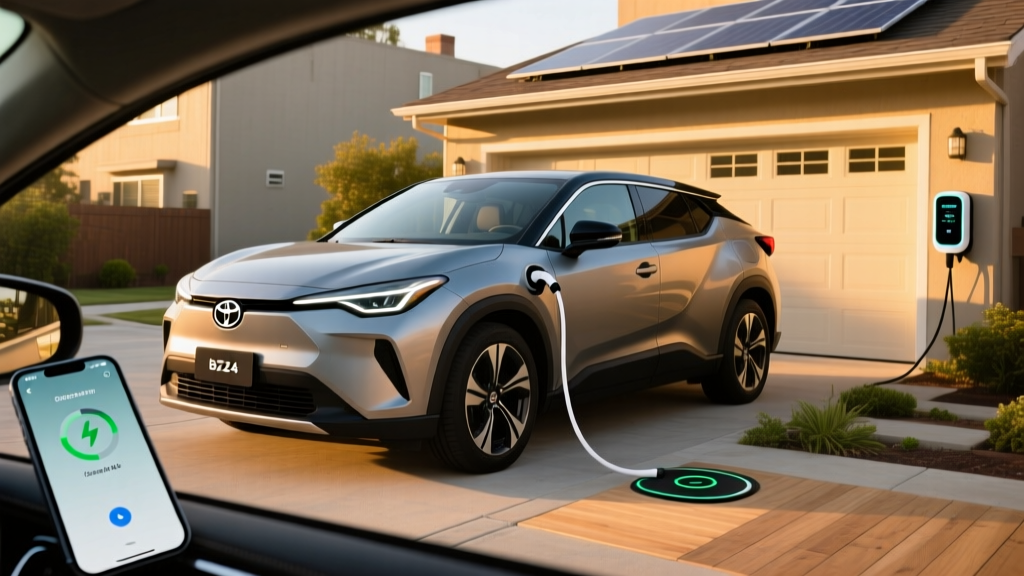
If you're searching for a Toyota SUV EV in 2026, the bZ4X is Toyota's only all-electric SUV currently on sale. The 2026 FWD model delivers an EPA-estimated 252 miles of range, DC fast-charges at up to 150 kW (10–80% in roughly 30 minutes), and starts at $38,465 before incentives. It's a competent, conservative choice for buyers who want Toyota's reliability reputation in an electric package — but it trails rivals like the Hyundai Ioniq 5 and Tesla Model Y in charging speed and interior space. If you drive under 200 miles daily, have Level 2 home charging, and prioritize build quality over cutting-edge EV tech, the bZ4X fits. If you road-trip frequently or need 300+ miles of range, look elsewhere or consider Toyota's RAV4 Prime PHEV instead.
2026 Toyota bZ4X Specifications at a Glance
| Specification | FWD | AWD |
|---|---|---|
| EPA Range | 252 miles | 228 miles |
| Usable Battery | 71.4 kWh (NMC) | 72.8 kWh (NMC) |
| Horsepower | 201 hp | 214 hp |
| 0–60 mph | 7.1 sec | 5.8 sec |
| Peak DC Fast Charge | 150 kW | 150 kW |
| 10–80% DC Charge Time | ~30 min | ~30 min |
| Level 2 Charge Rate | 7.4 kW | 7.4 kW |
| MPGe (Combined) | 119 MPGe | 112 MPGe |
| Cargo Volume (rear seats up) | 27.7 cu ft | 27.7 cu ft |
| Starting MSRP | $38,465 | $42,565 |
| Battery Warranty | 8 years / 100,000 miles | |
Sources: EPA fueleconomy.gov, Toyota Motor Corporation 2026 spec sheets.
Real-World Range: What the EPA Sticker Doesn't Tell You
EPA Estimate: 252 miles (FWD) / 228 miles (AWD)
Real-World Highway Expectation: ~210–230 miles at 70–75 mph
Cold-Weather Expectation (below 30°F): ~170–195 miles, depending on cabin heat usage
The bZ4X uses a lithium-ion NMC (nickel manganese cobalt) battery pack. NMC chemistry offers strong energy density but is more sensitive to temperature extremes than LFP alternatives. In independent testing, the bZ4X has shown approximately 12–15% range loss at sustained highway speeds compared to its EPA combined rating. In winter conditions, expect a 20–30% reduction — common across most EVs without a heat pump.
The 2026 FWD bZ4X does not include a standard heat pump in all trims, which affects cold-climate efficiency. Toyota offers a Cold Weather Package on select trims that adds a heat pump and heated seats/steering wheel, partially mitigating winter range loss. If you live in the northern U.S., this package is a practical necessity, not a luxury.
For context, a driver commuting 40 miles round-trip in a bZ4X FWD will use roughly 16–20% of battery daily in moderate weather, leaving ample buffer for errands. A 300-mile road trip, however, will require at least one DC fast-charge stop.
Charging Speed and Infrastructure: The Honest Picture
The bZ4X's 150 kW peak DC fast-charging rate is adequate but unremarkable for 2026. Competitors like the Hyundai Ioniq 5 peak at 240 kW and achieve 10–80% in roughly 18 minutes on a 350 kW charger. The bZ4X takes about 30 minutes for the same 10–80% session.
Understanding kW vs kWh: The battery stores 71.4 kWh (energy). The charger delivers up to 150 kW (power — the rate of energy delivery). Peak kW is rarely sustained for the full session; the bZ4X's charge curve tapers significantly above 70% State of Charge (SoC), which is why the 10–80% time matters more than peak rate alone.
| Charging Level | Power | Miles Added per Hour | Use Case |
|---|---|---|---|
| Level 1 (120V household) | ~1.4 kW | ~4–5 miles/hr | Overnight top-up, emergencies |
| Level 2 (240V home/public) | 7.4 kW | ~22–25 miles/hr | Daily home charging |
| DC Fast Charge | Up to 150 kW | ~180–220 miles/hr (peak) | Road trips, quick top-ups |
Home charging reality: A full Level 2 home charge from empty takes roughly 9.5 hours. Most owners plug in overnight and wake to a full battery. Level 2 home charger installation typically costs $500–$2,000 (equipment + electrician), assuming your electrical panel has capacity. Older homes with 100-amp panels may need a $1,500–$3,000 panel upgrade.
The bZ4X uses the NACS (North American Charging Standard) connector for the 2026 model year, following Toyota's commitment to the Tesla-originated standard. This grants access to Tesla Supercharger stations via native compatibility — a significant advantage over CCS-only vehicles.
Cost Breakdown: bZ4X EV vs Gas vs Hybrid Ownership
How does the bZ4X stack up financially against a gas-powered RAV4 and the RAV4 Prime PHEV? Here's a 5-year ownership estimate assuming 15,000 miles/year, $3.50/gallon gas, and $0.14/kWh home electricity.
| Cost Category (5 years) | bZ4X FWD (EV) | RAV4 LE (Gas) | RAV4 Prime (PHEV) |
|---|---|---|---|
| Base MSRP | $38,465 | $30,425 | $44,560 |
| Estimated Federal Tax Credit | Up to $7,500* | $0 | Up to $7,500* |
| Effective Purchase Price | ~$30,965 | $30,425 | ~$37,060 |
| Fuel/Energy (5 yr, 75k mi) | ~$4,200 | ~$9,200 | ~$5,800 |
| Maintenance (5 yr) | ~$1,500 | ~$3,800 | ~$3,200 |
| Insurance (5 yr avg) | ~$9,500 | ~$7,800 | ~$8,900 |
| Estimated 5-Year Total | ~$46,165 | ~$51,225 | ~$54,960 |
*Federal §30D tax credit eligibility depends on MSRP caps, buyer income limits, battery sourcing, and critical-mineral requirements. The bZ4X's credit availability has varied by model year due to battery-component sourcing rules. Verify current eligibility at IRS.gov before purchasing. Credit can be transferred to the dealer as a point-of-sale discount as of 2024 rules.
Key takeaway: The bZ4X can match or beat the gas RAV4 on 5-year total cost, but only if you qualify for the full federal credit and charge primarily at home. Public DC fast-charging at $0.35–$0.50/kWh significantly increases operating costs and narrows the gap.
Toyota SUV EV vs Toyota Hybrids: Which Powertrain Fits Your Life?
Toyota's strongest lineup is arguably its hybrids. If you're cross-shopping a Toyota SUV EV against a Toyota hybrid, here's the decision framework:
Choose the bZ4X (full EV) if:
- You have reliable Level 2 home charging (garage or driveway with 240V access)
- Your daily driving is under 200 miles
- You want the lowest per-mile energy cost and minimal maintenance
- You qualify for the federal tax credit
- You drive in a region with moderate winters or have access to preconditioning/garage parking
Choose the RAV4 Hybrid if:
- You lack home charging access (apartment, street parking)
- You take frequent 400+ mile road trips
- You want a lower upfront price (~$30k) with no charging infrastructure needs
- You live in an extreme cold climate where EV range loss is a daily concern
Choose the RAV4 Prime (PHEV) if:
- You want 42 miles of electric-only range for daily commuting plus gas flexibility for road trips
- You can charge at home but also want zero range-anxiety for long drives
- You're willing to pay a premium (~$44,500 MSRP) for the best of both worlds
Common Misconceptions About the Toyota bZ4X
| Myth | Fact |
|---|---|
| "The bZ4X battery will need replacing in 5 years." | Toyota warranties the battery for 8 years/100,000 miles with a capacity retention threshold of 70%. NMC batteries typically retain 85–90% capacity at 100,000 miles in moderate climates. |
| "EVs cost more to insure than gas cars." | Partially true: EV insurance averages 15–25% higher due to repair costs and battery replacement risk. However, the gap has narrowed as EV parts availability improves. |
| "I can't road-trip in a bZ4X." | You can, but plan for one charge stop per 180–200 miles of highway driving. With NACS compatibility, Tesla Supercharger access improves route flexibility. |
| "The bZ4X qualifies for the full $7,500 tax credit for everyone." | The §30D credit has income caps ($150k single / $300k joint), MSRP caps ($80k for SUVs), and battery-sourcing requirements. Eligibility changes as supply chains shift — always verify at purchase time. |
| "Charging an EV takes too long." | Home Level 2 charging happens while you sleep (9.5 hours for a full charge). Road-trip DC fast-charging adds ~150 miles in 20 minutes — enough time for a rest stop. |
What First-Time EV Buyers Must Know Before Purchasing the bZ4X
1. Home charging is the foundation. Relying solely on public charging is expensive and inconvenient. Budget $500–$2,000 for a Level 2 home charger installation. Confirm your electrical panel has a spare 40-amp breaker slot before purchasing.
2. Precondition the battery. The bZ4X supports battery preconditioning — warming the pack before a DC fast-charge session to maximize charge speed. Use the navigation system to route to a charger, which triggers preconditioning automatically. Skipping this step can add 10–15 minutes to your charge time in cold weather.
3. Plan for the charge-curve taper. DC fast-charging is fastest between 10–60% SoC. Above 80%, charge speed drops dramatically (often below 50 kW) to protect battery health. On road trips, it's faster to charge to 80% and resume driving than to wait for a full charge.
4. Regenerative braking takes adjustment. The bZ4X offers adjustable regen levels, but it does not provide true one-pedal driving in all modes. Expect a learning curve if you're coming from a Tesla or Nissan Leaf.
5. Software and OTA updates matter. Toyota's infotainment system has drawn criticism for being less responsive than competitors. Test-drive the 2026 system before committing, and ask the dealer about over-the-air (OTA) update capability.
Pros and Cons: The Honest Assessment
Pros
- Toyota reliability reputation and strong dealer network
- NACS connector = native Tesla Supercharger access
- Comfortable ride quality and low cabin noise
- Competitive pricing after potential tax credit
- 8-year/100,000-mile battery warranty
- Standard Toyota Safety Sense 3.0 (ADAS suite)
Cons
- 252-mile max range trails key rivals (Ioniq 5: 303 mi, Model Y: 320 mi)
- 150 kW peak charge rate is slow for 2026 standards
- 27.7 cu ft cargo space is below segment average
- No heat pump standard on all trims
- Infotainment system lags competitors in responsiveness
- AWD range drops to just 228 miles
Frequently Asked Questions
Does the Toyota bZ4X qualify for the federal EV tax credit in 2026?
Credit eligibility depends on current-year battery sourcing, critical-mineral requirements, buyer income, and MSRP caps under IRS §30D rules. The bZ4X's credit status has shifted across model years as Toyota adjusts its supply chain. Confirm eligibility with your dealer and a tax professional at the time of purchase. If eligible, the credit can be applied as a point-of-sale reduction.
How does the bZ4X compare to the Subaru Solterra?
The bZ4X and Solterra share the same e-TNGA platform and battery architecture. The Solterra offers standard AWD and slightly more ground clearance (8.3 inches vs 8.1), but range figures and charging speeds are nearly identical. Choose based on styling preference, dealer proximity, and pricing at your local showroom.
Can I tow with the Toyota bZ4X?
The 2026 bZ4X is not rated for towing in the U.S. market. If you need an electric SUV with towing capability, consider the Hyundai Ioniq 5 (up to 2,300 lbs) or the Ford F-150 Lightning for heavier loads.
What is the battery replacement cost for the bZ4X?
Out-of-warranty battery replacement is estimated at $12,000–$18,000 including labor, based on current NMC pack pricing. However, most owners will never need a full replacement — degradation to 80% capacity typically takes 150,000–200,000+ miles under normal use.
Is the bZ4X's driver-assist system self-driving?
No. Toyota Safety Sense 3.0 is an SAE Level 2 driver-assistance system. It provides adaptive cruise control and lane-centering, but the driver must remain fully engaged with hands on the wheel and eyes on the road at all times. It is not autonomous driving.
How does cold weather affect the bZ4X?
Expect 20–30% range loss in sustained sub-30°F temperatures, primarily from battery chemistry limitations and cabin heating demands. The optional Cold Weather Package with heat pump reduces this penalty. Garage parking and preconditioning while plugged in are the most effective mitigation strategies.
Final Considerations
The 2026 Toyota bZ4X occupies a specific niche in the EV SUV market: it's the conservative, reliability-first choice from a brand with decades of hybrid expertise. It won't win range or charging-speed comparisons, but it delivers a comfortable, practical daily driver with Toyota's warranty backing and growing NACS charging access.
For buyers who want maximum range and fastest charging, the Hyundai Ioniq 5 or Tesla Model Y remain segment leaders. For buyers who prioritize brand trust, dealer support, and a proven ownership experience — and whose daily driving fits within ~200 miles — the bZ4X is a rational, well-priced entry into EV ownership. Test-drive it with your actual commute in mind, verify tax-credit eligibility before signing, and invest in proper home charging infrastructure from day one.