How an Electric Vehicle Works — The Short Answer
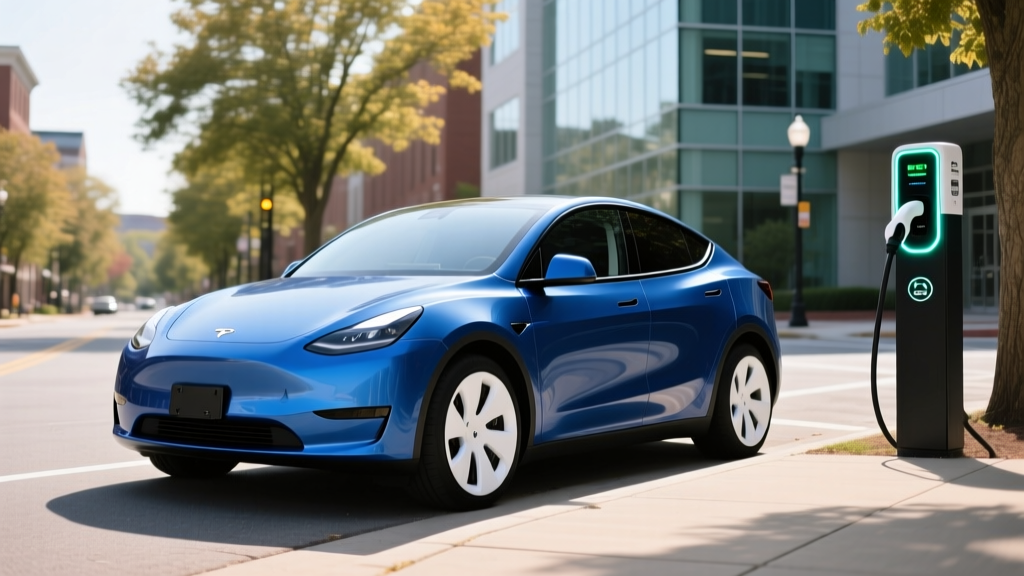
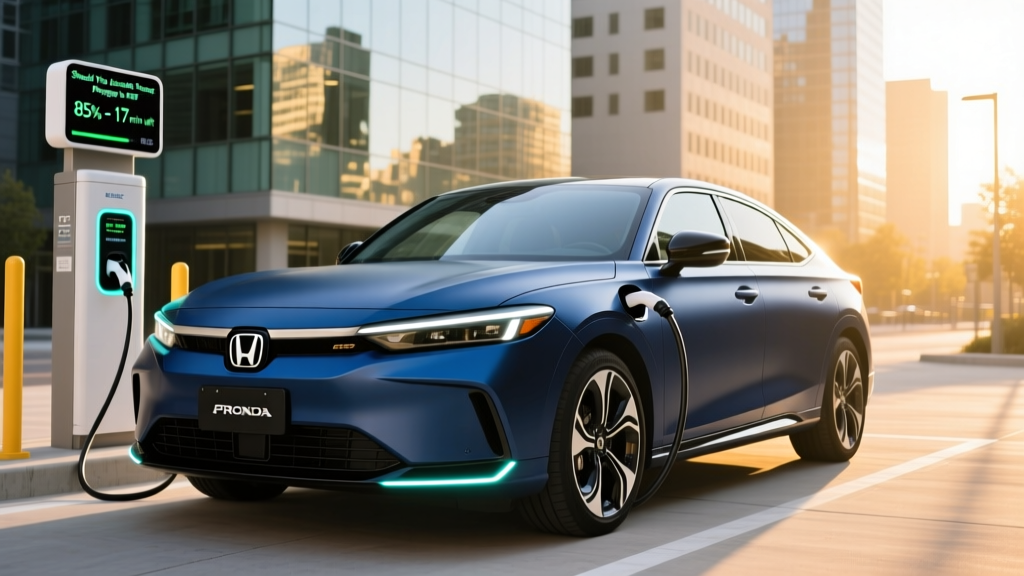
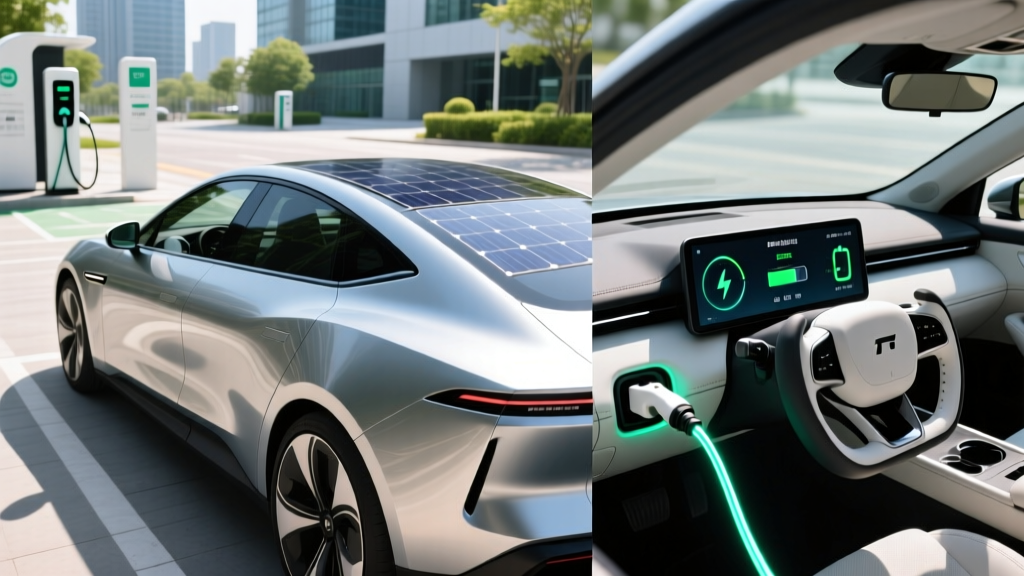
An electric vehicle works by storing energy in a high-voltage lithium-ion battery pack (measured in kWh — kilowatt-hours, the unit of energy capacity). That battery feeds electricity to one or more electric motors that convert it directly into wheel rotation — no combustion, no multi-speed transmission, no exhaust system. When you lift off the accelerator, the motor reverses direction and acts as a generator, converting kinetic energy back into electricity to recharge the battery (regenerative braking). You plug the car into an external power source — a wall outlet, a home Level 2 charger, or a public DC fast charger — to replenish the battery.
Unlike a gas car that wastes roughly 60-70% of its fuel energy as heat, an EV converts about 85-90% of its stored electrical energy into motion. That fundamental efficiency advantage is why EVs cost significantly less per mile to "fuel" — typically 3 to 5 cents per mile on home electricity versus 12 to 16 cents per mile for a 25 MPG gas car at $3.50/gallon.
The Core Components: What's Actually Under the Hood
Open the hood of a battery-electric vehicle (BEV) and you won't find an engine block. Instead, the major systems are:
Battery Pack (kWh capacity): The largest and most expensive component. A 2026 Tesla Model Y Long Range carries a ~75 kWh usable NMC (nickel-manganese-cobalt) pack, while a base Tesla Model 3 Rear-Wheel Drive uses a ~57.5 kWh LFP (lithium iron phosphate) pack. Chemistry matters: NMC offers higher energy density (more range in a lighter package) but degrades faster if routinely charged to 100%; LFP is heavier and less energy-dense but tolerates daily 100% charging and typically lasts longer. Battery packs sit low in the chassis, giving EVs a low center of gravity.
Electric Motor(s): Permanent-magnet synchronous motors (PMSM) or induction motors convert electrical energy into torque instantly — maximum torque from 0 RPM, which is why EVs feel punchy off the line. A 2026 Hyundai Ioniq 5's single rear motor produces 168 kW (225 hp); the dual-motor AWD variant pushes 325 hp. No gears to shift — most EVs use a single-speed reduction gear.
Inverter: Converts the battery's DC (direct current) electricity into the AC (alternating current) the motor requires. It also controls motor speed and torque response.
Onboard Charger: Manages AC charging from a home Level 2 station or wall outlet, converting household AC to DC for the battery. Typical onboard chargers handle 7.2 kW to 11.5 kW of AC power.
Thermal Management System: Liquid cooling loops keep the battery in its optimal temperature range (~68-86°F / 20-30°C). This system is critical for battery longevity and fast-charging speed — a cold battery charges far slower and delivers less range.
12V Auxiliary Battery: A small lead-acid or lithium 12V battery powers the lights, infotainment, and computers — just like a gas car. If it dies, the car won't start even if the main pack is full.
EV vs Gas Car: How the Numbers Actually Compare
The efficiency gap between electric and gasoline drivetrains is the single biggest driver of operating-cost differences. Here's how a mainstream EV stacks up against a comparable gas compact SUV, using 2026 EPA data:
| Metric | Hyundai Ioniq 5 RWD | Toyota RAV4 AWD (Gas) |
|---|---|---|
| EPA Fuel Economy | 117 MPGe combined | 30 MPG combined |
| Energy per 100 miles | 29 kWh | 3.33 gallons |
| Cost per 100 miles (home charging / $3.50 gas) | $3.77 (at $0.13/kWh) | $11.66 |
| Annual fuel cost (12,000 mi) | ~$452 | ~$1,399 |
| Annual fuel savings (EV) | ~$947/year | |
| 0-60 mph | 7.4 seconds | 8.1 seconds |
| EPA Range / Tank Range | 303 miles | ~408 miles (14.5 gal) |
| Maintenance cost (annual avg) | ~$300 (no oil, plugs, timing belt) | ~$650 |
The Ioniq 5 saves roughly $1,300 per year in combined fuel and maintenance costs. Over five years, that's approximately $6,500 in savings — a meaningful offset to the EV's higher purchase price. Note: these figures assume home charging at the US average residential rate of ~$0.13/kWh. Public DC fast charging at $0.35-$0.50/kWh narrows the gap considerably.
Real Costs of EV Ownership: A 5-Year Breakdown
Purchase price is only one variable. Here's a realistic five-year ownership cost comparison for a mainstream electric crossover versus a gas equivalent, assuming 12,000 miles/year, 80% home / 20% public charging, and the current federal §30D clean vehicle credit where applicable:
| Category | EV (e.g., Ioniq 5 SEL ~$47,000 MSRP) | Gas (e.g., RAV4 XLE ~$33,500 MSRP) |
|---|---|---|
| Purchase price (after incentives) | ~$47,000 (credit eligibility varies) | $33,500 |
| Federal tax credit (§30D, if eligible) | −$0 to −$7,500 (see IRS rules) | $0 |
| Home Level 2 charger install | $800–$2,000 (one-time) | $0 |
| 5-year fuel/energy cost | ~$2,800 (80% home / 20% DCFC) | ~$6,995 |
| 5-year maintenance | ~$1,500 | ~$3,250 |
| 5-year insurance (avg) | ~$10,500 (EV premiums ~15-25% higher) | ~$8,400 |
| Estimated 5-year depreciation | ~$18,800 (40%) | ~$14,400 (43%) |
| Total 5-year cost (approx.) | ~$42,800 – $49,300 | ~$47,745 – $52,145 |
Key takeaways: The EV's higher insurance premiums (~$2,100 more over 5 years) and possible home charger installation partially offset fuel and maintenance savings. If you qualify for the full §30D credit, the EV's total cost can drop below the gas car's. If you don't qualify (income above caps: $150K single / $300K joint, or vehicle MSRP above $55K for cars / $80K for SUVs and trucks), the gas car may still be cheaper upfront. Always verify current eligibility on IRS.gov — battery sourcing and critical mineral requirements change annually.
Charging in Practice: What First-Time Buyers Must Know
Charging speed is measured in kW (kilowatts — the rate of power delivery), while battery capacity is measured in kWh (kilowatt-hours — the total energy stored). Think of kW as the size of the hose and kWh as the size of the bucket.
| Level | Power (kW) | Miles Added per Hour | Use Case | Full Charge Time (75 kWh pack) |
|---|---|---|---|---|
| Level 1 (120V household) | 1.0–1.4 kW | 3–5 mi/hr | Overnight trickle; low-mileage drivers | ~55–75 hours |
| Level 2 (240V home/public) | 7.2–11.5 kW | 25–44 mi/hr | Daily home charging; workplace | ~7–10 hours |
| DC Fast Charging | 50–350 kW | 150–1,000+ mi/hr (peak) | Road trips; rapid top-ups | 10–80% in 18–40 min |
Home charging is the backbone of EV ownership. Roughly 80-90% of all EV charging happens at home. A Level 2 home charger (240V, 40-48 amp circuit) adds 25-40 miles of range per hour of charging — more than enough to fully replenish a daily commute overnight. Professional installation of a Level 2 station typically costs $800–$2,000 if your electrical panel has spare capacity. If you need a panel upgrade (from 100A to 200A service), add $1,500–$3,500.
The charging curve matters. When manufacturers advertise "peak 240 kW DC fast charging," that speed only applies at a low state of charge (typically 10-30%). As the battery fills, the charge rate tapers to protect cell health. A 2026 Ioniq 5 peaks at ~240 kW but averages closer to ~150 kW across a 10-80% session, completing it in roughly 18 minutes under ideal conditions. In cold weather (below 40°F), add 5-10 minutes unless the car has preconditioned the battery during navigation to the charger.
Real-world range vs. EPA sticker: The EPA range is a blended city/highway estimate. Expect to see 10-20% less range on sustained highway driving at 70+ mph, and 20-40% less in cold weather (below 25°F) due to cabin heating demands and reduced battery efficiency. A 303-mile EPA-rated Ioniq 5 may deliver ~250 miles on a winter highway road trip.
Common EV Misconceptions — Fact-Checked
| Myth | Fact (with data) |
|---|---|
| "EV batteries need replacing every few years." | Federal law requires battery warranties of at least 8 years / 100,000 miles. Most modern packs retain 85-90% capacity after 100K miles. Replacement (rare) costs $8,000–$20,000 depending on the model. |
| "EVs are worse in cold weather." | Range drops 20-40% in extreme cold, but EVs start reliably (no cold-cranking), and preconditioning while plugged in mitigates range loss. AWD EVs like the Ioniq 5 or Model Y have excellent winter traction. |
| "The electrical grid can't handle EVs." | The US grid adds EV load gradually. Most charging occurs overnight during off-peak hours when grid capacity is underutilized. Smart/managed charging further reduces peak demand. |
| "EVs produce more emissions than gas cars." | Even on coal-heavy grids, lifecycle emissions for EVs are lower than gas cars within 1-2 years of driving (EPA lifecycle analysis). On cleaner grids, the advantage is immediate. |
| "You can't take an EV on a road trip." | The US has over 200,000 public charging ports as of 2026. With 250-350 miles of range and 18-30 minute fast-charge stops, road trips require modest planning via apps like A Better Routeplanner or PlugShare. |
| "All EVs qualify for the $7,500 tax credit." | §30D eligibility requires meeting MSRP caps, buyer income limits, battery sourcing, and critical mineral requirements. Many popular EVs qualify for partial or no credit — check IRS.gov before buying. |
EV vs Hybrid vs PHEV: Which Drivetrain Fits You?
Not every buyer is ready for a full battery-electric vehicle. Here's how the three electrified options compare:
Battery Electric Vehicle (BEV): Zero tailpipe emissions, lowest per-mile fuel cost, simplest drivetrain (fewest moving parts), but requires charging access and route planning for long trips. Best for: drivers with home charging, daily commutes under 200 miles, and willingness to plan road-trip charging stops.
Plug-In Hybrid (PHEV): A smaller battery (typically 10-20 kWh) provides 25-50 miles of electric-only range, then a gas engine takes over. You can charge at home for daily driving and use gas for road trips with zero range anxiety. Best for: one-car households, apartment dwellers without reliable charging, or frequent long-distance drivers who want some electric benefit. Example: 2026 Toyota RAV4 Prime offers 42 miles EV range, 94 MPGe, and 38 MPG on gas after the battery depletes.
Hybrid (HEV): No plug — the small battery charges via regenerative braking and the gas engine. Delivers 40-55 MPG with zero behavior change. Best for: buyers who want fuel savings without any charging infrastructure. Example: 2026 Toyota RAV4 Hybrid at 40 MPG combined.
Your EV Decision Framework
Should You Buy an EV, PHEV, or Hybrid?
Choose a full EV (BEV) if:
- You have access to home or workplace Level 2 charging
- Your daily driving is under 200 miles (within most EV ranges)
- You're comfortable planning 20-30 minute DC fast-charge stops on road trips
- You want the lowest per-mile operating cost and minimal maintenance
- You qualify for federal or state incentives that offset the higher purchase price
Choose a PHEV if:
- You can install a Level 2 charger at home and your commute is under 40 miles round-trip
- You regularly take trips over 300 miles and don't want to plan charging stops
- You live in a one-vehicle household and need maximum flexibility
- You want to reduce fuel consumption 50-70% without going fully electric
Choose a hybrid (HEV) if:
- You have no access to home or workplace charging (apartment, street parking)
- You want better fuel economy with zero lifestyle or infrastructure changes
- Your budget doesn't accommodate the higher MSRP of an EV or PHEV
- You drive in an area with very limited public charging infrastructure
Wait on an EV if:
- You live in extreme cold (consistently below 0°F) and drive 300+ miles daily — current range loss makes this challenging
- Your home electrical panel needs a costly upgrade ($3,000+) and you have no workplace or public charging alternatives
- You tow heavy loads (5,000+ lbs) on long trips — EV range drops 40-50% under heavy towing
What a First-Time EV Buyer Should Do Before Purchasing
1. Audit your charging situation. Can you install a 240V outlet or Level 2 charger where you park? Check your electrical panel for a spare 40-50 amp double-pole breaker slot. If you rent or park on the street, map your nearest public Level 2 and DC fast chargers on PlugShare or the DOE's Alternative Fuels Station Locator.
2. Calculate your real-world range needs. Take your longest regular drive (commute + errands) and add a 30% buffer for cold weather and highway driving. If that number exceeds 250 miles, prioritize EVs with 300+ EPA range or plan for mid-trip charging.
3. Verify tax credit eligibility before signing. Check current §30D rules on IRS.gov. The credit has buyer income caps ($150K single, $225K head of household, $300K joint), MSRP caps ($55K cars, $80K SUVs/trucks/vans), and battery sourcing requirements that change annually. As of 2026, some credits can be transferred to the dealer at point of sale as an immediate price reduction.
4. Test-charge before you buy. Visit a DC fast charger near your home or commute route. See how the plug-in experience works, whether the charger is reliable, and how the vehicle's app handles charging status. This is the EV equivalent of a test drive for your daily routine.
5. Get an insurance quote early. EV insurance premiums run 15-25% higher than equivalent gas cars due to higher repair costs and battery replacement risk. Shop quotes from multiple insurers before committing to a purchase.
Frequently Asked Questions
How long does an EV battery actually last?
Modern lithium-ion EV batteries are designed to last the life of the vehicle. Most manufacturers warranty the battery for 8 years / 100,000 miles against dropping below 70% capacity (some warrant to 65-75%). Real-world data from high-mileage EVs shows typical degradation of 10-15% after 100,000 miles, with LFP chemistry packs generally degrading more slowly than NMC. Complete battery failure before 150,000 miles is uncommon.
Is it cheaper to charge at home or at a public DC fast charger?
Home charging is dramatically cheaper. At the US average residential electricity rate of ~$0.13/kWh, a full 75 kWh charge costs about $9.75. At a public DC fast charger charging $0.40/kWh, that same charge costs $30.00. For daily use, home charging saves roughly $1,500-$2,000 per year versus relying entirely on public DCFC.
Can I use a regular household outlet to charge an EV?
Yes — a standard 120V outlet delivers Level 1 charging at about 1.0-1.4 kW, adding 3-5 miles of range per hour. For a driver covering 30-40 miles per day, overnight Level 1 charging (10-12 hours) can be sufficient. However, for faster replenishment or longer commutes, a 240V Level 2 installation is strongly recommended.
Do EVs require oil changes or transmission service?
No. EVs have no engine oil, no spark plugs, no timing belts, and no multi-speed transmission. Routine maintenance is limited to tire rotation, cabin air filter replacement, brake fluid checks, windshield washer fluid, and wiper blades. Brake pad wear is minimal because regenerative braking handles most deceleration — some EV owners go 100,000+ miles on original brake pads.
What happens if I run out of charge on the road?
Running an EV to 0% state of charge is rare because the car provides progressive low-battery warnings, limits power, and navigation systems route you to chargers. If it happens, the car will need to be towed (flatbed preferred — towing with wheels down can damage the motor) to the nearest charger. Roadside assistance plans from AAA and manufacturers increasingly offer mobile charging or tow-to-charger service.
Are EVs safe in a crash?
EVs undergo the same NHTSA and IIHS crash testing as gas vehicles, and many score top ratings. The low-mounted battery pack gives EVs a low center of gravity, reducing rollover risk. High-voltage systems automatically disconnect in a collision. Fire risk from battery thermal runaway exists but is statistically lower per vehicle than gasoline fires in ICE vehicles, according to NHTSA data.