Quick Answer: Electric cars charge by plugging into an external power source that feeds electricity into the vehicle's battery pack. There are three charging levels: Level 1 (standard 120V outlet, ~3–5 miles of range per hour), Level 2 (240V home or public station, ~20–40 miles per hour), and DC fast charging (public stations delivering 50–350 kW, adding 100–250+ miles in 15–30 minutes). Most EV owners do 80% or more of their charging at home on Level 2, using public DC fast chargers primarily for road trips.
The Three Charging Levels Explained
Understanding how electric cars charge starts with the three standardized charging levels. Each delivers power at a different rate, measured in kilowatts (kW). Remember: kW measures the rate of energy flow (like water pressure from a hose), while kilowatt-hours (kWh) measures the total energy stored in your battery (like the size of the bucket you're filling).
| Level | Voltage | Power (kW) | Miles of Range/Hour | Typical Use Case |
|---|---|---|---|---|
| Level 1 | 120V AC | 1.0–1.9 kW | 3–5 mi/hr | Overnight top-ups, PHEVs, low-mileage drivers |
| Level 2 | 240V AC | 3.3–19.2 kW | 14–60+ mi/hr | Home charging, workplaces, shopping centers |
| DC Fast Charge | 400–800V DC | 50–350 kW | 150–1,000+ mi/hr (peak) | Road trips, highway corridors, quick top-ups |
Level 1: The Emergency Backup
Every EV comes with a Level 1 cord that plugs into a standard household 120V outlet. It's slow—expect roughly 4 miles of range per hour of charging. For a 300-mile EPA-range EV with a depleted battery, a full Level 1 charge could take 60+ hours. It's practical only for plug-in hybrids (PHEVs) with smaller batteries (10–20 kWh) or battery-electric drivers who travel under 30 miles daily and can plug in overnight.
Level 2: The Daily Workhorse
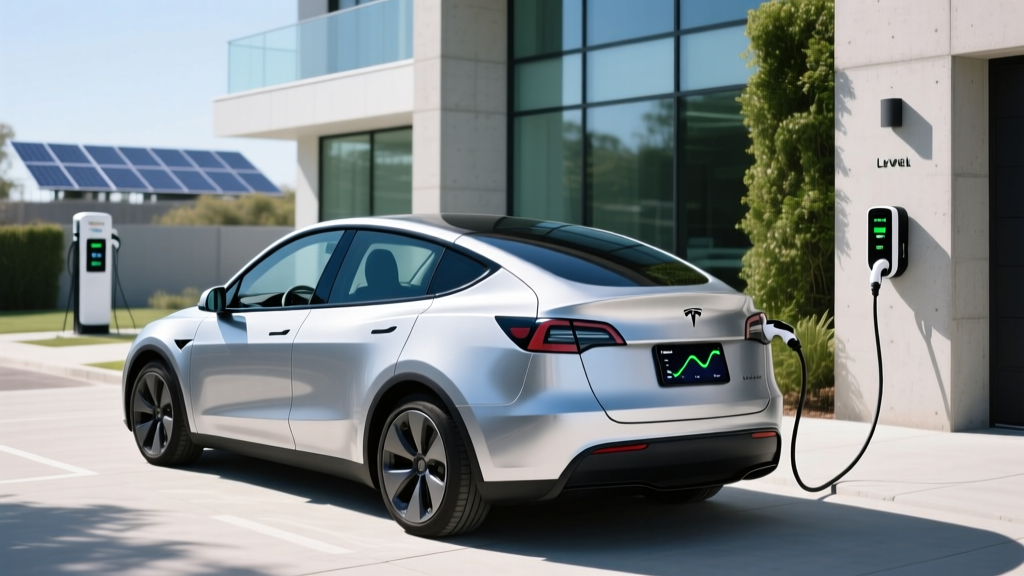
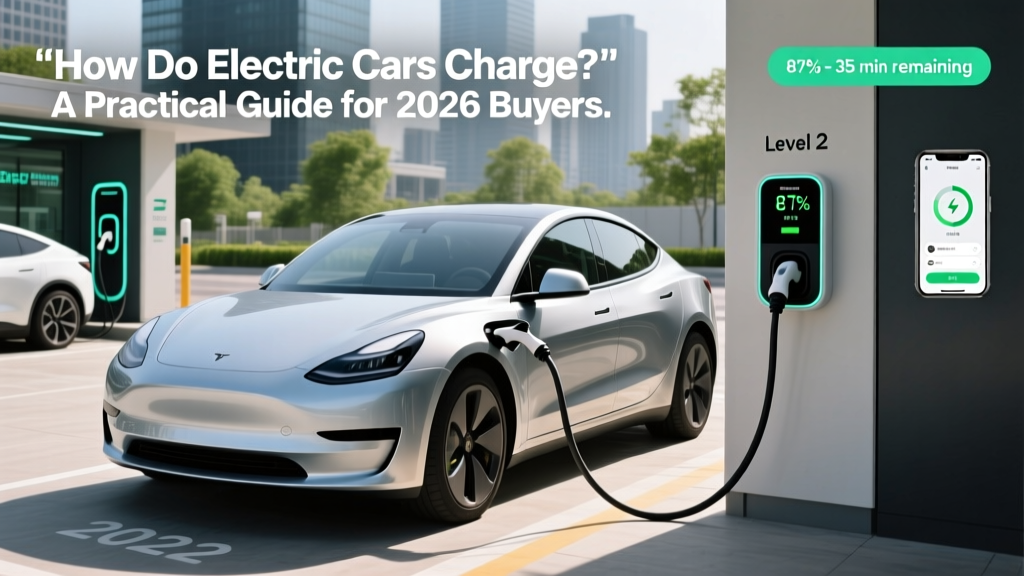
Level 2 charging requires a 240V circuit—the same type your electric dryer uses. Most home Level 2 chargers deliver 7.7 kW to 11.5 kW (32A to 48A), adding roughly 25–40 miles of range per hour. A typical 75 kWh battery (like the one in a 2026 Tesla Model Y Long Range) charges from 10% to 100% in about 7–9 hours on an 11.5 kW home charger. This means you plug in when you get home and wake up with a full battery every morning.
Home Level 2 installation typically costs $800–$2,500 total, including a quality charger ($350–$700 for units like the ChargePoint Home Flex or Emporia Level 2) plus electrician labor and permitting. If your electrical panel needs an upgrade from 100A to 200A service, add $1,500–$3,500. The federal government offers a tax credit of up to $1,000 for home charging equipment installation through the Alternative Fuel Vehicle Refueling Property Credit (IRS Form 8911), though eligibility is limited to qualified census tracts—check the IRS guidelines for your address.
DC Fast Charging: Road-Trip Essential
DC fast chargers bypass the car's onboard charger and deliver direct current straight to the battery at much higher power levels. In 2026, the US public fast-charging landscape is dominated by three networks:
- Tesla Superchargers (now open to non-Tesla EVs via NACS adapter or built-in NACS port): 150–250 kW typical, with V4 posts capable of 350+ kW
- Electrify America / EVgo / ChargePoint: CCS1 connectors at 50–350 kW, increasingly adding NACS cables
- Regional networks (e.g., EVgo, Blink): mix of 50–150 kW chargers
Real-world DC fast charging is not a flat rate. A vehicle that advertises a "peak 250 kW" charge rate will only sustain that peak for a portion of the session—typically between 10% and 50% State of Charge (SoC). Above 80%, the charge rate tapers significantly to protect battery health. This is why manufacturers quote "10–80% charge time" rather than 0–100%.
For example, a 2026 Hyundai Ioniq 5 with its 84 kWh battery and 800V architecture can peak at roughly 240 kW on a compatible charger, achieving a 10–80% charge in approximately 18 minutes under ideal conditions (battery preconditioned, warm ambient temperature). A 2026 Ford Mustang Mach-E Extended Range (91 kWh usable, NMC chemistry) peaks around 150 kW and takes roughly 30–38 minutes for the same 10–80% window.
Charging Connectors: NACS, CCS, and the 2026 Landscape
If you're shopping for an EV in 2026, the connector situation has largely consolidated around NACS (North American Charging Standard, originally developed by Tesla). Nearly every major automaker—Ford, GM, Hyundai/Kia, Rivian, BMW, and others—has adopted NACS for new vehicles starting with 2025–2026 model years.
| Connector | AC Level 2 | DC Fast Charge | Vehicles Using It (2026) |
|---|---|---|---|
| NACS (Tesla-style) | Yes | Yes | Tesla (all), Ford F-150 Lightning, GM Ultium vehicles, Hyundai Ioniq 5 (2026+), Rivian, new BMWs |
| CCS1 | Yes (with J1772 adapter) | Yes | Older model-year EVs (pre-2025), some VW ID.4, pre-adoption Hyundai/Kia models |
| CHAdeMO | N/A | Yes (legacy) | Nissan Leaf (discontinued after 2025), Mitsubishi Outlander PHEV (older) |
If you own an older CCS-equipped EV, most automakers and networks now offer CCS-to-NACS adapters (typically $150–$250) so you can access the expanded Supercharger network. When buying new in 2026, a NACS-equipped vehicle is strongly recommended for maximum charging network access.
How EV Charging Costs Compare to Gas
One of the most compelling reasons buyers ask how electric cars charge is the cost advantage. Let's break it down with concrete 2026 numbers.
| Scenario | Cost per kWh / Gallon | Cost per 300 Miles | Annual Cost (12,000 mi) |
|---|---|---|---|
| Home Level 2 (US avg electricity, $0.17/kWh) | $0.17/kWh | $15.30 | $612 |
| Public DC Fast Charging (avg $0.40/kWh) | $0.40/kWh | $36.00 | $1,440 |
| Gas car (28 MPG combined, $3.40/gal) | $3.40/gal | $36.43 | $1,457 |
| Hybrid (50 MPG combined, $3.40/gal) | $3.40/gal | $20.40 | $816 |
Assuming an average EV efficiency of 3.5 miles per kWh (roughly 120 MPGe combined, typical for a midsize crossover like the 2026 Tesla Model Y or Hyundai Ioniq 5), home charging delivers fuel savings of roughly $800–$900 per year versus a comparable gas vehicle. If you rely heavily on public DC fast charging, the savings narrow considerably—sometimes to near parity with gas. This is why home charging access is the single biggest factor in EV ownership economics.
According to fueleconomy.gov, EVs convert over 77% of electrical energy from the grid to power at the wheels, compared to 12–30% for gasoline vehicles. That efficiency gap is why even at higher public-charging electricity prices, EVs often still cost less per mile.
Real-World Charging Considerations for Buyers
Spec sheets tell one story. Daily life tells another. Here's what actually affects your charging experience:
Home Charging Access
If you own a home with a garage or dedicated parking spot near a 240V circuit (or have space to install one), you're in the ideal EV ownership scenario. Roughly 70–75% of EV owners charge primarily at home. Renters and apartment dwellers face a harder reality: shared or nonexistent charging infrastructure remains a real barrier. Before buying, confirm you have a viable home charging solution—or that your workplace and local public infrastructure can realistically meet your daily needs.
Cold Weather Impact
Battery chemistry slows down in cold temperatures. Expect 15–30% range reduction in freezing weather (below 32°F), and potentially 30–40% in extreme cold (below 0°F) due to both reduced battery efficiency and cabin heating demands. EVs equipped with a heat pump (standard on most 2026 models from Tesla, Hyundai, Kia, and GM) mitigate this somewhat, but the physics of lithium-ion cells in cold weather are unavoidable. Charging speeds also taper in cold weather until the battery warms up—this is why battery preconditioning (navigating to a charger in the car's nav system so the battery pre-heats en route) is critical for fast DC charging in winter.
Driving Patterns
If your daily commute is under 60 miles round-trip, virtually any modern EV with 250+ miles of EPA range will suit you with nightly Level 2 charging. If you regularly drive 200+ miles in a day or take frequent road trips, prioritize vehicles with faster DC charge rates (look for 200+ kW peak capability and 10–80% times under 20 minutes) and plan routes around reliable charging corridors.
Common EV Charging Myths vs. Facts
| Myth | Fact |
|---|---|
| "You can't charge an EV in the rain." | EV charging connectors and ports are weather-sealed (IP55 or higher). Charging in rain, snow, or humidity is safe and standard practice. |
| "Fast charging ruins the battery." | Modern battery management systems (BMS) carefully control charge rates and temperature. While exclusive DC fast charging can slightly accelerate degradation, studies show less than 5% additional loss over 150,000 miles compared to Level 2 charging. Most 2026 EV batteries carry 8-year/100,000-mile warranties guaranteeing 70%+ capacity retention. |
| "EVs take forever to charge." | On a 250+ kW DC fast charger, a 2026 Hyundai Ioniq 5 or Kia EV6 adds roughly 150 miles of range in 10 minutes. Home Level 2 charging happens while you sleep—zero active wait time. |
| "The power grid can't handle EVs." | Most EV charging happens overnight during off-peak hours when grid capacity is underutilized. Smart chargers and time-of-use rates actively shift load. According to the US Department of Energy, widespread EV adoption is manageable with current grid infrastructure and planned upgrades. |
| "You'll get stranded with no chargers nearby." | As of early 2026, there are over 70,000 public charging ports across the US (per the AFDC). However, rural charging deserts remain real in parts of the Mountain West, Great Plains, and rural South. Plan road trips with apps like A Better Routeplanner and verify charger availability before departure. |
EV vs. Gas vs. Hybrid: Which Makes Sense for You?
| Factor | Battery EV (BEV) | Plug-in Hybrid (PHEV) | Gas Vehicle (ICE) |
|---|---|---|---|
| Fuel cost (annual, 12k mi) | $600–$1,440 | $500–$1,000 | $1,300–$1,800 |
| Maintenance (annual) | $300–$500 | $600–$900 | $800–$1,200 |
| Home charging needed? | Strongly recommended | Helpful but optional | N/A |
| Road-trip convenience | Requires planning, 15–30 min stops | Gas backup, seamless | Seamless, 5-min fill-ups |
| Federal tax credit (2026) | Up to $7,500 (§30D) | Up to $7,500 (§30D) | None |
| Cold-weather impact | 15–30% range loss | Minimal (gas engine heat) | Minimal |
| Upfront cost premium | +$3,000–$10,000 vs. comparable ICE | +$3,000–$8,000 vs. ICE | Baseline |
Federal Tax Credit Reality Check
The §30D Clean Vehicle Credit can provide up to $7,500 for qualifying new EVs and PHEVs, but eligibility is complex. Requirements include buyer income caps ($150k single / $300k joint AGI), vehicle MSRP caps ($55k for cars / $80k for SUVs and trucks), and battery component and critical mineral sourcing rules that have tightened significantly. As of 2026, fewer vehicles qualify for the full $7,500 than in prior years due to battery-sourcing restrictions. The credit can now be transferred to the dealer at point of sale, effectively reducing your purchase price upfront. Always verify current eligibility on irs.gov before committing to a purchase—and consult a tax professional for your specific situation.
Your Decision Framework: Which Charging Setup Fits Your Life?
Choose a full BEV with home Level 2 charging if:
- You have a garage, driveway, or dedicated parking with access to a 240V circuit
- Your daily driving is under 80 miles round-trip
- You take road trips fewer than 6 times per year (and are willing to plan DC fast-charge stops)
- You want the lowest per-mile fuel cost and minimal maintenance
Choose a PHEV if:
- You can install Level 2 at home but also regularly drive 150+ miles in a day
- You want electric commuting (20–45 miles electric-only range) without any road-trip range planning
- You live in an area with extreme cold or limited public charging infrastructure
- You're not ready to fully commit to battery-only driving
Wait on an EV (or rely on public charging) if:
- You're a renter with no home charging access and no workplace charging
- Your daily route has no reliable public Level 2 or DC fast chargers
- Your budget cannot accommodate the higher upfront cost (even after tax credits) or potential panel-upgrade expenses
Frequently Asked Questions
Can I charge an EV from a regular wall outlet?
Yes, but slowly. A standard 120V outlet (Level 1) delivers roughly 1.4 kW, adding about 3–5 miles of range per hour. For a PHEV with a 15 kWh battery, overnight Level 1 charging is often sufficient. For a full EV with a 75–100 kWh battery, Level 1 is impractical as a primary charging method—a full charge would take 2–4 days. Plan for Level 2 if you're buying a BEV.
How long does it take to charge an EV at a public fast charger?
On a 150–250 kW DC fast charger, most 2026 EVs charge from 10% to 80% in 18–35 minutes, depending on battery size, architecture (400V vs. 800V), and battery temperature. Vehicles with 800V systems (Hyundai Ioniq 5, Kia EV6, Porsche Taycan, GM Ultium-based models) charge fastest. Always navigate to the charger using the car's built-in navigation to trigger battery preconditioning—arriving with a cold battery can double your charge time.
How much does it cost to install a home EV charger?
A typical Level 2 home charger installation costs $1,200–$2,500 if your electrical panel has sufficient capacity. This includes the charger unit ($350–$700), electrician labor for running a 240V/50A circuit ($500–$1,500), and permitting ($50–$200). If you need a panel upgrade from 100A to 200A service, add $1,500–$3,500. Get at least three quotes from licensed electricians and confirm they have EV charger installation experience.
Will fast charging damage my EV battery?
Occasional DC fast charging will not meaningfully harm your battery. Modern battery management systems regulate temperature and charge rates to prevent damage. However, if you fast-charge daily (e.g., relying exclusively on public DC charging without home Level 2), you may see slightly faster degradation—roughly 2–5% more capacity loss over 150,000 miles compared to primarily Level 2 charging. For long-term battery health, the 80% daily charge limit recommended by most automakers is your best practice, reserving 100% charges for road trips.
What happens if I run out of charge on the road?
Modern EVs provide extensive range warnings and will route you to the nearest charger well before the battery depletes. If you do run out, the car will enter a reduced-power "turtle mode" and eventually stop. You'll need a flatbed tow to the nearest charger—never a dolly or flat-tow, as this can damage the electric motors. Most EV manufacturers and insurance policies include roadside assistance that covers this scenario. The practical solution: treat your EV like a gas car and "refuel" before the tank is empty.