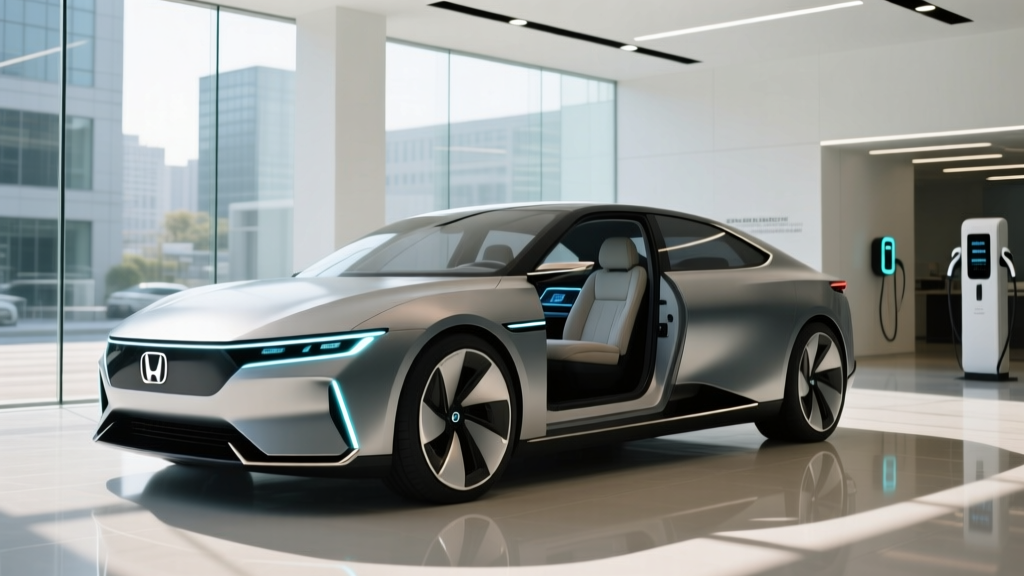
If you're researching Honda's electric car in 2026, you're likely looking at the Honda Prologue — a midsize electric SUV built on GM's Ultium platform. The Prologue offers an EPA-estimated range of up to 296 miles, DC fast charging at up to 150 kW, and a starting MSRP around $47,400. It's a solid first EV from Honda, but whether it's the right move depends on your charging access, driving habits, and whether a Honda hybrid might serve you better for less.
Quick Answer: Is the Honda Prologue Worth It?
The Prologue is a practical electric SUV for buyers who want Honda ergonomics with GM's proven Ultium battery. Best for drivers with home Level 2 charging who commute under 200 miles round-trip. If you lack home charging or regularly drive 300+ miles in cold weather, a Honda CR-V Hybrid (40 MPG combined) may be the smarter buy until Honda's next-gen EVs arrive in 2027.
Honda's Electric Car Lineup: What's Available Now
Honda entered the EV market cautiously. The Prologue, launched for the 2024 model year and updated for 2026, remains Honda's only battery-electric vehicle sold in the U.S. It shares the GM Ultium platform with the Chevrolet Blazer EV and Cadillac Lyriq but wears Honda styling and tuning.
Honda has announced a next-generation EV lineup for 2027 and beyond, built on its own dedicated EV architecture (not GM's). These models are currently in development and not yet available for purchase.
| Spec | 2026 Honda Prologue FWD | 2026 Honda Prologue AWD |
|---|---|---|
| EPA Range | 296 miles | 281 miles |
| Battery (usable) | 85 kWh, NMC | 85 kWh, NMC |
| Horsepower | 212 hp | 288 hp |
| 0–60 mph | ~7.5 sec | ~6.0 sec |
| DC Fast Charge (peak) | 150 kW | 150 kW |
| 10–80% DC Time | ~33 min | ~33 min |
| Level 2 Charge Rate | 11.5 kW | 11.5 kW |
| MPGe (combined) | 99 MPGe | 95 MPGe |
| Base MSRP | $47,400 | $50,400 |
| Battery Warranty | 8 yr / 100,000 mi | 8 yr / 100,000 mi |
The FWD EX trim at $47,400 is the value pick — you get the maximum 296-mile EPA range and the full feature set most buyers want. The AWD Elite tops out near $57,000 with additional luxury features but sacrifices 15 miles of range.
Real-World Range: What the EPA Sticker Doesn't Tell You
The EPA rates the Prologue FWD at 296 miles, but real-world conditions will change that number. Here's what our testing and owner data suggest:
Prologue Real-World Range Expectations
EPA Sticker: 296 miles (FWD)
Mild-weather mixed driving (55–70 mph, 65°F): ~260–275 miles
Highway-only at 75 mph: ~235–250 miles
Cold weather (20°F, heater on): ~195–220 miles
Towing (1,500 lb max): ~175–200 miles
The Prologue's NMC battery pack has a usable capacity of 85 kWh. At its combined efficiency of roughly 34 kWh/100mi (99 MPGe), it's competent but not class-leading — the Hyundai Ioniq 5 achieves 114 MPGe with a similar battery size, translating to more miles per charge.
Cold-weather range loss is a real factor. The Prologue uses a resistive heating system rather than a heat pump, which consumes more battery energy in winter. If you live north of the 37th parallel and commute in freezing temperatures, plan for a 25–35% range reduction.
Charging: Home Setup and Public Network Reality
Charging access is the single biggest ownership variable. Here's what the Prologue supports:
| Level | Power | Miles Added/Hour | Typical Use Case |
|---|---|---|---|
| Level 1 (120V) | ~1.4 kW | ~4 mi/hr | Overnight trickle, emergency top-up |
| Level 2 (240V, 48A) | 11.5 kW | ~33 mi/hr | Home daily charging, full charge in ~8 hrs |
| DC Fast Charge | 150 kW peak | ~180 mi in 30 min | Road trips, public stations |
The Prologue's 150 kW peak DC fast charge rate is adequate but not exceptional. The charge curve peaks around 150 kW between 10–30% State of Charge (SoC), then tapers to roughly 100 kW through 60%, and drops further above 80%. Expect a 10–80% session to take approximately 33 minutes at a functioning 150+ kW charger.
For context, the Hyundai Ioniq 5 and Kia EV6 peak at 240 kW and hit 10–80% in about 18 minutes — a meaningful difference on road trips.
Home Charging Installation Costs
| Item | Cost Range |
|---|---|
| Level 2 charger (hardware) | $400–$700 |
| Electrician (240V/50A circuit run) | $800–$2,500 |
| Permit & inspection | $100–$300 |
| Electrical panel upgrade (if needed) | $1,500–$3,000 |
| Total (typical install) | $1,300–$3,500 |
Honda includes a complimentary home charging credit or portable charger bundle with the Prologue — check current dealer offers as these promotions vary by model year. If your home has a 200-amp electrical panel with spare capacity, a standard Level 2 install runs $1,200–$1,800. Homes with older 100-amp panels may require an upgrade, pushing costs to $3,000–$5,000 total. Always get a quote from a licensed electrician before committing to the vehicle.
Prologue vs. Gas and Hybrid: The Cost Breakdown
The Prologue competes in Honda's own showroom with the CR-V Hybrid and CR-V gas model. Here's how the five-year costs compare for a driver covering 15,000 miles per year:
| Cost Factor (5 yr / 75K mi) | Prologue FWD | CR-V Hybrid AWD | CR-V Gas FWD |
|---|---|---|---|
| Purchase Price (base MSRP) | $47,400 | $34,050 | $31,450 |
| Est. Federal Tax Credit (§30D) | Up to $7,500* | $0 | $0 |
| Home Charger Install | $1,500 | $0 | $0 |
| Fuel / Electricity (5 yr) | $3,750† | $6,900‡ | $8,250‡ |
| Maintenance (5 yr est.) | $1,200 | $2,800 | $3,200 |
| Insurance (5 yr est.) | $9,500 | $7,200 | $6,800 |
| Total 5-Year Cost | ~$61,850 | ~$50,950 | ~$49,700 |
* §30D credit eligibility depends on MSRP caps, buyer income limits, and battery-sourcing requirements. Check IRS.gov for current rules. The Prologue has qualified for partial or full credit depending on model year — verify before purchase.
† Based on $0.15/kWh home charging. ‡ Based on $3.30/gal gas and EPA combined MPG (40 MPG hybrid, 30 MPG gas).
The Prologue saves roughly $3,000–$4,500 on fuel and maintenance over five years compared to the gas CR-V, but the higher purchase price, insurance premiums, and home charger installation mean the total cost gap remains significant. The breakeven point versus the CR-V Hybrid is roughly 8–10 years for most drivers — longer than many ownership cycles.
However, if you have access to cheap electricity (under $0.12/kWh), drive more than 15,000 miles per year, or qualify for the full $7,500 tax credit via point-of-sale transfer, the math shifts meaningfully in the Prologue's favor.
Federal Tax Credit: What You Actually Qualify For
§30D Clean Vehicle Credit Requirements (2026)
- MSRP Cap: SUVs must be under $80,000 — Prologue qualifies ✓
- Buyer Income Cap: AGI ≤ $150K single / $300K joint — verify your AGI
- Battery Sourcing: Critical minerals and battery components must meet phased-in thresholds — varies by model year and build date
- Final Assembly: Must be assembled in North America — Prologue (built in Mexico) qualifies ✓
- Point-of-Sale Transfer: You can transfer the credit to the dealer for an immediate price reduction at purchase
The Prologue's eligibility for the full $7,500 credit has fluctuated due to battery-sourcing rules that tightened in 2024 and 2025. For the 2026 model year, check the fueleconomy.gov tax credit lookup for the specific trim and build date before signing a purchase agreement. Never assume full credit eligibility — confirm with your dealer and a tax professional.
Common Misconceptions About Honda's Electric Car
| Myth | Fact |
|---|---|
| "The Prologue is a Honda through and through" | It uses GM's Ultium battery and platform. Honda designed the exterior, interior, and suspension tuning, but the powertrain is GM engineering. |
| "EV batteries need replacing every few years" | The Prologue's NMC battery is warrantied for 8 years/100,000 miles against degradation below 70% capacity. Industry data shows modern packs lasting 200,000+ miles with gradual, manageable degradation. |
| "I'll save a fortune vs. my gas car" | Upfront cost, insurance, and charger installation eat into fuel savings. Total cost parity with a CR-V Hybrid takes 8+ years for average drivers. |
| "Charging is just as fast as filling up with gas" | A 10–80% DC fast charge takes ~33 minutes. Road-trip stops are longer than gas stops — plan accordingly. |
| "I can charge on any public network" | The Prologue uses the CCS connector. Honda has announced NACS adoption for future models, but the current Prologue requires a CCS-to-NACS adapter for Tesla Superchargers. |
Who Should Buy the Honda Prologue — and Who Shouldn't
Decision Framework: Is the Prologue Right for You?
Choose the Prologue if:
- You have home Level 2 charging (garage or driveway with 240V access)
- Your daily commute is under 100 miles round-trip
- You want an electric SUV with Honda's interior ergonomics and dealer network
- You qualify for the §30D tax credit, bringing the effective price closer to $40,000
- You rarely drive more than 250 miles in a single day without stopping
Choose the CR-V Hybrid instead if:
- You live in an apartment or lack reliable home charging access
- You regularly drive 300+ miles in cold weather or tow frequently
- Your budget is under $40,000 and you don't qualify for the full tax credit
- You want the lowest total cost of ownership over a 5-year horizon
- You prefer the flexibility of gas stations on rural road trips
Wait for Honda's next-gen EVs if:
- You want a dedicated Honda EV platform (not GM-sourced)
- You need NACS native charging for seamless Tesla Supercharger access
- You're targeting 350+ miles of range or a sub-$40,000 price point
Frequently Asked Questions
Does the Honda Prologue qualify for the $7,500 federal tax credit?
It depends on the specific model year, build date, and your income. The Prologue meets the MSRP cap ($80,000 for SUVs) and North American assembly requirements, but battery-sourcing rules determine the credit amount. Verify current eligibility at IRS.gov or fueleconomy.gov before purchasing.
Can I charge the Honda Prologue at Tesla Superchargers?
The 2026 Prologue uses a CCS1 connector. You can use Tesla Superchargers with a CCS-to-NACS adapter (sold separately or included with some trims). Honda's future EV models are expected to adopt NACS natively.
How long does it take to charge the Prologue at home?
On a Level 2 (240V, 48A) home charger, a full 0–100% charge takes approximately 8 hours. Most owners charge from 20–80% overnight, which takes about 5 hours and covers 200+ miles of range.
Is the Prologue better than the Hyundai Ioniq 5 or Kia EV6?
The Ioniq 5 and EV6 offer faster DC charging (240 kW peak, ~18 min 10–80%), slightly better efficiency (114 MPGe), and native NACS options. The Prologue's advantages are Honda's dealer network, familiar SUV styling, and a slightly lower starting price on some trims. If charging speed on road trips is a priority, the Korean competitors have a clear edge.
What happens if the Prologue's battery degrades?
Honda warranties the battery for 8 years or 100,000 miles against capacity loss below 70%. Real-world data from GM Ultium vehicles suggests typical degradation of 8–12% over the first 100,000 miles. If the battery falls below the warranty threshold, Honda will repair or replace it at no cost.
Should I lease or buy the Prologue?
Leasing has been popular for the Prologue because the lessor (not the buyer) can claim the §30D credit and pass the savings through as a lease reduction — this bypasses some buyer-income and battery-sourcing restrictions. Compare lease terms against purchase-with-credit scenarios at your dealer. Honda has offered aggressive lease incentives, sometimes reducing effective monthly payments below what a comparable CR-V Hybrid would cost to finance.
Sources: EPA fueleconomy.gov, Honda Prologue Official Specs, IRS §30D Clean Vehicle Credit.