Honda's Super-One Electric Hot Hatch: What We Know So Far
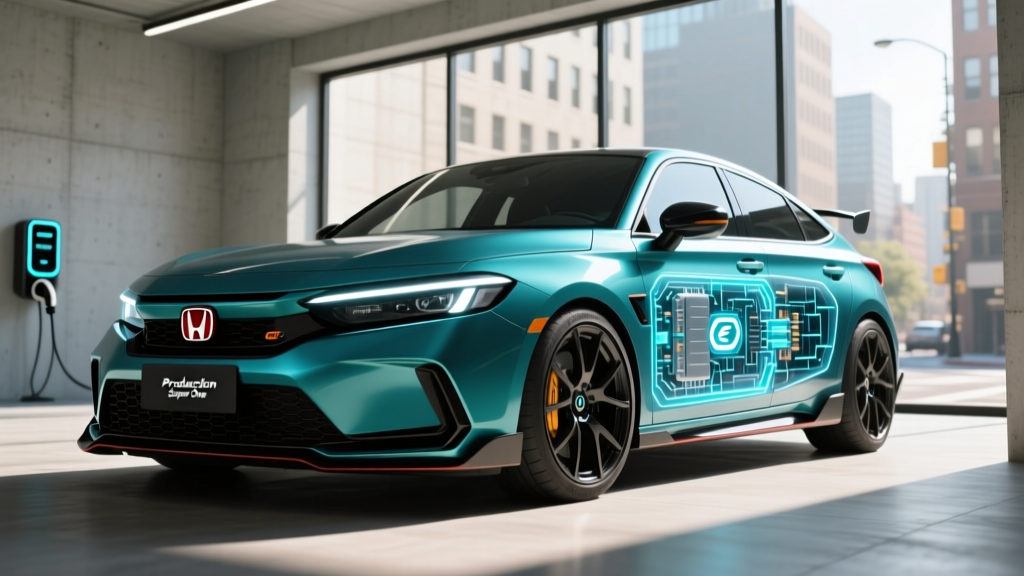
Honda's production Super-One electric hot hatch has been confirmed with new details pointing to a compact, performance-oriented BEV aimed at the enthusiast segment. Based on Honda's emerging EV platform architecture and the brand's e: series design language, the Super-One is expected to feature a ~55–65 kWh battery pack (likely NMC chemistry for energy density), a targeted EPA range of 220–260 miles, DC fast charging at up to 150 kW peak, and a single or dual-motor layout producing an estimated 200–280 horsepower. Pricing is projected to land between $35,000 and $42,000 MSRP depending on trim, positioning it against the Mini Cooper SE, Volkswagen ID.3 GTX (where available), and the upcoming Hyundai Ioniq 5 N's more affordable siblings. As of this writing, Honda has not published final EPA certification figures, and the vehicle remains announced/preliminary — treat all specs below as estimates until official certification.
Projected Specs: What the Numbers Tell Us
Honda's EV strategy has accelerated since the Prologue launched, and the Super-One represents the brand's first dedicated electric performance hatchback. Here is what we can reasonably project based on Honda's confirmed platform direction and segment benchmarks:
| Attribute | Projected / Estimated | Segment Benchmark |
|---|---|---|
| Battery Capacity (usable) | ~58–65 kWh (NMC) | Mini Cooper SE: 54 kWh |
| EPA Range (est.) | 220–260 miles | VW ID.4: ~260 mi |
| Motor Output | 200–280 hp (FWD or AWD) | Hyundai Ioniq 5: 225–325 hp |
| 0–60 mph (est.) | 5.5–6.8 seconds | Mini Cooper SE: ~6.7 sec |
| Peak DC Fast Charge | ~150 kW | Segment typical: 130–175 kW |
| 10–80% DC Charge Time (est.) | ~25–30 minutes | — |
| Level 2 AC Charge Rate | ~11 kW | Segment standard |
| Estimated Base MSRP | $35,000–$42,000 | — |
| Battery Warranty (expected) | 8 years / 100,000 miles | Federal minimum mandate |
Real-World Range Expectations
If Honda certifies the Super-One at 245 miles EPA, expect ~200–215 miles on sustained highway driving at 70+ mph, and ~170–190 miles in sub-freezing winter conditions. Cold weather reduces lithium-ion efficiency and increases cabin heating load — a heat pump (if equipped) would mitigate this by roughly 10–15%. Always plan road trips around 80% of the EPA sticker to preserve a safety buffer and account for charging-curve taper above 80% SoC.
Charging Reality: Home, Public, and the Curve
The Super-One's projected 150 kW peak DC charge rate is competitive for the compact hatchback segment, but peak rate is only part of the story. Charging speed follows a curve: the battery accepts maximum power between roughly 10–50% State of Charge (SoC), then tapers progressively to protect cell health. A 10–80% session at a 150 kW charger should take approximately 25–30 minutes under ideal thermal conditions, but add 5–10 minutes if the battery is cold and has not been preconditioned.
| Charging Level | Power (kW) | Miles Added per Hour | Typical Use Case |
|---|---|---|---|
| Level 1 (120V household) | ~1.4 kW | ~4–5 miles | Overnight trickle; emergency top-up |
| Level 2 (240V home/public) | ~7.7–11 kW | ~25–37 miles | Daily home charging; workplace |
| DC Fast Charge | Up to ~150 kW | ~500+ mi/hr (peak) | Road trips; 10–80% in ~25–30 min |
Preconditioning matters. If the Super-One supports navigation-based battery preconditioning (as the Prologue does), routing to a DC fast charger through the onboard nav will warm the battery to optimal temperature, enabling faster charge acceptance. Without preconditioning in cold weather, you may see peak rates cut by 30–50% for the first several minutes.
For home charging, a Level 2 wallbox (e.g., ChargePoint Home Flex, Emporia Level 2) on a 48-amp circuit delivers roughly 11 kW — enough to fully recharge a 60 kWh pack in about 6 hours overnight. Installation typically costs $800–$2,500 depending on panel proximity and whether your home needs a 200-amp service upgrade.
Cost of Ownership: Super-One EV vs. Gas Hot Hatch
The enthusiast hatchback segment has long been dominated by gas-powered models like the Volkswagen GTI, Honda Civic Si, and Mini Cooper S. Here is how the Super-One EV stacks up on cost over a 5-year ownership period, assuming 12,000 miles per year:
| Cost Factor | Super-One EV (est.) | VW GTI (gas baseline) |
|---|---|---|
| Purchase Price (MSRP) | $38,000 | $33,000 |
| Federal Tax Credit (§30D) | Up to $7,500 (if eligible)* | $0 |
| Effective Purchase Price | ~$30,500 | $33,000 |
| Fuel/Energy (5 years, 60k mi) | $3,200–$4,800† | $7,500–$9,000‡ |
| Maintenance (5 years) | $800–$1,200 | $2,500–$3,500 |
| Insurance (5-year avg.) | $8,500–$10,500 | $7,000–$8,500 |
| Estimated 5-Year Total | $43,000–$47,000 | $50,000–$54,000 |
* §30D federal tax credit eligibility requires meeting MSRP caps ($55,000 for cars), buyer income limits ($150K single / $300K joint), and battery critical-mineral/sourcing requirements. Credit can be transferred to the dealer at point of sale. Rules are subject to change — verify current-year eligibility at IRS.gov and consult a tax professional.
† Based on $0.13–$0.18/kWh national average and 3.5–4.0 mi/kWh efficiency.
‡ Based on $3.40–$3.80/gallon and 28 MPG combined.
The Super-One's energy cost advantage is substantial if you charge primarily at home on residential electricity rates. Public DC fast charging at $0.35–$0.50/kWh narrows the gap considerably — exclusive reliance on public charging can push energy costs to $5,500–$7,000 over 5 years. Home charging access is the single largest variable in EV ownership economics.
EV vs. Gas vs. Hybrid: Which Hot Hatch Fits Your Pattern?
Not every enthusiast buyer should go fully electric. Here is a data-driven decision framework:
Choose the Super-One EV If:
- You have reliable Level 2 home charging (garage or driveway with 240V access)
- Your daily commute is under 80 miles round-trip (well within the ~200-mile real-world buffer)
- You want instant torque delivery and a low center of gravity for sporty handling
- You drive in a region with moderate winters or have access to preconditioning and a heat pump
- You qualify for the §30D credit, bringing effective price below gas competitors
Choose a Gas Hot Hatch (GTI, Civic Si) If:
- You lack home charging access and rely on street parking or apartments without EV infrastructure
- You regularly drive 300+ miles in a single trip through areas with sparse DC fast-charger coverage
- You prioritize lightweight dynamics — EVs carry 400–600 lbs more battery mass
- You want a proven track record of 10+ year ownership with minimal powertrain complexity risk
Choose a PHEV (e.g., Toyota Prius Prime) If:
- You want 35–45 miles of electric-only commuting but need gas flexibility for road trips
- You are not ready to commit to full BEV ownership but want reduced fuel consumption
- You can charge at home but live in a region with extreme cold or unreliable public charging
Common Misconceptions About the Super-One and EV Hot Hatches
| Myth | Fact |
|---|---|
| "The battery will need replacing in 5 years." | Modern NMC packs are warrantied for 8 years/100,000 miles at minimum 70% capacity retention. Real-world degradation data from fueleconomy.gov and fleet studies show most packs retain 85–90% capacity at 100K miles. |
| "150 kW means it charges at 150 kW the whole time." | Peak rate applies only in a narrow SoC window (typically 10–50%). Average rate over a 10–80% session is closer to 90–110 kW. This is why 10–80% time is the more meaningful metric. |
| "EVs cost more to insure, always." | EV insurance premiums are typically 10–20% higher due to repair costs and battery replacement exposure, but this varies by model, driver profile, and insurer. Shop quotes before purchasing. |
| "I can't drive an EV in winter." | You can, but expect 20–30% range loss in sub-freezing temperatures. Preconditioning, a heat pump, and planning around 70–80% of EPA range make winter EV driving practical for most commutes. |
| "The §30D credit is automatic." | Eligibility depends on MSRP caps, buyer income, battery sourcing, and final assembly in North America. Honda's sourcing compliance for the Super-One has not been confirmed — check IRS.gov closer to launch. |
What First-Time EV Buyers Should Know Before Ordering
If the Super-One is your first electric vehicle, these practical considerations will determine whether ownership is seamless or frustrating:
- Confirm your home electrical panel capacity. A Level 2 charger typically requires a 50-amp dedicated circuit (NEMA 14-50 or hardwired). If your panel is 100 amps and already near capacity, a $1,500–$3,000 panel upgrade may be necessary. Consult a licensed electrician before purchase.
- Map your local public charging network. Use PlugShare or the DOV's Alternative Fuels Station Locator to verify DC fast-charger density along your common routes. Honda has partnered with various networks, but real-world reliability varies — Electrify America and Tesla Superchargers (now open to NACS-equipped non-Tesla EVs) tend to have the best uptime.
- Understand kW vs. kWh. kW (kilowatts) measures power — how fast energy flows into the battery during charging. kWh (kilowatt-hours) measures energy — the total capacity of the battery, analogous to gallons in a gas tank. A 60 kWh battery charged at 11 kW takes roughly 5.5 hours from empty to full.
- Budget for a quality Level 2 home charger. Plan $500–$800 for the hardware (e.g., ChargePoint Home Flex, Emporia Vue) plus $800–$2,000 for professional installation. Some utilities offer rebates covering $200–$500 of this cost.
- Factor in tire costs. EVs are heavier and deliver instant torque, which accelerates tire wear. Budget for tire replacement every 25,000–35,000 miles rather than the 40,000–50,000 miles typical of gas hatchbacks.
Charging Connector: NACS or CCS?
Honda has committed to adopting the NACS (North American Charging Standard) connector — the Tesla-designed plug now being standardized across the industry — for its future EVs in North America. If the Super-One follows this commitment, it will ship with a native NACS port, granting access to Tesla's Supercharger network (17,000+ stalls in the U.S.) without an adapter. This is a significant practical advantage over CCS-equipped vehicles, which currently have fewer reliable fast-charging options.
| Connector | Network Access | Super-One Likelihood |
|---|---|---|
| NACS | Tesla Supercharger + growing third-party | High (Honda commitment) |
| CCS1 | Electrify America, EVgo, ChargePoint | Low for North American market |
| CHAdeMO | Legacy; declining | None |
Frequently Asked Questions
When will the Honda Super-One be available to buy?
Honda has confirmed the Super-One as a production model, but an exact on-sale date has not been published as of this writing. Industry projections suggest a late 2026 or 2027 model-year launch. Treat all specifications as preliminary until Honda releases final EPA-certified figures.
Will the Super-One qualify for the $7,500 federal EV tax credit?
Eligibility under IRS §30D depends on final assembly location, battery critical-mineral sourcing, MSRP (must be ≤$55,000 for cars), and buyer income (≤$150K single / $300K joint). Honda's North American production footprint and battery supply chain will determine compliance. Check the IRS clean vehicle credit page closer to launch for a definitive answer.
How does the Super-One compare to the Mini Cooper SE?
The current Mini Cooper SE offers ~114 miles of EPA range with a 32.6 kWh battery — significantly less than the Super-One's projected 220–260 miles. The Super-One is positioned as a more practical, longer-range alternative while retaining the hot-hatch character. The Mini may win on urban agility and brand cachet, but range and charging speed favor the Honda.
Can I road-trip the Super-One?
Yes, with planning. At 220–260 miles EPA, expect to stop every 150–180 real-world highway miles for a 25–30 minute DC fast-charge session. NACS access to Tesla Superchargers (if confirmed) dramatically improves route flexibility. Use apps like A Better Routeplanner (ABRP) to model trips with charger locations, elevation, and temperature factored in.
What happens if the battery degrades?
Honda is expected to warrant the battery at 8 years/100,000 miles with a minimum 70% capacity retention threshold. If capacity drops below that level within the warranty period, Honda covers repair or replacement. Out-of-warranty battery replacement for a ~60 kWh pack would likely cost $8,000–$14,000 based on current industry pricing, though costs continue to decline.
Is the Super-One actually fun to drive?
EV hot hatches deliver instant torque and a low center of gravity from the floor-mounted battery, which benefits cornering dynamics. The trade-off is weight — expect the Super-One to weigh 3,500–3,800 lbs, several hundred pounds more than a gas Civic Si. Honda's suspension tuning and steering calibration will ultimately determine whether it matches the brand's reputation for driver engagement. Independent reviews will be essential once press cars are available.