The Performance EV Cadillac Buyers Actually Wanted
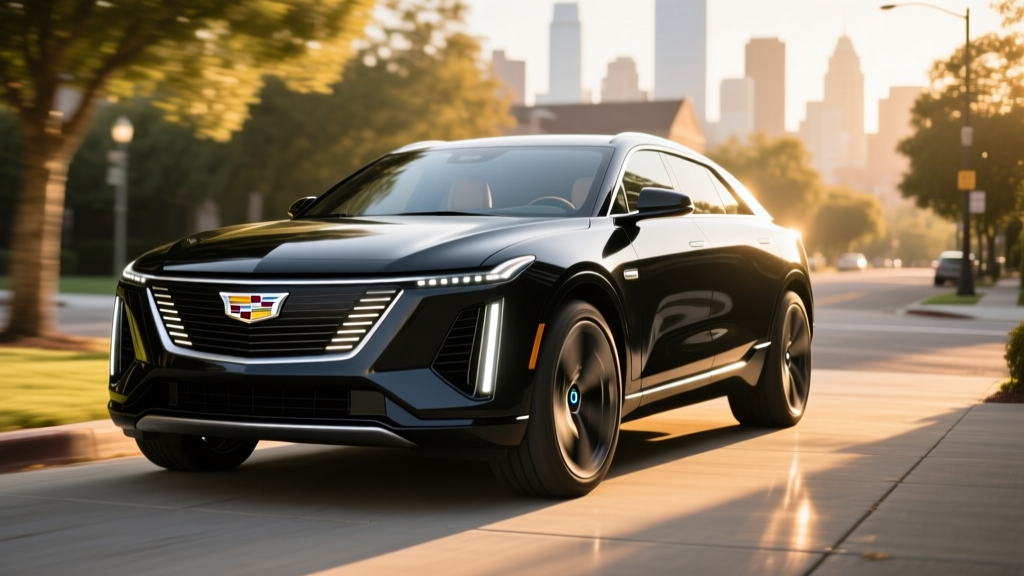
Cadillac didn't just add a badge to the Lyriq when it introduced the V performance variant. The Lyriq-V pairs a dual-motor all-wheel-drive powertrain with a sport-tuned suspension, aggressive styling, and the kind of straight-line acceleration that repositions the entire Lyriq lineup from luxury cruiser to legitimate performance contender. For 2026, the Lyriq-V is the halo model of Cadillac's Ultium-based EV fleet, and it arrives with serious numbers to back up its V-Series heritage.
This review covers everything a buyer needs to know: the real-world range you can expect beyond the EPA sticker, exactly how fast it charges on DC fast chargers and at home, what the Lyriq-V costs after federal incentives, and whether it earns its premium over rivals like the BMW iX M60, Audi Q8 e-tron, and Tesla Model X.
| Spec | Value |
|---|---|
| EPA Range | 285 miles |
| Battery (usable) | 102 kWh, NMC (nickel manganese cobalt) |
| Drivetrain | Dual-motor AWD |
| Horsepower | 615 hp |
| Torque | 650 lb-ft |
| 0–60 mph | 4.7 seconds |
| Top Speed | 130 mph (electronically limited) |
| Max DC Fast Charge | 190 kW |
| 10–80% DC Charge Time | ~30 minutes |
| Level 2 Home Charge Rate | 19.2 kW (AC) |
| EPA Efficiency | 89 MPGe combined (38 kWh/100 mi) |
| Cargo (rear seats up) | 28.0 cu ft |
| Cargo (rear seats folded) | 60.9 cu ft |
| Base MSRP | $72,990 (incl. destination) |
| Battery/Powertrain Warranty | 8 years / 100,000 miles |
Cadillac Lyriq-V 0-60 and On-Road Performance
The headline number is 4.7 seconds to 60 mph — a full 1.5 seconds quicker than the standard rear-wheel-drive Lyriq and roughly 0.6 seconds ahead of the standard AWD Lyriq. That puts the Lyriq-V in territory occupied by the BMW iX xDrive50 and well ahead of the Audi Q8 e-tron's 5.5-second run. It doesn't chase the Tesla Model X Plaid's sub-3-second theatrics, but that's not the point.
The 615 hp dual-motor setup delivers its torque instantly, as EVs do, and the Lyriq-V's advantage over its non-V siblings isn't just the power bump. Cadillac retuned the adaptive dampers for the V variant, stiffening the anti-roll bars and recalibrating the air suspension for flatter cornering. The result is an SUV that feels planted through highway sweepers and composed under hard braking — a meaningful improvement over the softer, more float-oriented standard Lyriq ride.
One note from real-world driving: the Lyriq-V's 130 mph electronic limiter is conservative by performance-SUV standards. BMW leaves the iX M60 unrestricted to 155 mph. If track days or unrestricted Autobahn stretches are on your agenda, this matters. For 99% of American driving, it's a non-issue.
EPA Range vs. Real-World Expectations
Real-World Highway (70 mph, moderate climate): ~240–255 miles
Real-World City/Suburban: ~265–280 miles
Cold Weather (below 32°F, highway): ~200–225 miles
The 102 kWh usable NMC battery pack gives the Lyriq-V a 285-mile EPA rating — 24 miles less than the RWD Lyriq's 309-mile figure, which is the expected trade-off for dual motors and higher output. The efficiency penalty shows in the combined rating of 89 MPGe (38 kWh per 100 miles), compared to 97 MPGe for the RWD model.
In practice, highway driving at sustained speeds of 70–75 mph typically yields 240–255 miles before the battery reaches 10% state of charge. The Lyriq-V's larger frontal area and sport-tire rolling resistance work against it on the interstate. City driving, where regenerative braking recaptures energy during stop-and-go, pushes closer to the EPA sticker.
Cold weather is the great equalizer for all EVs, and the Lyriq-V is no exception. Below freezing, expect a 15–25% range reduction depending on cabin heat usage. Cadillac includes a heat pump in the Lyriq-V's thermal management system, which helps — but physics wins. Plan for roughly 200–225 miles of usable range on a frigid winter highway run. Preconditioning the battery while plugged in (using the Cadillac app to warm the pack before departure) recovers some of that loss and is essential for maximizing fast-charge speed in cold weather.
For context on how range is measured and what affects it, the U.S. Department of Energy's EV technology overview provides detailed methodology.
Charging Speed: DC Fast, Level 2, and the Curve Reality
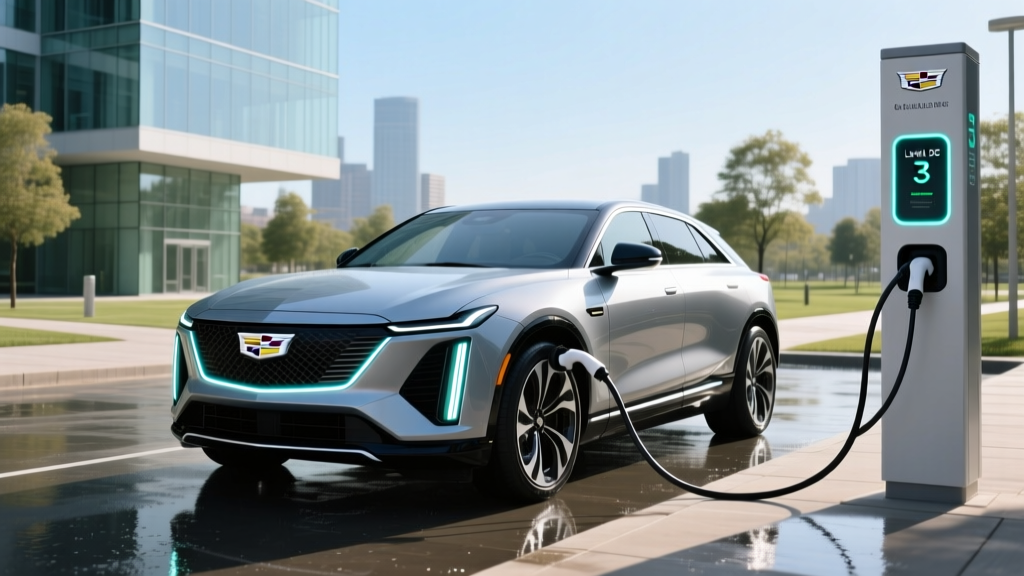
The Lyriq-V supports a peak DC fast-charge rate of 190 kW via its NACS (North American Charging Standard) port, which now gives it native access to the Tesla Supercharger network alongside Electrify America and other CCS-to-NACS networks using adapters where required.
| Charging Level | Power | Speed / Time |
|---|---|---|
| Level 1 (120V household) | ~1.4 kW | ~3–4 miles per hour |
| Level 2 (240V home, 48A) | 11.5 kW | ~27 miles per hour (~9 hrs, 10–100%) |
| Level 2 (240V, 80A capable) | 19.2 kW | ~45 miles per hour (~6 hrs, 10–100%) |
| DC Fast Charge (peak) | 190 kW | ~185 miles in 20 min; 10–80% in ~30 min |
A critical detail for buyers to understand: the 190 kW peak is not sustained across the entire charging session. Like all EVs, the Lyriq-V follows a charging curve that tapers significantly above 80% state of charge to protect battery health. You'll see 190 kW only between roughly 10% and 35% SoC under ideal thermal conditions. From 50–80%, expect rates closer to 80–110 kW. Above 80%, charging slows dramatically — which is why the industry standard metric is 10–80% time, not a full 0–100% session.
At home, the Lyriq-V's onboard charger accepts up to 19.2 kW on a 240V / 80A circuit. Most residential installations use a 48A circuit (11.5 kW), which adds roughly 27 miles of range per hour and fully replenishes the pack in about 9 hours — fine for overnight charging. If your electrical panel supports an 80A dedicated circuit, a Level 2 upgrade cuts that to roughly 6 hours. Factor in $500–$1,500 for a licensed electrician to install a 48A hardwired Level 2 charger, or $1,000–$2,500+ if your panel needs a 200A service upgrade.
Pricing, Trims, and Federal Tax Credit Eligibility
The 2026 Cadillac Lyriq-V carries a base MSRP of $72,990, including the $1,395 destination charge. That positions it as a premium offering — roughly $12,000 above the Lyriq Luxury AWD and $16,000 above the RWD base model.
| Item | Amount |
|---|---|
| Lyriq-V Base MSRP | $72,990 |
| Federal §30D Tax Credit (if eligible) | Up to $7,500 |
| Effective Price (with full credit) | ~$65,490 |
| Typical As-Tested (w/ Premium Luxury Pkg) | $78,000–$82,000 |
Here's where the federal tax credit gets complicated — and where buyers need to do their homework before signing. Under IRS §30D rules for 2026, the Lyriq-V faces several eligibility gates:
- MSRP Cap: SUVs must have an MSRP at or below $80,000. The Lyriq-V's base price of $72,990 clears this, but a fully loaded example with the Premium Luxury package and 22-inch wheels can push past $82,000 — disqualifying that specific vehicle from the credit.
- Buyer Income Cap: Modified adjusted gross income must not exceed $150,000 (single), $225,000 (head of household), or $300,000 (married filing jointly).
- Battery Sourcing: The credit splits into two halves — $3,750 for critical-minerals sourcing and $3,750 for battery-component assembly. GM has made progress on North American sourcing for Ultium cells, but the exact credit amount (full $7,500, partial $3,750, or $0) depends on the specific build date and supply-chain composition of your vehicle. This changes periodically.
- Point-of-Sale Transfer: If eligible, you can transfer the credit to the dealer at purchase, reducing your out-of-pocket cost immediately rather than waiting for a tax refund.
Always verify current eligibility on the IRS clean vehicle credits page and with your dealer before purchase. Tax situations vary — consult a tax professional for your specific case.
Interior, Cargo, and Technology
The Lyriq-V shares its cabin architecture with the rest of the Lyriq family, headlined by a 33-inch curved LED display that merges the instrument cluster and infotainment touchscreen into one continuous panel running Google Built-In (with native Google Maps, Google Assistant, and Play Store apps). The V variant adds exclusive interior trim options, including V-Series badging, a flat-bottom steering wheel, and available Nappa leather with contrast stitching.
Cargo space measures 28.0 cubic feet behind the second row and 60.9 cubic feet with the rear seats folded — competitive with the BMW iX (35.5 / 77.9 cu ft is larger, but the iX is a segment above in size). The Lyriq-V does not offer a front trunk (frunk), which is a missed opportunity for an EV-native platform. That space is occupied by power electronics and HVAC components.
Notable tech includes:
- Super Cruise: GM's hands-free Level 2 driver-assistance system, operational on over 750,000 miles of mapped highways in North America. This is not autonomous driving — you must remain attentive and the system monitors your eyes via an infrared camera on the steering column.
- AKG 19-Speaker Audio: Standard on the V, with studio-quality tuning tuned specifically for the Lyriq's cabin acoustics.
- Head-Up Display: Full-color, augmented-reality capable, projecting navigation and speed onto the windshield.
- Over-the-Air Updates: GM continues to push software updates for performance calibration, infotainment features, and Super Cruise expansion.
Drawbacks worth noting: the Lyriq still lacks a frunk, the rear-seat headroom is tight for occupants over 6'2" due to the sloping roofline, and the touch-capacitive climate controls on the center stack are fiddly compared to physical buttons.
How the Lyriq-V Compares
| Spec | Cadillac Lyriq-V | BMW iX xDrive50 | Audi Q8 e-tron Prestige |
|---|---|---|---|
| 0–60 mph | 4.7 sec | 4.4 sec | 5.5 sec |
| EPA Range | 285 mi | 324 mi | 285 mi |
| Battery (usable) | 102 kWh | 105.2 kWh | 106 kWh |
| Peak DC Charge | 190 kW | 200 kW | 170 kW |
| Base MSRP | $72,990 | $87,250 | $74,400 |
| Cargo (seats up) | 28.0 cu ft | 35.5 cu ft | 27.3 cu ft |
The Lyriq-V undercuts the BMW iX xDrive50 on price by more than $14,000 while offering comparable performance and slightly less range. The BMW charges marginally faster and offers more cargo room, but the Cadillac's interior design and Super Cruise are genuine differentiators. Against the Audi Q8 e-tron, the Lyriq-V is quicker and charges faster, with near-identical range. The Audi's build quality and ride refinement remain class-leading, but the Lyriq-V is the better value proposition.
Who Should Buy the Cadillac Lyriq-V
The Lyriq-V is best suited for luxury-EV buyers who want American-made performance with hands-free highway driving and don't need maximum cargo volume or 300+ miles of range. It's a strong fit for:
- Daily commuters with home charging and a round trip under 200 miles
- Performance-oriented luxury buyers stepping out of a BMW X5 M or Mercedes-AMG GLE who want EV acceleration
- GM loyalists already invested in the Super Cruise ecosystem
It's less ideal for frequent road-trippers who prioritize range over power, or families who need maximum cargo space for gear-heavy weekends.
Pros
- 4.7-second 0–60 with composed handling
- Super Cruise hands-free driving on 750K+ miles of highway
- 19.2 kW Level 2 onboard charger (fast home charging)
- NACS port = native Tesla Supercharger access
- Striking design with premium interior materials
- Competitive pricing vs. German rivals
Cons
- No front trunk (frunk)
- 285-mile range trails key competitors
- 190 kW DC peak is mid-pack for the segment
- Tight rear headroom for tall passengers
- Touch-capacitive climate controls
- MSRP cap risk: loaded models may exceed $80K tax-credit threshold
Frequently Asked Questions
What is the real-world range of the Cadillac Lyriq-V?
Expect 240–255 miles on the highway and 265–280 miles in mixed city driving. In cold weather below freezing, highway range drops to roughly 200–225 miles. The 285-mile EPA figure is achievable under ideal conditions with moderate speeds and mild temperatures.
How fast does the Lyriq-V charge?
On a DC fast charger, it peaks at 190 kW and charges from 10–80% in approximately 30 minutes. At home on a 48A Level 2 charger, it adds about 27 miles per hour, fully recharging overnight in ~9 hours. An 80A circuit cuts that to ~6 hours.
Does the Cadillac Lyriq-V qualify for the federal EV tax credit?
The base Lyriq-V at $72,990 is under the $80,000 MSRP cap for SUVs. However, eligibility depends on your income (must be under $300,000 for joint filers), and the battery must meet critical-mineral and component-sourcing requirements under IRS §30D. The credit amount can be $0, $3,750, or $7,500 depending on sourcing compliance at the time of manufacture. Verify with your dealer and the IRS before purchasing.
Is the Lyriq-V worth buying over the BMW iX?
If price is a primary factor, the Lyriq-V saves over $14,000 versus the iX xDrive50 while offering comparable 0–60 performance and superior hands-free driving tech via Super Cruise. The BMW offers more range (324 vs. 285 miles), more cargo room, and slightly faster DC charging. It's a genuine trade-off: value and tech vs. range and space.
Does the Lyriq-V have a frunk?
No. The Lyriq platform does not include a front trunk. All storage is in the rear cargo area (28.0 cu ft / 60.9 cu ft with seats folded).
What is the battery warranty on the Lyriq-V?
GM covers the Ultium battery pack and electric powertrain for 8 years or 100,000 miles, whichever comes first. The warranty guarantees the battery will retain a minimum capacity threshold (typically 60–70% of original capacity, per GM's warranty documentation) during that period.