The Short Answer on Honda Ruckus Electric Conversion Kits
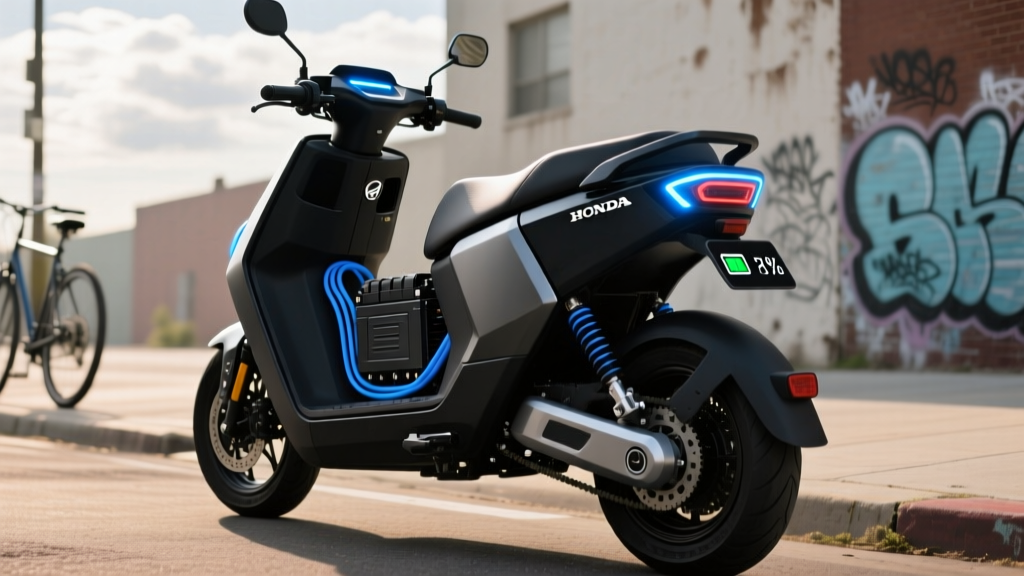
A Honda Ruckus electric conversion kit in 2026 typically costs between $1,800 and $4,500 depending on motor wattage (1,500W–5,000W), battery chemistry (lead-acid vs. lithium NMC/LFP), and controller sophistication. Real-world range on a quality lithium pack is 25–50 miles at city speeds (25–35 mph), with a full charge taking 3–5 hours on a standard 120V household outlet. These kits are largely sourced from small aftermarket suppliers — not Honda — and require moderate mechanical skill or a professional installer. Before committing, weigh the conversion cost against the price of a purpose-built electric scooter like the NIU NQi GT or the Segway E22, which offer warranty coverage, dealer support, and comparable range without the fabrication headaches.
Why Owners Consider Converting the Ruckus to Electric
The Honda Ruckus (also known as the Zoomer outside the US) has been a cult favorite since its 2002 debut. Its rugged steel frame, fat tires, and minimalist design make it a popular candidate for customization — including electric powertrain swaps. The motivations are straightforward:
- Fuel savings: The stock 49cc GY6 engine gets roughly 80–100 MPG, but at $3.50/gallon, even a thrifty scooter costs about $0.04–$0.05 per mile in fuel.
- Maintenance reduction: No oil changes, no carburetor rebuilds, no CVT belt replacements. Electric drivetrains have far fewer wear items.
- Noise and emissions: Silent operation and zero tailpipe emissions matter in residential areas and campuses.
- Customization culture: The Ruckus community thrives on builds — turbo kits, suspension lifts, and engine swaps are common. An EV conversion fits right in.
But the question isn't whether it's cool — it's whether it's practical and economical. Let's run the numbers.
What's in a Honda Ruckus Electric Conversion Kit?
Most kits sold through aftermarket channels (eBay, specialized EV scooter forums, Alibaba-based vendors) include the following core components:
| Component | Budget Tier | Mid Tier | Premium Tier |
|---|---|---|---|
| Motor | 1,500W hub motor | 3,000W hub or mid-drive | 5,000W+ mid-drive (QS Motor, Kelly) |
| Battery | 48V 20Ah lead-acid (~0.96 kWh) | 60V 30Ah NMC lithium (~1.8 kWh) | 72V 40Ah LFP lithium (~2.9 kWh) |
| Controller | Basic brushed/sine-wave | Programmable sine-wave | Kelly or Sabvoton programmable |
| Charger | 2A trickle (8–10 hr charge) | 5A standard (4–5 hr charge) | 8–10A fast (2–3 hr charge) |
| Throttle/display | Twist throttle, basic LED | Twist throttle, LCD display | Thumb throttle, TFT w/ regen control |
| Estimated Kit Cost | $1,800–$2,200 | $2,500–$3,200 | $3,500–$4,500 |
Important terminology note: Battery capacity is measured in kWh (kilowatt-hours — the energy "tank size"), while the charger output and motor are rated in kW or W (power — the rate of energy delivery or consumption). A 1.8 kWh battery paired with a 3,000W (3 kW) motor can theoretically deliver full power for about 36 minutes — which at 35 mph translates to roughly 21 miles before depletion. Real-world range is lower due to acceleration loads, hills, and the fact that you rarely drain a lithium pack below 10–15% to preserve cycle life.
Real-World Range and Performance: Conversion vs. Gas Ruckus
The stock Honda Ruckus 49cc produces about 4.5 horsepower and tops out at roughly 35–40 mph (stock) or 45–55 mph with common variator and exhaust modifications. Here's how electric conversions compare:
| Metric | Stock 49cc Gas | Budget EV (1.5 kW) | Mid EV (3 kW) | Premium EV (5 kW) |
|---|---|---|---|---|
| Horsepower | ~4.5 HP | ~2 HP | ~4 HP | ~6.7 HP |
| Top Speed | 35–40 mph (stock) | 25–30 mph | 35–45 mph | 50–60 mph |
| Real-World Range | 120–150 mi (2.0 gal tank) | 15–20 mi | 25–35 mi | 40–55 mi |
| Fuel/Energy Cost per Mile | ~$0.045 | ~$0.008 | ~$0.010 | ~$0.012 |
| Refuel/Recharge Time | 2 minutes (gas station) | 8–10 hours | 4–5 hours | 2–3 hours |
| Noise Level | 70–80 dB | ~40 dB | ~45 dB | ~50 dB |
The range reality check: If your daily commute is under 15 miles round-trip with flat terrain, a mid-tier conversion handles it comfortably. If you regularly ride 30+ miles, encounter hills, or carry a passenger, even the premium kit's 55-mile best-case range will shrink to 30–35 miles in practice. Cold weather (below 40°F) further reduces lithium battery output by 15–25%, a factor many conversion guides omit.
Full Cost Breakdown: Conversion vs. Buying a Factory Electric Scooter
The kit price is only the starting point. Here's the total cost of getting a Ruckus electric conversion on the road versus buying a purpose-built electric scooter:
| Cost Category | Ruckus EV Conversion (Mid-Tier) | NIU NQi GT (Factory EV) | Stock Gas Ruckus (Baseline) |
|---|---|---|---|
| Vehicle/Purchase Price | $1,500 (used Ruckus) + $2,800 (kit) = $4,300 | $3,699 MSRP | $2,999 MSRP (new 2024 final year) |
| Installation Labor | $500–$1,200 (or DIY free) | $0 | $0 |
| Fuel/Energy (5 yrs, 3,000 mi/yr) | ~$450 (at $0.13/kWh) | ~$400 | ~$2,250 (at $3.50/gal, 85 MPG) |
| Maintenance (5 yrs) | ~$200 (brake pads, tires) | ~$300 (dealer service) | ~$1,200 (oil, belts, carb, tires) |
| Insurance (5 yrs avg) | ~$900 (varies by state) | ~$900 | ~$900 |
| Battery Replacement (if needed) | $600–$1,200 (year 4–5) | $800 (under warranty if within 2yr/12k mi) | N/A |
| Total 5-Year Cost | $6,550–$7,250 | $6,099–$6,199 | $7,349 |
The conversion breaks even with the gas Ruckus over five years, but a factory electric scooter like the NIU NQi GT actually comes in cheaper overall — and it includes a warranty, dealer support, and DOT/EPA compliance out of the box. The conversion only wins if you already own a Ruckus, can do the installation yourself, and value the customization experience.
Legal, Registration, and Insurance Considerations
This is where many conversion projects hit a wall. The Honda Ruckus is registered as a motor-driven cycle or moped (depending on state) based on its original 49cc gas engine. Swapping to an electric motor changes the powertrain, and most states require you to notify the DMV of an engine/motor change.
- Registration: Some states will re-register the vehicle as an electric motorcycle or electric moped. Others may flag the VIN discrepancy. Check your state's DMV rules before starting the build.
- Insurance: Your existing scooter policy may not cover a modified powertrain. Inform your insurer — failure to do so could void a claim.
- Federal tax credits: The IRS §30D clean vehicle credit applies only to new qualifying vehicles from approved manufacturers with specific battery-sourcing requirements. A DIY conversion kit does not qualify. Neither does a used Ruckus. The used EV credit (§25E) caps at $4,000 for qualifying pre-owned EVs sold through dealers — also not applicable to a conversion.
- Safety: Purpose-built EVs undergo crash and electrical safety testing. A garage conversion has no equivalent certification. Lithium battery fires from poorly balanced packs or damaged cells are a real risk — use a battery management system (BMS) rated for your pack configuration.
Common Misconceptions About Ruckus EV Conversions
| Myth | Fact |
|---|---|
| "It'll go 100 miles on a charge." | Even a premium 2.9 kWh LFP pack delivers 40–55 real-world miles at 30–35 mph. At highway speeds or with a passenger, expect 25–35 miles. |
| "I can charge it at any public EV station." | Conversion kits charge via standard 120V AC outlets (NEMA 5-15). They do not use J1772, CCS, or NACS connectors. Public DC fast chargers are incompatible. |
| "It's maintenance-free forever." | Batteries degrade. Expect 60–80% of original capacity after 500–800 charge cycles (roughly 3–5 years of daily use). Brake pads, tires, and bearings still need attention. |
| "Any mechanic can install it." | Most conventional motorcycle shops won't touch aftermarket EV conversions due to liability. You'll likely DIY or find a specialist EV scooter builder. |
| "It qualifies for the $7,500 federal EV tax credit." | It does not. The §30D credit requires a new vehicle from a qualified manufacturer meeting MSRP, income, and battery-sourcing thresholds. DIY conversions are ineligible. |
Decision Framework: Should You Convert or Buy Factory Electric?
Choose the Ruckus EV Conversion If:
- You already own a Ruckus and want to keep the frame/style you love
- You have mechanical skills (wiring, fabrication, basic motor/controller troubleshooting)
- Your daily rides are under 20 miles round-trip at speeds below 40 mph
- You have reliable access to a 120V outlet for overnight charging
- You view the build as a hobby project, not just transportation
Choose a Factory Electric Scooter (NIU, Segway, Super73) If:
- You want warranty coverage, dealer service, and DOT compliance
- You need a turnkey solution with no fabrication or wiring
- You care about resale value (factory EVs hold value; conversions typically do not)
- You want a tested battery management system and certified charger
- Your budget is under $4,000 and you want everything included
Stick With the Gas Ruckus If:
- You regularly ride more than 40 miles in a day
- You lack access to reliable overnight charging
- You ride in extreme cold (below 30°F) frequently
- You need highway-capable speeds (55+ mph) for your commute
What First-Time EV Scooter Buyers Should Know
If a Ruckus conversion or factory electric scooter is your first experience with EV ownership, keep these practical realities in mind:
- Home charging is essential. Unlike electric cars that can use public DC fast-charging networks, scooters rely on 120V household outlets. If you live in an apartment without garage or outlet access, charging becomes a significant logistical challenge. Some riders remove the battery pack and carry it indoors — feasible with a 15–25 lb lithium pack, impractical with a 60+ lb lead-acid setup.
- kWh is your fuel tank. When comparing kits or scooters, battery capacity in kWh is the single most important spec for range. A 2.0 kWh pack is roughly double a 1.0 kWh pack, and range scales proportionally. Don't be fooled by "48V" or "60V" labels alone — voltage without amp-hours (Ah) tells you nothing about total energy.
- LFP vs. NMC chemistry matters. LFP (lithium iron phosphate) batteries are heavier but safer, longer-lasting (2,000+ cycles), and more tolerant of full 100% charges. NMC (nickel manganese cobalt) packs are lighter and more energy-dense but degrade faster if routinely charged to 100% and are more thermally sensitive. For a scooter that lives outdoors, LFP is the safer choice.
- Cold weather is real. Lithium batteries lose 15–25% of usable capacity below 40°F. If you ride year-round in a northern climate, size your battery 25% larger than your calculated needs.
- Regenerative braking helps, but modestly. Most mid-to-premium conversion controllers support regen, which recaptures 5–10% of energy during deceleration. It extends range slightly and reduces brake wear, but it won't double your mileage.
Frequently Asked Questions
How fast can a converted electric Honda Ruckus go?
A 3,000W mid-tier kit typically reaches 35–45 mph on flat ground. A 5,000W premium kit can hit 50–60 mph. However, higher speeds dramatically reduce range — riding at 50 mph may cut your mileage by 40% compared to 30 mph due to aerodynamic drag.
Can I use a Tesla Supercharger or public EV charging station with a converted Ruckus?
No. Conversion kits use proprietary or standard 120V AC chargers that plug into household outlets. They are not compatible with J1772, CCS, NACS, or any public DC fast-charging infrastructure. You charge at home, at work, or anywhere with a standard wall outlet.
How long does the battery last before needing replacement?
A quality NMC lithium pack retains roughly 80% capacity after 500–800 full charge cycles — about 3–5 years of daily use. LFP packs last longer, typically 1,500–2,000+ cycles (5–8 years). Lead-acid batteries degrade fastest, often needing replacement within 1–2 years. Replacement costs range from $600 (NMC) to $1,000+ (large LFP).
Is a Honda Ruckus electric conversion street-legal?
It depends on your state. Most states require notification of a powertrain change, and some may require re-inspection. The converted scooter must still meet lighting, braking, and equipment requirements. Check with your local DMV and insurance provider before riding on public roads. The NHTSA provides federal guidelines, but state rules vary significantly.
What's the cheapest viable Honda Ruckus electric conversion?
A budget build using a 1,500W hub motor and a 48V 20Ah lead-acid battery can be done for around $1,800–$2,200 in parts. However, lead-acid adds 60+ lbs, delivers only 15–20 miles of range, and degrades within 1–2 years. Most experienced builders recommend starting at the mid-tier ($2,500–$3,200 with NMC lithium) for a usable daily rider.
Does the conversion affect the Ruckus frame or require welding?
Hub motor conversions (motor built into the rear wheel) typically require no frame modification — you swap the rear wheel and mount the battery and controller in the under-seat area or a custom box. Mid-drive conversions (separate motor driving the wheel via chain or belt) often require custom motor mounts, which may involve welding or fabrication. Hub motors are simpler but add unsprung weight; mid-drives offer better weight distribution and more power options.