Honda Prologue at a Glance: Weight, Range, and the Big Picture
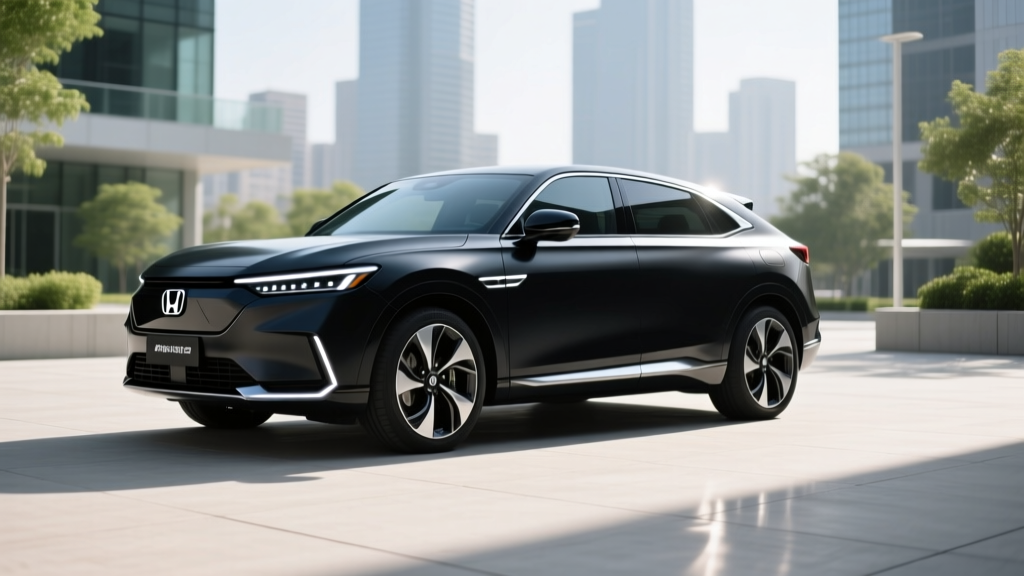
The Honda Prologue is Honda's first mass-market electric SUV built on General Motors' Ultium platform, and buyers searching for the Honda Prologue weight are usually trying to answer a practical question: how does this midsize EV's mass affect its efficiency, ride quality, and everyday usability? The 2026 Prologue tips the scales at approximately 4,930 lbs (FWD) and 5,127 lbs (AWD) — competitive for a two-row electric SUV with an 85 kWh battery pack, but heavy enough that it shapes the driving experience in measurable ways.
Built on the same BEV3 architecture as the Chevrolet Blazer EV and Cadillac Lyriq, the Prologue leverages GM's Ultium battery and drive-unit technology wrapped in Honda's interior design language and Honda Sensing safety suite. The result is an EV that prioritizes comfort and space over sportiness, with a curb weight that contributes to a planted highway ride while slightly penalizing efficiency compared to lighter rivals.
| Spec | EX (FWD) | Touring (AWD) |
|---|---|---|
| Curb Weight | ~4,930 lbs | ~5,127 lbs |
| EPA Range | 296 miles | 273 miles |
| Battery (Usable) | 85 kWh, NMC (Ultium) | |
| Horsepower | 212 hp | 288 hp |
| Torque | 236 lb-ft | 333 lb-ft |
| 0–60 mph | ~7.8 sec | ~6.2 sec |
| Max DC Fast Charge | 150 kW peak | |
| 10–80% DC Charge | ~33 minutes | |
| Level 2 Home Charge | 11.5 kW (~31 mi/hr) | |
| MPGe (Combined) | 95 MPGe | 87 MPGe |
| Base MSRP | $47,400 | $57,900 |
How the Honda Prologue's Weight Shapes the Drive
At roughly 5,000 lbs, the Prologue's weight sits squarely in the midsize electric SUV segment. For comparison, the Hyundai Ioniq 5 AWD weighs about 4,660 lbs, while the Ford Mustang Mach-E GT lands near 4,900 lbs. The Prologue's mass comes primarily from its 85 kWh NMC (nickel-manganese-cobalt) Ultium battery pack, which is mounted low in the chassis to maintain a favorable center of gravity.
What does this weight mean on the road? The Prologue's suspension tuning absorbs the mass well — ride quality is compliant and quiet over highway expansion joints, and body roll is controlled for a vehicle of this heft. However, the weight is noticeable during spirited cornering and when braking from highway speeds. Honda has calibrated the regenerative braking system to handle the kinetic energy of a 5,100-lb vehicle, but drivers accustomed to lighter EVs will feel the inertia. The steering is light and low-effort, which helps in parking but sacrifices feedback at speed.
The AWD Touring's additional 200 lbs (from the rear drive motor and associated hardware) barely register in daily driving, and the 288 hp / 333 lb-ft output more than compensates with a 6.2-second 0–60 time. The FWD EX's 212 hp is adequate for commuting but feels leisurely when merging onto fast-moving freeways with a full cabin.
Real-World Range: What to Expect Beyond the EPA Sticker
EPA Range vs. Reality
FWD EX: EPA 296 miles — expect ~255–275 miles on highway road trips (70+ mph), and ~230–250 miles in freezing temperatures (below 32°F) without preconditioning.
AWD Touring: EPA 273 miles — expect ~235–255 miles highway, and ~210–230 miles in cold weather.
The Prologue's 85 kWh usable battery delivers competitive range, but real-world efficiency depends heavily on speed, temperature, and terrain. According to fueleconomy.gov, the FWD EX achieves 95 MPGe combined (35 kWh/100 mi), while the heavier AWD Touring drops to 87 MPGe combined (39 kWh/100 mi).
In highway driving at sustained 70–75 mph speeds, the Prologue's aerodynamic profile and ~5,000-lb weight push consumption higher than the EPA cycle suggests. Cold weather compounds this: the NMC chemistry requires energy for battery thermal management, and cabin heating (the Prologue uses a heat pump on Touring trims) further reduces range. Preconditioning the battery while plugged in — available via the HondaLink app — mitigates cold-weather losses by warming the pack before departure.
For daily commuting under 50 miles round-trip, the Prologue's range is more than sufficient, and most owners will charge at home 1–2 times per week. Road trippers should plan stops every 200–220 miles to maintain a charging buffer and avoid the steep taper above 80% SoC.
Charging Speed: DC Fast Charging and Home Level 2
| Level | Power | Speed | Time |
|---|---|---|---|
| Level 1 (120V) | 1.4 kW | ~4 mi/hr | ~60 hrs (0–100%) |
| Level 2 (240V, 48A) | 11.5 kW | ~31 mi/hr | ~8 hrs (0–100%) |
| DC Fast Charge | 150 kW peak | ~170 mi in 30 min | ~33 min (10–80%) |
The Prologue's 150 kW peak DC fast-charging rate is its most debated spec. In a segment where the Hyundai Ioniq 5 peaks at 240 kW and the Tesla Model Y at 250 kW, the Prologue's charging speed is a generation behind. The 10–80% charge takes approximately 33 minutes on a 150+ kW station — functional for road trips but noticeably slower than rivals.
The charge curve is relatively flat between 20–60% SoC, sustaining roughly 120–140 kW, before tapering to under 60 kW above 80%. This means the last 20% of a charge takes almost as long as the first 60%. For road-trip efficiency, aim to charge from 10–80% and move on rather than waiting for a full top-off.
At home, the Prologue's 11.5 kW onboard charger (48 amps on a 240V/60A circuit) is a strong point. It adds roughly 31 miles of range per hour, meaning an overnight session from 20–80% takes about 4.5 hours. Honda includes a dual-level charge cord with the vehicle that can plug into a standard 120V outlet (Level 1, ~4 mi/hr) or a 240V NEMA 14-50 outlet. For fastest home charging, a hardwired Level 2 wall connector installed by a licensed electrician on a 60-amp circuit is recommended. Expect installation costs of $800–$2,000 depending on panel capacity and run length.
The Prologue uses the CCS1 connector for DC fast charging on 2024–2025 models. For the 2026 model year, Honda has announced a transition to NACS (the Tesla-style connector), enabling native access to Tesla Supercharger stations via adapter or native port depending on build date. Confirm your specific vehicle's port type at purchase.
Pricing, Trims, and Federal Tax Credit Eligibility
| Trim | MSRP | Est. After §30D Credit* | Key Features |
|---|---|---|---|
| EX (FWD) | $47,400 | ~$39,900 | 19" wheels, 11.3" touchscreen, Honda Sensing, heated front seats |
| EX-L (FWD) | $50,400 | ~$42,900 | Leather, power liftgate, wireless charging, upgraded audio |
| Touring (AWD) | $57,900 | ~$50,400 | Dual motor, 21" wheels, panoramic roof, HUD, Bose audio |
*Federal tax credit estimates assume buyer meets all IRS §30D requirements. Actual eligibility varies. Confirm at irs.gov before purchasing.
The Prologue's pricing positions it against the Hyundai Ioniq 5 ($42,600–$58,200), Ford Mustang Mach-E ($42,995–$59,995), and Chevrolet Blazer EV ($44,600–$56,600). Honda's MSRP includes destination, and the EX trim offers strong value with a 296-mile range and comprehensive standard equipment.
The federal §30D Clean Vehicle Credit can reduce the effective price by up to $7,500, but eligibility is not automatic. Key requirements for 2026 include:
- MSRP Cap: SUVs must be priced at or below $80,000 (all Prologue trims qualify).
- Buyer Income Cap: AGI must not exceed $150,000 (single), $225,000 (head of household), or $300,000 (joint filers).
- Battery Sourcing: The $7,500 credit splits into two halves — $3,750 for critical minerals and $3,750 for battery component sourcing. GM's Ultium battery sourcing has evolved, and the Prologue's eligibility for the full $7,500 depends on the current-year battery component and mineral supply chain compliance. Some buyers may qualify for $3,750 rather than the full $7,500.
- Point-of-Sale Transfer: Since 2024, buyers can transfer the credit to the dealer at purchase, reducing the out-of-pocket price immediately rather than waiting for a tax refund.
Always verify current eligibility with your tax professional and the IRS before finalizing a purchase, as battery-sourcing rules tighten annually.
Interior, Tech, and Daily Livability
The Prologue's cabin is where Honda's influence is most visible. The 11.3-inch landscape touchscreen runs Google Built-in (on Touring) or Honda's native infotainment (EX/EX-L), with wireless Apple CarPlay and Android Auto standard across all trims. The digital instrument cluster is clear, and physical buttons for climate control and volume are a welcome ergonomic choice.
Passenger space is generous: 41.4 inches of front legroom and 38.3 inches rear, with comfortable seating for four adults (the rear middle seat is best for children). Cargo volume measures 25.2 cu ft behind the second row and 57.7 cu ft with the rear seats folded — competitive with the Ioniq 5 (27.2/59.3 cu ft) and Mach-E (29.7/59.7 cu ft).
Honda Sensing comes standard and includes adaptive cruise control, lane-keeping assist, automatic emergency braking, and traffic-sign recognition. This is a Level 2 SAE driver-assist system, meaning the driver must remain engaged with hands on the wheel and eyes on the road at all times. It is not autonomous driving. The system performs competently on highways but does not offer hands-free capability like GM's Super Cruise or Ford's BlueCruise.
Notable drawbacks include the absence of a front trunk (frunk) — the Ultium platform packaging in the Prologue does not include one — and the lack of one-pedal driving as strong as some competitors offer. The Prologue's regen has multiple levels adjustable via paddle shifters, but the maximum setting still requires occasional brake-pedal use for full stops.
Pros and Cons: The Honest Verdict
Pros
- Competitive EPA range (296 mi FWD)
- Comfortable, quiet ride quality
- Strong 11.5 kW home charging speed
- Spacious cabin with practical cargo area
- Honda Sensing safety suite standard
- Eligible for up to $7,500 federal tax credit (verify sourcing)
Cons
- 150 kW DC fast charging is slower than rivals
- No front trunk (frunk)
- Level 2 driver assist — no hands-free highway driving
- FWD base model feels underpowered for the weight
- Regen braking not strong enough for true one-pedal driving
- Touring AWD MSRP pushes past $57,000
Who Should Buy the Honda Prologue?
The Prologue is best suited for daily commuters and families who prioritize ride comfort, cabin space, and Honda's reputation for reliability over sporty performance or bleeding-edge charging speed. If your routine involves a sub-80-mile round-trip commute with access to home Level 2 charging, the Prologue's range and overnight charging will cover your needs effortlessly.
It is less ideal for frequent road trippers who value the fastest possible DC charging (the Ioniq 5 or Model Y recharge 15–20 minutes faster per stop), or for drivers who want hands-free highway driving (look to the Mach-E with BlueCruise or GM vehicles with Super Cruise).
Battery Warranty and Long-Term Ownership
Honda backs the Prologue's Ultium battery with an 8-year / 100,000-mile warranty, covering defects and capacity loss below 70% of original capacity — standard for the segment. The limited vehicle warranty is 3 years / 36,000 miles, and the powertrain (drive motors, reduction gear) is covered for 5 years / 60,000 miles.
The NMC battery chemistry in the Prologue offers high energy density but is more sensitive to sustained high-SoC storage and extreme heat than LFP chemistry. For longevity, Honda recommends keeping the battery between 20–80% SoC for daily use and using the charge-limit setting in the HondaLink app. Avoid repeated DC fast charging in extreme heat without preconditioning.
Frequently Asked Questions
What is the Honda Prologue's curb weight?
The 2026 Honda Prologue weighs approximately 4,930 lbs in FWD (EX/EX-L) and 5,127 lbs in AWD (Touring). The weight is driven by the 85 kWh Ultium NMC battery pack.
What is the real-world range of the Honda Prologue?
The FWD EX is EPA-rated at 296 miles. In real-world highway driving at 70+ mph, expect 255–275 miles. In freezing temperatures, range can drop to 230–250 miles without preconditioning. The AWD Touring is rated at 273 miles EPA, with real-world highway figures around 235–255 miles.
How fast does the Honda Prologue charge?
On a DC fast charger, the Prologue peaks at 150 kW and charges from 10–80% in approximately 33 minutes. At home on a 240V Level 2 charger (48A), it charges at 11.5 kW, adding about 31 miles of range per hour.
Does the Honda Prologue qualify for the $7,500 federal tax credit?
The Prologue's MSRP falls under the $80,000 SUV cap, making it potentially eligible. However, the full $7,500 depends on battery critical-mineral and component sourcing rules under IRS §30D, as well as buyer income limits ($150K single / $300K joint). Some buyers may qualify for $3,750 (half credit). Always verify at irs.gov and consult a tax professional.
Is the Honda Prologue worth buying over the Hyundai Ioniq 5 or Tesla Model Y?
Choose the Prologue if you value ride comfort, Honda's dealer network, and a traditional SUV interior layout. Choose the Ioniq 5 if DC charging speed is a priority (240 kW vs 150 kW). Choose the Model Y if you want access to the Supercharger network natively and the strongest software/OTA update ecosystem. The Prologue competes on comfort and space, not on charging speed or performance.
Does the Prologue have a frunk?
No. The Prologue does not include a front trunk. All cargo space is in the rear (25.2 cu ft behind the second row, 57.7 cu ft with seats folded).
What battery chemistry does the Honda Prologue use?
The Prologue uses GM's Ultium NMC (nickel-manganese-cobalt) lithium-ion battery with 85 kWh of usable capacity. NMC offers high energy density for its weight but requires more careful thermal management and SoC management for optimal longevity compared to LFP chemistry.