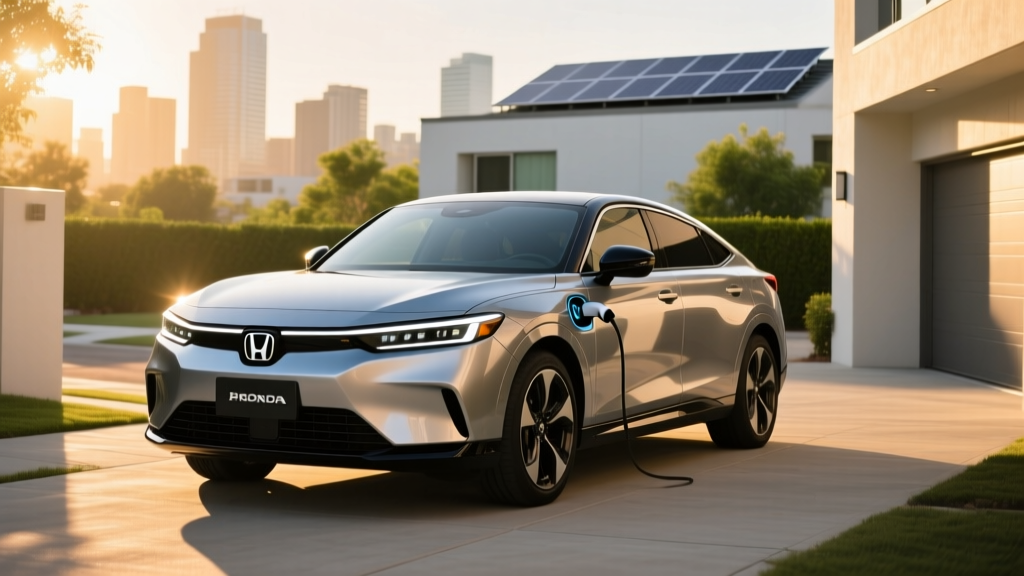
The 2026 Honda Prologue enters its third model year with a crucial advantage: aggressive dealer incentives and federal tax credit eligibility that can slash its effective price by thousands. Built on General Motors' Ultium platform, the Prologue offers a familiar Honda cabin wrapped around GM's proven battery and motor hardware. But with EV pricing in constant flux, understanding where the actual discounts stack up — and whether the underlying EV hardware justifies the deal — is essential before you sign.
2026 Honda Prologue Pricing and Available Discounts
Honda has been aggressive with Prologue incentives since launch, and 2026 continues that pattern. The manufacturer's suggested retail pricing positions the Prologue against mid-tier electric crossovers, but dealer-level discounts and federal incentives dramatically change the math.
| Trim | Drivetrain | Base MSRP | Destination | Total MSRP |
|---|---|---|---|---|
| EX | FWD | $47,400 | $1,395 | $48,795 |
| EX | AWD | $50,400 | $1,395 | $51,795 |
| Touring | AWD | $55,400 | $1,395 | $56,795 |
| Elite | AWD | $59,900 | $1,395 | $61,295 |
Where the Discounts Actually Come From
Honda Prologue sales discounts in 2026 typically layer from three sources:
- Federal §30D tax credit: Up to $7,500, available as a point-of-sale transfer at participating dealers. The Prologue qualifies because its battery meets critical-mineral and component sourcing requirements under current IRS rules.
- Honda manufacturer incentives: Honda has periodically offered $1,000–$2,500 in dealer cash or customer cash on Prologue trims, varying by region and inventory levels.
- Dealer negotiation: With EV inventory building on lots nationwide, many dealers are discounting $2,000–$4,000 below MSRP on FWD EX models especially.
| Line Item | Amount |
|---|---|
| Total MSRP (EX FWD) | $48,795 |
| Dealer discount (typical negotiation) | −$2,500 |
| Federal §30D credit (point-of-sale) | −$7,500 |
| Effective out-of-pocket | ~$38,795 |
Tax credit caveats: The §30D credit has income caps ($150K single / $300K joint modified AGI), an MSRP cap of $80,000 for SUVs (all Prologue trims clear this), and requires the buyer to have sufficient tax liability unless using the point-of-sale transfer option. Battery sourcing rules are strict and subject to change — always verify current eligibility with your dealer and a tax professional before relying on the credit.
Range, Efficiency, and Real-World Expectations
The 2026 Prologue uses an 85 kWh usable lithium-ion battery pack (NMC chemistry) shared with the Chevrolet Blazer EV and Cadillac Lyriq. EPA range varies by trim and drivetrain:
- EX FWD: 296 miles EPA
- EX AWD: 281 miles EPA
- Touring/Elite AWD: 273 miles EPA
The EPA 296-mile figure on the FWD EX assumes a mix of city and moderate-speed driving. In sustained highway driving at 70+ mph, expect roughly 240–260 miles. In freezing temperatures (below 32°F), cabin heating and battery conditioning can reduce range by 20–30%, putting real-world winter range closer to 190–220 miles on the FWD model. AWD trims will see slightly greater losses due to the second motor's parasitic drag and added weight.
Efficiency lands at approximately 99 MPGe combined for the FWD EX, which translates to roughly 34 kWh per 100 miles. That's competitive with the Hyundai Ioniq 5 but slightly behind the Tesla Model Y's class-leading efficiency. The Prologue's bluff body shape and 4,800+ lb curb weight work against it at highway speeds.
Charging Speed: DC Fast Charge and Home Level 2
Charging speed is where the Prologue's GM Ultium architecture shows its strengths and limitations. The pack supports a peak DC fast-charge rate of 155 kW, which is adequate but trails the 200+ kW peaks of Hyundai/Kia's E-GMP platform or Tesla's latest architecture.
| Charging Level | Power / Rate | Time / Speed |
|---|---|---|
| Level 1 (120V household) | ~1.4 kW | ~4 mi/hr added |
| Level 2 (240V home, 48A) | 11.5 kW | ~33 mi/hr; full charge in ~8.5 hrs |
| DC Fast Charge (peak) | 155 kW | 10–80% in ~34 min |
The 10–80% time of approximately 34 minutes is acceptable for road-trip charging stops but not class-leading. The charge curve holds near peak through about 50% state of charge before tapering — typical of NMC packs with this thermal management approach. For daily driving, most owners will charge at home on Level 2, where the 11.5 kW onboard charger replenishes overnight with ease.
Connector note: The 2026 Prologue uses the CCS1 connector natively. Honda provides a NACS adapter for Tesla Supercharger access, which significantly expands the available public charging network. Per Honda's official specs, Supercharger compatibility is confirmed via adapter.
Performance and Drivetrain
The Prologue's performance is tuned for comfort rather than sportiness, which suits its family-crossover mission:
- FWD: Single front motor, 212 hp, 236 lb-ft torque — 0–60 mph in ~8.4 seconds
- AWD: Dual motor, 288 hp, 333 lb-ft torque — 0–60 mph in ~6.0 seconds
The AWD model's 6.0-second sprint is genuinely quick for a 4,888-lb vehicle and makes highway merging effortless. The FWD version is adequate for commuting but feels its weight when asked for urgent acceleration. Regenerative braking offers multiple levels adjustable via steering wheel paddles, though it doesn't quite achieve true one-pedal driving at its strongest setting — you'll still need the friction brakes for final stops.
Ride quality is a standout. The Prologue's suspension soaks up rough pavement with the composure Honda buyers expect, and cabin isolation is excellent at highway speeds. The steering is light and numb, which is fine for parking lots but uninspiring on back roads.
Interior Space, Cargo, and Technology
The Prologue's cabin is where Honda's influence is most visible, and it's a strong selling point versus the Chevrolet Blazer EV it shares a platform with.
Dimensions and Space
- Front legroom: 41.4 inches
- Rear legroom: 38.4 inches
- Cargo behind rear seats: 25.2 cu ft
- Cargo with rear seats folded: 57.7 cu ft
- Frunk (front trunk): None — the Ultium platform's under-hood packaging doesn't allow one
Passenger space is generous for a midsize crossover, and the flat floor (thanks to the battery pack) gives rear-seat occupants excellent foot room. Cargo volume trails the Tesla Model Y (76 cu ft max) but matches competitors like the Ford Mustang Mach-E.
Infotainment and Driver Assists
The Prologue uses an 11.3-inch touchscreen running Google Built-In, which includes native Google Maps navigation, Google Assistant, and Play Store apps. Wireless Apple CarPlay and Android Auto are standard. The system is responsive and the interface is logical — a welcome change from some competitors' overcomplicated menus.
Honda Sensing is standard across all trims and includes:
- Adaptive cruise control with stop-and-go
- Lane-keeping assist and lane-centering
- Forward collision warning with automatic emergency braking
- Blind-spot monitoring with rear cross-traffic alert
This is a Level 2 driver-assist system per SAE automation levels — meaning the driver must remain fully engaged with hands on the wheel and eyes on the road. It is not autonomous or "self-driving." The system works well on divided highways but requires active supervision, especially in construction zones and on faded lane markings.
Warranty Coverage
Honda backs the Prologue with competitive warranty terms:
- Battery warranty: 8 years / 100,000 miles (capacity retention guaranteed above 70% of original)
- Powertrain warranty: 5 years / 60,000 miles
- Bumper-to-bumper: 3 years / 36,000 miles
- Roadside assistance: 3 years / 36,000 miles
The battery warranty's 70% retention threshold is standard for the industry. Based on NMC degradation data from the broader Ultium fleet, owners can expect roughly 5–8% capacity loss over the first 100,000 miles under normal use patterns — well within the warranty floor. Per fueleconomy.gov, the Prologue's efficiency and range figures have remained stable across model years.
Pros, Cons, and Who Should Buy
- Strong federal tax credit eligibility stacks with dealer discounts
- Comfortable, quiet ride quality that beats most EV crossovers
- Google Built-In infotainment is intuitive and well-integrated
- AWD model offers genuinely quick acceleration
- NACS adapter included for Tesla Supercharger access
- Honda's dealer network and service infrastructure
- 155 kW peak DC charge rate trails Hyundai/Kia/Tesla rivals
- No front trunk (frunk) — lost cargo opportunity
- Highway efficiency drops noticeably above 70 mph
- Cold-weather range loss is significant without a heat pump on base trims
- Regenerative braking doesn't fully enable one-pedal driving
- Elite trim pushes $60K+ before incentives
Who the Prologue Suits Best
Commuters and suburban families who charge at home and drive under 60 miles daily will find the Prologue ideal. The comfortable ride, spacious rear seat, and straightforward tech make it an easy transition from a gas CR-V. It's also a strong choice for buyers who prioritize dealer service access — Honda's nationwide network is far denser than Tesla's or newer EV brands.
Road-trip enthusiasts should consider the 34-minute 10–80% charge time and 240-mile real-world highway range when planning long routes. It's workable with Supercharger access, but competitors like the Ioniq 5 (18-minute 10–80%) make longer trips less time-consuming. Towing is limited to 1,500 lbs — adequate for a small trailer but not a camper.
How It Stacks Up Against Competitors
With discounts applied, the Prologue EX FWD can land near $38,000–$40,000 effective price. That puts it in direct competition with:
- Tesla Model Y Long Range: More range (320+ mi EPA), faster charging, Supercharger native access, but less comfortable ride and no physical dealer network for service.
- Hyundai Ioniq 5: Faster DC charging (800V architecture), available heat pump, slightly less cargo space. Often priced similarly after credits.
- Ford Mustang Mach-E: Sportier handling, longer range on Extended Range trims, but tighter rear seat and less refined ride.
- Chevrolet Blazer EV: Same platform, lower starting price, but noticeably cheaper interior materials and less polished infotainment.
The Prologue wins on ride comfort, interior quality, and dealer network convenience. It loses on charging speed and efficiency. If your daily driving is predictable and home charging is available, the Prologue's strengths matter more than its weaknesses.
Frequently Asked Questions
What is the real-world range of the Honda Prologue?
The FWD EX achieves 296 miles EPA, but real-world highway driving yields roughly 240–260 miles. In freezing weather, expect 190–220 miles. AWD trims lose an additional 10–15 miles across all conditions.
How fast does the Prologue charge at home and on DC fast chargers?
On a 240V Level 2 home charger at 48 amps, the Prologue charges at 11.5 kW, adding about 33 miles per hour and fully recharging overnight in roughly 8.5 hours. On DC fast chargers, it peaks at 155 kW and charges from 10–80% in approximately 34 minutes.
How much does the Prologue cost after federal tax credits and discounts?
The EX FWD starts at $48,795 MSRP. With a typical $2,500 dealer discount and the $7,500 federal §30D credit (via point-of-sale transfer), the effective price drops to approximately $38,795. AWD and higher trims will cost more but may also see larger dealer discounts on overstocked inventory.
Does the Honda Prologue qualify for the full $7,500 federal EV tax credit?
As of 2026, the Prologue qualifies for the full $7,500 credit under IRS §30D, meeting both battery component and critical mineral sourcing requirements. However, buyer eligibility depends on income caps ($150K single / $300K joint AGI) and the vehicle must be under the $80,000 MSRP cap for SUVs. Always verify current rules at irs.gov and with a tax professional.
Is the Prologue worth buying over the Tesla Model Y or Ioniq 5?
If you value ride comfort, a quiet cabin, Google Built-In infotainment, and Honda's dealer service network — yes, especially with discounts applied. If fast DC charging and maximum highway range are priorities, the Ioniq 5 or Model Y are stronger choices.
Does the Prologue have a heat pump for cold weather?
The Touring and Elite trims include a heat pump, which reduces cold-weather range loss and improves cabin heating efficiency. The EX trim uses a resistive heater, which draws more battery power in freezing conditions.