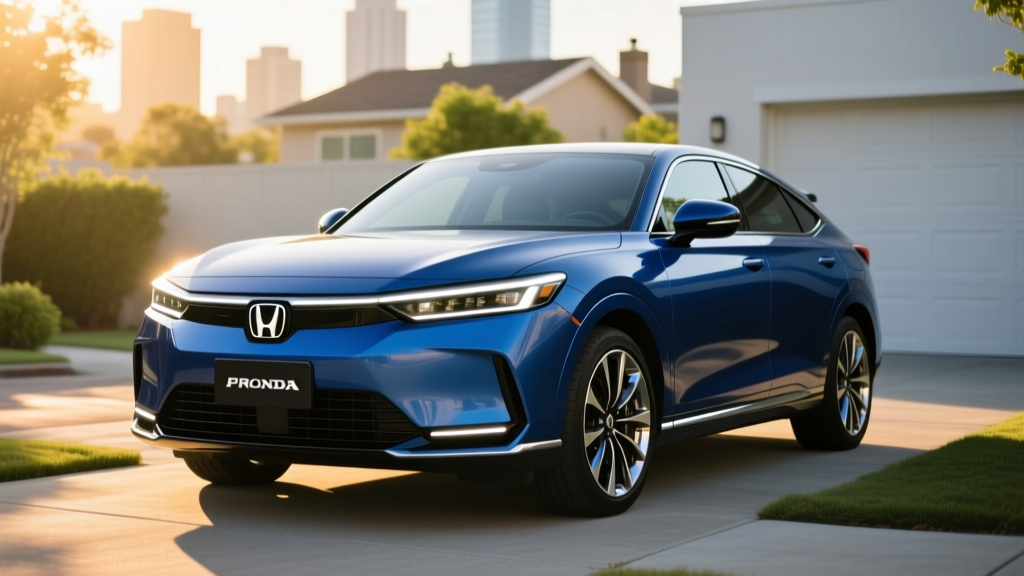
The Honda Prologue occupies an unusual space in the electric SUV market: it's a midsize crossover built on General Motors' Ultium platform, yet it wears a Honda badge and targets loyal Accord and CR-V buyers ready to go electric. For 2026, the Prologue continues to leverage its GM underpinnings — including an 85 kWh NMC battery and available dual-motor AWD — while wrapping everything in Honda's familiar ergonomics and dealer network. But the real question for most shoppers isn't just what the Prologue offers — it's what it costs after incentives. Let's map out the Honda Prologue rebates, the federal tax credit landscape, and whether the math works in your favor.
Honda Prologue Spec Sheet at a Glance
| Specification | EX (FWD) | Touring (AWD) |
|---|---|---|
| EPA Range | 296 miles | 273 miles |
| Battery (usable) | 85 kWh, NMC (nickel manganese cobalt) | |
| Horsepower | 212 hp | 288 hp (dual-motor) |
| 0-60 mph | ~7.5 sec | ~5.8 sec |
| Max DC Fast Charge | 150 kW peak | |
| 10-80% DC Charge Time | ~35 minutes | |
| Level 2 Home Charge Rate | 11.5 kW (~34 mi/hr) | |
| EPA Efficiency (combined) | 99 MPGe (34 kWh/100mi) | 94 MPGe (36 kWh/100mi) |
| Cargo (behind rear seats) | 25.2 cu ft / 57.7 cu ft (folded) | |
| Rear Legroom | 38.4 inches | |
| Base MSRP | $48,795 | $59,295 |
| Battery/Powertrain Warranty | 8 years / 100,000 miles | |
Real-World Range: What the EPA Number Doesn't Tell You
The FWD EX carries an EPA-estimated 296 miles of range. In real-world mixed driving — predominantly highway at 70-75 mph — expect roughly 250-270 miles before you're hunting for a charger. In cold weather (below 30°F), that figure can drop to 210-230 miles due to battery resistance and cabin heating demands. The AWD Touring trim's 273-mile EPA rating translates to roughly 230-250 miles on the highway in moderate temperatures.
The Prologue's 85 kWh NMC battery is shared with the Chevrolet Blazer EV and Cadillac Lyriq, but Honda's thermal management tuning and slightly lighter curb weight give it competitive efficiency. At 34 kWh per 100 miles (FWD), the Prologue sits in the middle of the midsize electric SUV pack — not as efficient as a Tesla Model Y (28 kWh/100mi) but comparable to the Hyundai Ioniq 5 and Ford Mustang Mach-E.
For daily commuting under 60 miles round-trip, even the AWD Touring will rarely need more than a nightly Level 2 top-up. Road trippers should plan charging stops every 200-220 miles to keep the battery in its fastest-charging zone (between 10-60% State of Charge).
Charging Speed: DC Fast and Home Level 2 Breakdown
| Charging Level | Power | Speed | Typical Use Case |
|---|---|---|---|
| Level 1 (120V household) | ~1.4 kW | ~4 miles/hour | Emergency / overnight trickle |
| Level 2 (240V home) | 11.5 kW | ~34 miles/hour | Daily home charging (full charge in ~8 hrs) |
| DC Fast Charge | 150 kW peak | 10-80% in ~35 min | Road trips, public stations |
The Prologue's 150 kW peak DC fast-charging rate is adequate but not class-leading. Competitors like the Hyundai Ioniq 5 and Kia EV6 peak at 240 kW on 800V architecture, achieving 10-80% in roughly 18 minutes. The Prologue's ~35-minute 10-80% session is closer to the Ford Mustang Mach-E and Volkswagen ID.4.
An important charging-curve reality: the 150 kW peak only sustains between roughly 10-40% State of Charge. Above 60%, the rate tapers significantly — often dropping below 60 kW by 80%. This is normal NMC battery behavior, but it means charging from 80-100% at a DC station is painfully slow. Plan to charge to 80% and go, unless you need the full battery for a long stretch without chargers.
For home charging, the 11.5 kW onboard charger is a strong point. A full charge from empty takes about 8 hours on a Level 2 home station — meaning you'll wake up to a full battery every morning. Most Prologue owners will need a 48-amp Level 2 charger installed on a 60-amp circuit. Budget $500-$2,000 for home Level 2 installation depending on your electrical panel's capacity and proximity to the garage (source: typical licensed electrician rates for a 240V/60A circuit).
Honda Prologue Rebates and Federal Tax Credit Eligibility
This is where the Prologue's value proposition shifts dramatically. The federal EV tax credit under IRS §30D remains a central factor for 2026 buyers, and the Prologue — assembled in Mexico on GM's Ultium platform — has navigated the complex battery-sourcing and critical-mineral requirements to qualify for the full $7,500 credit for eligible buyers. Here's what you need to know:
- Credit amount: Up to $7,500 (split between battery component and critical mineral requirements)
- MSRP cap: Vehicle must be under $80,000 for SUVs — all Prologue trims qualify
- Buyer income cap: AGI must not exceed $150,000 (single), $225,000 (head of household), or $300,000 (joint filing)
- Battery sourcing: Must meet critical mineral and battery component thresholds set by the IRS for the model year
- Point-of-sale transfer: As of 2024, buyers can transfer the credit to the dealer for an immediate price reduction at purchase — no need to wait until tax filing
Source: IRS Clean Vehicle Credits. Eligibility rules change — always confirm with a tax professional and check the IRS energy credit lookup tool for your specific VIN before purchase.
| Trim | Base MSRP | After $7,500 Federal Credit | Destination & Fees | Effective Starting Price |
|---|---|---|---|---|
| EX (FWD) | $48,795 | -$7,500 | +$1,395 | ~$42,690 |
| Touring (AWD) | $59,295 | -$7,500 | +$1,395 | ~$53,190 |
Beyond the federal credit, several states and utilities offer additional rebates. California's Clean Vehicle Rebate Project (CVRP) and various utility-company incentives (typically $500-$1,500 for Level 2 charger installation) can stack on top. Check fueleconomy.gov and your state's energy office for current local programs — these vary significantly by jurisdiction and are subject to funding availability.
Performance, Interior, and Daily Livability
The Prologue drives like a Honda should: composed, quiet, and confidence-inspiring without being thrilling. The FWD EX's 212 hp delivers a 0-60 mph time around 7.5 seconds — adequate for merging and passing but not exciting. The dual-motor AWD Touring bumps that to 288 hp and a ~5.8-second sprint, which feels genuinely quick for a family crossover.
Ride quality is a highlight. Honda tuned the suspension for comfort over sportiness, and the Prologue absorbs highway expansion joints and city potholes with a maturity that some competitors (looking at you, Hyundai Ioniq 5) don't quite match. Cabin noise levels are impressively low at 70 mph — among the quietest in the segment.
Inside, the 11.3-inch touchscreen runs Google Built-In (a GM platform hallmark), meaning Google Maps, Google Assistant, and the Play Store are native. Wireless Apple CarPlay and Android Auto are standard. Honda Sensing driver-assistance features include adaptive cruise control, lane-keeping assist, and blind-spot monitoring. Note: this is a Level 2 driver-assist system per SAE classification — the driver must remain fully engaged at all times. It is not autonomous driving.
Cargo space is competitive: 25.2 cubic feet behind the rear seats expands to 57.7 cubic feet with the 60/40 split folded. Rear legroom is generous at 38.4 inches. However, there is no front trunk (frunk) — the Ultium platform's front subframe houses electronics and HVAC components. For comparison, the Tesla Model Y offers 76 cu ft total (including its frunk), and the Ioniq 5 provides 59.3 cu ft of rear cargo.
Pros and Cons
- Qualifies for full $7,500 federal tax credit
- Comfortable, quiet ride quality
- Strong Honda dealer network for service
- 11.5 kW Level 2 charging (fast home fills)
- Generous rear legroom (38.4 in)
- Google Built-In infotainment is intuitive
- 150 kW peak DC charging is below class leaders
- No frunk (front trunk)
- Base price high before incentives ($48,795)
- Range drops significantly in cold weather
- No NACS port — requires adapter for Tesla Superchargers
- Cargo space trails Model Y and Ioniq 5
Prologue vs. Key Competitors: Which Should You Choose?
The Prologue's closest rivals are the Hyundai Ioniq 5, Tesla Model Y, Ford Mustang Mach-E, and Chevrolet Blazer EV (its platform sibling). Here's how the value proposition compares after incentives:
| Model | EPA Range (top trim) | Peak DC Charge | 10-80% Time | Base MSRP | Federal Credit |
|---|---|---|---|---|---|
| Honda Prologue EX | 296 mi | 150 kW | ~35 min | $48,795 | $7,500 |
| Hyundai Ioniq 5 SE | 303 mi | 240 kW | ~18 min | $42,600 | $7,500* |
| Tesla Model Y LR | 320 mi | 250 kW | ~25 min | $44,990 | $7,500* |
| Ford Mach-E Select | 250 mi | 150 kW | ~36 min | $42,995 | $7,500* |
*Credit eligibility varies by model year, sourcing, and buyer income. Verify at irs.gov before purchasing.
Choose the Honda Prologue if: You value a quiet, comfortable ride; you trust the Honda dealer network for service; you want Google Built-In infotainment; and your daily commute is under 80 miles round-trip.
Choose the Hyundai Ioniq 5 if: Fast DC charging is a priority (240 kW, 10-80% in ~18 min); you want a lower starting price; or you frequently road-trip and need minimal charging stops.
Choose the Tesla Model Y if: Maximum range and Supercharger network access matter most; you want the lowest cost per mile; or cargo space is a top priority.
Who the Honda Prologue Suits Best
The Prologue is strongest as a daily commuter and family hauler for buyers who prioritize comfort and familiarity over cutting-edge charging technology. If you can install a Level 2 charger at home and your typical drive is under 80 miles, the Prologue's range is more than sufficient, and you'll rarely visit a public charger.
It's less ideal for frequent road trippers who need the fastest possible DC charging, or for buyers in extreme cold climates where the 273-mile AWD range could drop below 220 miles. For towing, Honda rates the Prologue at a modest 1,500 pounds — fine for a small utility trailer but not a camper. If you need 3,500+ lb towing, look at the Ford F-150 Lightning or Rivian R1S.
Frequently Asked Questions
Does the Honda Prologue qualify for the $7,500 federal EV tax credit in 2026?
Yes, the Prologue qualifies for the full $7,500 federal tax credit under IRS §30D, provided the buyer meets income requirements (up to $300,000 AGI for joint filers) and the vehicle is purchased new. The credit can be transferred to the dealer at point of sale for an immediate price reduction. Always confirm eligibility with your tax professional and check the VIN against the IRS energy credit lookup tool.
What is the real-world range of the Honda Prologue?
The FWD EX is EPA-rated at 296 miles; the AWD Touring at 273 miles. In real-world highway driving at 70-75 mph, expect 250-270 miles (FWD) or 230-250 miles (AWD) in moderate temperatures. Cold weather below 30°F can reduce range by 15-25%, bringing the AWD Touring down to roughly 210-230 miles.
How fast does the Prologue charge at home and on the road?
At home on a Level 2 (240V) charger, the Prologue accepts up to 11.5 kW, adding roughly 34 miles of range per hour — a full charge takes about 8 hours. On DC fast chargers, it peaks at 150 kW and reaches 10-80% in approximately 35 minutes, though charging speed tapers significantly above 60% State of Charge.
Is the Honda Prologue worth buying over the Tesla Model Y or Hyundai Ioniq 5?
It depends on your priorities. The Prologue wins on ride comfort, cabin quietness, and Honda dealer familiarity. The Ioniq 5 wins on DC charging speed (240 kW vs 150 kW) and lower base price. The Model Y wins on range (320 mi), Supercharger network access, and cargo space. If comfort and a trusted service network matter most, the Prologue earns its place.
Does the Prologue use a CCS or NACS charging connector?
The Prologue uses the CCS1 connector for DC fast charging and J1772 for Level 2 AC. Honda has announced future NACS adoption, but current Prologue models require an adapter to access Tesla Superchargers. Honda provides a complimentary adapter for qualifying owners — confirm availability with your dealer.
What is the battery warranty on the Honda Prologue?
Honda covers the Prologue's high-voltage battery and electric powertrain for 8 years or 100,000 miles (whichever comes first), with a capacity retention threshold of 70%. This is in line with industry standards and matches GM's Ultium battery warranty.