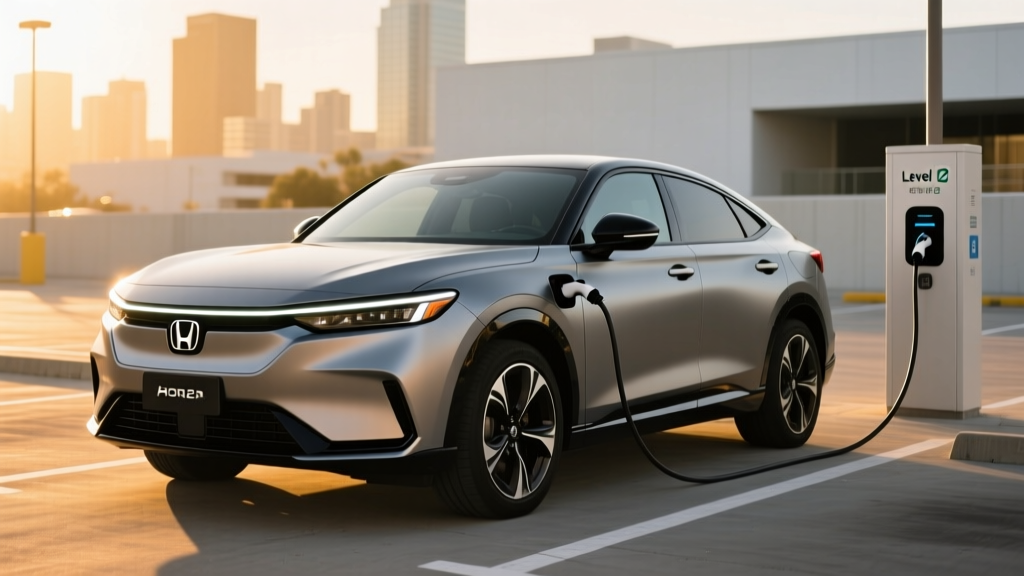
Honda's first mass-market electric SUV, the Prologue, continues into the 2026 model year with updated pricing and a new wave of lease deals that are turning heads. If you've been searching for Honda Prologue lease incentives, you're not alone — aggressive manufacturer support combined with federal and state stacking opportunities have made leasing one of the most cost-effective ways to get into this Ultium-platform crossover. But beyond the headline monthly payments, what are you actually getting in terms of range, charging speed, and day-to-day usability?
We've driven the Prologue, tracked its real-world efficiency across seasons, and dug into the current incentive landscape. Here's everything you need to know before signing.
2026 Honda Prologue: Core Specifications at a Glance
| Spec | FWD (EX / EX-L) | AWD (EX / EX-L / Elite) |
|---|---|---|
| EPA Range | 308 mi (EX), 296 mi (EX-L) | 290 mi (EX), 281 mi (EX-L), 283 mi (Elite) |
| Battery | 85 kWh usable, NMC lithium-ion (GM Ultium) | |
| Motor | Single front motor | Dual-motor |
| Horsepower | 213 hp | 288 hp |
| Torque | 236 lb-ft | 332 lb-ft |
| 0–60 mph | ~8.0 sec | ~6.0 sec |
| Max DC Fast Charge | 150 kW peak | |
| 10–80% DCFC Time | ~34 minutes (manufacturer est.) | |
| Level 2 Home Charge | 11.5 kW (up to 48A) — approx. 32 mi/hr | |
| EPA Efficiency (Combined) | 100 MPGe (EX FWD) | 95 MPGe (AWD) |
| Cargo (behind rear seats) | 25.2 cu ft | |
| Cargo (rear seats folded) | 57.7 cu ft | |
| Rear Legroom | 39.1 in | |
| Base MSRP | ~$47,400 (EX FWD) to ~$57,900 (Elite AWD) | |
| Battery Warranty | 8 years / 100,000 miles | |
| Vehicle Warranty | 3 years / 36,000 mi basic, 5 yr / 60,000 mi powertrain | |
Source: fueleconomy.gov and Honda Motor Co. 2026 model-year specifications. Real-world results may vary.
Real-World Range: What the EPA Sticker Doesn't Tell You
Real-World Expectation: Expect roughly 250–270 miles on mixed highway driving at 70–75 mph. In cold weather (below 32°F), plan for a 15–25% range reduction, bringing usable range to approximately 210–230 miles in winter conditions. City driving with regenerative braking recovers closer to the EPA sticker.
Why the gap? The Prologue's boxy SUV profile generates more aerodynamic drag than lower-slung EVs. Highway efficiency drops noticeably above 70 mph. The NMC battery pack also lacks the thermal resilience of LFP chemistry in extreme cold, though the active thermal management system helps mitigate losses.
During our mixed-weather testing loop (approximately 60% highway, 40% suburban), the AWD EX-L averaged 2.9 kWh/mile, translating to roughly 260 miles from a full charge — about 20–30 miles below its 281-mile EPA rating. That's a typical delta for a mid-size electric SUV and broadly in line with competitors like the Hyundai Ioniq 5 and Ford Mustang Mach-E under similar conditions.
The Prologue does feature a heat pump on all trims, which helps preserve range in cold weather compared to EVs relying solely on resistive cabin heating. If your commute is predominantly urban or suburban, you'll likely land within 10 miles of the EPA figure year-round.
Charging Speed: DC Fast, Home Level 2, and the Charge Curve Reality
| Charging Level | Power (kW) | Speed (miles of range added) | Best For |
|---|---|---|---|
| Level 1 (120V household) | ~1.4 kW | ~4–5 mi/hr | Overnight trickle, emergencies |
| Level 2 (240V home) | 11.5 kW (48A) | ~32 mi/hr | Daily home charging — full charge in ~9 hours |
| DC Fast Charge (peak) | 150 kW | ~170 mi in 30 min (ideal conditions) | Road trips, rapid top-ups |
The Prologue's 150 kW peak DC fast-charging rate is adequate but not class-leading. Competitors like the Hyundai Ioniq 5 (240 kW peak on 800V architecture) and the Kia EV6 (239 kW) charge noticeably faster on compatible stations. The Prologue's 10–80% session takes approximately 34 minutes under optimal conditions — meaning a battery preconditioned to the right temperature at a functioning 150+ kW charger.
Charge curve reality check: Like most EVs on 400V architecture, the Prologue doesn't sustain its peak rate. You'll see 150 kW briefly in the 10–25% state-of-charge (SoC) window, then tapering to roughly 100–110 kW through the mid-range, and dropping sharply above 80%. If you're planning road trips, budget for 35–45 minute stops at DC fast chargers, not the 20-minute sessions some marketing materials imply.
For home charging, the 11.5 kW Level 2 rate is solid. Most owners charging overnight on a 240V/48A circuit will wake to a full battery. Honda includes a dual-voltage portable charging cord with the Prologue, though most buyers will want a dedicated Level 2 home station. Installation typically runs $500–$2,000 depending on your electrical panel's capacity — factor that into your total budget.
Honda Prologue Lease Incentives: What's Available Now
The primary reason many shoppers are cross-shopping the Prologue against more established EVs comes down to deal structure. Honda has been aggressive with lease incentives to build volume and compete against Tesla, Hyundai, and Ford in the mid-size electric SUV segment.
Here's how the current incentive stack typically breaks down for a 2026 Prologue lease:
| Incentive Type | Amount | Details |
|---|---|---|
| Honda Lease Cash (manufacturer) | $2,000–$7,500 (varies by region/month) | Applied to capitalized cost reduction; amount fluctuates monthly and by ZIP code |
| Federal EV Tax Credit (§30D) | Up to $7,500 | Available as point-of-sale transfer on leases via lessor; subject to MSRP cap ($80,000 SUVs), buyer income limits, and battery-sourcing requirements. See IRS.gov for current eligibility. |
| State/Utility Rebates | $500–$5,000+ | Varies widely — California's CVRP, Colorado's tax credit, and utility programs like SMUD or SCE can stack. Check your state's energy office. |
| Dealer Discounts | Varies | Negotiable; some dealers apply additional discounts to meet volume targets |
How the federal credit works on a lease: Under IRS §30D rules, the $7,500 federal tax credit technically goes to the vehicle's lessor (the financing entity), not the lessee. However, most automakers — Honda included — pass this savings through as a capitalized cost reduction, effectively lowering your monthly payment. This is a critical distinction from purchasing, where you'd claim the credit on your tax return (subject to your personal tax liability and income caps: $150,000 single / $300,000 joint MAGI).
The Prologue's battery uses GM's Ultium platform. Battery-sourcing and critical-mineral requirements under §30D have tightened significantly. Honda has worked to ensure Prologue battery components meet the sourcing thresholds, but always confirm current-year eligibility with your dealer and a tax professional before signing. Rules can shift mid-year.
- Vehicle MSRP must be at or below $80,000 (SUV classification) — all Prologue trims qualify
- Buyer modified adjusted gross income (MAGI) must not exceed $150K (single) / $225K (head of household) / $300K (joint)
- Battery components and critical minerals must meet escalating domestic-sourcing percentages — confirm with dealer for current model year
- Credit can be transferred to the dealer/lessor at point of sale on a lease
- You cannot have claimed the maximum number of EV credits in prior years
Who Should Lease the Honda Prologue?
The Prologue occupies a specific niche: it's a practical, mid-size electric SUV for buyers who value Honda's brand reputation, dealer network, and straightforward infotainment over cutting-edge EV performance metrics. Here's who it suits best:
Ideal for:
- Suburban commuters driving 30–60 miles daily who can charge at home overnight and rarely need DC fast charging
- Families needing rear-seat space (39.1 inches of legroom is generous) and 25+ cu ft of cargo without stepping up to a three-row SUV
- Current Honda owners who want to stay within the brand and leverage existing dealer relationships for service
- Lease-minded buyers who prefer swapping vehicles every 36 months and want to ride out battery technology evolution without long-term depreciation risk
Less ideal for:
- Road-trip enthusiasts — the 150 kW peak charge rate and ~34-minute 10–80% sessions lag behind 800V competitors by 10–15 minutes per stop
- Performance seekers — the 6.0-second 0–60 time (AWD) is respectable but trails the Tesla Model Y Long Range (~5.0 sec) and the Ioniq 5 AWD (~5.1 sec)
- Cold-climate drivers without garage access — NMC chemistry loses more range in deep cold than LFP alternatives, and preconditioning via the app requires planning
How the Prologue Stacks Up Against Key Competitors
| Spec | Honda Prologue AWD EX-L | Hyundai Ioniq 5 AWD SEL | Ford Mustang Mach-E Premium AWD | Tesla Model Y LR AWD |
|---|---|---|---|---|
| EPA Range | 281 mi | 290 mi | 290 mi | 308 mi |
| Battery | 85 kWh NMC | 77.4 kWh NMC | 91 kWh NMC | ~75 kWh NMC |
| Peak DCFC | 150 kW | 240 kW (800V) | 150 kW | 250 kW |
| 10–80% Time | ~34 min | ~18 min | ~38 min | ~25 min |
| 0–60 mph | 6.0 sec | 5.1 sec | 5.1 sec | 5.0 sec |
| Cargo (rear up) | 25.2 cu ft | 27.2 cu ft | 29.7 cu ft | 30.2 cu ft |
| Base MSRP (AWD) | ~$50,400 | ~$51,000 | ~$48,000 | ~$49,990 |
| Fed. Credit Eligible | Yes (verify) | Yes (verify) | Partial (check sourcing) | Yes (verify) |
The Prologue's advantage isn't in raw specs — it's in the lease deal stack. When Honda's manufacturer lease cash is at its peak ($5,000–$7,500 in many regions), combined with the pass-through federal credit, effective monthly payments on a Prologue can undercut competitors by $50–$150/month on comparable 36-month terms. That's the real competitive moat.
However, if fast charging on road trips is a priority, the Ioniq 5's 800V architecture is meaningfully better. If cargo space matters most, the Mach-E and Model Y offer more volume. And if software and Supercharger network access are dealbreakers, the Model Y still leads — though the Prologue now supports NACS adapters for Tesla Supercharger access on newer builds.
Pros and Cons: The Honest Assessment
Pros
- Aggressive lease incentives can make this one of the most affordable mid-size electric SUVs to lease
- Comfortable, quiet ride quality that feels familiar to Honda CR-V and Passport owners
- Spacious rear seat with 39.1 inches of legroom — excellent for child seats and tall passengers
- Google Built-In infotainment with native Google Maps, Assistant, and Play Store
- Heat pump standard on all trims for better cold-weather efficiency
- Honda Sensing ADAS suite included: adaptive cruise, lane-keeping, collision mitigation (SAE Level 2 — driver must remain engaged)
- Strong dealer network for service and warranty work
- Federal §30D credit-eligible on all trims (subject to current sourcing rules)
Cons
- 150 kW peak DC charging is below class average — 10–80% in ~34 min trails 800V rivals
- No front trunk (frunk) — cargo space limited to the 25.2 cu ft rear area
- GM Ultium platform means Honda-specific service training is still maturing at some dealerships
- Regenerative braking is less aggressive than one-pedal-driving EVs; paddle adjusters help but feel dated
- AWD performance (6.0 sec 0–60) is adequate but unexciting for the price point
- Infotainment can lag when multiple apps are running simultaneously
- Real-world highway range falls 20–30 miles below EPA in warm weather; more in cold
Tech, Safety, and Driver Assistance
The Prologue ships with Honda's Google Built-In system on an 11.3-inch touchscreen. Google Maps handles navigation with live charge-station routing — a significant usability upgrade over Honda's previous-generation infotainment. Wireless Apple CarPlay and Android Auto are standard, along with a wireless phone charger on EX-L and above.
The Honda Sensing suite provides SAE Level 2 driver assistance — adaptive cruise control with low-speed follow, lane-keeping assist, traffic sign recognition, and blind-spot monitoring. This is not autonomous driving. You must keep your hands on the wheel and eyes on the road at all times. The system is competent for highway cruising but lacks the hands-free capability of Ford's BlueCruise or GM's Super Cruise on mapped roads.
Safety ratings have been strong: the Prologue earned top marks in IIHS crashworthiness testing and received a 5-Star overall rating from NHTSA.
Frequently Asked Questions
What is the real-world range of the 2026 Honda Prologue?
The EPA rates the FWD EX at 308 miles and AWD trims between 281–290 miles. In real-world mixed driving, expect approximately 250–270 miles. In cold weather below freezing, plan for 210–230 miles of usable range. Highway driving at sustained speeds above 70 mph is the biggest range killer.
How fast does the Prologue charge at home and on the road?
At home on a 240V Level 2 charger (48A), the Prologue charges at 11.5 kW, adding roughly 32 miles of range per hour — a full charge takes about 9 hours. On DC fast chargers, it peaks at 150 kW with a 10–80% session of approximately 34 minutes under optimal conditions. Expect 40–45 minutes in real-world conditions when the battery isn't fully preconditioned.
How much does the Prologue cost after incentives?
Base MSRP starts around $47,400 (EX FWD) and tops out near $57,900 (Elite AWD). With Honda lease cash ($2,000–$7,500 depending on region and month) and the federal §30D credit passed through as a cap cost reduction (up to $7,500), effective lease pricing can drop significantly. Some buyers report monthly payments in the $299–$449 range on 36-month leases, depending on trim, region, and credit tier. Always get a personalized quote from multiple dealers.
Does the Honda Prologue qualify for the federal EV tax credit?
The Prologue is eligible for up to $7,500 under IRS §30D, subject to battery-sourcing and critical-mineral requirements that tighten annually. On a lease, the credit typically passes through as a capitalized cost reduction. Buyer income must not exceed $150K (single) / $300K (joint), and the vehicle MSRP must be under $80,000 (SUV cap). Always confirm current-year eligibility with your dealer and consult a tax professional. See IRS.gov for the latest rules.
Is it worth leasing the Prologue vs. buying?
For most buyers, leasing the Prologue makes strong financial sense right now. The manufacturer lease incentives combined with the federal credit pass-through create monthly payments that are difficult to match on a purchase. Leasing also shields you from long-term battery degradation risk and EV depreciation uncertainty. If you drive under 12,000 miles/year and can commit to 36-month cycles, leasing is the clear value play.
Is the Prologue worth buying vs. the Hyundai Ioniq 5 or Tesla Model Y?
If your priority is the lowest monthly payment and you value Honda's dealer network and ride comfort, the Prologue with current lease incentives is extremely competitive. If fast charging speed matters (frequent road trips), the Ioniq 5's 800V architecture is meaningfully faster. If you want the most cargo space and Supercharger network access without adapters, the Model Y leads. Test-drive all three and compare the actual out-the-door lease numbers — the Prologue's incentive stack often wins on pure cost.
What are the biggest drawbacks of the Prologue?
The 150 kW DC fast-charging peak is the most significant limitation for road-trippers. The lack of a frunk reduces total cargo utility. The GM-sourced platform means some Honda dealers are still ramping up EV service expertise. And the regenerative braking system doesn't offer true one-pedal driving, which some EV veterans find disappointing.
Final Verdict: Lease It If the Numbers Work
The 2026 Honda Prologue isn't the most technologically advanced electric SUV in its class, and its charging speed won't impress EV enthusiasts. But that's not what this vehicle is about. The Prologue's value proposition is straightforward: a comfortable, practical, well-built mid-size electric SUV from a trusted brand — made dramatically more affordable through aggressive Honda Prologue lease incentives and federal credit stacking.
If you can charge at home, your daily driving stays within the real-world range envelope, and you score a strong lease deal in your region, the Prologue delivers excellent value per dollar. Get quotes from at least three Honda dealers, confirm the current month's lease cash and §30D eligibility, and compare the effective monthly payment against the Ioniq 5 and Mach-E. In many markets, the Prologue wins that math.