The Honda Prologue arrived as the brand's first mass-market battery-electric vehicle, built on General Motors' Ultium platform through a cross-company partnership. For 2026, it remains Honda's sole BEV offering in the U.S. — a midsize two-row crossover aimed squarely at families transitioning from the CR-V or Passport. But does the Honda Prologue interior, powertrain, and charging profile actually deliver for daily EV ownership? We break down every spec that matters.
Quick Verdict: Who the Prologue Is For
The Prologue works best for suburban families who want a familiar Honda driving experience with zero tailpipe emissions, home Level 2 charging access, and a comfortable, tech-forward cabin. It is not the fastest-charging or longest-range EV in its class, but its packaging, ride quality, and interior space punch above its price point — especially after the federal tax credit.
Honda Prologue Interior: Space, Materials, and Technology
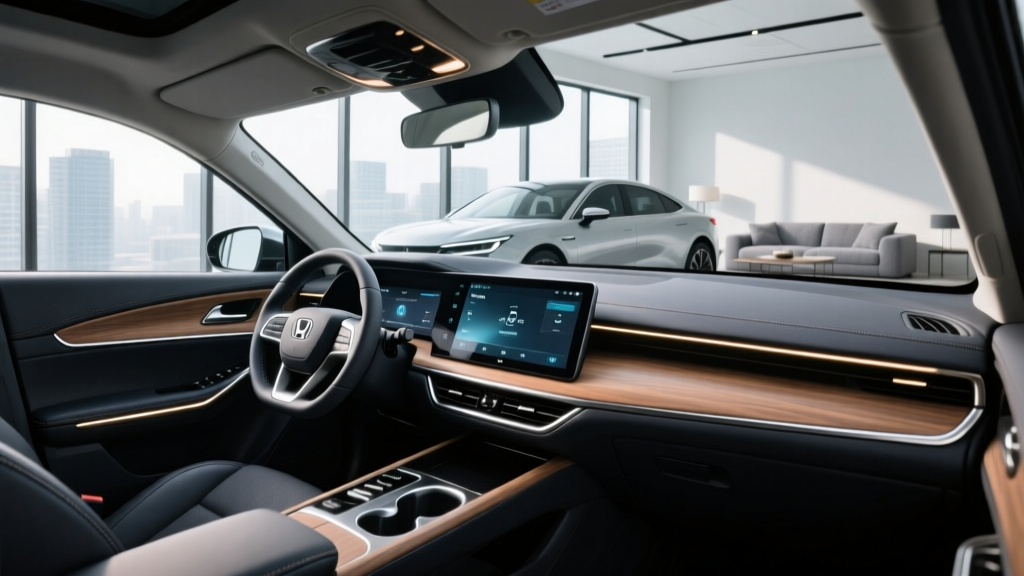
The search volume around the Honda Prologue interior reflects genuine buyer curiosity, and the cabin largely delivers on the midsize crossover promise. Honda uses a dual-screen layout: an 11.3-inch touchscreen infotainment display running a Google Built-in operating system, paired with an 11-inch digital instrument cluster. Wireless Apple CarPlay and Android Auto are standard across all trims.
Material quality varies by trim. The base EX uses a mix of soft-touch and hard plastics that feels appropriate for the price, while the Elite trim adds perforated leather seating surfaces, a heated steering wheel, and ambient lighting. Fit and finish is typical Honda — tight panel gaps, well-damped switchgear, and no obvious cost-cutting shortcuts.
Passenger and Cargo Dimensions
| Measurement | Honda Prologue (2026) |
|---|---|
| Front headroom | 40.0 in |
| Rear headroom | 38.2 in |
| Front legroom | 41.4 in |
| Rear legroom | 37.8 in |
| Cargo (behind 2nd row) | 25.2 cu ft |
| Cargo (seats folded) | 57.7 cu ft |
Rear-seat space is generous for two adults and acceptable for three. The flat floor — a benefit of the dedicated EV platform — gives the middle passenger real foot room. Cargo volume trails the Hyundai Ioniq 5 (27.2 cu ft) slightly but beats several compact EV crossovers. There is no front trunk (frunk); Honda uses that space for HVAC components.
Notable Interior Drawbacks
- No physical volume knob for audio — volume is controlled via a touch-sensitive slider on the screen, which frustrates some drivers.
- Climate controls are embedded in the touchscreen rather than dedicated buttons.
- The center console bin is shallow compared to competitors like the Ioniq 5 or Kia EV6.
- No rear-seat USB-C ports on the base EX trim (standard on Touring and Elite).
Range, Battery, and Efficiency
The front-wheel-drive Prologue carries an EPA-estimated 308 miles of range. The dual-motor AWD drops to 281 miles (EPA). In real-world highway driving at 70+ mph, expect roughly 250–270 miles from the FWD model. In freezing temperatures (below 32°F), range can fall 20–30%, bringing the FWD model closer to 215–245 miles on a full charge. City and suburban driving with regenerative braking recovers more energy, often exceeding the EPA estimate in mild weather.
The Prologue uses an 85 kWh usable lithium-ion battery with NMC (nickel manganese cobalt) chemistry, sourced from the Ultium Cells joint venture. This is not an LFP pack — meaning energy density is higher but Honda recommends keeping daily charges between 20% and 80% for long-term health, with 100% reserved for road trips.
| Spec | FWD (EX / Touring) | AWD (Elite) |
|---|---|---|
| Usable battery | 85 kWh (NMC) | 85 kWh (NMC) |
| EPA range | 308 mi | 281 mi |
| MPGe (combined) | 95 MPGe | 90 MPGe |
| kWh / 100 mi | 35 kWh | 37 kWh |
| Horsepower | 212 hp | 288 hp |
| 0–60 mph | ~7.8 sec | ~6.2 sec |
| Drivetrain | Single-motor FWD | Dual-motor AWD |
Efficiency of 35 kWh/100 mi (FWD) is average for this size class. The Toyota bZ4X and Subaru Solterra, which share a platform, achieve slightly worse figures, while the Ioniq 5 RWD does marginally better at 32 kWh/100 mi. According to fueleconomy.gov, the Prologue FWD's combined MPGe of 95 translates to roughly $550–$650 in annual electricity costs at the national average rate of $0.16/kWh and 15,000 miles driven.
Charging Speed: DC Fast, Level 2, and Level 1
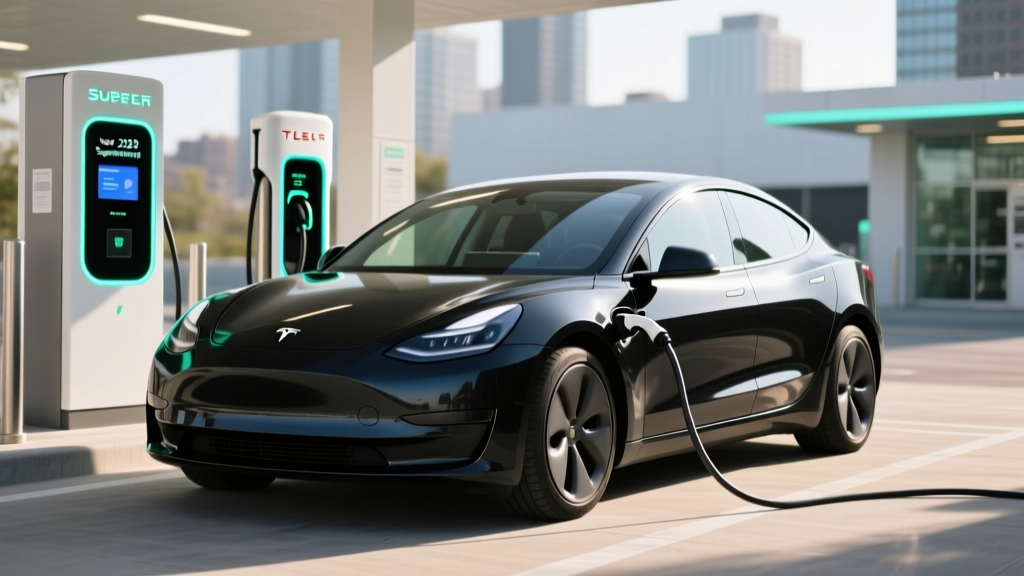
Charging capability is where the Prologue shows its Ultium-platform roots — competent but not class-leading. The 2026 model peaks at 155 kW on DC fast chargers, which is well below the 240 kW of the Ioniq 5 or the 250 kW of the Tesla Model Y.
| Charging Level | Power | Speed / Time |
|---|---|---|
| Level 1 (120V outlet) | ~1.4 kW | ~3–4 mi/hr |
| Level 2 (240V, home) | 11.5 kW (48A) | ~28 mi/hr / full charge ~8.5 hr |
| DC Fast Charge (peak) | 155 kW | 10–80% in ~34 minutes |
The 10–80% DC fast-charge time of roughly 34 minutes is acceptable for road-trip stops but noticeably slower than the 18-minute benchmarks set by Hyundai/Kia's E-GMP platform. The charge curve tapers significantly above 80% state of charge — expect the final 20% to take an additional 25–30 minutes. Honda includes a charge-port preconditioning feature that warms the battery when you navigate to a charger via the built-in Google Maps, which helps sustain peak charge rates in cold weather.
For home charging, Honda provides a Level 2 home charging credit with new purchases (check current dealer terms) that can offset the cost of a 240V installation. At 11.5 kW, overnight charging easily replenishes a full day's driving. We recommend a dedicated 60A circuit with a hardwired Level 2 station; consult a licensed electrician for panel capacity evaluation, as older homes with 100A service may require a panel upgrade costing $1,500–$3,000.
Pricing, Trims, and Federal Tax Credit
| Trim | Drivetrain | MSRP (2026) | Est. After §30D Credit* |
|---|---|---|---|
| EX | FWD | $47,400 | ~$39,900 |
| Touring | FWD | $51,400 | ~$43,900 |
| Elite | AWD | $57,900 | ~$50,400 |
*Estimated price assumes full $7,500 federal credit eligibility. Actual credit depends on buyer income, MSRP caps, and battery-sourcing requirements under IRS §30D. See irs.gov for current-year rules.
- Vehicle MSRP must not exceed $80,000 for SUVs (Prologue qualifies on all trims).
- Buyer modified adjusted gross income (MAGI) must be ≤ $150,000 (single) or ≤ $300,000 (joint).
- Battery must meet critical-mineral and battery-component sourcing thresholds that tighten annually — verify current-year compliance with your dealer.
- Credit can be transferred to the dealer at point of sale for an immediate price reduction (as of 2024+ rules).
- Consult a tax professional to confirm your specific eligibility.
With the full $7,500 credit applied, the Prologue EX FWD becomes one of the more affordable midsize EV crossovers on the market. However, buyers should verify battery-sourcing compliance each model year, as IRS rules on critical minerals and component origin have phased in progressively and can disqualify otherwise eligible vehicles.
Driver Assistance and Safety
Honda Sensing on the Prologue is a Level 2 driver-assistance system. It provides adaptive cruise control, lane-centering, and automatic emergency braking — but the driver must remain fully engaged with hands on the wheel and eyes on the road at all times. This is not autonomous or "self-driving" capability.
The Prologue comes standard with Honda Sensing, which includes adaptive cruise control with low-speed follow, lane-keeping assist, road-departure mitigation, traffic-sign recognition, and blind-spot monitoring. The system performs competently on highways but is not as refined as GM's Super Cruise (hands-free on mapped roads) or Ford's BlueCruise. Lane-centering can feel slightly aggressive on curvy two-lane roads, and the system issues frequent hands-on-wheel reminders.
For safety ratings, check the latest results from NHTSA and IIHS once crash-test data is published for the current model year.
Pros, Cons, and How It Stacks Up
- Spacious, well-finished interior with Google Built-in infotainment
- Competitive EPA range (308 mi FWD) for the price point
- Eligible for $7,500 federal tax credit (subject to sourcing/income rules)
- Comfortable ride quality; quiet cabin at highway speed
- Strong rear-seat legroom (37.8 in) for a midsize crossover
- Honda Sensing safety suite standard on all trims
- DC fast charging peaks at 155 kW — slower than Hyundai/Kia rivals
- No physical audio knob or dedicated climate buttons
- No frunk (front trunk) for extra storage
- AWD Elite trim pushes past $57K before incentives
- Regenerative braking is not strong enough for true one-pedal driving
- Charge curve tapers steeply above 80% SoC
Prologue vs. Key Competitors
Against the Hyundai Ioniq 5: The Ioniq 5 charges dramatically faster (240 kW peak, 10–80% in ~18 min) and offers a frunk, but its rear cargo space is slightly smaller. The Ioniq 5's interior design is more polarizing.
Against the Tesla Model Y: The Model Y has a more extensive Supercharger network, faster charging (250 kW), and a more minimalist interior. The Prologue offers a more traditional crossover feel, physical buttons (mostly), and a quieter ride.
Against the Volkswagen ID.4: The ID.4 offers similar range (~275 mi AWD) and slightly slower DC charging (170 kW). The Prologue's interior materials and infotainment are a step above the ID.4's.
Ownership Costs and Warranty
| Coverage | Term |
|---|---|
| Basic vehicle warranty | 3 years / 36,000 miles |
| Powertrain warranty | 5 years / 60,000 miles |
| Battery warranty | 8 years / 100,000 miles (≥70% capacity retention) |
| Complimentary maintenance | 2 years / 24,000 miles |
Honda's battery warranty guarantees at least 70% capacity retention over 8 years or 100,000 miles — the industry standard. NMC chemistry typically degrades 1–2% per year under normal use, meaning most owners will see 90%+ state of health after five years. For a deeper look at battery longevity, see our guide on EV battery technology from the Department of Energy.
Over five years and 75,000 miles, the Prologue FWD's estimated electricity cost is roughly $2,750–$3,250 at national average rates, compared to $7,500–$9,000 in gasoline for a comparable gas-powered midsize SUV. Insurance premiums for the Prologue run 10–20% higher than the gas CR-V, so factor that into your total cost of ownership calculation.
FAQ
What is the real-world range of the Honda Prologue?
The EPA estimates 308 miles for the FWD model and 281 miles for the AWD. Real-world highway driving at sustained speeds typically yields 250–270 miles (FWD). Cold weather below freezing can reduce range by 20–30%, bringing it to 215–245 miles on a full charge.
How fast does the Honda Prologue charge?
On a DC fast charger, the Prologue peaks at 155 kW and charges from 10% to 80% in approximately 34 minutes. At home on a Level 2 (240V) charger at 11.5 kW, it adds about 28 miles per hour, achieving a full charge in roughly 8.5 hours.
How much does the Honda Prologue cost after tax credits?
The base EX FWD starts at $47,400 MSRP. With the full $7,500 federal §30D tax credit (subject to income, MSRP, and battery-sourcing requirements), the effective price drops to approximately $39,900. The Elite AWD at $57,900 falls to roughly $50,400 with the credit.
Does the Honda Prologue qualify for the federal EV tax credit?
The Prologue has qualified for the full $7,500 credit in recent model years, but eligibility depends on IRS battery-sourcing rules that tighten annually, plus buyer income caps ($150K single / $300K joint) and the $80K SUV MSRP cap. Verify current-year eligibility on irs.gov and with your dealer before purchasing.
Is the Honda Prologue worth buying vs. competitors?
If you value a comfortable, traditional crossover interior with Google-based infotainment and don't need the fastest DC charging, the Prologue is a strong choice — particularly the FWD EX at ~$39,900 after incentives. If rapid road-trip charging is a priority, the Hyundai Ioniq 5 or Tesla Model Y are better picks. If you need hands-free highway driving, look at vehicles offering GM Super Cruise or Ford BlueCruise.
Does the Prologue have a frunk?
No. Honda uses the front compartment for HVAC and power electronics. All cargo space is in the rear — 25.2 cu ft behind the second row, 57.7 cu ft with seats folded.
Can the Honda Prologue tow?
Honda rates the Prologue for light towing, but official capacity figures are modest compared to truck-based EVs. Check the owner's manual and your specific trim for the exact rating. It is not designed for heavy trailer or boat towing.