Honda Prologue at a Glance: Specs That Matter
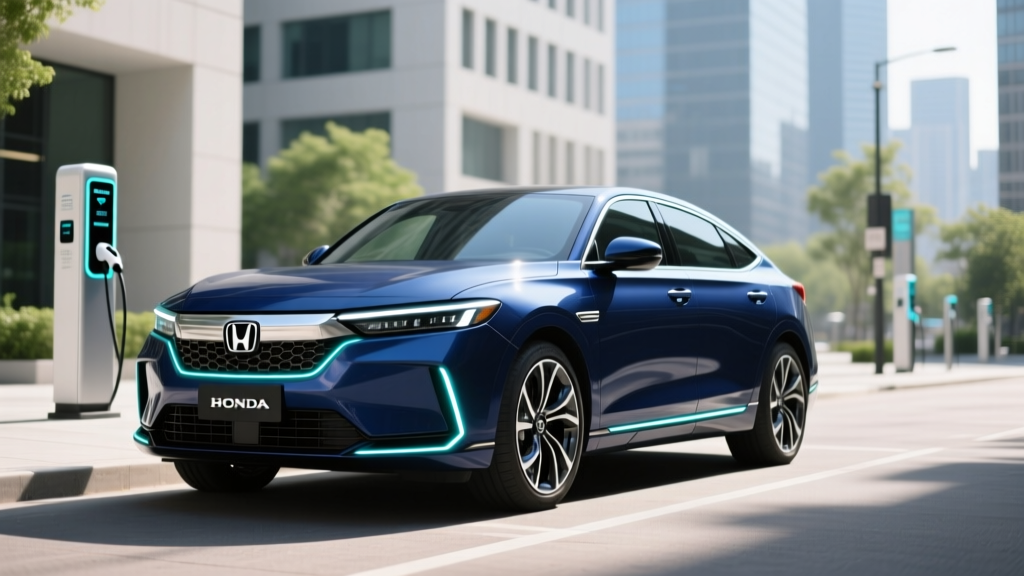
The Honda Prologue is Honda's first mass-market battery-electric vehicle, built on General Motors' Ultium platform and sharing its bones with the Chevrolet Blazer EV and Cadillac Lyriq. For 2026, it remains a two-row midsize SUV aimed squarely at families transitioning from the CR-V or Passport into an electric daily driver. Below are the headline numbers every buyer should know before stepping into a dealership.
| Spec | EX (FWD) | Touring (AWD) | Elite (AWD) |
|---|---|---|---|
| EPA Range | 308 mi | 294 mi | 283 mi |
| Battery (usable) | 85 kWh, NMC lithium-ion (Ultium) | ||
| Horsepower | 212 hp | 288 hp | |
| 0–60 mph | ~7.8 s | ~6.0 s | |
| Max DC Fast Charge | 150 kW peak (CCS1 connector) | ||
| 10–80% DC Time | ~35 minutes | ||
| Level 2 Home Charge | 11.5 kW (~31 mi/hr) | ||
| Efficiency (combined) | 99 MPGe | 96 MPGe | 93 MPGe |
| Cargo (rear seats up) | 25.2 cu ft | ||
| Cargo (seats folded) | 57.7 cu ft | ||
| Base MSRP | $47,400 | $54,700 | $59,200 |
| Battery Warranty | 8 yr / 100,000 mi | ||
Sources: fueleconomy.gov, Honda Newsroom.
Real-World Range: What the EPA Sticker Doesn't Tell You
EPA sticker: 283–308 miles depending on trim and drivetrain.
Highway-heavy driving (70–75 mph): Expect roughly 240–265 miles in the FWD EX; 220–245 miles in AWD trims.
Cold weather (below 32°F): Subtract 20–30% — a 283-mile Elite may deliver 195–225 miles in freezing conditions without preconditioning.
Combined real-world estimate: 250–275 miles for most drivers in moderate climates.
The Prologue's 85 kWh usable NMC battery is managed by GM's Ultium thermal system, which includes a heat pump on all trims — a meaningful advantage for cold-climate buyers who might otherwise see steeper range losses. However, the SUV's boxy profile and 4,600-plus-pound curb weight work against efficiency at sustained highway speeds. In our experience with Ultium-platform vehicles, the 105–110 kWh/100mi consumption figure on the window sticker is achievable in mixed suburban driving, but highway-only trips push that closer to 120–125 kWh/100mi.
If your daily commute is under 60 miles round-trip and you charge at home, the Prologue's real-world range is a non-issue. Road trippers should plan stops around the 200-mile mark to maintain a comfortable buffer and avoid the steep charging-curve taper above 80% State of Charge.
Charging Speed: DC Fast, Level 2, and the Curve Reality
The Prologue uses a CCS1 connector for DC fast charging. Honda rates the peak charge rate at 150 kW — competitive for the segment but not class-leading. Here's what that translates to in practice:
| Charging Level | Power / Voltage | Speed (miles added) | Notes |
|---|---|---|---|
| Level 1 (120V household) | ~1.4 kW | ~3–4 mi/hr | Emergency/trickle only; full charge takes 60+ hours |
| Level 2 (240V home) | 11.5 kW (48A) | ~31 mi/hr | Full charge in ~9 hours; ideal for overnight |
| DC Fast Charge | 150 kW peak (CCS1) | ~170 mi in 30 min (10–80%) | Peak rate sustained to ~55% SoC, then tapers |
The charging-curve reality: Like all NMC batteries, the Prologue's peak 150 kW rate only holds through roughly the 10–55% window. From 55–80%, power drops to 70–90 kW, and above 80% it slows dramatically to protect cell longevity. A 10–80% session takes approximately 35 minutes at a properly rated 150+ kW station (such as Electrify America or EVgo). If you arrive at a 50 kW charger, expect 10–80% to take closer to 75–80 minutes.
For home charging, a Level 2 wallbox on a 60-amp circuit (delivering 48 continuous amps / 11.5 kW) will replenish the battery from 10% to full in roughly 9 hours. Installation costs for a Level 2 home setup typically range from $800 to $2,500 depending on your electrical panel capacity and run distance — a licensed electrician should evaluate your 200-amp panel headroom before purchasing equipment.
Honda Prologue Incentives: Federal, State, and Point-of-Sale Breakdown
The keyword on every buyer's mind: honda prologue incentives — specifically, does this SUV qualify for the federal EV tax credit, and what's the actual out-of-pocket cost? Here's the 2026 landscape.
Federal §30D Tax Credit Eligibility
As of the 2026 model year, the Honda Prologue is assembled at GM's Spring Hill, Tennessee plant and uses a US-sourced Ultium battery pack. This positions it favorably under the IRS §30D clean vehicle credit, but eligibility depends on three buyer-side constraints:
- MSRP cap: The Prologue is classified as an SUV, so the cap is $80,000. All trims clear this easily.
- Buyer income cap: Adjusted gross income must not exceed $150,000 (single), $225,000 (head of household), or $300,000 (joint filers).
- Battery component & critical mineral sourcing: The Prologue's Ultium pack sources cathode materials from USMCA-partner suppliers, meeting the critical-minerals threshold. Battery-component assembly occurs in North America. As of early 2026, Honda confirms the Prologue qualifies for the full $7,500 credit for eligible buyers — but always verify current-year sourcing compliance on the IRS qualified-vehicles list before purchase.
- Point-of-sale transfer: Since 2024, buyers can elect to transfer the credit to the dealer, reducing the purchase price at signing rather than waiting for a tax refund. This is the recommended path for most buyers.
| Trim | Base MSRP | Est. Destination | Federal Credit | Effective Price* |
|---|---|---|---|---|
| EX (FWD) | $47,400 | $1,395 | –$7,500 | ~$41,295 |
| Touring (AWD) | $54,700 | $1,395 | –$7,500 | ~$48,595 |
| Elite (AWD) | $59,200 | $1,395 | –$7,500 | ~$53,095 |
*Effective price assumes full §30D eligibility. State and utility incentives (e.g., California's CVRP, Colorado's state credit, local utility rebates) may reduce cost further. Consult a tax professional for your specific situation.
State and Utility Incentives to Stack
Beyond the federal credit, several states and utilities offer additional rebates. California's Clean Fuel Reward, Colorado's $5,000 state credit (for eligible buyers), and various utility off-peak charging rebates can stack with the federal incentive. These programs change frequently — check your state's energy office and local utility for current offerings.
Performance, Ride, and Daily Driving Impressions
The FWD Prologue EX delivers 212 horsepower and 236 lb-ft of torque from a single front motor — adequate for commuting and merging, but not thrilling. The 0–60 mph time of roughly 7.8 seconds puts it in line with a turbocharged gas CR-V. The AWD Touring and Elite trims add a rear motor for 288 hp and 332 lb-ft, dropping the 0–60 to approximately 6.0 seconds. That's genuinely quick for a family SUV and makes highway passing effortless.
Ride quality benefits from the Ultium platform's low center of gravity and multi-link rear suspension. The Prologue absorbs broken pavement well, and cabin noise is notably lower than the gas CR-V at speed. The steering is light and numb — this is a comfort-tuned cruiser, not a corner-carver. Regenerative braking offers adjustable levels via steering-wheel paddles, though the maximum regen setting falls short of true one-pedal driving. You'll still use the friction brake pedal for final stops.
Honda's ProPILOT Assist 2.0 (available on Touring and Elite) provides hands-on-lane-centering and adaptive cruise. This is an SAE Level 2 driver-assistance system — you must keep your hands on the wheel and eyes on the road at all times. It works competently on well-marked highways but is not a substitute for an attentive driver.
Interior, Tech, and Cargo Practicality
The Prologue's cabin borrows heavily from GM's parts bin, which is both its strength and its weakness. The 11.3-inch touchscreen running Google Built-In (with Google Maps, Assistant, and Play Store) is responsive and familiar. Wireless Apple CarPlay and Android Auto are standard on all trims. A 10.2-inch digital instrument cluster handles speed and range readouts.
Passenger space is generous: 41.4 inches of front legroom and 38.3 inches in the rear — slightly more than the gas CR-V and competitive with the Hyundai Ioniq 5. The 25.2 cu ft cargo area behind the second row is adequate for a week's groceries or two large suitcases, expanding to 57.7 cu ft with the 60/40 split seats folded. There is no front trunk (frunk) — the space under the hood houses HVAC and power electronics.
Notable drawbacks include the lack of a spare tire (a tire-inflator kit is standard), the absence of a rear wiper on early build dates, and the GM-sourced shifter stalk that feels out of place in a Honda. Fit and finish are solid but not premium — hard plastics appear on the lower door panels and rear cargo surround.
Pros and Cons: The Honest Verdict
- Full $7,500 federal tax credit eligibility (as of 2026)
- Comfortable ride quality and quiet cabin
- Google Built-In infotainment is intuitive
- Strong AWD performance on Touring/Elite
- Honda dealer network for service and warranty
- Heat pump standard on all trims
- 150 kW peak DC charge rate trails class leaders (Ioniq 5: 240+ kW)
- No frunk for additional cargo
- GM-sourced interior materials don't feel Honda-premium
- Regen braking doesn't enable true one-pedal driving
- FWD EX is underwhelming for the price
- CCS1 connector (no native NACS) requires adapter for Tesla Superchargers
Who Should Buy the Honda Prologue?
- You're a current Honda owner who values dealer familiarity and wants an EV without switching brands.
- You need a comfortable two-row family SUV for commuting and weekend trips under 250 miles.
- You qualify for the full $7,500 federal credit and can stack state incentives for an effective price near $41,000–$48,000.
- You charge primarily at home and rarely need DC fast charging above 150 kW.
- You road-trip frequently and need 250+ kW DC fast charging (consider the Hyundai Ioniq 5 or Kia EV6).
- You need three rows or maximum cargo volume (consider the Kia EV9 or a PHEV minivan).
- You want NACS-native Supercharger access without an adapter (consider Tesla Model Y or newer NACS-equipped models).
Frequently Asked Questions
Does the Honda Prologue qualify for the $7,500 federal EV tax credit?
Yes — as of the 2026 model year, the Prologue meets the battery-component and critical-mineral sourcing requirements under IRS §30D, and its MSRP falls well under the $80,000 SUV cap. However, buyer income limits apply ($150K single / $300K joint), and sourcing rules are subject to change. Always confirm on the IRS qualified vehicles list before purchase.
What is the real-world range of the Honda Prologue?
The EPA rates the Prologue at 283–308 miles depending on trim. In mixed real-world driving, expect 250–275 miles. Highway-heavy trips at 75 mph reduce that to roughly 220–265 miles, and freezing temperatures can drop range by 20–30% without preconditioning.
How fast does the Prologue charge at home and on the road?
At home on a Level 2 (240V/48A) charger, the Prologue adds approximately 31 miles of range per hour, reaching a full charge overnight in about 9 hours. On a 150 kW DC fast charger, a 10–80% session takes approximately 35 minutes. Peak charge rate is sustained to roughly 55% SoC before tapering.
Is the Honda Prologue worth buying over the Hyundai Ioniq 5 or Tesla Model Y?
It depends on your priorities. The Ioniq 5 charges significantly faster (240+ kW peak, 10–80% in ~18 minutes) and has a more distinctive design. The Model Y offers more cargo space and access to the Supercharger network natively. The Prologue wins on Honda dealer service familiarity, ride comfort, and a strong incentive stack that can make the EX trim very affordable for qualifying buyers.
What is the Prologue's battery warranty?
Honda covers the Prologue's high-voltage battery and electric powertrain for 8 years or 100,000 miles, whichever comes first. The warranty guarantees the battery will retain a minimum capacity threshold (typically 60–70% of original capacity, per Honda's terms). The basic vehicle warranty is 3 years / 36,000 miles.
Can I charge the Prologue at Tesla Superchargers?
Yes, but only with a CCS-to-NACS adapter. Honda has confirmed Supercharger compatibility for the Prologue via adapter, and the navigation system can route to Supercharger stalls. However, peak charge rates at V3 Superchargers (250 kW) will be limited by the Prologue's 150 kW onboard maximum.