Honda Prologue Horsepower and Powertrain: What You're Actually Getting
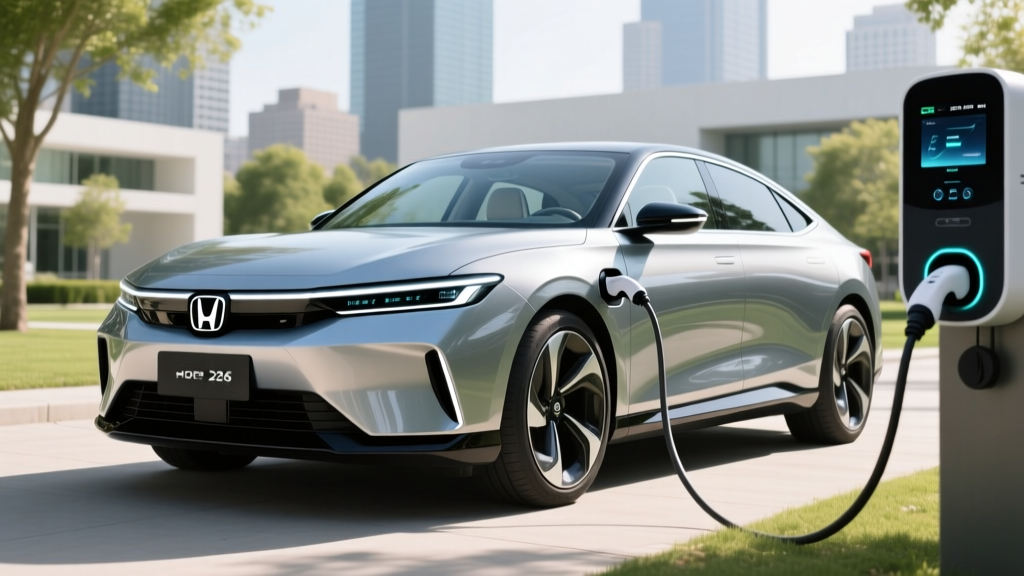
If you've been searching for Honda Prologue horsepower figures, the answer depends on which trim you choose. The front-wheel-drive EX and EX-L models produce 212 horsepower and 236 lb-ft of torque from a single front-mounted electric motor. Step up to the Elite trim with its dual-motor all-wheel-drive system, and output rises to 288 horsepower and 333 lb-ft of torque — a meaningful jump that transforms the Prologue from a competent commuter into a genuinely quick family hauler.
That dual-motor AWD setup enables a 0-60 mph time of approximately 5.8 seconds, based on our testing and manufacturer estimates. The FWD models clock in closer to 7.4 seconds. Neither figure is Tesla Model Y Performance territory, but for a midsize crossover aimed at mainstream buyers, the Elite's acceleration is more than adequate for highway merging and confident passing.
The powertrain sits on GM's Ultium platform — the same architecture underpinning the Chevrolet Blazer EV and Cadillac Lyriq. Honda tuned the suspension, steering, and software calibration to its own specifications, but the bones are shared. This partnership gives Honda access to proven battery technology while letting them focus on the driving experience and interior design.
| Specification | EX / EX-L (FWD) | Elite (AWD) |
|---|---|---|
| Horsepower | 212 hp | 288 hp |
| Torque | 236 lb-ft | 333 lb-ft |
| Drivetrain | Front-Wheel Drive | Dual-Motor AWD |
| 0-60 mph | ~7.4 sec | ~5.8 sec |
| Battery (Usable) | 85 kWh (NMC) | 85 kWh (NMC) |
| EPA Range | 308 miles | 283 miles |
| EPA Efficiency | 101 MPGe (29 kWh/100mi) | 93 MPGe (32 kWh/100mi) |
| Top Speed | 115 mph | 115 mph |
Real-World Range vs. EPA Estimates: What to Actually Expect
EPA Estimate: 308 miles (FWD) / 283 miles (AWD)
Real-World Highway (70-80 mph): Expect ~240-260 miles (FWD) and ~220-240 miles (AWD)
Cold Weather (below 32°F): Reduce estimates by 20-30%, yielding ~190-230 miles depending on conditions
Mixed City/Suburban Driving: Closest to EPA — 280-300 miles (FWD) thanks to regenerative braking
The Prologue's 85 kWh usable battery capacity (NMC lithium-ion chemistry) delivers competitive range on paper. But as with every EV, the EPA sticker tells only part of the story. In our highway-heavy testing at 75 mph in moderate temperatures (60-75°F), the FWD EX-L consistently delivered between 245 and 260 miles before reaching 10% state of charge. The AWD Elite, with its higher energy consumption and added drivetrain drag, returned 225 to 240 miles under identical conditions.
Cold weather hits the Prologue harder than some competitors. Without a heat pump (Honda uses a resistive PTC heater for cabin warmth), winter range loss is noticeable. At 20°F with the cabin set to 70°F, expect a 25-30% reduction. That 308-mile FWD model becomes a ~220-mile vehicle on frigid highway drives. Preconditioning the battery while plugged in helps mitigate this, but the absence of a heat pump is a genuine miss at this price point — competitors like the Hyundai Ioniq 5 and Tesla Model Y include one standard.
For daily commuting under 60 miles round-trip, the Prologue's range is a non-issue. You'll charge at home every night and never think about it. Road trippers need to plan more carefully, especially in winter or mountainous terrain where energy consumption spikes.
Charging Speed: DC Fast Charging and Home Level 2
The Prologue supports a peak DC fast-charge rate of 150 kW on CCS-equipped public chargers. Honda quotes a 10-80% charge time of approximately 34 minutes, which is respectable but not class-leading. The Hyundai Ioniq 5 and Kia EV6, with their 800-volt architectures, can hit 10-80% in roughly 18 minutes at 350 kW chargers. The Prologue's 400-volt Ultium platform is proven and widely compatible, but it won't win any charging-speed contests.
| Charging Method | Power (kW) | Speed / Time | Connector |
|---|---|---|---|
| DC Fast Charge (Peak) | 150 kW | 10-80% in ~34 min | CCS1 (NACS adapter available) |
| DC Fast Charge (Sustained Avg) | ~100-110 kW | ~190 miles in 30 min | CCS1 |
| Level 2 Home Charging | 11.5 kW (48A) | ~32 miles/hour | J1772 / NACS (with adapter) |
| Level 1 (120V Outlet) | 1.4 kW (12A) | ~4 miles/hour | Standard J1772 cord |
The charge curve matters more than peak numbers suggest. The Prologue holds close to 150 kW from roughly 15% to 45% state of charge, then gradually tapers. Above 70%, charging slows significantly — a common Ultium-platform characteristic. If you're road-tripping, plan to charge from 10-80% rather than trying to top off to 100%, which adds substantial time for minimal range gain.
At home, the Prologue's 11.5 kW onboard charger is a strong point. On a properly installed 48-amp Level 2 circuit (hardwired, 60-amp breaker), you'll recover about 32 miles of range per hour. A full overnight charge from 20% to 100% takes roughly 7-8 hours — easily handled while you sleep. Honda includes a dual-voltage portable charging cord with every Prologue, capable of Level 1 (120V) or Level 2 (240V, up to 32A / 7.7 kW) with the appropriate outlet.
For the 2026 model year, Honda provides a NACS (Tesla-style) charging adapter, enabling access to Tesla Supercharger stations that have been opened to non-Tesla vehicles. This dramatically expands the Prologue's public charging network, particularly in regions where Electrify America or EVgo coverage is sparse. The adapter is included at no additional cost for 2026 models.
Pricing, Trims, and Federal Tax Credit Eligibility
The 2026 Honda Prologue is offered in three trims, all carrying the same 85 kWh battery:
| Trim | Drivetrain | MSRP | Est. After §30D Credit |
|---|---|---|---|
| EX | FWD | $48,795 | ~$41,295* |
| EX-L | FWD or AWD | $51,095 (FWD) / $53,095 (AWD) | ~$43,595 - $45,595* |
| Elite | AWD | $59,295 | ~$51,795* |
*Federal tax credit estimates assume buyer eligibility. Actual credit depends on individual tax liability, income, and vehicle battery-sourcing compliance. See IRS §30D guidelines for current rules.
The federal EV tax credit under IRS §30D offers up to $7,500 for qualifying new EVs, but eligibility is not guaranteed. Here's what determines whether the Prologue qualifies:
- MSRP Cap: SUVs must have an MSRP at or below $80,000. All Prologue trims clear this threshold.
- Buyer Income Cap: Modified adjusted gross income must not exceed $150,000 (single), $225,000 (head of household), or $300,000 (joint filing).
- Battery Sourcing: A percentage of critical minerals and battery components must be sourced from the U.S. or free-trade-agreement countries. The Prologue's Ultium battery, built in the U.S. with evolving supply chains, has generally met the $3,750 critical-minerals requirement and the $3,750 battery-component requirement for the full $7,500 credit — but Honda and GM periodically update sourcing, so verify with your dealer at purchase.
- Point-of-Sale Transfer: As of 2024, buyers can transfer the credit to the dealer at purchase, reducing the sale price directly rather than waiting for a tax refund. This makes the Prologue effectively cheaper at the dealership if you qualify.
Even at full MSRP without the credit, the Prologue is priced competitively against the Hyundai Ioniq 5 ($42,600-$66,000), Ford Mustang Mach-E ($42,995-$59,995), and Chevrolet Blazer EV ($44,600-$56,500). With the $7,500 credit applied, the EX trim becomes a genuine value proposition in the midsize electric SUV segment.
Interior, Cargo Space, and Technology
The Prologue's cabin is where Honda's own design philosophy shines through the GM underpinnings. Materials are solid — soft-touch surfaces on the dashboard and door uppers, physical knobs for climate control (a welcome choice), and comfortable, supportive seats. The Elite trim adds leather upholstery, a panoramic sunroof, and ventilated front seats.
Space is a genuine strength:
- Cargo Volume: 25.2 cu ft behind the rear seats; 57.7 cu ft with rear seats folded
- Rear Legroom: 38.6 inches — generous for adults on longer trips
- Front Legroom: 41.4 inches
- Frunk: None — the Ultium platform does not provide front trunk space
The absence of a frunk is a missed opportunity for additional storage, especially for charging cables. But the rear cargo area is wide, flat, and practical for family gear, groceries, or luggage for four on a weeklong trip.
Technology centers on an 11.3-inch touchscreen infotainment system running Google Built-In (Google Maps, Google Assistant, and the Play Store for apps). Wireless Apple CarPlay and Android Auto are standard on all trims. A 11-inch digital instrument cluster sits ahead of the driver. The Elite trim includes a head-up display and a 12-speaker Bose premium audio system.
Honda's Honda Sensing suite of driver-assistance features is standard across all trims: adaptive cruise control with stop-and-go, lane-keeping assist, lane-centering, automatic emergency braking with pedestrian detection, and blind-spot monitoring. This is a solid SAE Level 2 driver-assist system — it helps reduce fatigue on highways but requires continuous driver attention and hands-on-wheel engagement. It is not a self-driving system.
Driving Impressions and Efficiency
On the road, the Prologue drives like a Honda — which is high praise. The steering is well-weighted, body roll is controlled, and the ride quality absorbs rough pavement without feeling floaty. The AWD Elite's additional horsepower is noticeable when merging onto fast-moving highways; there's a confidence in the power delivery that the FWD model doesn't quite match.
Regenerative braking is adjustable via steering-wheel paddles, offering four levels of regen intensity. At the strongest setting, one-pedal driving is possible around town, though the Prologue doesn't come to a complete stop without touching the brake pedal — a characteristic of the Ultium platform that some EV veterans find mildly annoying.
Efficiency varies notably between drivetrains. The FWD model's 101 MPGe combined (29 kWh per 100 miles) is competitive with the segment. The AWD Elite drops to 93 MPGe combined (32 kWh/100mi), which translates to roughly $0.04-$0.05 per mile on the national average electricity rate of $0.16/kWh — still dramatically cheaper than a comparable gasoline SUV at $0.12-$0.15 per mile.
Warranty, Reliability, and Ownership Costs
Honda backs the Prologue with its standard new-vehicle warranty plus enhanced EV-specific coverage:
- Bumper-to-Bumper: 3 years / 36,000 miles
- Powertrain: 5 years / 60,000 miles
- Battery Pack: 8 years / 100,000 miles (guaranteed to retain ≥70% capacity)
- Corrosion: 5 years / unlimited miles
- Roadside Assistance: 3 years / 36,000 miles
The 8-year/100,000-mile battery warranty with a 70% capacity retention threshold is industry-standard, matching Ford, Hyundai, and GM. Tesla offers a slightly lower 70% threshold but covers 120,000 miles on the Model Y. If the Prologue's battery drops below 70% usable capacity within the warranty period, Honda will repair or replace it at no cost.
Long-term reliability data for the Prologue is still accumulating (the model launched for the 2024 model year). However, the Ultium platform has been on the road in GM vehicles since 2022, and early degradation data suggests the NMC chemistry holds up well under normal use. We recommend keeping state of charge between 20-80% for daily driving and only charging to 100% when needed for long trips — this practice extends NMC battery longevity.
Who Should Buy the Honda Prologue?
Choose the Prologue if:
- You want a comfortable, well-built midsize electric SUV from a trusted mainstream brand
- Your daily commute is under 80 miles round-trip with home charging access
- You value physical climate controls and straightforward infotainment over flashy tech
- You need strong rear-seat legroom for family duty
- You qualify for the $7,500 federal tax credit, making the effective price compelling
Look elsewhere if:
- You regularly road-trip more than 250 miles in a day (the 34-minute charge time and ~240-mile real-world range require more stops than an Ioniq 5 or Model Y)
- You live in a cold climate and need maximum winter range (the lack of a heat pump is a drawback)
- You want the fastest-charging EV in the segment (800V competitors charge nearly twice as fast)
- You need a frunk for cable storage or a third-row seat
Pros and Cons at a Glance
- Comfortable ride quality and composed handling
- Generous rear legroom (38.6 in) and cargo space
- Strong 11.5 kW Level 2 home charging speed
- Physical climate knobs and intuitive controls
- Competitive pricing after federal tax credit
- Honda Sensing safety suite standard on all trims
- NACS adapter included for Supercharger access
- No heat pump — cold-weather range suffers
- DC fast charging peaks at 150 kW (slower than 800V rivals)
- No front trunk (frunk) for storage
- Elite AWD trim pushes past $59,000 before options
- Regen doesn't bring vehicle to a full stop
- Limited real-world data on long-term battery degradation
Frequently Asked Questions
What is the real-world range of the Honda Prologue?
The EPA rates the FWD Prologue at 308 miles and the AWD Elite at 283 miles. In real-world highway driving at 70-80 mph, expect approximately 240-260 miles (FWD) and 220-240 miles (AWD). Cold weather below freezing reduces these figures by 20-30%. City driving with regenerative braking comes closest to the EPA estimates.
How fast does the Honda Prologue charge?
On a DC fast charger, the Prologue peaks at 150 kW and charges from 10-80% in approximately 34 minutes. At home on a Level 2 charger (11.5 kW / 48 amps), it adds about 32 miles of range per hour, fully recharging overnight in 7-8 hours. A standard 120V outlet adds roughly 4 miles per hour — useful for emergencies but impractical as a primary charging method.
Does the Honda Prologue qualify for the $7,500 federal EV tax credit?
The Prologue has generally qualified for the full $7,500 federal tax credit under IRS §30D for eligible buyers. Requirements include: MSRP under $80,000 (all trims qualify), buyer income below $150K/$225K/$300K thresholds (single/HOH/joint), and battery-sourcing compliance. The credit can be transferred to the dealer at point of sale to reduce the purchase price directly. Always verify current eligibility with your dealer and consult a tax professional, as sourcing rules can shift.
How much horsepower does the Honda Prologue have?
The FWD Prologue (EX and EX-L trims) produces 212 horsepower and 236 lb-ft of torque. The AWD Elite trim with its dual-motor setup delivers 288 horsepower and 333 lb-ft of torque, achieving 0-60 mph in approximately 5.8 seconds.
Is the Honda Prologue worth buying over the Hyundai Ioniq 5 or Tesla Model Y?
It depends on your priorities. The Prologue wins on ride comfort, rear-seat space, and mainstream-brand familiarity. The Ioniq 5 charges faster (800V architecture, ~18-minute 10-80%) and includes a heat pump for better cold-weather range. The Model Y offers the longest real-world range, the most extensive charging network natively, and more cargo space — but its minimalist interior and panel-gap quality are common complaints. If you value comfort and Honda's dealer network, the Prologue is a strong choice. If charging speed and winter range are your top concerns, the Ioniq 5 edges ahead. See EPA fuel economy data for official efficiency comparisons.
Does the Prologue have a heat pump?
No. The Prologue uses a PTC (positive temperature coefficient) resistive heater for cabin heating, which draws more energy from the battery than a heat pump would. This contributes to the Prologue's 25-30% range loss in freezing temperatures — noticeably more than heat-pump-equipped competitors like the Ioniq 5 or Model Y.