Quick Verdict: The Prologue's Tax-Credit Advantage
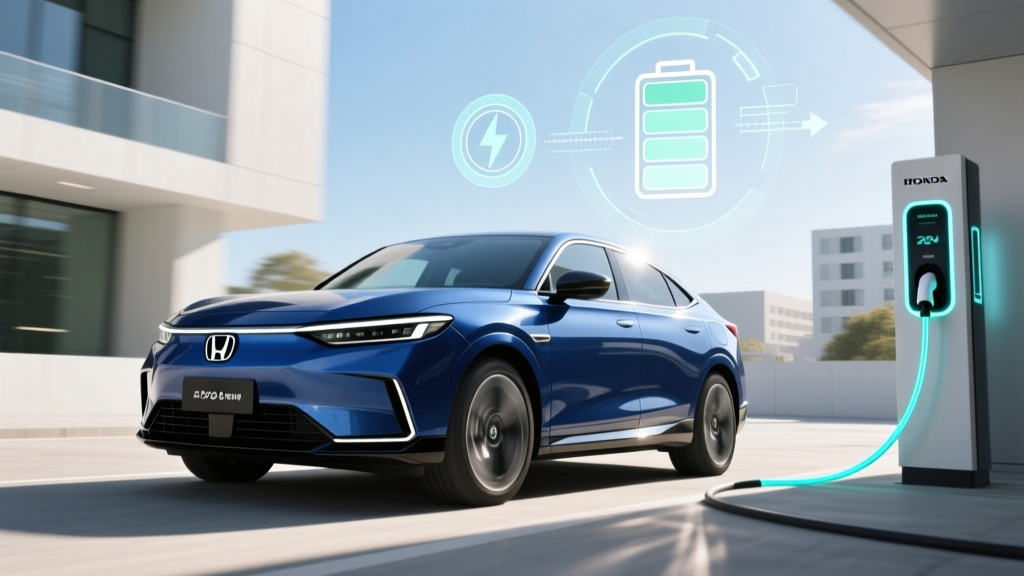
The 2026 Honda Prologue occupies a rare position in the midsize electric-SUV segment: it's a mainstream, non-Tesla crossover that can leverage the full $7,500 federal EV tax credit under IRS §30D — provided you meet income and filing requirements — and its point-of-sale transfer option effectively drops the entry price by thousands at the dealership. But the Honda Prologue EV tax credit story is only one piece of the ownership puzzle. Insurance runs higher than its gas-powered Passport sibling, depreciation curves are still stabilizing for EVs, and home charging access determines whether your fuel savings actually materialize. This guide walks through every dollar you'll spend — and save — over five years of Prologue ownership.
| EPA Range | 296 mi (FWD) / 283 mi (AWD) |
| Battery | 85 kWh usable, NMC lithium-ion |
| Peak DC Charge Rate | 150 kW (10–80% in ~32 min) |
| Level 2 Charging | 11.5 kW onboard charger |
| Horsepower | 212 hp (FWD) / 288 hp (AWD) |
| 0–60 mph | ~6.5 sec (AWD) |
| EPA Efficiency | 99 MPGe combined (FWD) |
| Base MSRP | $48,795 (EX FWD, incl. destination) |
| Battery Warranty | 8 yr / 100,000 mi |
Federal Tax Credit: Do You Qualify for the Full $7,500?
The Honda Prologue is assembled in North America (at GM's Spring Hill, Tennessee plant, on the Ultium platform shared with the Chevrolet Blazer EV), which clears the first major hurdle of the IRS §30D Clean Vehicle Credit. For the 2026 tax year, the Prologue remains eligible for up to $7,500 — split between a $3,750 critical-minerals component and a $3,750 battery-components component. Honda has confirmed that the Prologue's battery sourcing satisfies both requirements for the current model year.
- Adjusted Gross Income Cap: $150,000 single / $225,000 head of household / $300,000 joint filers
- MSRP Cap: Vans, SUVs, and pickup trucks — $80,000 maximum. The Prologue's top Touring trim (~$58,095) clears this easily.
- Vehicle Assembly: Must be assembled in North America (Prologue qualifies — TN-built).
- Battery Sourcing: Critical minerals and battery components must meet phased-in percentage thresholds for 2026. Honda/GM sourcing currently qualifies.
- Point-of-Sale Transfer: You can transfer the credit to the dealer at purchase, reducing your out-of-pocket price by up to $7,500 on the spot — no need to wait until tax filing.
- One Credit Per Vehicle: The vehicle VIN must not have been previously claimed for a §30D credit.
Source: IRS.gov — Credits for New Clean Vehicles. Rules are subject to legislative change; consult a tax professional for your specific situation.
What this means at the dealership: If you're a joint filer under the $300K income cap buying the Prologue EX FWD at $48,795, you can transfer the full $7,500 credit to the dealer. Your effective purchase price drops to $41,295 before state incentives, trade-in, or dealer discounts. That puts the Prologue in direct price competition with well-equipped gas midsize SUVs — before you even factor in fuel savings.
5-Year Total Cost of Ownership: The Full Math
Sticker price is just the entry fee. Here's what five years and 75,000 miles of Honda Prologue ownership actually costs, compared against a comparably priced gas SUV (the Honda Passport AWD, MSRP ~$47,000). All figures use national averages and 2026 energy/fuel prices.
| Category | Honda Prologue AWD (after credit) | Honda Passport AWD (gas) |
|---|---|---|
| Purchase Price (effective) | $43,795 (EX AWD after $7,500 credit) | $47,095 |
| Fuel / Charging (75K mi) | $3,375 (home L2, $0.14/kWh avg) | $8,100 ($3.60/gal, 22 MPG combined) |
| Maintenance | $1,400 | $3,200 |
| Insurance (5-yr total) | $11,250 ($2,250/yr avg) | $9,000 ($1,800/yr avg) |
| Estimated Depreciation | $18,500 (~42%) | $16,000 (~34%) |
| 5-Year Total Cost | $78,320 | $83,395 |
| 5-Year Savings (Prologue) | +$5,075 | — |
Key takeaway: The Prologue's federal tax credit effectively closes the EV price premium at purchase, and fuel + maintenance savings widen the gap over time. Insurance and depreciation partially offset those gains, but the net result still favors the EV by roughly $5,000 over five years — and that's before any state rebates or utility incentives.
Charging Cost vs. Gasoline: The Per-Mile Reality
The Prologue's 85 kWh battery and 99 MPGe combined efficiency (FWD; AWD drops slightly to 95 MPGe) translate to roughly 2.9 miles per kWh in mixed driving, per fueleconomy.gov. Real-world highway driving at 70+ mph will reduce this to around 2.5 mi/kWh, and cold-weather conditions (below 30°F) can push it closer to 2.2 mi/kWh due to cabin heating and battery thermal management demands.
| Scenario | Prologue $/mile | Passport $/mile |
|---|---|---|
| Home Level 2 ($0.14/kWh) | $0.045 | $0.164 |
| Public DC Fast ($0.48/kWh avg) | $0.166 | $0.164 |
| Time-of-Use off-peak ($0.08/kWh) | $0.026 | $0.164 |
Assumptions: Prologue at 2.9 mi/kWh (mixed), Passport at 22 MPG combined, gas at $3.60/gal. Public DC fast charging rates vary widely by network — Electrify America, EVgo, and Tesla Supercharger (now open to NACS-equipped non-Teslas) all have different pricing tiers.
The home-charging advantage is massive. If 85% of your charging happens at home on Level 2 and 15% on public DC fast chargers (a typical ratio for homeowners with L2 installs), your blended cost per mile is roughly $0.063 — less than half the Passport's $0.164. Over 15,000 miles annually, that's a $1,515/year fuel savings.
However, if you rely exclusively on public DC fast charging (apartment dwellers, street parkers), your per-mile cost essentially matches gasoline. The Prologue's fuel savings are contingent on home or workplace charging access.
Maintenance: What You'll Never Pay for Again
EVs eliminate the entire internal-combustion maintenance schedule. The Prologue has no engine oil, no transmission fluid, no spark plugs, no timing belt, no exhaust system, and no emissions equipment. Regenerative braking dramatically extends pad and rotor life — many EV owners report original brake pads lasting 80,000+ miles.
| Service Item | Prologue EV | Gas SUV |
|---|---|---|
| Oil changes (synthetic, ~$60 each) | $0 (none required) | $600–$900 (10–15 changes) |
| Brake pads & rotors | $0–$200 (regen extends life) | $600–$1,200 |
| Transmission fluid | $0 (single-speed reduction gear) | $200–$400 |
| Air filter, cabin filter | $100–$150 (cabin only) | $200–$350 (both) |
| Coolant, spark plugs, belts | $0 (no scheduled replacement in 5yr) | $400–$700 |
| Tire rotation & replacement | $800–$1,200 (EVs are heavier; tires wear faster) | $600–$900 |
| 5-Year Total (est.) | ~$1,400 | ~$3,200 |
The tire caveat: The Prologue weighs approximately 4,900 lbs (AWD), roughly 700 lbs more than a comparable gas SUV. Combined with instant torque, EV tires wear 15–25% faster. Budget for a set of four tires around year 4 — this is the one maintenance area where EVs cost more.
Insurance: The Hidden EV Cost Premium
EV insurance costs consistently run 15–30% higher than comparable gas vehicles, and the Prologue is no exception. Industry data places the national average for midsize electric SUV insurance at approximately $2,100–$2,400 annually for a clean-record driver, versus $1,700–$1,900 for the gas Passport.
Why EVs cost more to insure:
- Higher repair costs: Battery pack damage in a collision often triggers total-loss thresholds. Specialized high-voltage repair training and equipment drive up labor rates.
- Parts pricing: Ultium platform components and EV-specific sensors are more expensive to replace than mass-produced ICE parts.
- Vehicle value: Even after the tax credit, insurers base premiums on MSRP, not your effective purchase price.
Some insurers now offer specific EV discounts (Farmers, Progressive, and State Farm have EV-specific programs). Always quote at least three carriers before purchase — the spread between insurers for EVs is wider than for gas cars, often $600+/year between the cheapest and most expensive quotes.
Depreciation and Resale Value: The EV Wildcard
EV depreciation has been volatile. In 2023–2024, Tesla's aggressive price cuts cascaded through used-EV values, and many early EVs depreciated faster than gas counterparts. By 2026, the market has stabilized somewhat, but EVs still face unique depreciation pressures:
- Battery health concerns: Used buyers discount EVs based on perceived battery degradation risk, even though data shows modern NMC packs retain 85–90% capacity at 100K miles.
- Rapid tech advancement: Newer EVs with faster charging and longer range make older models feel dated faster than gas cars do.
- Tax credit effect: The $7,500 new-vehicle credit effectively lowers the used-market ceiling — a used Prologue competes against new ones selling at credit-adjusted prices.
Current projections place 5-year Prologue depreciation at approximately 40–45%, versus 30–35% for the Passport. On a credit-adjusted purchase of $43,795, that means roughly $18,500 in depreciation — about $2,500 more than the gas alternative. This gap may narrow as the used-EV market matures and battery confidence grows, but it's a real cost today.
Beyond the federal credit, state and utility incentives can add $1,000–$5,000+ in additional savings depending on where you live and charge. Examples include California's CVRP rebate (income-dependent), Colorado's state tax credit, and utility-specific EV charging rebates from providers like PG&E, Xcel Energy, and ConEdison that cover Level 2 charger purchase or offer discounted EV time-of-use rates.
These programs vary by state, utility district, and income level, and funding can run out. Check your state energy office and local utility for current availability. Consult a tax professional for state-specific credit claims.
Real-World Range: What the EPA Sticker Doesn't Tell You
The Prologue's EPA-rated 296 miles (FWD) and 283 miles (AWD) are competitive for the class, but real-world results depend heavily on conditions:
- Mild weather, mixed driving (55–65 mph): Expect 270–290 miles — close to the EPA sticker.
- Highway-only at 75+ mph: Aerodynamic drag reduces range to roughly 240–260 miles.
- Cold weather (below 30°F): Battery resistance and cabin heating cut range by 20–30%, yielding 195–230 miles. The Prologue does not include a heat pump (it uses resistive PTC heating), which worsens cold-weather efficiency compared to heat-pump-equipped rivals like the Hyundai Ioniq 5.
Charging speed reality: The Prologue peaks at 150 kW on DC fast chargers — adequate but not class-leading. The charge curve tapers significantly above 80%, so plan for 10–80% in approximately 32 minutes at a 150+ kW station. Charging from 80–100% adds another 25–30 minutes. For road trips, charge to 80% and go — don't wait for a full battery.
Decision Framework: Is the Prologue the Right EV Buy?
- You qualify for the full $7,500 federal credit and can apply it at point of sale
- You have home Level 2 charging access (or can install it)
- You want a mainstream dealer service network — not a startup brand
- You prioritize a comfortable, quiet ride over sporty handling or cutting-edge tech
- Your daily commute is under 120 miles round-trip, leaving ample range buffer
- You live in a cold climate and need maximum range retention (consider the Ioniq 5 with heat pump)
- You frequently road-trip 400+ miles and want faster DC charging (the Ioniq 5 and EV6 charge at 240+ kW)
- You don't qualify for the federal credit due to income caps — the value proposition weakens significantly
- You need third-row seating (the Prologue is strictly two-row)
Frequently Asked Questions
How much does it really cost to own the Honda Prologue over 5 years?
After applying the $7,500 federal tax credit, a Prologue EX AWD costs approximately $78,300 over five years and 75,000 miles, including purchase, charging, insurance, maintenance, and depreciation. That's roughly $5,000 less than a comparably equipped Honda Passport gas SUV over the same period — assuming you charge primarily at home.
Do I qualify for the Honda Prologue EV tax credit?
You qualify for up to $7,500 if your AGI is under $150K (single), $225K (head of household), or $300K (joint), and you purchase the vehicle new. The Prologue's MSRP falls well under the $80,000 SUV cap, and its Tennessee assembly and battery sourcing meet current §30D requirements. The credit can be transferred to the dealer at point of sale for an immediate price reduction.
How much do I save on fuel and maintenance with the Prologue?
Home-charging at the national average of $0.14/kWh yields a per-mile fuel cost of about $0.045, versus $0.164 for a 22-MPG gas SUV at $3.60/gallon. Over 15,000 miles/year, that's roughly $1,500–$1,800 in annual fuel savings. Maintenance savings add another $300–$400/year from eliminated oil changes, reduced brake wear, and fewer fluid services.
Are EVs more expensive to insure than gas cars?
Yes — typically 15–30% more. The Prologue's estimated annual insurance cost is $2,100–$2,400 versus $1,700–$1,900 for the Passport. Higher repair costs, battery replacement thresholds in collisions, and EV-specific parts pricing drive the premium. Shop multiple insurers; EV-specific discounts exist.
How well does the Honda Prologue hold its value?
Current projections estimate 5-year depreciation of 40–45% for the Prologue, somewhat steeper than the 30–35% typical for gas midsize SUVs. Battery health perception, rapid EV tech advancement, and the effect of new-vehicle tax credits on used pricing all contribute. However, the credit-adjusted lower purchase price partially offsets the higher depreciation percentage in absolute dollar terms.